
What Is Shoe Last and Its Impact on Foot Health
Finding shoes that truly care for your feet can feel frustrating when every pair promises comfort yet leaves you sore at the end of the day. For anyone living with diabetes, foot conditions, or just seeking healthier choices, the secret often lies in the shoe last, the essential template that shapes every shoe’s fit and support. Understanding how lasts influence comfort, especially when manufacturers now create designs tailored to actual foot anatomy, helps you select footwear that prioritises both style and lasting wellbeing.
Table of Contents
- Shoe Last Definition And Common Myths
- Types Of Shoe Last And Key Variations
- How Shoe Lasts Shape Comfort And Fit
- Shoe Last Technology For Foot Health
- Mistakes To Avoid When Choosing Shoe Lasts
Key Takeaways
| Point | Details |
|---|---|
| Precision in Shoe Last Design | Accurate shoe lasts are crucial for comfort and fit, addressing unique anatomical factors such as arch height and toe box width. |
| Debunking Common Myths | Many misconceptions exist regarding shoe lasts; proper fitting should rely on individual foot measurements rather than generic sizing. |
| Technological Advancements | Innovations like 3D scanning and customisable lasts enhance footwear comfort, support, and prevent injuries. |
| Avoid Common Fitting Mistakes | Consumers should consider comprehensive evaluations of foot anatomy beyond just size to avoid long-term foot health issues. |
Shoe last definition and common myths
A shoe last is a mechanical form crucial in the shoemaking process, serving as a precise template that determines the shape, fit, and structure of footwear. Mechanical form used by shoemakers represents more than just a simple mould - it’s the fundamental blueprint that transforms flat materials into three-dimensional shoes.
Historically, shoe lasts were designed with significant variations from actual human foot anatomy. Traditional lasts typically featured narrower toe areas compared to natural foot shapes, which often led to uncomfortable and restrictive footwear. Modern shoe design has dramatically evolved, with manufacturers now creating lasts that more closely mirror human foot contours.
Several common myths persist about shoe lasts and shoe fitting that can negatively impact foot health:
- Myth 1: All shoe lasts are identical and universal
- Myth 2: Shoes will naturally stretch to accommodate foot shape
- Myth 3: One last design works for every foot type
- Myth 4: Comfort is solely about material softness
In reality, shoe fitting requires precise matching between the foot’s unique structure and the shoe’s internal form. Proper last design considers multiple anatomical factors, including:
- Arch height
- Toe box width
- Heel cup dimensions
- Longitudinal and transverse foot curvature
Professional shoe manufacturers now employ advanced technologies to create lasts that provide optimal support and comfort. These precision-engineered forms help prevent common foot issues like blisters, pressure points, and improper weight distribution.
Pro tip: Always prioritise professional foot measurements and last-specific shoe fitting over generic sizing recommendations.
Types of shoe last and key variations
Shoe lasts represent a sophisticated engineering marvel, with multiple design variations tailored to specific purposes. These mechanical forms are not uniform but instead feature intricate designs that accommodate diverse footwear requirements across different industries and use cases.
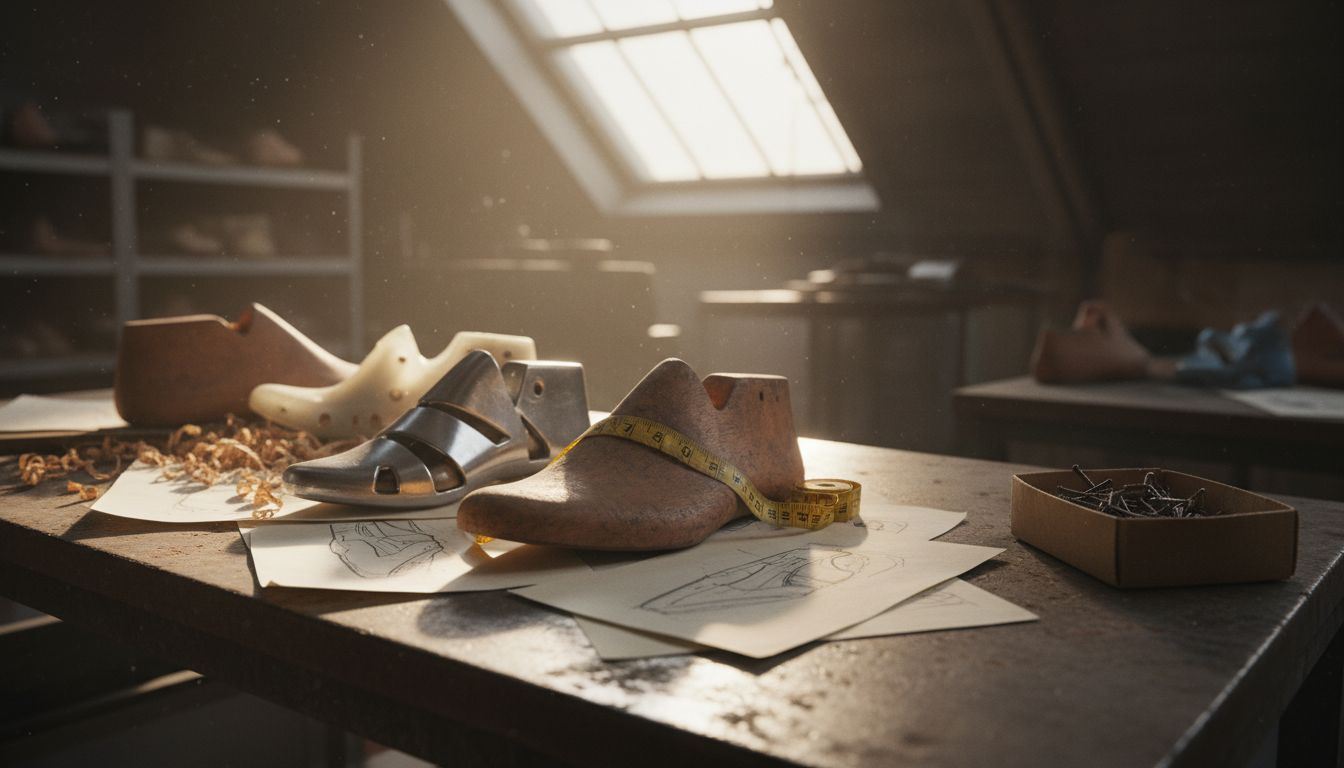
Traditionally, shoe lasts can be categorised into several primary types based on their specific manufacturing and design characteristics:
To better understand the main types of shoe lasts and their applications, refer to the comparison below:
| Last Type | Primary Purpose | Typical Use Case |
|---|---|---|
| Repair Last | Shoe restoration | Cobbler repairs and quick fixes |
| Production Last | Mass manufacturing | Factory-produced footwear |
| Bespoke Last | Personalised fit | Custom-made shoes |
| Fashion Last | Aesthetic focus | High-fashion, trend-driven shoes |
- Repair Lasts: Simple, one-size models used for shoe restoration
- Production Lasts: Mechanised templates for mass manufacturing
- Bespoke Lasts: Custom-designed forms for personalised footwear
- Fashion Lasts: Narrower designs emphasising aesthetic considerations
The complexity of shoe last design involves multiple anatomical considerations, including precise measurements for:
- Toe box dimensionality
- Heel cup geometry
- Arch support configuration
- Longitudinal foot curvature
Manufacturers construct these intricate templates using diverse materials such as hardwood, cast iron, and high-density plastics. Each material offers unique properties that contribute to the last’s durability and performance in shaping footwear.
Different shoe types demand specialised last variations. Athletic footwear requires robust, performance-oriented lasts with enhanced structural support, while formal shoes demand more refined, elegant last designs that prioritise aesthetic precision.
Pro tip: Invest in professionally measured lasts that match your unique foot anatomy for optimal comfort and performance.
How shoe lasts shape comfort and fit
The shoe last serves as the fundamental blueprint for footwear comfort, directly influencing how shoes interact with human anatomy. This intricate mechanical form determines critical aspects of shoe fit, including internal volume, contour, and pressure distribution across the foot.
Critical comfort factors shaped by shoe lasts include:
- Toe Box Dimensions: Ensuring adequate space for toe movement
- Heel Cup Design: Providing stable posterior foot support
- Arch Support Configuration: Matching individual foot curvature
- Longitudinal Foot Alignment: Promoting natural foot mechanics
Proper shoe design prevents potential foot injuries by addressing key biomechanical considerations. Shoes must accommodate precise measurements, including:
- Leaving 3/8 to 1/2 inch space from the longest toe
- Matching width to the ball of the foot
- Providing sufficient toe depth
- Ensuring heel stabilisation to prevent slipping
The interaction between shoe last and foot anatomy is complex. Improperly designed lasts can create pressure points, leading to discomfort, blisters, and long-term foot deformities. Conversely, well-engineered lasts distribute weight evenly, support natural foot movement, and minimise strain on joints and soft tissues.
Different activities demand specialised last designs. Athletic footwear requires dynamic lasts that support explosive movements, while formal shoes prioritise elegant contours that maintain foot aesthetics and comfort.
Pro tip: Request a professional foot measurement to identify the most suitable last design for your unique foot structure.
Shoe last technology for foot health
Advanced shoe last technologies are revolutionising our understanding of foot biomechanics, transforming how footwear supports human movement and prevents potential injuries. These innovative approaches go far beyond traditional shoe manufacturing, integrating sophisticated design principles that consider individual foot morphology.
Key technological advancements in shoe last development include:
- 3D Scanning Techniques: Creating precise foot mapping
- Customisable Last Designs: Accommodating unique foot structures
- Biomechanical Analysis Algorithms: Predicting pressure distribution
- Material Science Innovations: Enhancing structural flexibility
Emerging shoe technologies now focus on preventing common foot conditions by addressing critical biomechanical factors. Modern last designs aim to:
- Reduce friction points
- Minimise excessive pressure
- Support natural foot mechanics
- Prevent potential injury development
The progression of last technology represents a profound shift from one-size-fits-all approaches to personalised foot support. Specialist lasts for athletic footwear, for instance, now incorporate motion control mechanisms that optimise cushioning and stability, significantly reducing injury risks during dynamic movements.
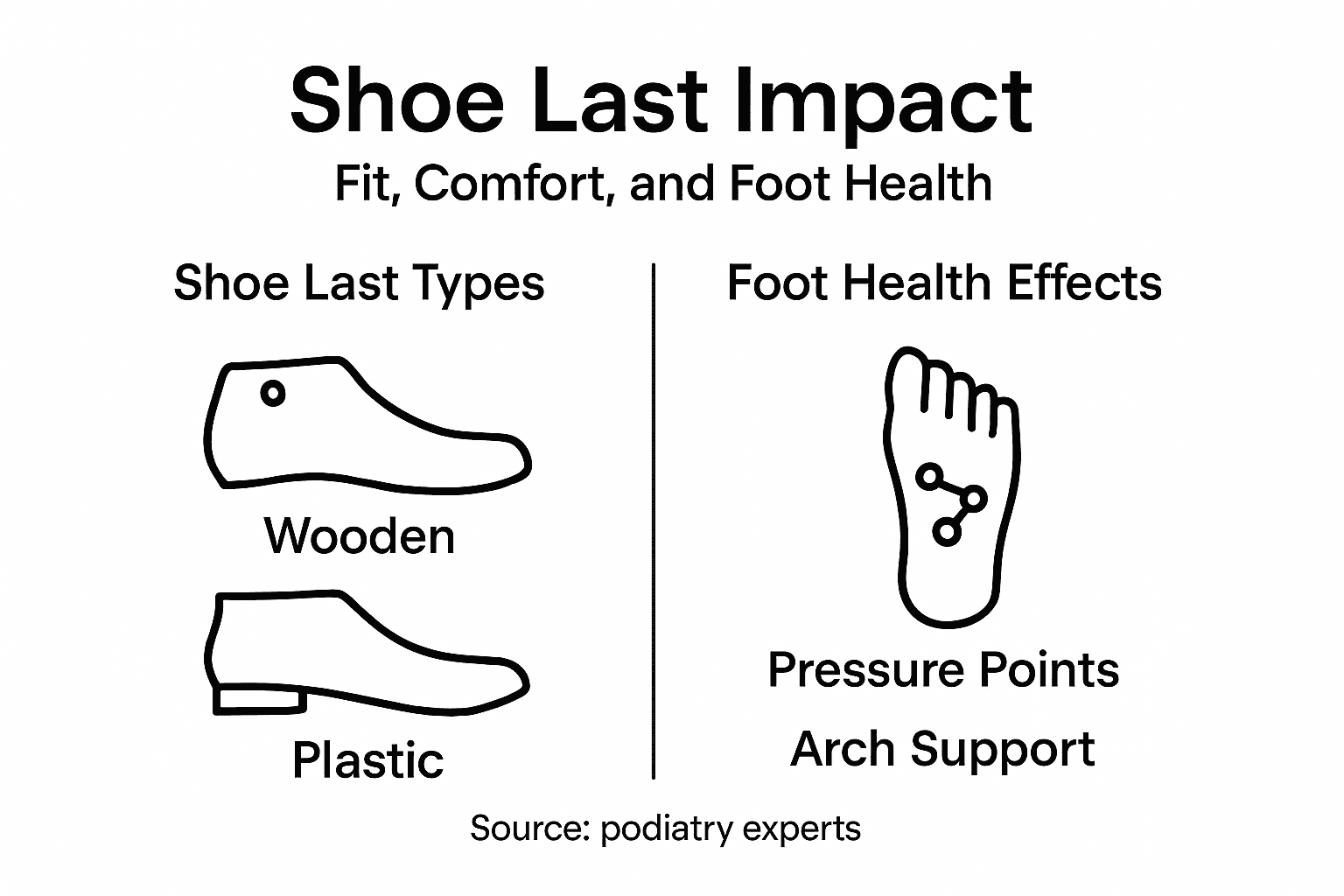
These technological innovations transform shoe design from a purely aesthetic endeavour to a scientifically precise method of protecting and supporting human locomotion. By understanding individual foot anatomy at microscopic levels, manufacturers can now create footwear that genuinely adapts to human movement patterns.
Here’s a summary of how technological advancements in shoe last design are transforming footwear comfort and foot health:
| Innovation Area | Benefit for Footwear | Impact on Foot Health |
|---|---|---|
| 3D Scanning | Accurate individual fit | Reduces pressure and friction |
| Customisable Last Design | Tailored for unique feet | Minimises injury risk |
| Biomechanical Algorithms | Predicts optimal support | Supports natural movement |
| Advanced Materials | Greater flexibility & lightness | Enhances comfort and durability |
Pro tip: Invest in professionally measured footwear that utilises advanced last technologies for optimal foot health and comfort.
Mistakes to avoid when choosing shoe lasts
Selecting the appropriate shoe last requires careful consideration beyond simple aesthetic preferences. Common shoe fitting mistakes can lead to significant long-term foot health complications if not addressed strategically.
Critical mistakes consumers frequently make include:
- Mistake 1: Relying exclusively on numerical shoe size
- Mistake 2: Ignoring foot width measurements
- Mistake 3: Expecting shoes to stretch significantly
- Mistake 4: Purchasing based on fashion instead of fit
- Mistake 5: Neglecting foot shape compatibility
Shoe selection requires comprehensive evaluation of multiple anatomical factors. Proper assessment should consider:
- Foot length and width
- Arch height and structure
- Toe box space requirements
- Individual movement patterns
- Daily activity demands
Many individuals mistakenly assume that shoe discomfort will resolve itself over time. However, persistent pressure points can cause progressive foot deformities such as bunions, hammertoes, and chronic pain syndromes. Professional biomechanical assessments can prevent these potential long-term health issues by identifying precise last requirements.
Furthermore, foot morphology changes with age, weight fluctuations, and activity levels. What fits perfectly today might become problematic tomorrow, emphasising the importance of regular professional foot measurements and adaptive footwear selections.
Pro tip: Schedule annual professional foot measurements to ensure consistent, accurate shoe last selection.
Discover Footwear Designed To Fit Your Unique Foot Shape
Understanding the vital role of shoe lasts in shaping comfort and foot health reveals why not all shoes suit every foot. Common issues like improper fit, pressure points, and inadequate support arise from ignoring precise last design and foot measurements. At YDA UK, we prioritise these essential factors by integrating advanced footwear technology that aligns with your foot’s unique anatomy. Our collection offers stylish and scientifically crafted shoes designed to provide optimal arch support, a spacious toe box, and perfect heel stability.
Explore our curated range of Shoes – YDA UK today and experience the difference of footwear engineered for your feet. Don’t wait until discomfort affects your daily life. Visit https://ydauk.com now to find your ideal fit and embrace lasting comfort and foot health.
Frequently Asked Questions
What is a shoe last?
A shoe last is a mechanical template used in the shoemaking process that determines the shape, fit, and structure of footwear, transforming flat materials into three-dimensional shoes.
How does the shoe last impact foot health?
The design of the shoe last affects comfort and fit by influencing internal volume, contour, and pressure distribution across the foot, which can prevent issues like blisters and improper weight distribution.
What are the main types of shoe lasts?
The main types of shoe lasts include repair lasts for restoration, production lasts for mass manufacturing, bespoke lasts for custom-made shoes, and fashion lasts that focus on aesthetics. Each type caters to specific footwear needs.
What mistakes should I avoid when choosing shoe lasts?
Avoid relying solely on numerical shoe sizes, ignoring foot width measurements, expecting shoes to stretch significantly, purchasing based on fashion rather than fit, and neglecting compatibility with your foot shape. Comprehensive evaluations of foot characteristics are essential.