
A 10-inch foot equals a US men's size 8: your inches sizing guide
A 10-inch foot usually lands you at a US men’s size 8. Add or shave off length and the size shifts by roughly one full US size per fraction of an inch. The maths behind it is straightforward: USM = 3 × L(in) − 22, where L is your foot length in inches. Flip it round and you get the inverse, L(in) = (USM + 22) ÷ 3, which tells you what foot length a given US size actually assumes.
A few quick examples make this concrete:
- 9.5 inches roughly maps to around US men’s 9.5
- 10 inches roughly maps to around US men’s 8
- 10.5 inches roughly maps to around US men’s 9.5
- 11 inches roughly maps to around US men’s 11
That last jump looks steep, and it is. The formula isn’t perfectly linear across the whole range, which is one reason ISO/TS 19407:2015 exists as a technical reference rather than a single tidy equation. One caveat before anything else: every brand cuts its lasts slightly differently, so treat any chart, including this one, as a strong starting point rather than gospel.
Key Takeaways
Getting men’s shoe sizes right in inches depends on accurate foot measurement first and formula-based conversion second, not the other way round.
| Point | Details |
|---|---|
| Use the formula | USM = 3 × L(in) − 22 converts foot length in inches to a US men’s size directly. |
| Measure both feet | Trace each foot in the evening wearing your usual socks, then size to the larger one. |
| Leave toe clearance | Allow 5 to 12mm beyond your longest toe to avoid a cramped or sliding fit. |
| Cross-check brand charts | Lasts and widths vary between brands, so treat generic tables as a starting point. |
| Consult product-specific notes | Check model pages for sizing quirks before ordering, especially boots and narrow cuts. |
Table of Contents
- How to measure men’s shoe sizes in inches
- Men’s shoe size chart: US, UK and EU by foot length in inches
- The formula behind the conversion, with worked examples
- Why shoe sizes vary between brands, and how to pick the right fit
- Ydauk’s approach to sizing and foot health
- Which shoes should you buy once you know your size in inches?
- Editorial take: measurement discipline beats chart-hopping
- Frequently asked questions
- Sources
How to measure men’s shoe sizes in inches
You need three things: a hard-backed sheet of paper, a pen, and a ruler or tape measure. That’s the whole kit. No app, no fancy foot-scanning gadget, though YDA’s product notes occasionally mention them for specific models.
Here’s the step-by-step:
- Place the paper on a hard floor, not carpet, against a wall.
- Stand on it with your heel touching the wall, wearing the socks you’d normally wear with the shoe.
- Mark the point where your longest toe ends. For most men that’s the big toe, but check. Second toes are sneakily longer more often than people expect.
- Step off and measure heel to mark in inches, to the nearest sixteenth if your ruler allows it.
- Repeat for the other foot. Feet are rarely identical. Use the larger measurement to pick your size.
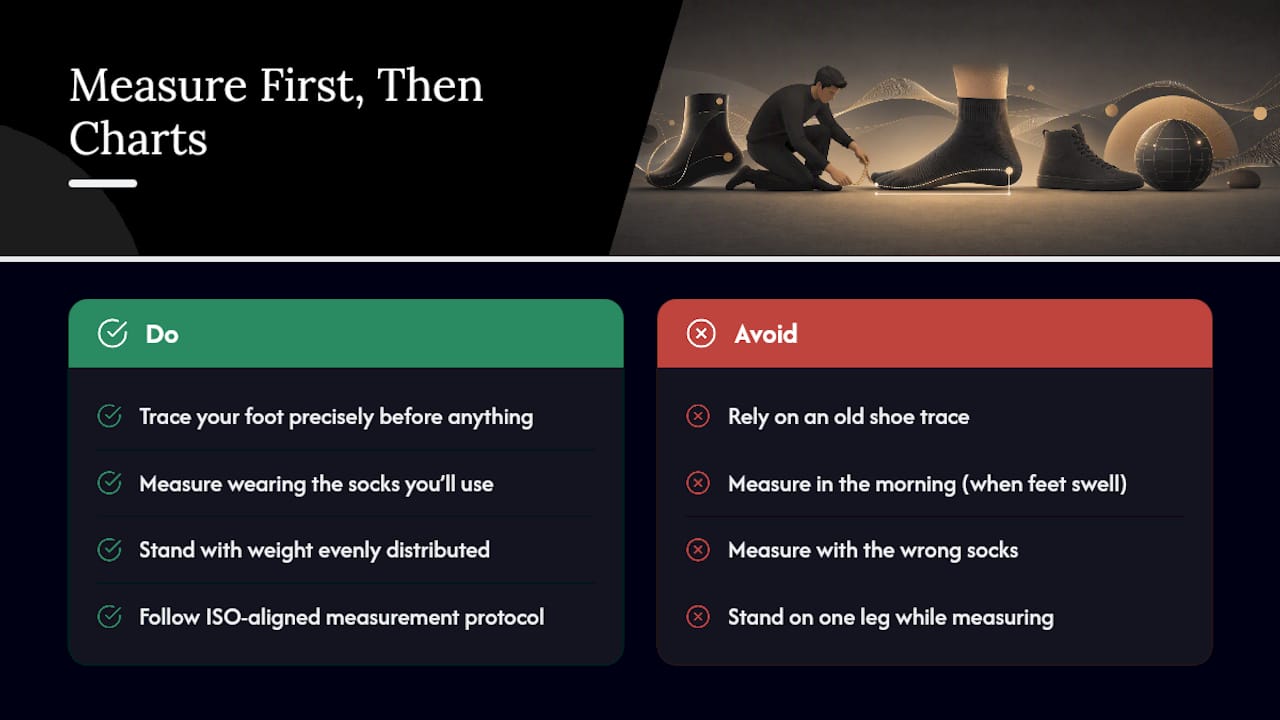
- Measure in the evening if you can. Feet swell through the day, and a morning measurement can underestimate your true size by a noticeable margin.
The most common mistake is measuring a shoe you already own instead of your actual foot. That tells you about that shoe’s insole length, not your foot, and the two rarely match. The second most common mistake is standing with weight on one leg or leaning against the wall, which shortens the print. Stand square, weight evenly distributed, and don’t skip the “trace both feet” step even if you’re confident they’re the same.
Pro Tip: Measure late in the day and always in the socks you intend to wear with the shoe. A pair of thick wool socks can add close to a quarter size of practical room.
Men’s shoe size chart: US, UK and EU by foot length in inches
Once you’ve got a foot length in inches, matching it to a size system is just a lookup. Here’s a practical reference covering the range most men fall into.
| Foot length (in) | US men’s | UK | EU |
|---|---|---|---|
| 9.25 | approx. size 6 | 6 | 39 |
| 9.5 | 7 | approx. size 6 | 40 |
| 9.65 | 7.5 | 6.5 | 40.5 |
| 9.8 | approx. size 8 | 7 | 41 |
| 10 | approx. size 8.5 | 7.5 | 42 |
| 10.25 | approx. size 9 | approx. size 8 | 42.5 |
| 10.5 | approx. size 9.5 | approx. size 8.5 | 43 |
| 10.65 | approx. size 10 | approx. size 9 | 44 |
| 10.85 | approx. size 10.5 | approx. size 9.5 | 44.5 |
| 11 | approx. size 11 | approx. size 10 | 45 |
| approx. 11.25 | approx. size 12 | approx. size 11 | approx. size 46 |
| approx. 11.50 | approx. size 13 | approx. size 12 | approx. size 47 |
These figures follow the standard conversion pattern used across established charts such as SizeChartBase and Shoesize.
A few notes on reading it properly:
- If your measurement falls between two rows, round up rather than down. A slightly loose shoe beats a cramped one every time.
- UK and EU columns are approximate. EU sizing is based on the Mondopoint system measured in millimetres, which is generally more consistent across brands than inch-based US sizing.
- Always cross-check against the specific brand’s own chart before ordering, especially for boots or narrow-cut styles where a half size makes a bigger difference than usual.
The formula behind the conversion, with worked examples
The formula USM = 3 × L(in) − 22 isn’t arbitrary. It reflects the relationship long used in footwear manufacturing between last length and labelled size, and it’s the same relationship referenced in ISO/TS 19407 for technical sizing conversions. The inverse, L(in) = (USM + 22) ÷ 3, lets you work backwards from a size to the foot length it’s built for, handy if you’re trying to figure out whether a size 10 you already own will fit a slightly bigger or smaller foot.
Three worked examples:
- Small foot, 9.4 in: USM = 3 × 9.4 − 22 = 6.2, rounds to US 6.
- Mid-size foot, 10.6 in: USM = 3 × 10.6 − 22 = 9.8, rounds to US 9.5 or 10 depending on the brand’s half-size availability.
- Large foot, 11.8 in: USM = 3 × 11.8 − 22 = 13.4, rounds to US 13.
Round to the nearest half size, and treat results at the very small or very large end of the scale with a bit more scepticism. Independent calculators using the same formula show the same small deviations outside the common 6 to 13 range, since lasts at the extremes aren’t scaled quite as proportionally.
Why shoe sizes vary between brands, and how to pick the right fit
The formula gets you close, but it won’t account for the last, which is the foot-shaped mould a shoe is built around. Two shoes labelled US 10 can differ by close to a third of an inch in actual internal length depending on the last shape a brand uses. Width matters just as much: a D width is standard, E and 2E are wider, and a shoe that’s the right length but the wrong width will still feel wrong.
Practical rules that actually help:
- Measure both feet and buy for the larger one.
- Leave 5 to 12mm of clearance beyond your longest toe. Too little and your toes hit the front on descents; too much and your foot slides, which causes blisters.
- Factor in the socks or insoles you’ll actually wear, not the ones you measured in if they differ.
- If your feet are noticeably wide, size up half a size rather than hunting for a wide-only fit, unless the brand explicitly offers width options.
Pro Tip: Check customer reviews for phrases like “runs small” or “true to size” before ordering online. Manufacturing tolerances mean two pairs from the same brand in the same size can still vary slightly.
Ydauk’s approach to sizing and foot health
Getting the size right matters more when the shoe is doing real work for your foot, not just covering it. Ydauk builds its footwear around YDA Technology, a foot health and energy efficiency focus that means fit precision isn’t cosmetic. It affects comfort and how your foot performs over a full day, which matters even more for people managing diabetes or other foot conditions where poor fit carries real risk.
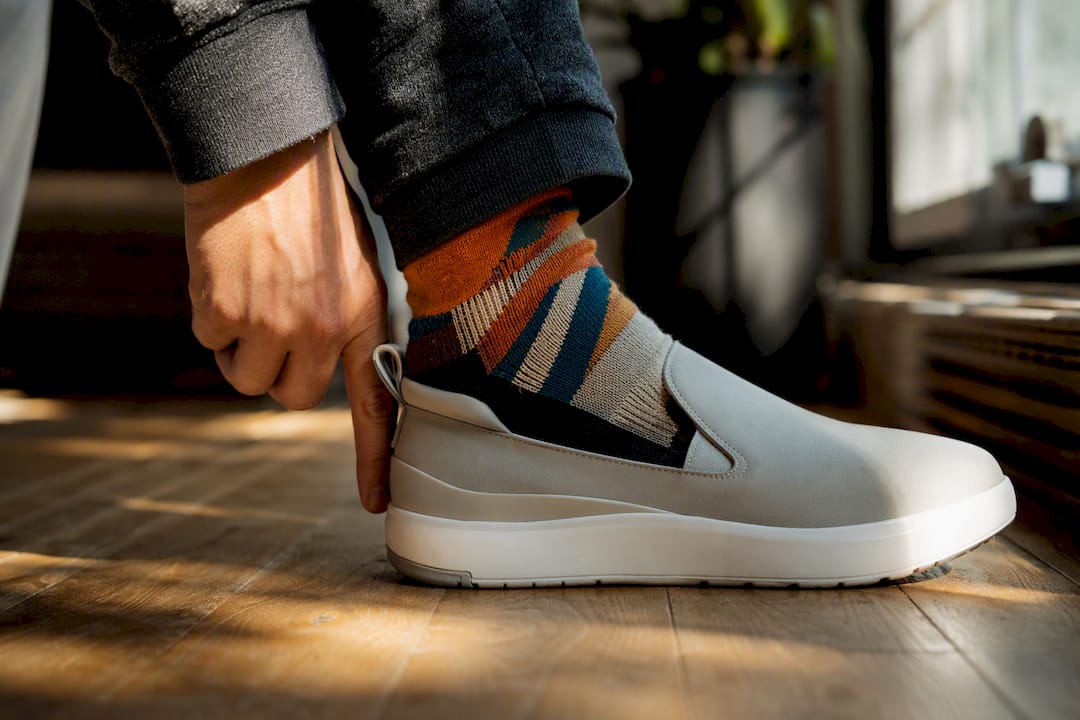
Ydauk publishes its own men’s foot size chart mapping UK, EU and US sizes, alongside guidance on width fitting. Check individual product pages for model-specific sizing notes before you order, since lasts vary between styles even within one brand. If you’re unsure after measuring, contact customer service directly rather than guessing.
Which shoes should you buy once you know your size in inches?
Knowing your foot length in inches only solves half the problem. The other half is buying a shoe actually engineered around foot health rather than fashion alone. Ydauk’s footwear technology is built specifically around energy efficiency and comfort for people on their feet all day, including those with problem feet or diabetes-related fitting needs. Once you’ve measured accurately using the steps above, matching that number to a properly fitted, technology-backed shoe is the part that actually changes how your feet feel by the end of the day.
Editorial take: measurement discipline beats chart-hopping
Most sizing advice online treats the conversion chart as the hard part and the measuring as an afterthought. That’s backwards. The formula is simple enough that anyone can apply it correctly in five seconds. Where people actually go wrong is at the measuring stage: morning feet, the wrong socks, weight on one leg, comparing to an old shoe instead of a fresh trace.
The conventional advice to “just check the size chart” undersells how much a sloppy measurement corrupts every step after it. A precise foot trace fed into a rough formula beats a rough guess fed into a precise-looking chart, every time. If you take one thing from this guide, take the measuring protocol, not the table. Chase ISO-aligned precision at the measurement stage first, then treat brand-specific charts, including Ydauk’s own, as the tool for fine-tuning rather than the starting point.
Frequently asked questions
What size is a 10-inch foot in men’s US sizing? A 10-inch foot converts to roughly US men’s size 8 using the standard formula, though it can round to 8.5 depending on the specific brand’s last.
How do I convert men’s shoe sizes from inches without a calculator? Multiply your foot length in inches by three, then subtract 22. For the reverse, add 22 to the US size and divide by three.
Why does my US size feel different between brands even though I measured correctly? Lasts differ between manufacturers, so a US 10 from one brand can measure noticeably shorter or longer inside than a US 10 from another.
Should I measure my foot in the morning or evening for the most accurate shoe size? Measure in the evening. Feet swell throughout the day, and an evening measurement better reflects the size you’ll need for comfortable all-day wear.
Is EU sizing more accurate than US sizing based on inches? EU sizing, based on the Mondopoint system in millimetres, tends to be more consistent across brands than inch-based US sizing, though neither eliminates brand-to-brand variation entirely.
Sources
- Men’s shoe sizes — US, UK, EU conversions | SizeChartBase
- Shoesize
- Shoe size calculator (inches to shoe size) — Calculator Academy