
Women's shoe size chart: your complete fit guide
TL;DR:
- A women’s shoe size chart helps convert foot measurements into standard sizes across different systems to ensure proper fit. Wearing the correct size depends on accurate foot length and width measurements, with brand-specific guides offering the most reliable fit. Conversion between sizing systems is rough, as brand lasts and styles significantly affect fit, making reviews and specific measurements crucial when shopping online.
A women’s shoe size chart converts foot measurements into standard sizes across the US, UK, and EU systems, giving you a reliable reference before buying footwear online. Without one, you are essentially guessing. Sizing systems differ significantly by country, and even within the same system, brands interpret sizes differently. This guide explains how the main sizing scales work, how to measure your feet correctly at home, and how to use a shoe size chart to avoid costly returns.
What are the main women’s shoe sizing systems?
Three systems dominate women’s footwear sizes globally: US, UK, and EU. Each uses a different measurement unit and numerical scale, which is why a size 8 in one country does not equal a size 8 in another.
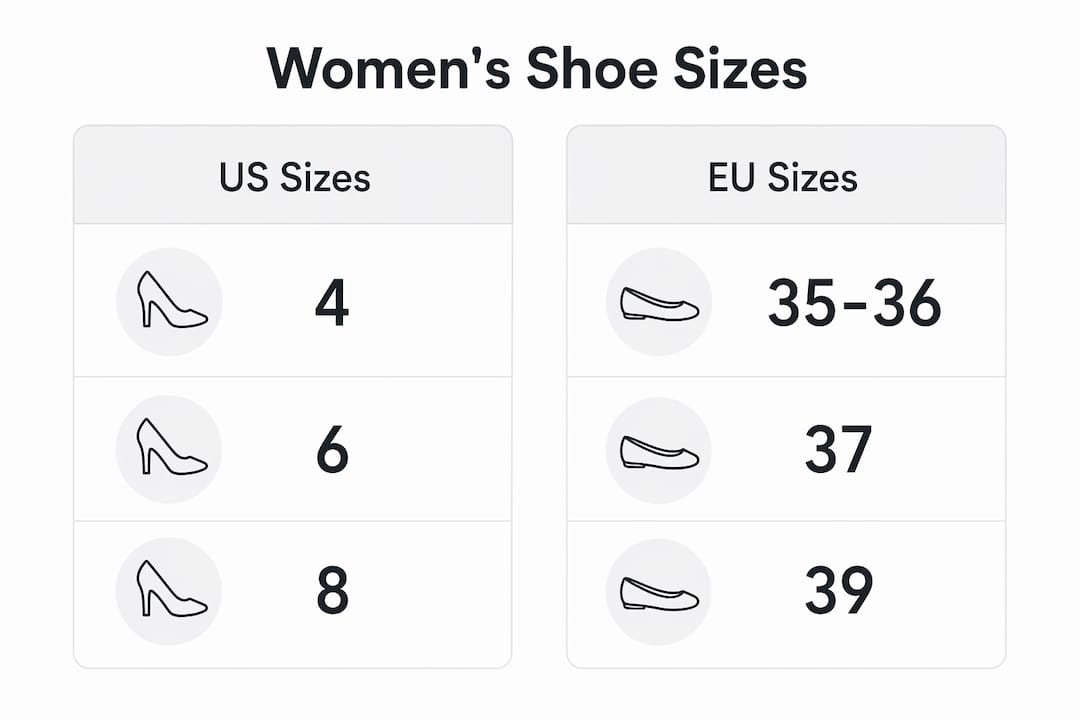
US women’s shoe sizes run from approximately 4 to 12, with half-size increments of one-sixth of an inch. UK sizes follow a similar structure but run roughly two sizes larger than US. That means a US size 8 is equivalent to a UK size 6. This difference catches many shoppers off guard, particularly when buying from international retailers.
The EU system works on a completely different unit. EU sizing uses Paris points, where one Paris point equals two-thirds of a centimetre. EU women’s sizes typically range from 35 to 43. A US size 8 translates to approximately EU 39, though exact equivalents vary by brand.
| US size | UK size | EU size |
|---|---|---|
| 5 | 3 | 35–36 |
| 6 | 4 | 37 |
| 7 | 5 | 38 |
| 8 | 6 | 39 |
| 9 | 7 | 40 |
| 10 | 8 | 41–42 |
Pro Tip: If you are buying from a European brand, always check whether the size chart uses Paris points or centimetres. Some brands list both, which makes conversion far simpler.
How to measure your foot length and width at home
Measuring your foot correctly is the single most reliable step in women’s shoe sizing. A tape measure and a sheet of paper are all you need.
- Place a sheet of plain paper on a hard floor.
- Stand with your heel against a wall and your foot flat on the paper.
- Mark the tip of your longest toe with a pencil.
- Measure the distance from the wall to the mark in centimetres.
- Repeat for your other foot.
Measure both feet and use the larger measurement when selecting your size. Feet are rarely identical, and a shoe that fits the smaller foot will pinch the larger one.
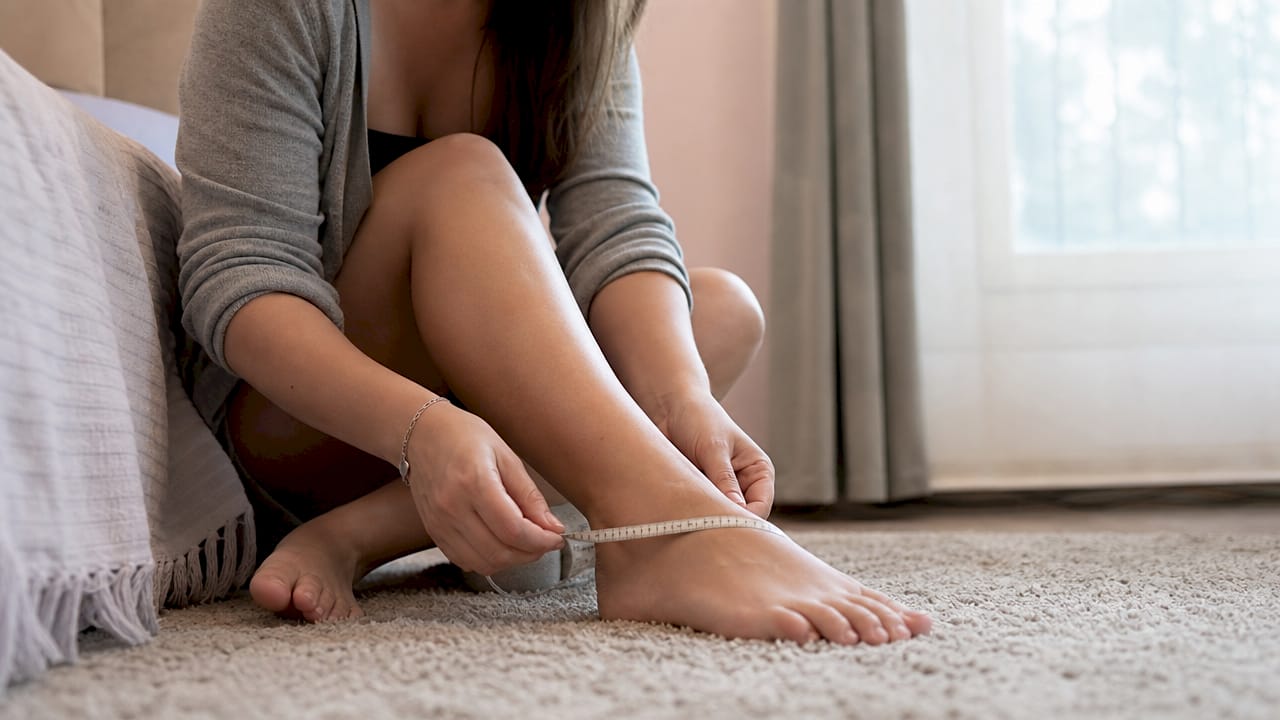
Width matters just as much as length. Shoe width classifications use letter codes: N for narrow, M for medium or standard, W for wide, and XW for extra wide. To measure width, wrap a soft tape measure around the widest part of your foot, just across the ball. Compare this figure against the brand’s width chart, not just the length chart.
Pro Tip: Measure your feet in the evening. Feet swell throughout the day, and an evening measurement gives you the largest size your foot reaches. Buying shoes based on a morning measurement often leads to tightness by afternoon.
Once you have both measurements, cross-reference them against the brand’s specific size guide. Generic charts give you a starting point, but a step-by-step fitting guide from the retailer will always be more accurate for their particular shoe construction.
What challenges exist in women’s shoe size conversion?
Size conversion between systems is not a precise science. International shoe size conversions vary considerably by brand and should be treated as a rough guide rather than a definitive answer. The reason is that brands use different lasts, which are the moulds around which shoes are built. Two shoes labelled EU 39 from different brands can fit entirely differently.
Brand-specific lasts cause the same nominal size to fit quite differently across manufacturers. A size 8 from a heritage British brand may run narrow, while the same size from a casual lifestyle brand runs wide. This is why customer reviews that mention fit are worth reading before you buy.
International conversions get more complex beyond US, UK, and EU. Japanese shoe sizes add approximately 15 to the US women’s size for conversion, so a US size 8 becomes Japan size 23. That kind of numerical jump is not intuitive, and it is easy to misread if you are not expecting it.
Common pitfalls when relying on conversion charts include:
- Assuming all brands follow the same conversion formula
- Ignoring width entirely and focusing only on length
- Using a chart designed for men’s sizing when shopping for women’s shoes
- Forgetting that some brands size up or down by half a size consistently
- Overlooking that children’s and adult sizing scales are entirely separate
Men’s to women’s shoe size conversion adds another layer of complexity. Women’s sizes generally run about 1.5 sizes larger than men’s in the US system. A men’s and women’s size comparison guide can help if you are shopping unisex styles or buying from a brand that lists only men’s sizes.
How to use a shoe sizing guide effectively when shopping online
Online shoe shopping removes the ability to try before you buy, so your preparation before clicking “add to basket” matters more. A sizing guide works best when you combine it with your own foot measurements rather than relying on it alone.
- Measure your foot length and width at home using the method above.
- Locate the brand’s size chart on the product page, not a generic third-party chart.
- Match your centimetre measurement to the chart’s length column.
- Check whether the chart includes width options and whether the style comes in multiple widths.
- Read customer reviews and filter for comments about fit, particularly whether the shoe runs large or small.
Brand size charts on product pages and fit notes help shoppers refine their choices far better than generic conversion tables. If a product page includes a fit note such as “runs half a size small,” treat that as a firm instruction rather than a suggestion.
If you are genuinely unsure between two sizes, ordering both and returning the one that does not fit is a practical solution. Check the retailer’s return policy before ordering. Many online footwear retailers offer free returns specifically because sizing uncertainty is so common. For shoppers with wider feet, a dedicated shoe width guide can clarify which styles accommodate a W or XW fitting.
Pro Tip: When your new shoes arrive, wear them indoors on a clean floor for 20–30 minutes before committing to them. This lets you assess fit without scuffing the soles, keeping your return option open if they do not feel right.
For those who need orthopedic considerations alongside standard sizing, guidance on senior footwear features can help identify which shoe structures offer the best support alongside a correct size fit.
Key takeaways
A women’s shoe size chart is a starting reference, not a guarantee of fit. Accurate foot measurements, width awareness, and brand-specific guides together produce the most reliable result.
| Point | Details |
|---|---|
| US and UK sizes differ by two | A US size 8 equals a UK size 6. Never assume the numbers match across systems. |
| EU sizing uses Paris points | One Paris point equals two-thirds of a centimetre. EU women’s sizes typically run 35–43. |
| Measure both feet | Use the larger foot measurement when selecting size, as feet are rarely identical. |
| Width classifications matter | N, M, W, and XW designations affect fit as much as length. Always check width options. |
| Conversion charts are a guide only | Brand lasts and construction mean the same size can fit differently across manufacturers. |
Why I think most shoppers overlook the most important number
Most shoppers focus entirely on length when reading a women’s shoe size chart. Width is the number that actually determines whether a shoe is comfortable after an hour of wear.
I have seen this pattern repeatedly. A shopper measures her foot length, matches it to a chart, orders the correct size, and then returns the shoes because they pinch across the ball of the foot. The length was right. The width was wrong. Medium width, designated M, is the standard, but medium width can still feel tight depending on the shoe’s cut and construction. A slim, pointed toe box will feel narrower than a round toe box in the same nominal width.
My honest advice is to measure your foot width every time you buy from a new brand. Do not assume your width is the same across styles. A trainer and a court shoe from the same brand can feel completely different in the same size. Patience here saves money and frustration.
Reading customer reviews specifically for fit comments is not optional. It is the closest thing to trying the shoe on before it arrives. Look for reviewers who mention their foot shape or width, not just their size. Those comments are the most useful data you will find on any product page.
— Panagiotis
Ydauk’s approach to fit and foot health technology

Ydauk builds its footwear around YDA Technology, which is designed to support different foot shapes and sizes rather than assuming one standard fits all. The technology focuses on foot health and energy efficiency, meaning the construction of each shoe accounts for how weight distributes across the foot during everyday wear. For shoppers who have struggled to find shoes that fit well despite using standard size charts, this approach addresses the root cause rather than just the symptom. You can read more about how the engineering works on the YDA shoe technology page. Ydauk also provides detailed size information alongside its product listings to help you match your measurements to the right style with confidence.
FAQ
What is a women’s shoe size chart?
A women’s shoe size chart converts foot length measurements into standard shoe sizes across US, UK, and EU systems. It gives shoppers a reference point for selecting the correct size, particularly when buying online.
How do US and UK women’s shoe sizes differ?
US sizes run about two sizes smaller than UK sizes, so a US size 8 equals a UK size 6. Always check which system a retailer uses before selecting your size.
How do I measure my foot size at home?
Stand on a sheet of paper with your heel against a wall, mark the tip of your longest toe, and measure the distance in centimetres. Use the larger of your two feet when matching to a size chart.
What do shoe width letters mean?
Width letters indicate how wide the shoe is across the ball of the foot: N is narrow, M is medium or standard, W is wide, and XW is extra wide. Choosing the correct width is as important as choosing the correct length.
How do I convert men’s shoe sizes to women’s?
In the US system, women’s sizes run approximately 1.5 sizes larger than men’s. A men’s size 7 is roughly equivalent to a women’s size 8.5, though brand variation means you should always verify against a specific size conversion chart.