
Shoe width sizes: your complete fitting guide
TL;DR:
- Shoe width sizes are letter-coded measurements that determine the horizontal space across the foot’s ball, which is essential for comfort and foot health.
- Measuring both feet under full weight and fitting to the larger foot ensures proper sizing, especially since foot width can change with age and activity.
Shoe width sizes are letter-coded measurements that indicate the horizontal space of a shoe across the ball of the foot, and getting this dimension right is just as critical as getting the length right. Standard widths for men and women are D and B respectively, yet these only fit around 60% of people. The remaining 40% need narrower or wider options. The Brannock device, used in most reputable shoe shops, measures both dimensions simultaneously. Sources such as John White Shoes and Michigan Foot Doctors confirm that ignoring width leads directly to discomfort, blisters, and long-term foot damage.
What are shoe width sizes and how do they work?
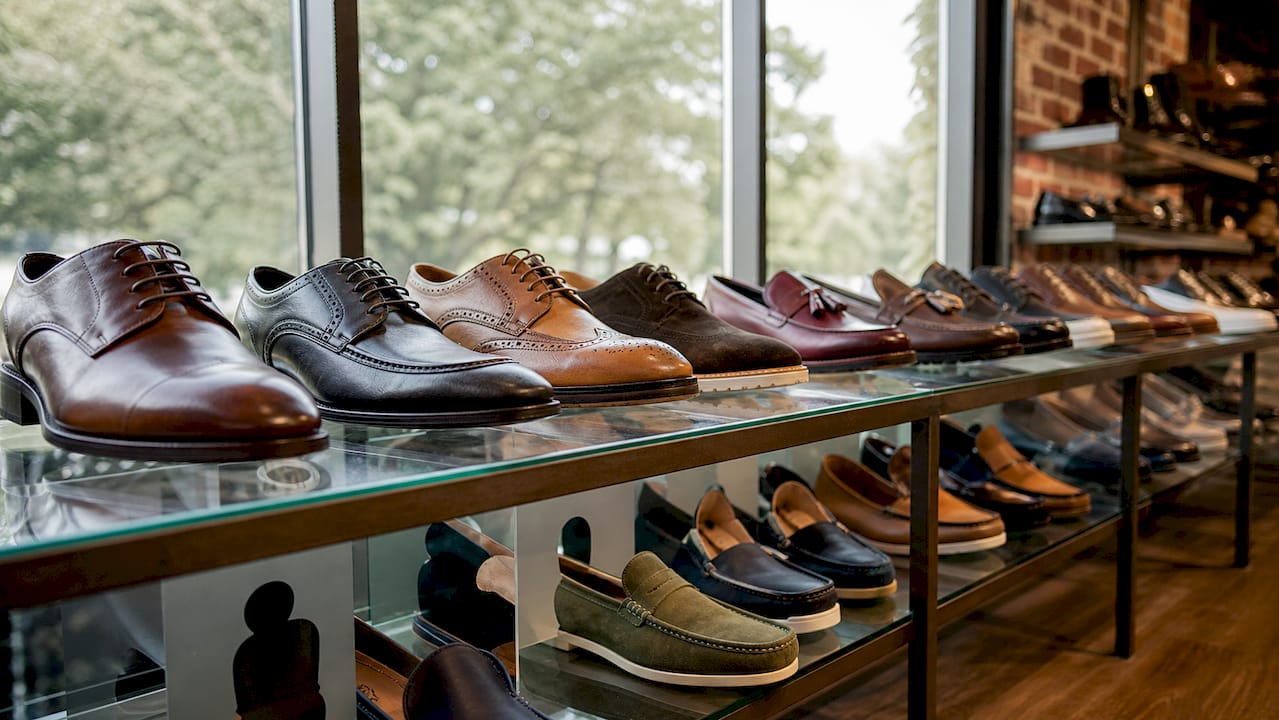
Shoe width sizes use a letter scale to describe how much horizontal room a shoe provides across its widest point. In the UK, the scale runs from B (narrow) through to H (extra wide), with E and EE being the most commonly stocked wide fittings. In the US system, widths run from A (narrow) through to 6E (extra wide), with each letter increment representing roughly 3–4mm of additional width across the ball of the foot. That small difference in millimetres has a large effect on comfort over a full day of wear.
Width is not a fixed physical measurement. It is tied to the shoe’s length and the specific last the manufacturer uses. A D width in a size 9 is physically narrower than a D width in a size 12, because the last scales proportionally. This is why checking a brand’s specific size chart matters far more than relying on a letter alone.
How to measure shoe width at home
Measuring your foot width accurately at home takes less than five minutes and requires only a sheet of paper, a pen, and a ruler.
- Place a sheet of plain paper on a hard floor. Stand on it with your full body weight distributed evenly. Sitting down reduces the width reading because your foot spreads under load.
- Trace around your foot. Keep the pen vertical, not angled, to avoid adding false width to the outline.
- Mark the widest points. These are typically across the knuckles of your toes, at the ball of the foot.
- Measure the straight-line distance between those two marks in millimetres. Tracing under full weight is more accurate than circumference methods, which can overestimate width.
- Repeat for both feet. Most people have one foot slightly larger than the other. Always fit to the larger foot to avoid pressure points on the wider side.
Timing matters more than most people realise. Foot volume increases by 4–8% during the day due to natural swelling from activity and gravity. Measuring in the morning can leave you with shoes that feel tight by early evening.
Pro Tip: Measure both feet late in the afternoon, after you have been on your feet for at least a few hours. This gives you the most realistic width reading for everyday wear.
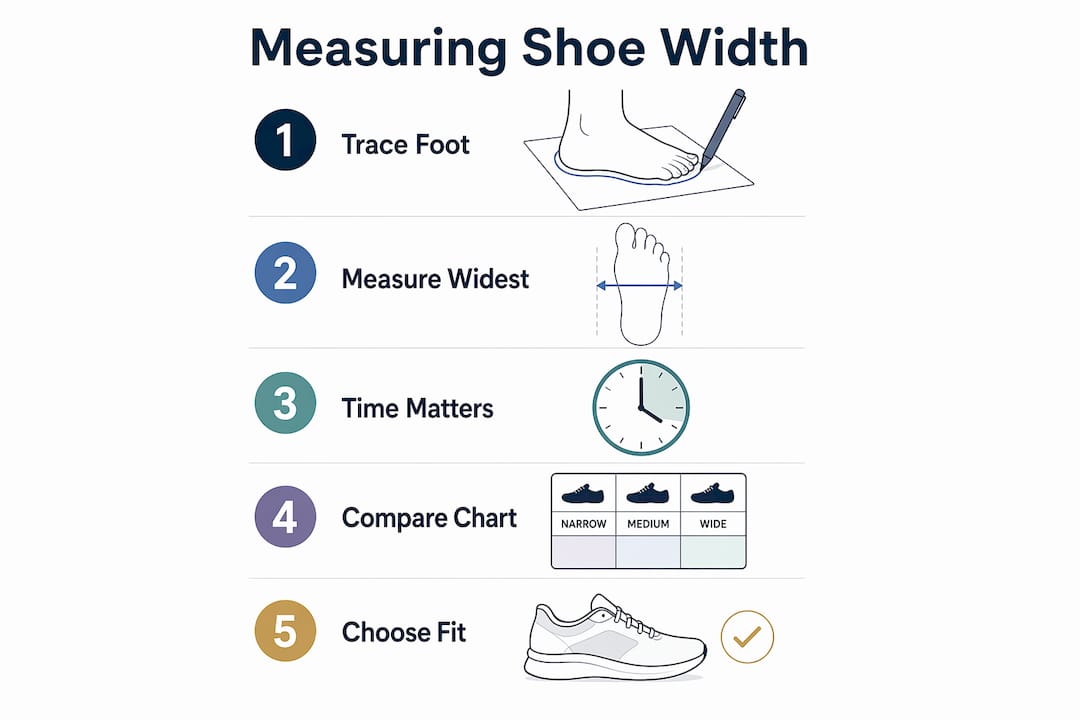
Once you have your measurement in millimetres, cross-reference it against a shoe width chart for your shoe size to find your width letter. In a physical shop, ask the assistant to use a Brannock device, which reads both length and width in a single step and removes the guesswork entirely.
UK, US, and EU width systems compared
Navigating width codes across different countries is one of the most confusing parts of buying shoes online. The three main systems work very differently from one another.
The UK system uses a straightforward letter scale. B is narrow, C is slightly narrow, D is standard for women, E is standard for men, EE is wide, and H is extra wide. The US system uses a similar letter scale but extends further in both directions, from A (narrow) through to 6E (extra wide). These two systems align reasonably well, though not perfectly, because the underlying lasts differ between manufacturers.
European sizing presents the biggest challenge. EU sizes omit width designations entirely and rely instead on brand-specific lasts to determine fit. A size 43 from one European brand may fit like a UK E width, while the same size from another brand fits like a C. This makes buying European footwear without trying it on a genuine gamble for anyone outside the standard width range.
| UK Width | US Equivalent | Approximate Fit |
|---|---|---|
| B | AA or A | Narrow |
| C | B | Slightly narrow |
| D | B or C | Standard (women) |
| E | D | Standard (men) |
| EE | 2E | Wide |
| EEE or F | 3E | Extra wide |
| H | 4E or wider | Very extra wide |
The table above is a guide, not a guarantee. Width dimensions vary by brand and last, so always cross-reference with the specific brand’s size chart before purchasing. This is especially true when buying across regions.
Which foot conditions require specific width sizes?
Several common foot conditions make width selection a medical consideration, not just a comfort preference.
- Bunions push the big toe joint outward, widening the forefoot significantly. A standard width shoe compresses this joint and accelerates deformity. Wide or extra-wide fittings (EE or 4E) reduce pressure on the bunion and slow progression.
- Hammertoes cause the toes to curl upward, increasing both the height and width needed in the toe box. Shoes with a wide, deep toe box prevent the toes from being forced into an unnatural position.
- Oedema (swollen feet) is common in older adults, pregnant women, and people with circulatory conditions. Feet can change width significantly throughout the day, making adjustable fastenings such as Velcro straps far more practical than laces or fixed closures. Ydauk’s guide on shoes for swollen feet covers this in detail.
- Diabetic feet require particular care. Reduced sensation means pressure from a narrow shoe can cause ulcers before the wearer notices any pain. Extra-wide therapeutic footwear with seamless linings is the standard recommendation from podiatrists. Ydauk’s resource on diabetic shoe width explains the specific fit requirements.
The wider problem is availability. Most shoe shops stock primarily medium widths, which forces people with foot conditions into shoes that are too narrow. Wearing the wrong width over months or years causes calluses, blisters, nerve compression, and in severe cases, permanent structural changes to the foot.
Pro Tip: If you have any of the conditions above, bring a tracing of your foot to the shop and compare it directly against the shoe’s insole. If the insole is narrower than your tracing, the shoe will not fit correctly regardless of the length.
How to choose the right width for comfort and foot health
Selecting the correct width requires applying your measurement alongside a few practical principles.
- Never size up in length to compensate for width. A longer shoe with the correct length but wrong width still compresses the ball of the foot. It also creates excess space at the heel, causing slipping and blisters at the back.
- Consider the shoe style. Derby shoes have an open lacing system that allows the upper to spread slightly, making them more forgiving for wider feet than Oxford shoes, which have a closed lacing system and a more rigid fit.
- Do not rely on leather to stretch into shape. Leather may soften slightly over time but cannot correct a fundamental width mismatch. Wearing narrow shoes expecting them to break in can cause permanent deformities including bunions and calluses.
- Account for age. Feet widen and flatten with age as the ligaments and tendons lose elasticity. If you have not measured your feet in the past two years, your width may have changed. Many adults discover they have moved up a full width fitting after their forties.
- Check for the signs of wrong width. Red marks across the ball of the foot after wearing, numbness in the toes, or a feeling of the shoe gripping the sides of your foot all indicate the width is too narrow. Excess material bunching at the sides, or the foot sliding laterally inside the shoe, indicates the width is too wide.
Using a complete sizing guide alongside your measurements gives you a structured way to confirm fit before committing to a purchase.
Key takeaways
Correct shoe width sizing requires measuring both feet under full body weight, fitting to the larger foot, and cross-referencing measurements against brand-specific charts rather than relying on letter codes alone.
| Point | Details |
|---|---|
| Standard widths fit 60% of people | D for men and B for women are standard; 40% need narrower or wider options. |
| Measure late in the afternoon | Foot volume rises 4–8% during the day, so afternoon measurements reflect real wearing conditions. |
| Fit to the larger foot | Most people have asymmetrical feet; always size to the bigger foot to avoid pressure pain. |
| EU sizing lacks width codes | European shoes rely on brand lasts, so always try before buying or check brand-specific charts. |
| Never stretch a narrow shoe | Leather cannot fix a width mismatch; wearing too-narrow shoes causes lasting foot damage. |
Width is the dimension most shoppers ignore
I have spent years watching people buy shoes by length alone, then wonder why their feet ache by lunchtime. The width conversation almost never happens in a standard shoe shop, and that is a genuine problem. Most assistants reach for the next half size up when a customer complains about tightness, when the real fix is a wider fitting in the same length.
The part that surprises people most is how much width changes with age. I have spoken with customers in their fifties who have worn the same width their entire adult lives, then suddenly find every shoe uncomfortable. Their feet have widened, but they have not updated their measurement. They are essentially wearing the wrong shoe for the foot they now have.
My strong view is that the Brannock device should be used every time you buy shoes, not just once in childhood. It takes thirty seconds and removes all the guesswork. If your local shop does not have one, trace your foot at home using the method described above and compare it against the insole of any shoe before you buy. That single step will save you from more discomfort than any amount of break-in time ever could.
Width is not a secondary consideration. It is half the fit equation.
— Panagiotis
Find your perfect fit with Ydauk
Getting your width right is the foundation of comfortable, healthy footwear. Ydauk specialises in health-oriented shoes designed with precise width fittings in mind, combining YDA Technology with practical fit guidance for everyday wear.

Whether you need a complete fitting guide for wide feet or a step-by-step fitting process to confirm your size before purchasing, Ydauk’s resources cover every stage. Browse the full range at ydauk.com and find footwear built around the dimensions that actually matter.
FAQ
What do shoe width letters mean?
Shoe width letters indicate the horizontal space across the ball of the foot. In the UK, B is narrow, E is standard for men, and EE or wider covers broad fittings.
How do i measure my shoe width at home?
Stand on paper, trace your foot under full body weight, and measure the straight-line distance across the widest point. Measure both feet and use the larger reading.
What is the difference between narrow vs wide shoes?
Narrow shoes (B or C width in the UK) have less horizontal space across the ball of the foot, while wide shoes (EE, 4E) provide significantly more room. Each UK width increment adds roughly 3–4mm of space.
Do EU shoes come in width fittings?
Most European shoe sizes do not include standard width codes. They rely on brand-specific lasts, so fit varies between manufacturers and you should always check brand charts or try shoes in person.
Can i wear a longer shoe if my foot is wide?
Sizing up in length to compensate for width is a common mistake. It creates heel slippage and does not resolve compression across the ball of the foot. Always address width directly with the correct width fitting.