
What Is Motion Control Footwear? 30% Injury Reduction
Most people assume all shoes provide equal foot protection, yet nearly 70% of individuals exhibit some degree of overpronation requiring specialized support. Motion control footwear represents a targeted solution for severe overpronation, combining biomechanical engineering with daily comfort. This guide explains how these shoes work, who benefits most, and how to select the right pair for your needs.
Table of Contents
- Introduction to Motion Control Footwear
- How Motion Control Footwear Works: Biomechanics and Design
- Comparing Motion Control, Stability, and Neutral Shoes
- Benefits and Injury Prevention with Motion Control Footwear
- Common Misconceptions and Precautions
- Choosing and Using Motion Control Footwear Effectively
- Innovations and Future Trends in Motion Control Footwear
- Summary and Practical Takeaways
- Explore Advanced Motion Control Footwear at YDA UK
Key Takeaways
| Point | Details |
|---|---|
| Motion control shoes correct severe overpronation | Firmer midsoles and medial posts limit excessive inward foot rolling |
| They differ structurally from stability and neutral shoes | Heavier construction targets specific biomechanical issues |
| Proper fitting and gradual adaptation are essential | Professional gait analysis prevents discomfort and maximizes benefits |
| Injury reduction reaches 30% with correct use | Lowers risk of plantar fasciitis, shin splints, and runner’s knee |
| Modern designs blend style with biomechanical support | Advanced materials maintain function without sacrificing appearance |
Introduction to Motion Control Footwear
Motion control footwear is designed specifically to correct excessive foot pronation caused by flat feet or low arches. When your foot rolls inward too much during walking or running, it creates a chain reaction affecting your ankles, knees, and hips. This excessive motion, called overpronation, places uneven stress on joints and soft tissues.
People with severe overpronation face distinct challenges during daily activities:
- Persistent arch pain and fatigue after standing or walking
- Ankle instability and frequent rolling sensations
- Knee discomfort from misaligned leg positioning
- Rapid shoe wear on the inner heel and forefoot areas
- Lower back strain from compensatory posture adjustments
Flat feet and collapsed arches are the primary conditions requiring motion control support. Without proper correction, these structural issues compound over time, turning minor discomfort into chronic pain. Your gait pattern reveals whether you need motion control intervention.
Picking shoes for flat feet requires understanding your specific pronation severity. Some people show mild inward rolling, while others exhibit dramatic collapse with each step.
Pro tip: Schedule a professional gait analysis at a specialty footwear store or podiatry clinic before purchasing motion control shoes. Video analysis reveals your exact pronation pattern, eliminating guesswork and ensuring you invest in appropriate support levels.
How Motion Control Footwear Works: Biomechanics and Design
Motion control shoes employ specific engineering features to restrict excessive pronation and stabilize your foot throughout the gait cycle. Each design element serves a precise biomechanical function.
Key structural components include:
- Firm midsoles resist compression on the inner foot edge, preventing arch collapse and maintaining proper foot alignment during weight transfer
- Medial posts are dense foam wedges positioned under the arch that physically limit inward rolling through strategic resistance placement
- Reinforced heel counters wrap the rear foot in rigid material, locking the heel in place to prevent side to side movement during ground contact
- Wider outsole bases expand the shoe’s footprint, distributing weight across a larger surface area to enhance balance and reduce tipping forces
- Straight or semi curved lasts provide a stable platform that discourages the foot’s natural tendency to pronate excessively
The firmer midsole creates a rigid foundation that your foot cannot easily deform. When you step down, this density pushes back against pronation forces. Meanwhile, the medial post acts as a physical barrier, making it mechanically difficult for your arch to collapse inward.
Footwear stability impact extends beyond the foot itself. Proper alignment at ground level travels upward through the kinetic chain, reducing compensatory stress in knees and hips.
“The integration of firmer materials and structural support elements in motion control shoe design creates a biomechanical intervention that guides the foot through a more neutral path, reducing strain on tissues and joints throughout the lower extremity.”
These features work synergistically. The wide base provides initial stability, the firm midsole resists deformation, and the medial post guides motion. Together, they create a corrective system that supports your foot’s natural structure while preventing harmful excessive movement.
Comparing Motion Control, Stability, and Neutral Shoes
Understanding the distinctions between shoe categories helps you match footwear to your specific biomechanical needs. Each type addresses different levels of pronation control.
| Feature | Motion Control | Stability | Neutral |
|---|---|---|---|
| Pronation Level | Severe overpronation | Mild to moderate overpronation | Normal pronation |
| Weight | Heaviest (12+ oz) | Moderate (10-12 oz) | Lightest (8-10 oz) |
| Flexibility | Most rigid | Moderately flexible | Highly flexible |
| Support Features | Maximum (dual density midsole, strong medial post) | Moderate (light medial post or guide rails) | Minimal (uniform cushioning) |
| Ideal User | Flat feet, severe pronation, heavier runners | Mild arch issues, moderate pronation | Normal arches, neutral gait |
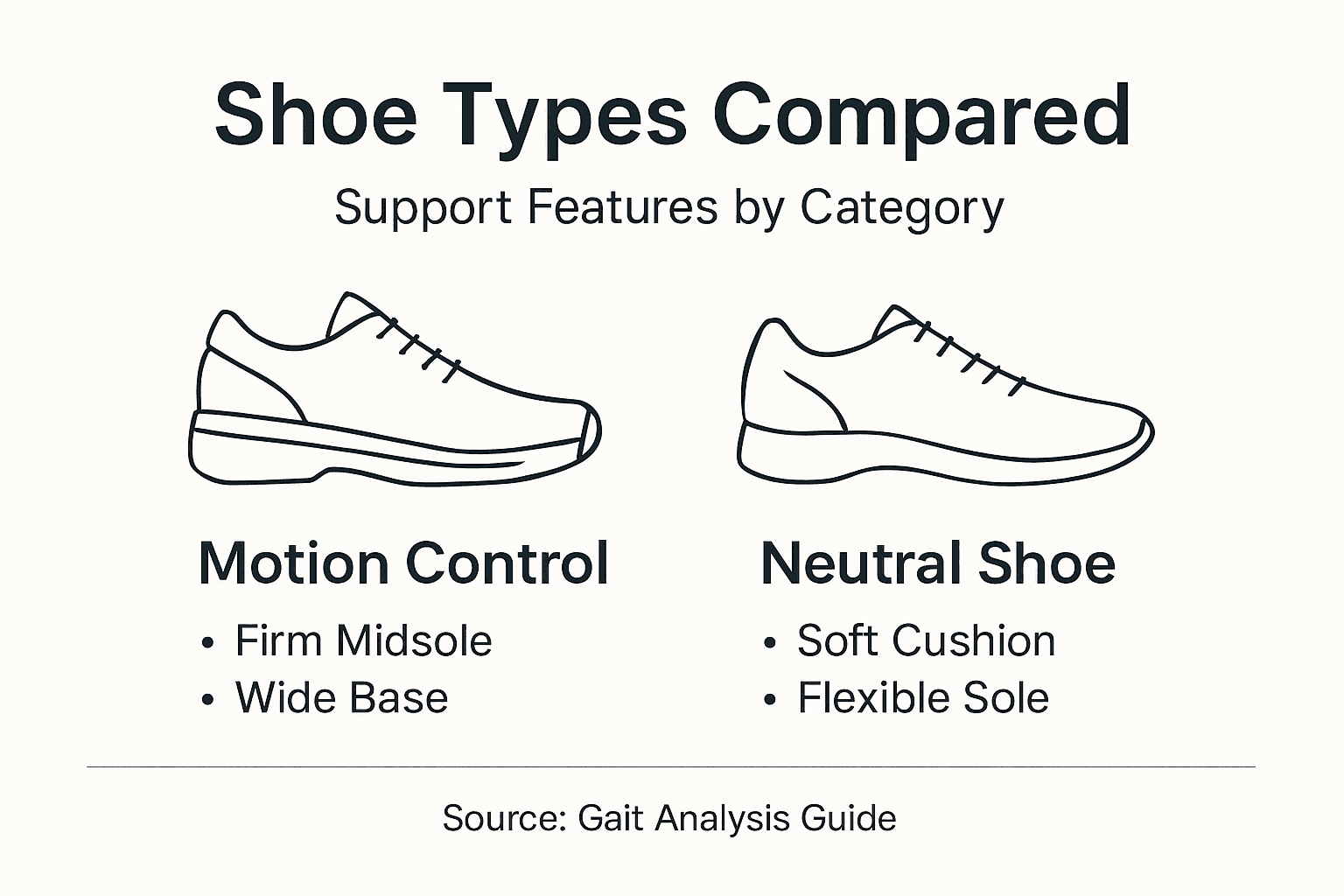
Motion control shoes are heavier and stiffer, prioritizing correction over responsiveness. Stability shoes offer a middle ground, providing some pronation control without maximum rigidity. Neutral shoes assume your foot moves correctly and simply provide cushioning.
Choose based on these scenarios:
- Select motion control when you have flat feet, your ankles roll inward dramatically, or previous injuries stem from overpronation
- Choose stability shoes if you show mild inward rolling or want preventive support without maximum stiffness
- Opt for neutral shoes only if gait analysis confirms proper foot mechanics and you have normal to high arches
Wearing the wrong category creates problems. Motion control shoes on neutral feet over correct your gait, potentially causing lateral foot strain. Neutral shoes on flat feet provide zero correction, accelerating injury risk. Footwear and injury prevention depends on accurate matching.
Professional consultation removes uncertainty. A trained specialist observes your barefoot gait, examines your foot structure, and recommends the appropriate category based on objective assessment rather than marketing claims or personal preference.
Benefits and Injury Prevention with Motion Control Footwear
Studies demonstrate up to 30% injury reduction when individuals with severe overpronation use properly fitted motion control shoes. This significant decrease stems from improved biomechanical alignment throughout the lower body.
Specific injury prevention benefits include:
- Plantar fasciitis reduction through arch support that prevents excessive tissue stretching during foot strike
- Shin splint prevention by limiting tibial rotation caused by unchecked pronation
- Knee pain decrease as proper foot alignment reduces lateral knee stress and patellofemoral tracking issues
- Achilles tendon protection from minimizing the twisting forces that irritate this critical structure
- Hip and lower back relief as corrected foot mechanics reduce compensatory movement patterns up the kinetic chain
30% injury reduction represents a substantial protective effect for high risk individuals. The firmer construction and medial posting directly address the mechanical causes of these common overuse injuries.
Shoe cushioning comfort in motion control designs has evolved significantly. Modern versions incorporate responsive foams that provide comfort without sacrificing control. You no longer choose between correction and cushioning.
Enhanced stability decreases muscle fatigue during extended standing or walking. When your foot maintains proper alignment, surrounding muscles work efficiently rather than fighting constant collapse. This efficiency translates to reduced end of day soreness and improved endurance.
How shoes impact energy expenditure becomes especially relevant for motion control users. Proper alignment means your body wastes less energy on stabilization, freeing resources for forward propulsion and daily activities.
Pro tip: Replace motion control shoes every 300 to 500 miles to maintain protective benefits. Compressed midsole foam and worn medial posts lose corrective properties, even when the outer sole appears intact. Track your mileage or replace every 4 to 6 months with regular use.
The benefits of motion control shoes extend beyond injury statistics. Users report greater confidence during activities, knowing their footwear actively prevents harmful motion rather than simply cushioning impact.
Common Misconceptions and Precautions
Several persistent myths about motion control footwear lead to improper use and disappointed expectations. Clearing these misconceptions ensures safe, effective application.
Wearing motion control shoes without severe overpronation causes discomfort and potentially alters your natural gait pattern negatively. The rigid structure designed to correct excessive motion restricts normal movement in neutral feet. This over correction creates lateral foot pressure, outer ankle strain, and an unnatural walking sensation.
Key precautions for new users:
- Start gradually by wearing motion control shoes for 30 to 60 minutes initially, slowly increasing duration over 2 weeks as your body adapts
- Monitor discomfort signals including new pain locations, unusual pressure points, or feeling off balance during wear
- Verify professional fitting ensuring the medial post aligns with your arch and the heel counter properly cups your rear foot
- Maintain realistic expectations understanding these shoes guide rather than instantly fix biomechanical issues
- Combine with exercises strengthening foot and ankle muscles to complement external support
The misconception that motion control shoes suit everyone ignores individual biomechanical variation. Your friend’s severe overpronation differs from your neutral gait. Footwear selection guide principles emphasize personalized assessment over one size fits all recommendations.
Another common error assumes maximum support always benefits foot health. Excessive reliance on external control can weaken intrinsic foot muscles over time. Balance supportive footwear with barefoot strengthening exercises and varied shoe types when appropriate.
Workflow for right shoes includes regular reassessment. Your pronation severity may change with age, weight fluctuation, or fitness level improvements. Annual gait analysis ensures your footwear matches current needs rather than past conditions.
Pro tip: Track when shoes reach 300 miles by marking purchase date inside the tongue and calculating based on weekly activity. Visible wear patterns on the sole’s inner edge signal replacement time, as does return of pronation related discomfort despite continued use.
Precautions for motion control shoes include avoiding them for speed workouts or racing if you run. The heavier construction suits training and daily wear but hampers performance when lighter weight matters.
Choosing and Using Motion Control Footwear Effectively
Selecting and adapting to motion control shoes requires a systematic approach that prioritizes fit, gradual introduction, and ongoing maintenance.
Follow these four essential steps:
- Obtain professional gait analysis at a specialty running store or podiatry clinic where trained staff use video analysis or pressure plate technology to quantify your pronation severity and recommend appropriate control levels
- Select based on specific design features comparing medial post firmness, overall weight, and heel counter rigidity across brands while trying multiple pairs to assess personal comfort and support balance
- Implement gradual break in protocol starting with short 30 minute sessions and adding 15 minutes daily over two weeks, allowing your feet and legs to adapt to the corrective structure without shock
- Replace at recommended intervals tracking mileage carefully and retiring shoes at 300 to 500 miles or when the medial post shows visible compression, maintaining consistent support rather than waiting for complete breakdown
Gradual adaptation to motion control shoes starting with short wear times prevents discomfort by allowing your musculoskeletal system to adjust incrementally. Sudden full day wear in maximally supportive shoes can cause muscle soreness as your body recalibrates to corrected alignment.
Proper fitting extends beyond length and width. The medial post must align with your arch location, not sit too far forward or back. The heel counter should feel snug without pinching, preventing heel slippage during walking. Toe box depth matters for flat feet, which often have higher volume across the forefoot.
Footwear fitting and selection succeeds when you shop later in the day after feet naturally swell. Wear the socks you’ll use during activities. Walk around the store for at least 10 minutes, paying attention to pressure points and overall comfort.
Selecting shoes for flat feet emphasizes straight or semi curved lasts that accommodate wider, flatter foot shapes without creating side wall pressure.
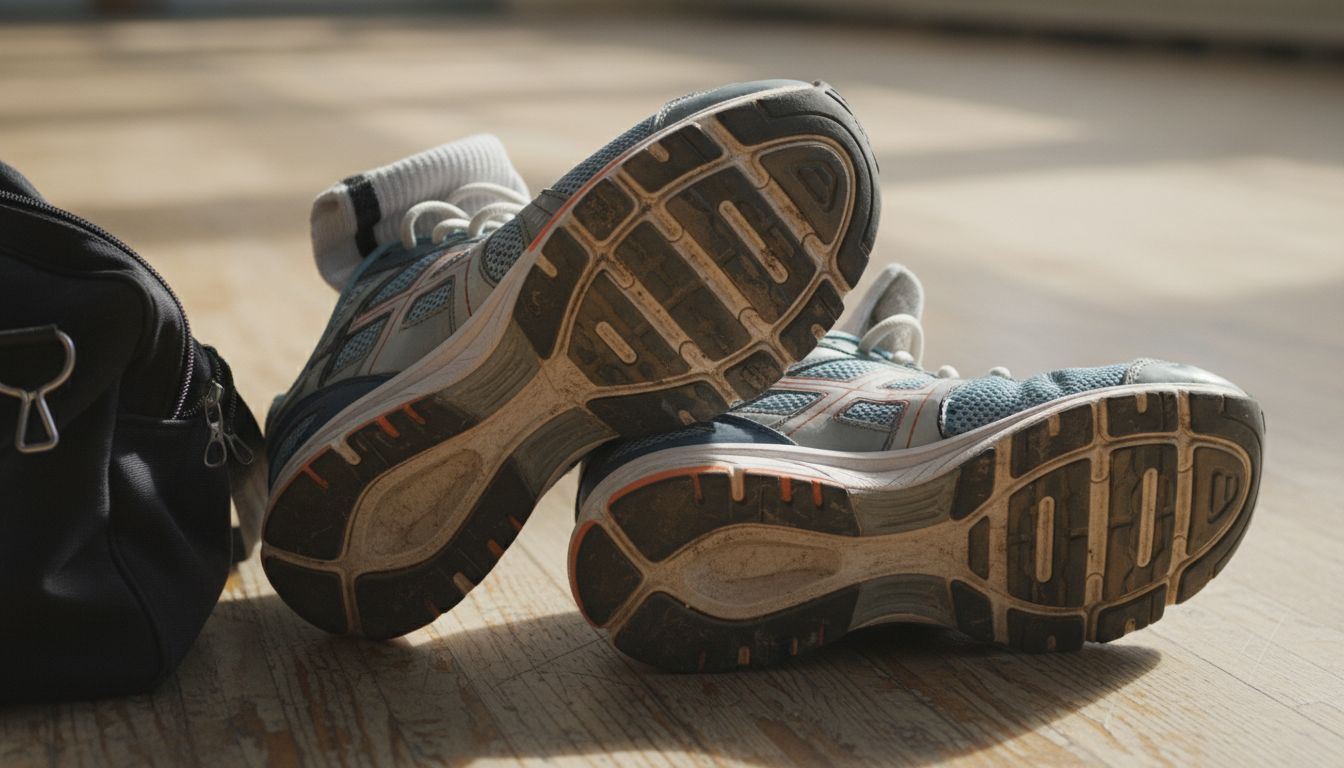
Pro tip: Examine wear patterns on old shoes before shopping. Heavy wear on the inner heel and medial forefoot confirms overpronation and helps staff recommend appropriate motion control levels. Bring worn shoes to fitting appointments for expert analysis.
Integrate motion control footwear into your lifestyle systematically. Use them for all weight bearing activities initially, then assess whether you need maximum support constantly or can alternate with less rigid options for light duty days. Some people require motion control only during exercise, while others need it for all day wear.
Using motion control footwear effectively means recognizing when support helps versus when it restricts unnecessarily. Your body provides feedback through comfort and performance changes.
Innovations and Future Trends in Motion Control Footwear
Motion control technology continues evolving, replacing traditional heavy, rigid constructions with advanced materials that maintain correction while improving comfort and aesthetics.
The industry is shifting toward more flexible yet supportive designs that accomplish pronation control through strategic material placement rather than overall stiffness. This approach recognizes that excessive rigidity limits natural foot function beyond what correction requires.
Current innovations shaping motion control footwear:
- Integrated medial posts using dual density midsole foam that transitions gradually from firm to soft rather than creating abrupt density changes that feel harsh underfoot
- Lightweight composite materials for heel counters providing structure without traditional plastic weight while maintaining rear foot stability
- Breathable engineered mesh uppers with strategic reinforcement zones that support without creating the boxy, athletic only appearance of older designs
- Responsive cushioning systems incorporating energy return properties within firmer midsole structures, balancing control with forward propulsion
- Fashion forward silhouettes that disguise biomechanical features within everyday casual and business appropriate styling
Footwear innovations 2025 reflect consumer demand for shoes that address foot health without announcing their corrective purpose through chunky, obviously orthopedic design.
Manufacturers increasingly recognize that people with overpronation want style options matching neutral shoe aesthetics. Modern motion control designs incorporate sleeker profiles, varied color choices, and contemporary materials that work in multiple settings from office to social occasions.
The goal centers on invisible correction: biomechanical support that functions effectively while looking like standard fashionable footwear. Advanced manufacturing techniques allow precise placement of support features only where needed, eliminating excess material that added weight and bulk in earlier generations.
Technology of YDA shoes exemplifies this integration approach, combining foot health engineering with everyday wearability through materials science advances and user centered design philosophy.
Future developments will likely emphasize customization, using 3D scanning and printing to create personalized medial posts matching individual arch geometry. Smart materials that adjust firmness based on activity level may provide variable support within single shoe designs.
Summary and Practical Takeaways
Motion control footwear provides essential biomechanical correction for individuals with severe overpronation through specialized design features including firm midsoles, medial posts, and reinforced heel counters.
Key insights to remember:
- Professional gait analysis identifies whether you need motion control, stability, or neutral shoes based on objective pronation assessment
- Proper fitting ensures medial posts align with your arch and heel counters stabilize without pinching
- Gradual adaptation over two weeks prevents discomfort as your body adjusts to corrective structure
- Regular replacement every 300 to 500 miles maintains injury prevention benefits as materials compress
- Modern designs successfully blend biomechanical function with style suitable for daily wear
Choosing appropriate motion control footwear starts with understanding your specific foot mechanics through professional evaluation. This foundation prevents the common mistake of selecting shoes based on appearance or marketing rather than biomechanical needs.
Implementing motion control shoes correctly reduces injury risk substantially while improving daily comfort and activity confidence. The 30% injury reduction documented in studies translates to fewer painful setbacks and more consistent participation in activities you enjoy.
Summary on footwear selection emphasizes that informed choices based on individual assessment produce better outcomes than following trends or recommendations designed for different foot types.
Your journey toward optimal foot health combines appropriate footwear selection with proper fitting, gradual adaptation, regular maintenance, and ongoing reassessment as your needs evolve over time.
Explore Advanced Motion Control Footwear at YDA UK
YDA UK offers a curated collection of motion control footwear that combines proven biomechanical support with contemporary design aesthetics. Each shoe integrates specialized features addressing overpronation while maintaining the style and comfort you need for daily activities.
Our footwear technology guide explains how advanced materials and engineering principles create shoes that protect your foot health without compromising on appearance. Detailed product descriptions help you understand which features match your specific pronation needs.
Explore options for daily wear comfort and style that integrate seamlessly into your lifestyle, from professional settings to weekend activities. YDA UK prioritizes the intersection of function and fashion, ensuring you never choose between foot health and personal style.
Discover how YDA UK support shoes deliver the specialized correction you need with the contemporary look you want, backed by customer service committed to your long term foot health and satisfaction.
FAQ
What is the difference between motion control and stability shoes?
Motion control shoes provide maximum support through rigid midsoles and prominent medial posts, designed specifically for severe overpronation and flat feet. Stability shoes offer moderate correction for mild to moderate pronation using lighter support features. Motion control options are heavier and less flexible, prioritizing correction over responsiveness, while stability shoes balance some support with greater natural movement. Choose based on injury prevention footwear assessment of your specific pronation severity.
How can I determine if I need motion control footwear?
Professional gait analysis at a specialty footwear store or podiatry clinic provides the most reliable assessment of your pronation pattern and support needs. Video analysis or pressure plate technology quantifies exactly how your foot moves during walking and running. Symptoms suggesting potential need include persistent arch pain, ankle instability, rapid inner sole wear, and discomfort that improves with firmer shoes. Consult our footwear selection guide for detailed evaluation steps.
Are motion control shoes suitable for casual daily wear and style?
Modern motion control footwear successfully integrates biomechanical support with fashion forward designs appropriate for various daily settings beyond athletic activities. Recent innovations use sleeker profiles, contemporary materials, and varied aesthetic options that disguise corrective features within stylish silhouettes. You can find stylish motion control shoes that provide necessary pronation control while matching your personal style preferences for work, social occasions, and casual wear.
How often should motion control shoes be replaced?
Replace motion control shoes every 300 to 500 miles or approximately every 4 to 6 months with regular daily use to maintain structural integrity and corrective benefits. Midsole compression and medial post breakdown occur before visible outer sole wear, reducing effectiveness even when shoes appear intact. Watch for signs including return of pronation related discomfort, visible medial post compression, worn inner heel edges, or decreased stability sensation. Timely replacement preserves the injury prevention advantages that make motion control shoe replacement essential for continued foot health.