
How to Pick Shoes for Flat Feet: A Step-by-Step Guide
Over half of all British adults experience some level of foot discomfort, with flat feet listed as a leading cause. For many, choosing the right footwear is more than a fashion decision, it impacts daily health and long-term mobility. Whether you are struggling with chronic aches or simply want to protect your feet, this step-by-step guide breaks down what matters when selecting shoes that truly support flat feet.
Table of Contents
- Step 1: Assess Your Foot Shape and Needs
- Step 2: Identify Supportive Shoe Features
- Step 3: Compare Suitable Styles and Brands
- Step 4: Test Comfort and Fit In-Person or Online
- Step 5: Verify Long-Term Comfort and Health Benefits
Quick Summary
| Key Point | Explanation |
|---|---|
| 1. Assess Your Foot Shape | Conduct a wet test to determine your arch type and evaluate if you have flat feet or mild arch depression. |
| 2. Identify Shoe Features | Look for shoes with firm arch support, deep heel cups, and wide toe boxes to provide necessary stability and comfort. |
| 3. Compare Styles and Brands | Choose footwear that offers motion control, advanced arch support, and avoid minimalist designs that lack structural support. |
| 4. Test for Comfort and Fit | Walk in-person or check online returns to ensure proper fit, focusing on arch support and overall comfort before purchasing. |
| 5. Verify Long-Term Comfort | Monitor your foot comfort over time and consult a podiatrist if needed to assess the effectiveness of your new shoes. |
Step 1: Assess Your Foot Shape and Needs
Understanding your unique foot structure is crucial when selecting shoes for flat feet. The first step involves a thorough assessment of your foot shape and biomechanical needs, which requires more than a casual glance in the mirror.
To begin, you’ll want to perform a simple wet test to determine your arch type. Stand on a flat surface with slightly damp feet and examine the footprint left behind. A comprehensive foot posture protocol reveals that flat feet typically show a complete imprint with minimal arch definition, indicating low or collapsed arches. This test helps you understand whether you have completely flat feet or a mild arch depression.
Careful assessment becomes even more critical if you carry additional weight. Research examining foot malalignments in individuals with higher body mass highlights how excess weight can dramatically impact foot structure and biomechanics. For those with obesity or significant weight, consulting a podiatrist might provide the most accurate evaluation of your specific foot shape and support requirements.
Pay attention to any discomfort or uneven wear patterns in your current footwear. Unusual shoe sole wear particularly on the inner edge can signal potential flat foot issues that require specialised footwear solutions. Your goal is to gather comprehensive information about your foot’s unique characteristics before making any purchasing decisions.
Step 2: Identify Supportive Shoe Features
Identifying the right shoe features is essential for managing flat feet and preventing potential discomfort or long-term foot problems. Your goal is to find footwear that provides maximum support and stability while accommodating your unique foot structure.

When searching for appropriate footwear, focus on specific characteristics that address flat foot challenges. Key footwear recommendations for flat feet emphasise several critical design elements. Look for shoes with firm arch supports that help distribute weight evenly and prevent excessive pronation. The sole should be rigid enough to provide structured support but flexible enough to allow natural foot movement. Pay special attention to shoes with deep heel cups that stabilise your foot and prevent unnecessary lateral movement.
Additionally, seek out shoes with wide toe boxes that allow your toes to spread naturally and accommodate potential orthotic inserts. The upper material should be breathable yet supportive, offering a snug fit without creating pressure points. Adjustable features like lace systems or straps can help you customise the fit, ensuring your foot remains secure and properly aligned throughout movement. When trying on shoes, walk around and assess how they feel remember that comfort and support are your primary considerations.
Step 3: Compare Suitable Styles and Brands
Comparing shoe styles and brands for flat feet requires a strategic approach that balances support, comfort, and individual biomechanical needs. Your mission is to find footwear that provides optimal stability while accommodating your unique foot structure.
Expert recommendations for selecting shoes with problematic foot conditions highlight critical considerations for individuals with flat feet. Running shoes and walking trainers with motion control features are particularly beneficial. For those with active lifestyles, specialised running shoes designed for flat foot support offer motion control and stability technologies that help distribute weight more evenly and reduce potential strain.
When comparing brands, prioritise those offering advanced arch support and biomechanical design. Look for shoes with firm midsoles, structured heel counters, and reinforced arch zones. Avoid completely flat designs or minimalist shoes that provide little structural support. Some brands specialise in orthotic friendly footwear with removable insoles that allow you to insert custom orthotics. Remember that shoe fit is personal test multiple styles and do not hesitate to seek professional fitting advice to ensure you find the most suitable option for your specific foot structure.
Step 4: Test Comfort and Fit In-Person or Online
Testing shoe comfort and fit is a critical step for individuals with flat feet, requiring careful evaluation of both physical sensations and technical support features. Your goal is to find footwear that feels comfortable while providing the necessary biomechanical assistance.
Comprehensive guidance for evaluating shoe fit suggests several key strategies for assessing footwear. When trying shoes in person, walk around the store and pay attention to arch support, heel stability, and overall cushioning. Online shoppers should look for detailed sizing charts, flexible return policies, and shoes with adjustable features like removable insoles or multiple width options.
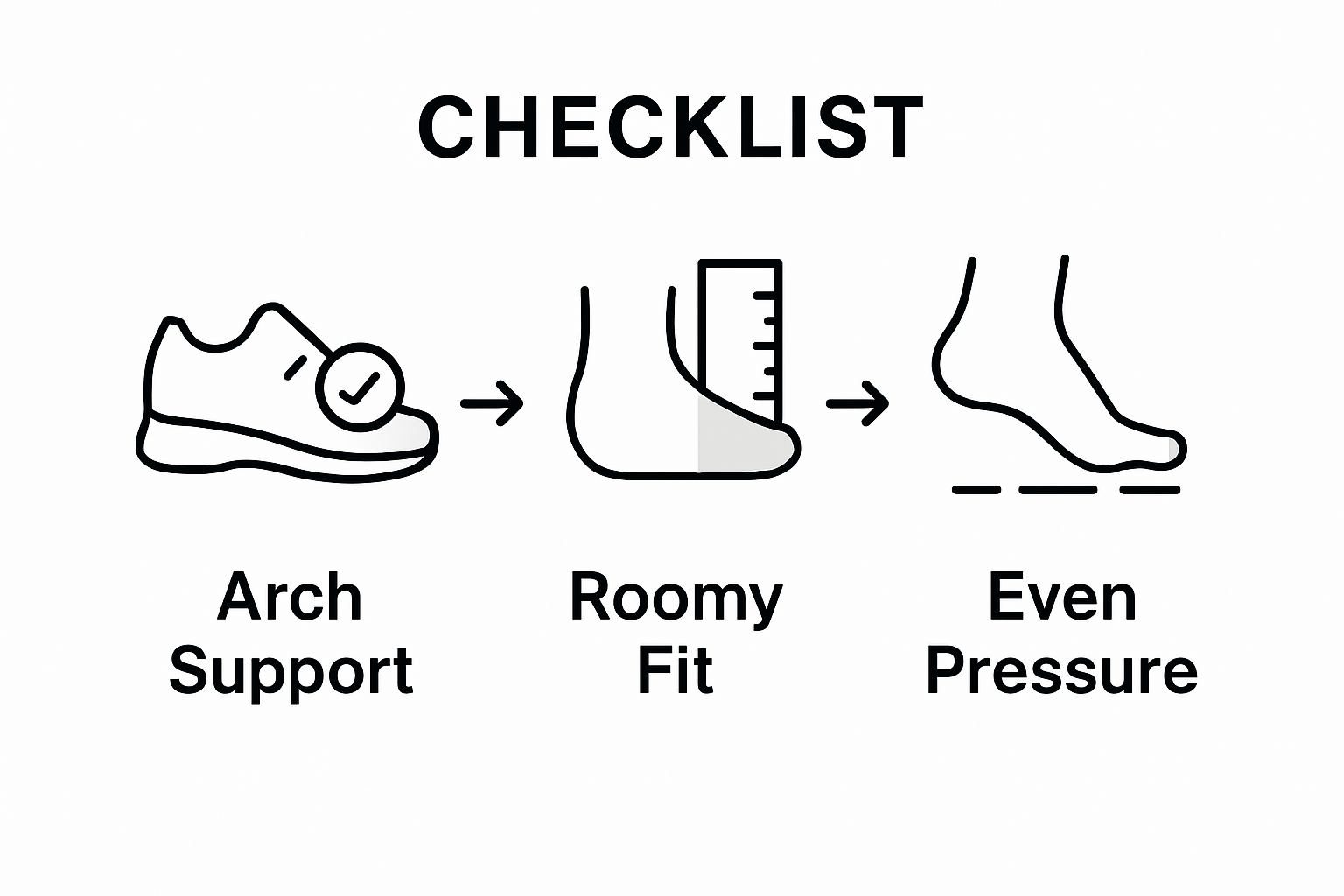
Remember that proper shoe fitting extends beyond basic measurements. Consider factors like your typical walking patterns, any existing foot pain, and the specific activities you plan to undertake. If possible, bring your current orthotics or insoles when shopping to ensure compatibility. Many specialty running and walking shoe stores offer professional fitting services that can provide detailed biomechanical assessments tailored to your unique foot structure. Do not compromise on comfort or support flattery or aesthetic appeal should always be secondary to functional design.
Step 5: Verify Long-Term Comfort and Health Benefits
Verifying the long-term comfort and health benefits of your chosen footwear is crucial for individuals with flat feet. Your objective is to ensure that the shoes not only feel good initially but provide sustained support and potentially improve your overall foot biomechanics.
Scientific research on arch-support interventions demonstrates significant improvements in foot function for individuals with flat feet. Monitor how your feet feel during different activities over several weeks. Pay attention to reduced fatigue, improved walking patterns, and any changes in foot pain or discomfort. Some individuals might benefit from advanced biomechanical solutions like customised arch supports that can provide targeted support for your specific foot structure.
Keep a journal tracking your foot comfort and any physical changes. Consider consulting a podiatrist for a professional assessment after wearing the shoes for a month. This will help you understand whether the shoes are genuinely improving your foot health or if further adjustments are necessary. Remember that finding the perfect shoe is an ongoing process and may require patience and multiple attempts to achieve optimal comfort and support.
Discover Your Perfect Supportive Shoe for Flat Feet Today
Struggling to find shoes that truly support your flat feet without sacrificing style or comfort is a challenge many face. This guide highlights the importance of arch support, stability, and custom fit, all critical to easing discomfort and improving foot health. At YDA UK, we understand these specific needs and offer a curated collection of footwear designed with advanced foot health technology to provide the support your feet deserve.
Explore our range now and experience shoes that combine comfort, innovative YDA Technology, and sleek design. Don’t wait until foot pain affects your daily life take the step to healthier feet with YDA UK’s supportive footwear. Visit us today and find the perfect pair tailored just for you.
Frequently Asked Questions
How can I assess my foot shape for flat feet?
To assess your foot shape, perform the wet test by standing on a flat surface with slightly damp feet and examining the footprint left behind. Look for a complete imprint with minimal arch definition, which indicates low or collapsed arches.
What features should I look for in shoes for flat feet?
When selecting shoes for flat feet, focus on features such as firm arch supports, rigid yet flexible soles, and deep heel cups for stability. Ensure the shoes have wide toe boxes to accommodate your toes and provide adjustable features for a customised fit.
How do I compare different shoe styles for flat feet?
To compare shoe styles, prioritise footwear that offers motion control and stability, especially in running or walking shoes. Test multiple brands that specialise in supporting flat feet to find the best combination of comfort and structural support.
What should I consider when testing shoe comfort and fit?
When testing shoes, walk around and pay attention to arch support, heel stability, and cushioning. Bring any orthotics you use for compatibility and remember that comfort should always take precedence over aesthetics.
How can I verify the long-term comfort of my new shoes?
Monitor how your feet feel over the next few weeks while wearing the shoes. Keep track of any changes in comfort or foot pain, and consider consulting a podiatrist after about a month to evaluate if the shoes are beneficial for your foot health.
What should I do if my new shoes cause discomfort?
If your new shoes cause discomfort, it’s essential to reassess their fit and features. Consider trying different styles or seeking professional fitting advice to help identify the right shoe for your specific needs.
Recommended
- How to Buy Shoes for Foot Pain: A Step-by-Step Guide – YDA UK
- 7 Best Shoes for Problem Feet and How to Choose Them – YDA UK
- How to Shop for Foot Health: A Step-by-Step Guide – YDA UK
- 7 Must-Have Shoes for Foot Problems: Essential Guide – YDA UK
- Come Scegliere lo Stepper Perfetto: Guida Completa 2025