
Understanding arch support: improve foot health and comfort
TL;DR:
- Proper arch support maintains foot structure, reduces pain, and supports overall body alignment.
- Different arch types require specific support types for effective foot health.
- Combining correct support with foot strengthening exercises offers the best long-term benefit.
Foot pain is not an inevitable part of life, yet a significant proportion of adults accept daily discomfort as normal, often because the root cause goes unaddressed. Poor arch support is one of the most overlooked contributors to pain in the feet, knees, hips, and lower back. Most people have never been told how many arches the foot actually has, let alone how each one affects their gait and posture. This article clarifies the anatomy behind arch support, walks through different arch types and their specific needs, and gives you practical tools to make genuinely better footwear decisions.
Table of Contents
- What is arch support and why does it matter?
- Types of foot arches and their support needs
- Choosing the right arch support: methods and materials
- Evidence: How arch support improves foot comfort and health
- Orthotics vs minimalist footwear: Pros and cons
- What most guides miss: The critical balance in arch support
- Find your ideal arch-support solution with YDA UK
- Frequently asked questions
Key Takeaways
| Point | Details |
|---|---|
| Arch support defined | Arch support maintains the natural curve of your foot, reducing pain and fatigue. |
| Know your arch type | Each foot arch type needs a specific kind of support for maximum comfort and health. |
| Custom vs OTC solutions | Custom orthotics offer precise support; OTC insoles can suit everyday needs but are less specialised. |
| Evidence-backed benefits | Proper arch support lowers displacement, stress, and injury risks in both clinical and real-world scenarios. |
| Balance support and muscle strength | Pair arch support with exercises to prevent muscle weakening and dependency. |
What is arch support and why does it matter?
The term “arch support” gets used frequently in footwear marketing, but its meaning is often blurred. At its most precise, arch support refers to devices designed to maintain the natural curve of the foot’s arches, distributing pressure evenly during weight-bearing activities to prevent collapse, strain, and related pain. That includes everything from a specialised insole to a structurally reinforced midsole built directly into a shoe.
The foot is remarkably complex. According to human foot anatomy research, the foot contains three distinct arches: the medial longitudinal arch (the tall inner curve most people picture), the lateral longitudinal arch (a shallower curve along the outer edge), and the transverse arch (which runs across the width of the forefoot). All three are formed by a combination of tarsal and metatarsal bones, held in place by ligaments, muscles, and tendons that work together under constant load.
When any of these arches loses proper support, the consequences ripple upward. Collapsed arches alter your gait mechanics, increasing stress on the ankle, knee, and hip joints. There is a direct relationship between footwear and posture, meaning the shoes you wear daily have a measurable effect on how your entire musculoskeletal system is aligned.
Key reasons arch support matters include:
- Pain prevention: Even minor arch collapse increases plantar fascia tension, leading to heel pain and inflammation.
- Pressure distribution: Proper support spreads load evenly across the foot, reducing hot spots under the ball or heel.
- Fatigue reduction: Supported arches allow muscles and tendons to work more efficiently, reducing end-of-day fatigue.
- Joint protection: Corrected foot alignment decreases abnormal rotational forces on the knee and hip.
“Most arch-related discomfort develops gradually. By the time pain becomes noticeable, the underlying mechanical imbalance has often been present for months.”
Ignoring arch support does not simply risk temporary soreness. Over time, it contributes to chronic conditions including plantar fasciitis, Achilles tendinopathy, metatarsalgia, and stress fractures.
Types of foot arches and their support needs
Understanding your specific arch type is the single most important step in choosing effective support. It is not enough to buy “arch support” generically; the wrong type can actually worsen your condition.

| Arch type | Characteristics | Common issues | Recommended support |
|---|---|---|---|
| High arch (cavus foot) | Rigid, pronounced medial curve | Supination, lateral ankle stress, claw toes | Cushioned, flexible insole |
| Normal arch | Moderate curve, balanced contact | Occasional fatigue if unsupported | Moderate support, standard insole |
| Flat arch (pes planus) | Little to no visible curve | Overpronation, knee pain, shin splints | Structured, rigid or semi-rigid insole |
| Transverse arch issues | Spreading forefoot | Ball-of-foot pain, Morton’s neuroma risk | Metatarsal pad or forefoot bar |
For flat feet, the priority is structure. A rigid or semi-rigid insole prevents the arch from collapsing inward with each step, reducing overpronation. Overpronation is the inward rolling of the foot that places excessive stress on the knee and lower leg. You can find detailed guidance on choosing shoes for flat feet to understand which shoe features best address this specific pattern.
High arches present the opposite challenge. Because the arch is already elevated and rigid, it does not absorb shock well. Cushioned, flexible support is needed to compensate for the foot’s reduced natural shock absorption. Forcing a rigid insole into a high-arched foot can increase lateral pressure and worsen pain.

The transverse arch is often overlooked entirely. When it drops, the forefoot spreads and the metatarsal heads bear excessive load, causing burning or numbness under the ball of the foot.
Here is a simple process to identify your arch type at home:
- Wet the sole of your foot thoroughly.
- Step onto a piece of cardboard or dark paper.
- Step off and examine the imprint.
- A narrow band connecting heel to forefoot suggests a high arch; a full, wide imprint indicates flat feet; a moderate band reflects a normal arch.
- Compare both feet, as asymmetry between left and right is common and clinically significant.
Pro Tip: The wet test is a useful starting point, but expert guidance consistently recommends a professional gait analysis over self-assessment, particularly if you are experiencing pain. A podiatrist can identify subtleties the wet test misses, such as dynamic pronation that only appears when walking. If you are unsure where to start, finding the right shoes is a practical first step before committing to a support solution.
Choosing the right arch support: methods and materials
Once you know your arch type, the next decision is which category of support best fits your situation. There are three primary options, each with distinct advantages and limitations.
Over-the-counter (OTC) insoles are the most accessible starting point. OTC insoles made from EVA foam or polypropylene offer a range of stiffness levels, from soft cushioning for sensitive high arches to firmer, structured options for flat feet. They are widely available, relatively affordable, and can be moved between shoes. The limitation is that they are built around averaged foot shapes, not your specific biomechanics.
Custom orthotics are prescribed and manufactured based on a precise scan or cast of your foot. They address individual biomechanical patterns with accuracy that OTC options cannot match. They are typically recommended for moderate to severe conditions, following a clinical assessment.
Built-in shoe features are an underappreciated option. Some performance footwear integrates structured midsoles, arch bridges, and heel cups directly into the shoe’s construction. This approach is increasingly refined, particularly in health-focused footwear brands where foot-friendly shoe features are designed into the shoe from the ground up rather than added as an afterthought.
| Option | Cost | Precision | Best suited for |
|---|---|---|---|
| OTC insoles | Low to moderate | Generalised | Mild to moderate issues, everyday use |
| Custom orthotics | High | Individual | Severe conditions, clinical diagnosis |
| Built-in shoe features | Moderate | Moderate | Everyday comfort, preventative care |
Key material considerations:
- EVA foam: Lightweight and cushioning, best for shock absorption in high-arched or sensitive feet. Compresses over time.
- Polypropylene: Rigid to semi-rigid, excellent for controlling overpronation in flat feet. Less comfortable on hard surfaces without a cushioning top layer.
- Carbon fibre: Found in high-performance orthotics, extremely stiff, used for severe biomechanical control.
- Gel inserts: Provide targeted cushioning but little structural support; useful as a supplement, not a primary solution.
Pro Tip: If you are trying OTC insoles for the first time, start with a semi-rigid option rather than going straight to maximum rigidity or maximum softness. Allow two weeks of gradual wear before assessing the result. Explore foot health shoe examples to see how built-in support compares to added insoles in real footwear contexts.
Evidence: How arch support improves foot comfort and health
The clinical and biomechanical evidence supporting arch support is substantial. It moves well beyond anecdote.
Research modelling using finite element analysis (FEA, a method that simulates mechanical stress in body tissues) shows that stiffer insoles reduce foot displacement by 48%, plantar stress by 47.5%, and tissue stresses throughout the foot by 20 to 30%. Studies on flatfoot specifically found that dual-arch orthoses (supporting both the medial longitudinal and transverse arches) significantly improved navicular height and reduced abnormal joint range of motion, with results reaching statistical significance at p<0.001.
Additional findings from biomechanical insole research indicate that an insole stiffness threshold of approximately 3,000 MPa optimises stress reduction without causing discomfort from excessive rigidity. Below this threshold, the insole is too soft to provide meaningful correction. Above it, pressure can become concentrated rather than distributed. This is why material selection matters enormously, and why matching stiffness to arch type is not just a preference but a clinical consideration.
Key findings at a glance:
- 48% reduction in foot displacement with structured insoles
- 47.5% reduction in plantar tissue stress
- 20 to 30% reduction in overall tissue stresses in FEA models
- Significant improvements in navicular height in flatfoot studies
Body composition also plays a role. Research shows that higher fat mass is associated with reduced arch elasticity, with the arch elasticity index (AEI) dropping by as many as 62 points in higher-mass individuals. This means that support needs are not static and may change with body composition over time.
The practical takeaway: support is not just about comfort in the short term. It directly reduces the mechanical stress that causes long-term tissue damage. If you are looking to increase foot support systematically, understanding this evidence helps you invest in the right solution rather than cycling through ineffective products. Proper support also plays a key role in efforts to prevent foot injuries, particularly in active or high-demand daily environments. For those managing existing conditions, reviewing shoes for problem feet alongside clinical advice is a sensible approach.
Orthotics vs minimalist footwear: Pros and cons
The debate between traditional arch support and minimalist or barefoot footwear is genuinely complex, and oversimplified takes on either side do a disservice to people trying to make informed decisions.
Traditional orthotics have strong clinical backing. Studies show traditional orthotics reduce diabetic ulceration risk by approximately 50%, correct alignment, and reduce acute pain effectively. For people with structural foot problems, neurological conditions, or diabetes-related foot complications, orthotics are often essential rather than optional.
The critique of orthotics comes from a different angle. When the foot is continuously supported, the intrinsic muscles responsible for maintaining the arch are not required to work as hard. Over years, this can lead to a gradual reduction in muscular strength and arch resilience. Populations that habitually go unshod tend to demonstrate stronger arches and better intrinsic foot muscle development. This is not a fringe observation; it is documented in anthropological and biomechanical literature.
Here is a balanced approach to navigating this debate:
- If you have an acute condition or diagnosed structural problem, use appropriate support and seek clinical guidance.
- Introduce foot strengthening exercises alongside any support regimen. Short-foot exercises (where you scrunch the foot to shorten its length without curling the toes) are highly effective and require no equipment.
- If you wish to transition towards minimalist footwear, do so gradually. Reduce daily wearing time of structured shoes by no more than 10 to 15 minutes per week.
- Never switch abruptly to minimalist footwear, particularly if you have a history of plantar fasciitis or Achilles problems.
- Monitor carefully and return to support if pain or fatigue increases significantly during a transition period.
“Minimalist footwear can build strength, but the transition requires patience measured in months, not weeks. Rushing it is one of the most common causes of stress fractures in the foot.”
Learning to improve foot health naturally does not require abandoning all support. It means using support strategically rather than unconditionally.
What most guides miss: The critical balance in arch support
Most articles on this topic land in one of two camps. Either they advocate strongly for orthotics and structured support, or they champion barefoot strengthening as the ultimate solution. The reality is more nuanced, and the nuance matters particularly for people managing chronic foot conditions.
Medical arch support guidance is clear that support type must match foot type precisely. A flat foot needs structure; a high arch needs cushion. Getting this wrong does not just fail to help; it actively worsens the mechanical imbalance already present. Yet many people select insoles based on price or general marketing claims rather than their actual biomechanical needs.
There is also a dependency issue that is rarely discussed. If you wear rigid orthotics in every shoe, every day, and never perform any intrinsic strengthening work, your foot gradually offloads its muscular effort onto the device. Over time, the support becomes load-bearing in a way that limits your foot’s own capacity. This does not mean orthotics are harmful. It means they work best as part of a strategy, not as the entire strategy. Strategies for lasting comfort always involve both the right footwear and an active approach to foot conditioning.
We also think about the broader picture: every foot is part of a kinetic chain that extends through the ankle, knee, hip, and spine. Understanding the impact of shoes on joint health helps explain why arch support decisions are never purely about the foot in isolation. Getting your arch support right is genuinely a whole-body investment.
The most effective approach we have seen is this: begin with a proper assessment, match support to your actual arch type and activity level, pair it with consistent strengthening exercises, and revisit your setup every twelve to eighteen months as your feet and lifestyle evolve.
Find your ideal arch-support solution with YDA UK
Making sense of arch support is the first step. Finding footwear that actually delivers on it is the next. At YDA UK, we have built our range around the principle that everyday shoes should do more than look good.
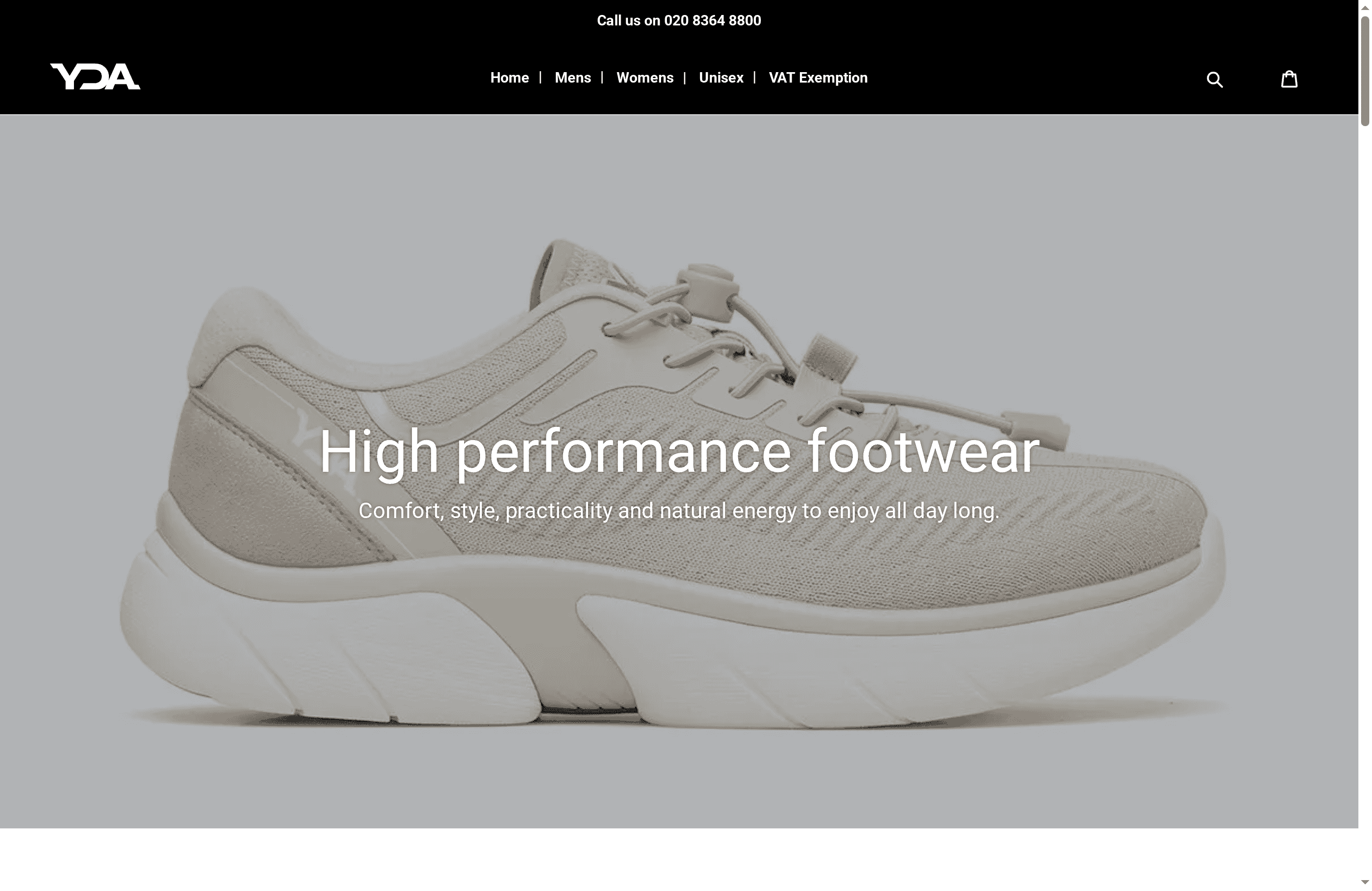
Our footwear is designed with built-in structural support that accounts for different arch needs, integrating the kind of YDA shoe technology that translates clinical insight into practical daily comfort. Whether you are managing flat feet, high arches, or forefoot discomfort, you will find footwear engineered to support your specific needs rather than a generic average. Browse the full range of health-focused shoes and discover how purposeful design can change the way your feet feel by the end of the day.
Frequently asked questions
What is the difference between arch support and regular insoles?
Arch support insoles are specifically designed to maintain the natural curve and alignment of your foot’s arches, distributing pressure evenly to prevent collapse and strain. Regular insoles typically provide only basic cushioning with no structural correction.
How can I tell if I need extra arch support?
Persistent foot pain, arch fatigue, or visible flattening of the foot during standing are common indicators. A professional gait analysis is recommended over self-assessment for an accurate diagnosis, particularly for moderate or severe discomfort.
Is it true that arch support can weaken foot muscles?
Some experts do flag this concern. Long-term reliance on orthotics can reduce the demand on intrinsic foot muscles, so pairing support with targeted strengthening exercises is advisable to maintain muscular resilience.
What materials are best for arch support?
EVA foam and polypropylene are the most widely used materials, offering a range from soft cushioning to rigid control. Higher stiffness materials suit severe overpronation, while softer materials are better for high-arched or sensitive feet.
Can arch support help with knee, hip, or back pain?
Yes. Because the foot’s three arches influence the alignment of the entire lower limb, correcting arch mechanics can reduce abnormal rotational forces on the knee, hip, and lower back, often easing pain well above the foot itself.
Recommended
- How to improve foot support for lasting comfort – YDA UK
- How to Maintain Foot Comfort Naturally for Healthy Feet – YDA UK
- Why Invest in Foot Support – Comfort and Health Benefits – YDA UK
- How to Improve Foot Health 2025 with Modern Footwear – YDA UK
- i migliori prodotti per il tuo Comfort del Piede
- Thrival Arch Attachments