
Understand overpronation and find the right supportive shoes
TL;DR:
- Overpronation involves excessive inward foot rolling during gait, causing misalignment and widespread discomfort. Proper footwear with strong arch support and targeted exercises can effectively correct this mechanical issue and prevent related injuries. Addressing overpronation early improves overall body mechanics and reduces long-term pain in the feet, knees, hips, and lower back.
Foot pain is one of those problems that people tend to dismiss until it becomes impossible to ignore. Many assume the culprit is flat feet, but the reality is more nuanced. Overpronation is a subtle mechanical issue affecting the way your foot rolls during every single step, and it can quietly cause pain from your heel all the way up to your lower back. Understanding what is actually happening in your gait is the first step towards genuine, lasting relief, and the good news is that the right footwear can make a striking difference without any need for surgery or lengthy treatments.
Table of Contents
- What is overpronation and how does it affect your feet?
- Common causes and risk factors for overpronation
- Health impacts: Conditions linked to overpronation
- Diagnosing and measuring overpronation
- Best ways to manage and prevent overpronation discomfort
- A fresh perspective on overpronation: It is not just about your feet
- Support your feet and move with comfort
- Frequently asked questions
Key Takeaways
| Point | Details |
|---|---|
| Overpronation defined | Overpronation is an excessive inward roll of the foot that can lead to discomfort and injury if left unsupported. |
| Multiple risk factors | Foot structure, muscle weakness, weight, and footwear all influence your likelihood of developing overpronation. |
| Wider health effects | It is linked to plantar fasciitis, tendonitis, knee pain, and can impact overall mobility. |
| Diagnosis and solutions | Overpronation can be measured by gait analysis or at-home checks and is best managed with supportive footwear and targeted exercises. |
| Everyday comfort matters | Small changes in shoe choices or support features can make daily life more comfortable and reduce pain. |
What is overpronation and how does it affect your feet?
Pronation is simply the natural inward roll of the foot as it absorbs the impact of each step. It is a healthy, necessary motion. When your heel strikes the ground, your foot rolls inward by roughly 15 degrees, spreading the force of impact across the arch and preparing your foot to push off again. Problems begin when this rolling goes too far.
Overpronation is excessive inward rolling of the foot during gait, beyond the normal 15 degrees, causing the arch to collapse and the ankle to roll inward excessively. The arch flattens more than it should, the ankle tilts, and the knee, hip, and lower back are all forced to compensate for that misalignment. Over time, these compensations cause wear and fatigue throughout the entire body, not just the foot.
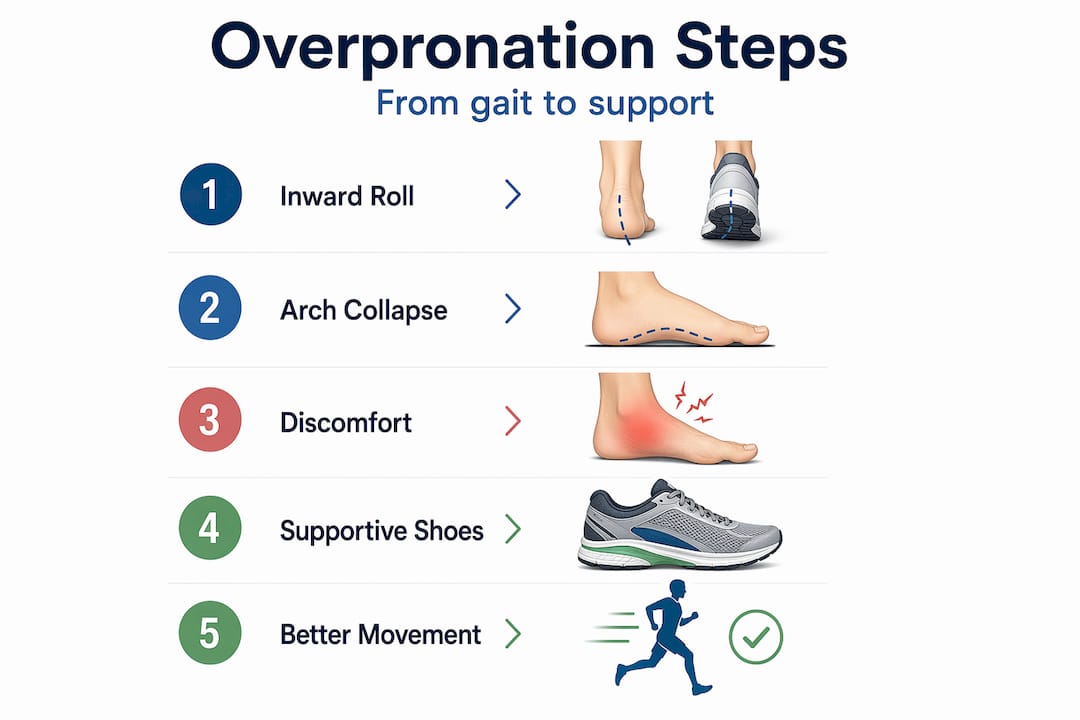
Normal pronation involves about 15 degrees of inward roll for shock absorption. Overpronation prolongs this motion, reducing the foot’s ability to supinate (roll back outward) correctly, and causing instability up the kinetic chain. Think of it like a door hinge that swings too far. The door stays open when it should close, and everything connected to that frame starts to strain.
For those who spend long hours on their feet, whether at work, on a commute, or simply going about daily routines, the cumulative effect of this faulty motion is significant. Understanding arch support is crucial here because without proper structural help, the foot simply cannot self-correct during repetitive daily movement.
| Measurement | Normal pronation | Overpronation |
|---|---|---|
| Inward roll angle | Up to 15 degrees | Greater than 15 degrees |
| Arch collapse | Minimal | Moderate to severe |
| Supination recovery | Prompt and efficient | Delayed or incomplete |
| Body chain impact | Localised, manageable | Ankle, knee, hip, back |
“Overpronation does not just affect athletes. Anyone who walks, stands, or carries weight regularly can experience its effects, regardless of activity level.”
New excessive pronation data from Frontiers in Sports research continues to refine how clinicians identify the threshold where normal gait becomes a problem worth treating.
Common causes and risk factors for overpronation
Once you grasp what overpronation is, it is helpful to know why it is happening to you or those around you. The condition rarely has a single cause. More often, it is a combination of structural, lifestyle, and environmental factors.
Primary causes include flat feet or low arches, weak hip and ankle muscles, ligament laxity, obesity, pregnancy, improper footwear, and genetics. Each of these can independently push the foot towards excessive inward rolling, but when several are present together, the effect is amplified considerably.
Here is a breakdown of the most common contributing factors:
- Flat feet or low arches: The arch acts as a natural shock absorber. When it is structurally low or absent, the foot naturally rolls inward more during loading.
- Weak hip and ankle muscles: These muscles stabilise the lower limb during movement. When they are weak, the ankle cannot resist the inward force of each footfall.
- Ligament laxity: Loose ligaments throughout the foot and ankle allow more movement than the joints can safely handle, making overpronation more likely.
- Excess body weight: Extra weight increases the compressive force on the arch with every step, encouraging collapse and inward roll.
- Pregnancy: Hormonal changes during pregnancy loosen ligaments throughout the body, including those in the feet, often leading to new or worsening overpronation.
- Poor footwear choices: Shoes without proper arch support or a firm heel cup do nothing to counteract inward rolling and may actively worsen the problem.
- Genetics: If a close relative has flat feet or overpronation, your risk is statistically higher, although lifestyle factors still play a large role.
What is encouraging here is that several of these factors are modifiable. You cannot change your genetics, but you can address muscle weakness, choose better shoes, and manage your weight. Even addressing just one factor can produce a noticeable improvement in daily comfort. Knowing which best shoes for problem feet suit your specific situation is often the most accessible and immediate intervention available.
Pro Tip: Start with footwear. It is the single easiest change to make, and it can produce results within days rather than months. A shoe with genuine medial support and a structured heel cup can reduce the strain that overpronation places on your entire lower limb.
Health impacts: Conditions linked to overpronation
Understanding the causes leads us to ask what actually happens when overpronation is not addressed. The answer is a cascade of connected problems that spread upward through the body over time.
Associated conditions include plantar fasciitis, Achilles tendonitis, shin splints, knee pain, and back pain, all arising from the uneven stress that overpronation places on connected structures. Each of these conditions can significantly restrict daily movement and quality of life.
The most common conditions seen in people with overpronation are:
- Plantar fasciitis: The plantar fascia, a thick band of tissue running along the bottom of the foot, becomes inflamed when subjected to the repeated stretching caused by arch collapse. Morning heel pain is the classic symptom.
- Achilles tendonitis: The Achilles tendon compensates for poor ankle alignment, leading to chronic inflammation and tightness at the back of the heel.
- Shin splints: Excessive inward rolling increases rotational stress on the tibia (shin bone), causing the muscle attachments along the shin to become inflamed and painful.
- Knee pain: The inward roll of the ankle causes the knee to track inward rather than straight, placing uneven pressure on the joint and increasing the risk of patellofemoral pain syndrome.
- Lower back pain: When the pelvis tilts to compensate for misaligned ankles and knees, the lumbar spine (lower back) takes on asymmetrical load, contributing to chronic aching.
Over 10 million GP visits per year in the UK are related to musculoskeletal conditions, and a significant proportion of these involve lower limb pain that can be traced, at least partly, to biomechanical issues like overpronation. Choosing appropriate plantar fasciitis footwear is not a luxury for those experiencing these symptoms. It is a practical health decision.
“Pain in the knees or back is rarely just about the knees or back. The foundation matters. What your feet do in every step shapes what every joint above them experiences.”
Diagnosing and measuring overpronation
If you are experiencing symptoms, you might wonder how overpronation can actually be confirmed or measured. There are useful steps you can take at home, and there are also clinical assessments that offer more precise insight.
Here is how to check for signs at home:
- Look at your old shoes. Excessive wear on the inner edge of the heel and forefoot is a reliable sign of inward rolling.
- Do the wet foot test. Wet your foot and step onto a piece of paper or a flat surface. If you see almost the entire sole printed (little or no arch curve), flat feet and overpronation are likely.
- Stand and observe your ankles. If your ankles visibly lean inward when you stand normally, that is a classic sign of excessive pronation.
- Watch your knees. Knees that point slightly inward when you stand or walk are often linked to overpronation below.
- Consider your pain pattern. Recurring inner heel pain, Achilles tightness, or shin soreness after walking are all worth investigating further.
For clinical confirmation, a podiatrist or physiotherapist will use dynamic gait analysis, often involving video or pressure plate assessment. Quantitative benchmarks from recent research identify excessive pronation at maximum rearfoot eversion of 16.9 degrees, excursion of 25.8 degrees, eversion velocity of 849 degrees per second, and a duration of 0.273 seconds. These thresholds help clinicians decide when intervention is genuinely warranted.
| Assessment method | Setting | What it measures |
|---|---|---|
| Shoe wear pattern | Home | Direction and degree of wear |
| Wet foot test | Home | Arch shape and contact area |
| Static foot posture | Clinical | Rearfoot angle, arch height |
| Dynamic gait analysis | Clinical | Eversion angle, velocity, duration |
| Pressure plate scanning | Clinical | Force distribution across the sole |
Research supporting dynamic gait assessment as the gold standard for diagnosing overpronation confirms what many podiatrists already know: static observation alone misses a great deal. What your foot does when standing still often tells a different story from what happens the moment you start moving.
When assessing your situation, paying attention to the features of healthy shoes can help you understand what your footwear should be doing structurally and what gaps your current pair may have.
Best ways to manage and prevent overpronation discomfort
Now that you know how to spot overpronation, the focus shifts to what you can do about it, particularly through smart footwear choices and simple home management strategies.
Effective treatments include shoes with arch support, a deep heel cup, medial posting or orthotics to limit inward roll, and targeted strengthening exercises. The good news is that most of these solutions are accessible, affordable, and effective when applied consistently.
Here are the key footwear features to seek out:
- Firm medial post: This is a denser material on the inner side of the midsole that physically resists inward rolling.
- Deep heel cup: Cups the heel in place, limiting the degree to which the ankle can tilt during weight-bearing.
- Structured arch support: Prevents the arch from collapsing under load, maintaining proper foot alignment throughout the gait cycle.
- Rigid heel counter: The firm backing at the rear of the shoe that provides rearfoot stability.
- Wider base: A broader outsole adds lateral stability, reducing the likelihood of the ankle rolling inward.
| Feature | What it does | Good for overpronation? |
|---|---|---|
| Medial post | Resists inward midsole compression | Yes, strongly recommended |
| Deep heel cup | Stabilises rearfoot alignment | Yes, essential |
| Cushioned neutral midsole | Absorbs impact but no correction | Limited value alone |
| Flexible flat sole | Allows full range of motion | No, may worsen rolling |
| Custom orthotic | Tailored arch and rearfoot control | Yes, highly effective |
Alongside good footwear, home exercises play an important supporting role. Strengthening the hip abductors, calf muscles, and intrinsic foot muscles (those small muscles within the foot itself) can improve the dynamic stability that prevents excessive rolling. Calf stretches, single-leg calf raises, and resistance band ankle exercises are all straightforward additions to a daily routine.
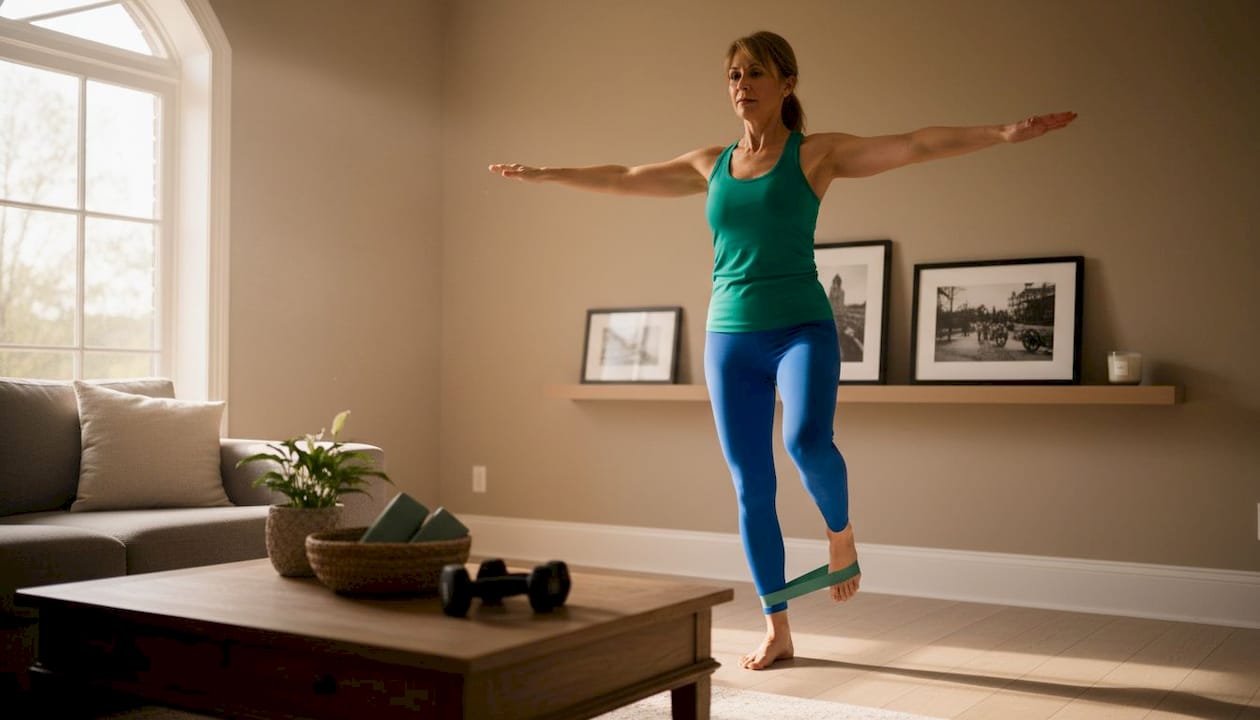
Pro Tip: You do not have to overhaul everything at once. Start by replacing your everyday shoes with a pair designed for stability running shoes or structured daily wear, and reassess your symptoms after two to three weeks. Most people notice a tangible reduction in foot fatigue and discomfort without any other changes.
The benefits of supportive footwear extend well beyond mere comfort. Proper structural support reduces the compensatory strain on your knees, hips, and lower back, making every hour on your feet less taxing. Understanding the foot-friendly shoe features that matter most means you can make informed decisions rather than relying on marketing claims alone.
A fresh perspective on overpronation: It is not just about your feet
Here is something most articles on this topic do not tell you. The reason so many people never resolve their overpronation-related pain is not that they failed to find the right treatment. It is that they kept thinking of it purely as a foot problem.
Overpronation is a whole-body mechanical event. Every single step you take with excessive inward rolling sends a ripple of compensatory force through your ankle, your knee, your hip, and your spine. When you only address the foot, you are treating the starting point of a chain reaction while ignoring everything downstream. The knee that aches, the hip that tightens, the lower back that flares up on long days: these are often symptoms of a problem that began at ground level but was never properly supported there.
We have seen this pattern repeatedly in the feedback from people who finally find footwear that genuinely works. The relief is not just in the foot. It is everywhere. People describe feeling less tired after a full day’s work, sleeping better because their back is no longer aching, and walking longer distances without building dread about the pain that usually follows.
There is also a tendency to think that overpronation only matters if your case is severe. That is simply not true. Mild, persistent overpronation over years creates wear patterns in joints and tendons that accumulate silently. You may not feel it dramatically until you are in your forties or fifties, by which point the structural consequences are well established.
Our honest advice? Do not wait for the pain to become dramatic before taking action. Small adjustments in footwear, small additions like targeted exercises, and a willingness to experiment with support levels make a genuine difference. The orthotic-friendly footwear benefits that come from wearing properly designed shoes are not reserved for elite athletes or people with severe deformities. They are available to anyone willing to take their daily comfort seriously.
Support your feet and move with comfort
Taking the principles from this guide and applying them to your footwear choices is far easier than it might sound, and the difference to your daily comfort can be remarkable.
At YDA, we have built our footwear around precisely the kind of structural support that overpronation demands. Our YDA shoe technology addresses the mechanics of each footfall, providing the arch support, heel stability, and energy return that help your foot move correctly rather than compensating for misalignment. If you are ready to experience footwear designed with real foot health in mind, explore our full range at YDA and discover what genuine support feels like from the first step.
Frequently asked questions
How do I know if I have overpronation?
Common signs include feet rolling noticeably inward when standing or walking, worn inner edges on shoe soles, or recurring pain in the heel, knee, or lower back. Excessive inward rolling beyond the normal 15 degrees is the defining characteristic, and a podiatrist can confirm this through gait analysis.
Can overpronation be corrected with exercises?
Targeted exercises for the hip abductors, calves, and intrinsic foot muscles can improve stability and help reduce overpronation’s effects over time. Strengthening exercises are most effective when combined with appropriate footwear rather than used as a standalone solution.
Do special shoes actually help overpronation?
Yes, substantially. Shoes featuring arch support and heel cups along with orthotics actively limit excessive inward rolling and distribute load more evenly, reducing strain on the ankle, knee, and back.
What happens if overpronation is left untreated?
Untreated overpronation tends to produce a progressive pattern of discomfort, starting with foot fatigue and eventually contributing to plantar fasciitis, shin splints, and chronic knee or back pain. The longer it goes unaddressed, the more opportunity it has to cause lasting structural strain.