
Essential features in healthy shoes for comfort and performance
TL;DR:
- Shoes should have proper cushioning, stability, breathability, and internal geometry based on scientific criteria.
- Effective arch support and customizable insoles are essential for foot health and reducing fatigue.
- Fit, internal volume, and adaptability are crucial for comfort and accommodating orthotics or foot conditions.
Finding a shoe that looks good, feels genuinely comfortable, and actually supports your foot health is harder than it sounds. The market is flooded with footwear that promises clinical benefits but delivers little beyond a plush first impression. Recent advances in biomechanics research and materials science have changed what we know about healthy footwear, and this guide cuts through the noise. Whether you live with flat feet, plantar fasciitis, or simply spend long hours on your feet, understanding the key features that science backs will help you make a confident, informed choice.
Table of Contents
- How to identify genuinely healthy shoes: Key criteria to consider
- Cushioning, breathability and shock absorption: The comfort and protection triad
- Arch support and insole innovation: Building foundation for healthy movement
- Rocker soles, pressure redistribution and the science of motion
- Fit, volume and everyday usability: Matching shoes to life’s demands
- Our view: Why custom-fit and flexibility in footwear matter most
- Next steps: Find your ideal healthy shoe today
- Frequently asked questions
Key Takeaways
| Point | Details |
|---|---|
| Fit is non-negotiable | Shoes must offer a secure but adaptable fit to protect foot health and provide all-day comfort. |
| Technology meets comfort | Features like cushioning, arch support, and rocker soles improve support and can prevent fatigue or injury. |
| Personalisation matters | Removable insoles and adjustable volumes allow orthotics and accommodate foot changes for optimal health. |
| Match features to your needs | Not every advanced feature suits every foot—select shoes that fit your specific activities and preferences. |
How to identify genuinely healthy shoes: Key criteria to consider
When most people shop for comfortable shoes, they squeeze the sole, tap the toe box, and walk a few steps across the shop floor. That tells you almost nothing about whether the shoe will serve your feet well over months of daily wear. A proper evaluation needs to be structured and evidence-led.
The following criteria form a reliable framework when assessing any shoe claiming health benefits. Think of them as a checklist rather than isolated factors, because each one influences the others.
Key criteria to assess:
- Cushioning and shock absorption: Protective cushioning that absorbs impact without making the shoe unstable or overly spongy. Cushioning should be protective without sacrificing control or structure.
- Breathability: Uppers made from mesh, engineered fabrics, or perforated materials allow heat and moisture to escape, reducing fatigue and skin irritation.
- Stability: Lateral and medial support prevents excessive rolling and distributes ground forces more evenly across the foot.
- Flexibility: The shoe should bend at the forefoot, not the middle, matching the foot’s natural flex point.
- Internal geometry: Adequate toe box width, heel cup depth, and midfoot structure to accommodate real foot shapes, not idealised ones.
- Adjustability: Lacing systems, straps, or closures that allow a personalised fit rather than a one-size estimate.
“Softness and cushioning are not the same thing. A shoe that collapses under your weight has failed at its primary job, regardless of how comfortable it feels when you first try it on.”
Technology-focused shoe evaluation reveals that biomechanical performance, not just materials, should guide your choice. It is also worth exploring key shoe design features that are specifically designed with foot health in mind, and reviewing tips for choosing healthy shoes before your next purchase.
Pro Tip: Always try shoes later in the day when your feet are at their largest. This gives you a truer sense of how a shoe will fit after a full day of activity.
Cushioning, breathability and shock absorption: The comfort and protection triad
These three features are often mentioned together in shoe marketing, but they function in quite different ways and must be balanced carefully. Getting one right at the expense of another is a recipe for discomfort or injury over time.
Cushioning is about managing the energy created every time your foot strikes the ground. A well-cushioned shoe absorbs and redistributes that energy so your joints, tendons, and muscles do not have to absorb all of it. However, too much cushioning can actually impair proprioception, which is your body’s ability to sense where your foot is in relation to the ground. Excessively soft midsoles can reduce stability and contribute to ankle sprains, particularly in people who already pronate or supinate.
Shock absorption is closely related but technically distinct. Where cushioning is about comfort, shock absorption is specifically about reducing peak impact forces. Research supports that breathability and shock absorption are key contributors to everyday comfort and injury prevention. Materials like EVA (ethylene vinyl acetate) foam and newer energy-return compounds strike a balance between softness and resilience, absorbing impact without collapsing completely.
Breathability is the feature most commonly underestimated. Feet contain around 250,000 sweat glands and produce significant moisture during activity. A non-breathable shoe traps this moisture, raising skin temperature and creating ideal conditions for blisters, fungal infections, and general fatigue. Mesh uppers or those incorporating breathable membrane technology allow airflow while still maintaining structure.
What to look for practically:
- EVA or polyurethane midsoles with a medium density, firm enough to push back slightly when compressed
- Mesh or knitted uppers rather than solid synthetic panels
- Outsoles with zone-specific grip rather than flat rubber, which aids both traction and flex
- A heel counter that holds its shape when pressed from the sides
You can explore a practical footwear selection guide that matches these criteria to specific shoe types. If you also use ergonomic protective socks, combining them with well-designed footwear amplifies the protective effect considerably.
Pro Tip: Press the midsole of a candidate shoe between your fingers. It should compress slightly but spring back immediately. If it stays compressed, the foam is already fatigued and will offer little support after a few weeks of wear.
Arch support and insole innovation: Building foundation for healthy movement
The arch of your foot is not simply a curved structure that looks elegant. It acts as a spring, storing and releasing energy with every step, and as a shock dampener, protecting the bones and soft tissue of the lower leg. When arch support is inadequate, the entire kinetic chain, from your ankle through to your lower back, is affected.

Modern insole design has moved well beyond the simple foam footbeds that lined most shoes a decade ago. Today’s options include contoured support shells, gel zones for pressure points, and removable platforms that accommodate custom orthotics.
Research confirms the value of this innovation. Arch-support mechanisms reduce fatigue in people with flatfoot during walking, particularly when delivered through built-in support or well-designed removable insoles. This is significant because muscle fatigue in the foot and calf accumulates quickly when the arch collapses repeatedly throughout the day.
| Arch type | Common issues | Recommended insole support |
|---|---|---|
| Flat/low arch | Overpronation, shin splints, plantar fasciitis | Firm medial arch support, deep heel cup |
| Neutral arch | Generally balanced load | Moderate contouring, cushioned heel |
| High arch | Underpronation, lateral stress, ball pain | Cushioned arch fill, forefoot padding |
Benefits of removable insoles specifically:
- Allow insertion of custom orthotics prescribed by a podiatrist
- Can be replaced as they wear down, extending shoe lifespan
- Can be switched between shoes for consistent therapeutic support
- Allow the shoe to be adapted as your foot needs change over time
You might also want to evaluate shoe health technology to understand how arch support integrates with broader midsole architecture. Some users also experiment with smart removable insoles that add tracking functionality alongside ergonomic support.
Pro Tip: If you use prescribed orthotics, always remove the existing insole before inserting them. Layering orthotics on top of a standard insole raises the heel artificially and can cause new alignment problems.
Rocker soles, pressure redistribution and the science of motion
Not all outsoles are flat. Rocker-bottom and rocker-profile soles curve upward at the toe and sometimes at the heel, altering how your foot rolls through each step. Originally developed for clinical use in managing diabetic foot complications, rocker designs have moved into mainstream health footwear, and the science behind them is worth understanding carefully.
The fundamental premise of a rocker sole is simple. By reducing the need for the foot to bend fully at the toe during push-off, it offloads pressure from sensitive forefoot areas. Rocker-bottom soles can redistribute plantar pressure in ways that benefit people with specific foot conditions, but effects on gait mechanics and balance vary considerably depending on design and individual needs.
Three main rocker sole designs and their typical uses:
| Design type | Mechanism | Best suited for |
|---|---|---|
| Toe-only rocker | Reduces toe dorsiflexion demand | Hallux rigidus, metatarsalgia |
| Full rocker | Smooths full gait cycle | Diabetic foot offloading |
| Negative heel rocker | Shifts weight forward | Plantar heel pain, calcaneal spurs |
What the evidence actually says:
- Rocker soles are clinically validated for offloading in diabetes-related foot conditions
- They may reduce pain in osteoarthritis of the first metatarsophalangeal joint
- Balance effects are real and can be a concern for older adults or those with reduced proprioception
- Not every technically advanced sole is suitable for all foot types or conditions
For those curious about which styles apply these principles in practice, browsing examples of health shoes gives a useful visual and functional reference. The key takeaway is nuance: rocker soles are a tool, not a universal solution, and matching the design to your specific foot condition and daily activity level is essential.
Fit, volume and everyday usability: Matching shoes to life’s demands
You can select a shoe with textbook cushioning, ideal arch support, and a clinically validated sole profile, and it will still fail you if it does not fit properly. Fit is the foundation upon which every other feature depends, and it is the most commonly neglected aspect of shoe selection.
Removable insoles and sufficient internal volume are essential for orthotics to function correctly. Too-tight shoes cause discomfort and blisters; too-loose shoes reduce the support you need. This sounds obvious, yet most people select shoe size based purely on length, ignoring width, depth, and the shape of the toe box entirely.
Fit considerations that matter most:
- Toe box width: There should be roughly a thumb’s width between your longest toe and the end of the shoe, and no pinching across the widest part of your foot.
- Heel counter security: Your heel should not slip up and down when walking. Slippage causes blisters and reduces propulsive efficiency.
- Internal depth: Important for those with high insteps, swelling conditions, or who wear custom orthotics.
- Midfoot lockdown: Lacing or strap systems that secure the foot without constriction at any single pressure point.
For those managing diabetes-related foot risk or neuropathy, footwear priorities for diabetes go further, emphasising internal volume, pressure offloading, and toe protection as non-negotiable rather than optional extras.
Everyday usability also means thinking about:
- How easy the shoe is to put on and take off, particularly relevant for those with reduced dexterity
- Whether the outsole provides enough grip for typical daily surfaces
- How the shoe performs across different terrain types, from smooth floor to uneven paving
Take time to check shoe interiors before committing to a purchase, paying close attention to seam placement and lining texture, as these small details cause significant long-term irritation for many wearers.
Pro Tip: Bring the socks you typically wear and, if applicable, your orthotics to any shoe fitting. Foot size and volume can change significantly depending on sock thickness and whether orthotics are in place.
Our view: Why custom-fit and flexibility in footwear matter most
After years of working with health-focused footwear, we have observed something consistent: the shoes that genuinely improve people’s lives are rarely the ones with the longest specification sheet. They are the shoes that fit those particular feet, for that particular lifestyle, at that particular moment.
The footwear industry has a habit of layering features upon features, and the marketing can make it feel as though more technology always means more benefit. But even when shoe features change biomechanics or plantar pressure in controlled studies, those improvements do not automatically translate into meaningful long-term outcomes for every individual. Bodies adapt, habits change, and the way a shoe interacts with your specific gait pattern is deeply personal.
What we have found consistently is this: a shoe with moderate, well-implemented features and an excellent fit will outperform a technically superior shoe that does not suit your foot shape. Adaptability matters enormously. Removable insoles, adjustable lacing, and a forgiving toe box give you options as your needs evolve. Explore the finding right shoes workflow we recommend before committing to any single model.
Trust your comfort instincts, but verify them with evidence. Walk in a shoe for at least ten minutes before deciding. Pay attention to where pressure concentrates and whether your foot feels held or constricted. The spec sheet is the starting point. Your feet have the final word.
Next steps: Find your ideal healthy shoe today
You now have the framework. The next question is where to find shoes that actually deliver on these evidence-backed criteria without compromising on style or everyday wearability.
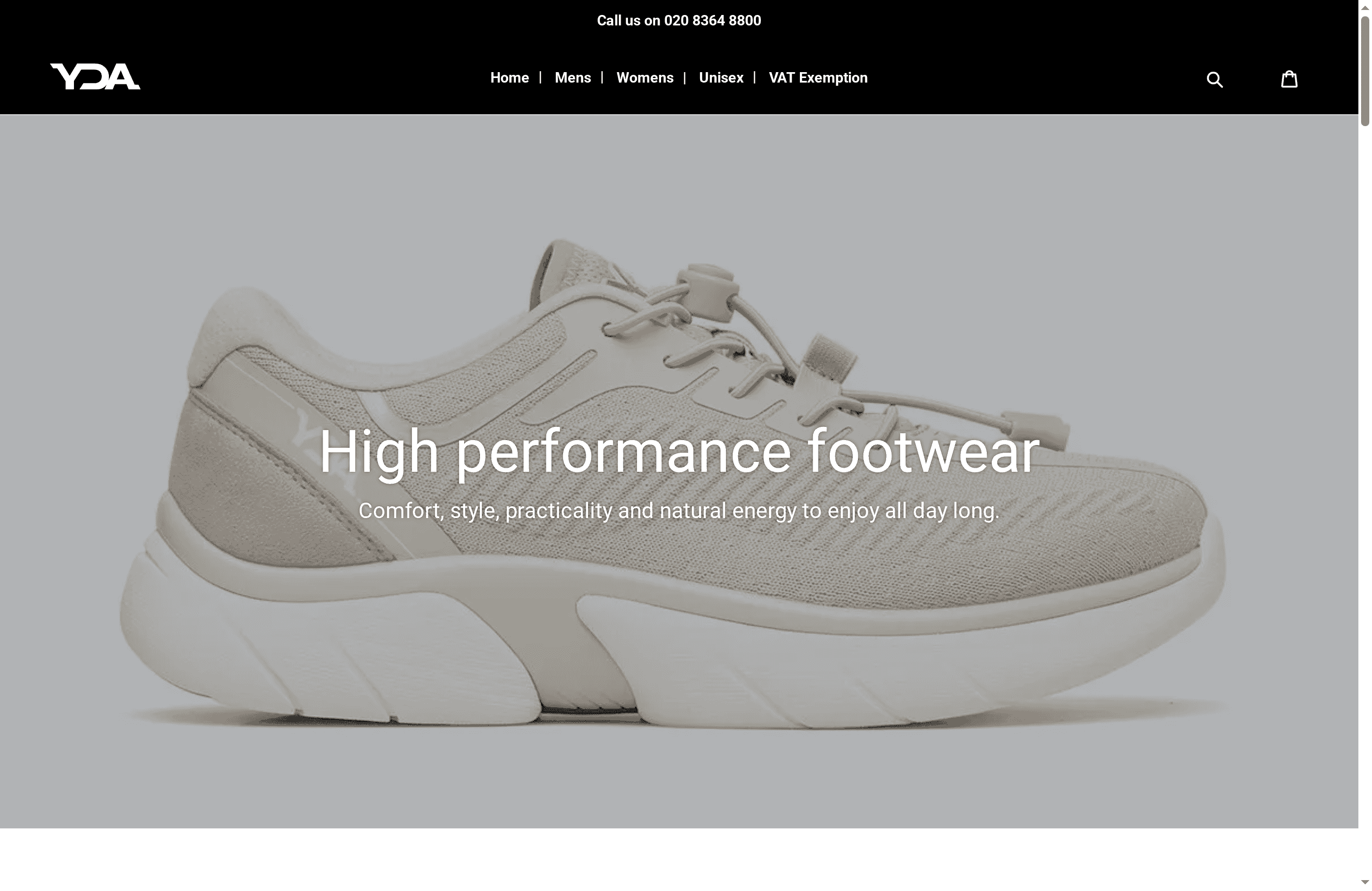
At YDA, every shoe in our range is developed with these clinical and biomechanical principles at its core. The technology of YDA shoes combines energy-return midsoles, breathable uppers, and adaptive insole systems designed specifically for people who take their foot health seriously. Whether you are managing a specific condition or simply want footwear that keeps pace with a full and active life, our collection of shoes for problem feet is built around fit, function, and lasting comfort. Explore the range and find the model that works for your feet, not just the average foot.
Frequently asked questions
Which shoe features help most with flat feet or fallen arches?
Shoes with built-in or removable arch supports, plus a stable and secure fit, can reduce lower-extremity muscle fatigue for those with flat feet or fallen arches, as arch-support mechanisms reduce fatigue during walking when delivered through well-designed insoles or structural support.
Are rocker-bottom soles suitable for everyday use?
Rocker soles can benefit users with specific foot conditions such as metatarsalgia or diabetic foot risk, but as rocker soles affect gait and balance in ways that vary by design, they are not universally appropriate for all wearers or all daily activities.
Why is breathability important in a healthy shoe?
Good breathability prevents excess heat and moisture from accumulating inside the shoe, reducing the risk of blisters, fungal infections, and general foot fatigue during extended wear, all of which are recognised as part of everyday comfort and injury prevention.
How can I check if a shoe will fit orthotics or accommodate swelling?
Look for shoes with wide toe boxes, removable insoles, and adjustable closures, as sufficient internal volume ensures orthotics function correctly and accommodates natural foot swelling that occurs throughout the day.