
How shoes shape posture: A guide to healthier movement
Your shoes are doing far more than carrying you from one place to another. Every step you take, the materials beneath your feet are quietly influencing your spine, your hips, your knees, and even your shoulders. Most people choose footwear based on looks or a vague sense of comfort, never realising that a 2cm difference in heel height can shift your entire centre of gravity. This guide cuts through the noise to explain the real science behind shoes and posture, compare different shoe types honestly, and give you a practical framework for making smarter choices that support your body for the long term.
Table of Contents
- How footwear shapes your body: The science of shoes and posture
- High heels, minimal and maximal shoes: Comparing impact on alignment
- Shoe technology advances: Innovations for foot health and posture
- How to choose shoes that support your posture
- The truth about shoes and posture: What most guides miss
- Find shoes that improve your posture and comfort
- Frequently asked questions
Key Takeaways
| Point | Details |
|---|---|
| Shoes reshape your posture | Everyday footwear choices directly change how your whole body moves and aligns. |
| Not all features help | Extra cushioning or high heels may not give the support your body truly needs for healthy posture. |
| Tech can close the gap | Innovative shoes blend style with posture support—just transition into new types slowly for safety. |
| Choose balance | Look for flexible, supportive, and adaptable shoes tailored to your own activity and alignment needs. |
How footwear shapes your body: The science of shoes and posture
The connection between your shoes and your posture is not abstract. It is biomechanical, meaning it involves the physical forces acting on your bones, joints, and muscles with every stride. Shoes significantly influence posture biomechanics through heel height, cushioning, arch support, and sole drop, altering gait, joint angles, and muscle activation throughout your entire body. Understanding this is the first step toward making footwear work for you rather than against you.
Before going further, a few terms are worth defining. Sole drop refers to the height difference between the heel and the forefoot of a shoe. A zero-drop shoe keeps your foot flat, like standing barefoot. Arch support describes built-in structures that prop up the inner curve of your foot. Minimalist shoes are thin, flexible, and low-drop, while maximalist shoes offer thick, highly cushioned soles.
Here is how key shoe features interact with your posture:
| Shoe feature | Effect on posture and gait |
|---|---|
| High heel (above 3cm) | Tilts pelvis forward, increases lumbar curve, raises knee stress |
| Excessive cushioning | Reduces sensory feedback, alters natural foot strike |
| Rigid arch support | Limits natural foot flexion, may weaken intrinsic foot muscles |
| Zero or low sole drop | Encourages forefoot strike, activates calf and foot muscles more |
| Flexible sole | Improves proprioception and natural movement patterns |
The effects are not limited to your feet. Consider what happens further up the chain:
- Knees absorb altered forces when heel height changes your strike pattern
- Hips rotate differently depending on whether your foot pronates or supinates
- Lower back curves more sharply when your pelvis tilts forward in heeled shoes
- Core muscles work harder or less depending on how stable your footwear is
- Shoulders and neck can compensate for imbalances originating at the foot
A common misconception is that more support and more cushioning always mean better posture. In reality, the relationship is far more nuanced. You can read more about footwear and posture alignment and explore footwear technology explained to understand how modern designs address these complexities.
High heels, minimal and maximal shoes: Comparing impact on alignment
Now that you understand which shoe features affect posture, let’s directly compare how high heels, minimalist, and maximal shoe types shape alignment and movement, and where the risks and solutions lie.
What happens to your body in each shoe type:
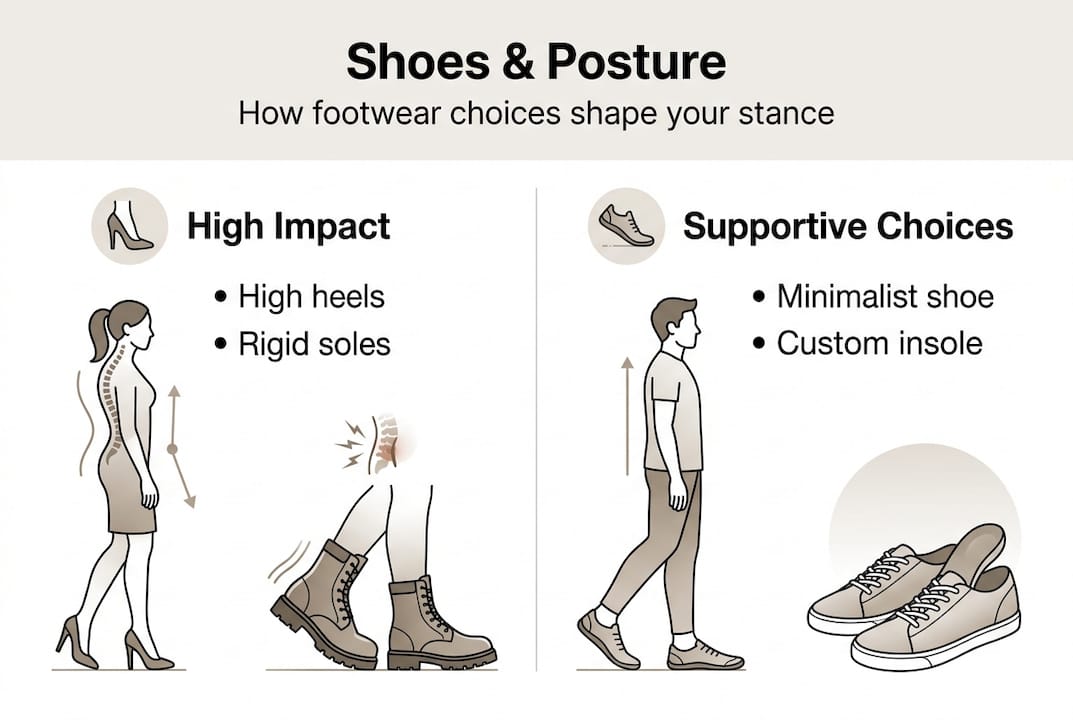
- High heels: Your heel rises, pushing your centre of gravity forward. Your knees bend slightly to compensate. Your pelvis tilts anteriorly, increasing the curve in your lower back. High heels and altered gait reduce stride length and foot clearance while increasing knee flexion and adduction moments. Over time, this strains the patellofemoral joint and shortens the Achilles tendon.
- Minimalist shoes: Your foot sits close to the ground, encouraging a more natural gait. Sensory feedback improves because the thin sole lets your foot feel the terrain. However, barefoot and minimalist use enhances proprioception but carries real risk on hard urban surfaces without adequate cushioning.
- Maximalist shoes: The thick sole absorbs impact well, making them popular for long-distance running. However, the height and rigidity can reduce foot muscle engagement and alter your natural strike pattern in ways similar to a moderate heel.
| Shoe type | Posture effect | Key risk | Best suited for |
|---|---|---|---|
| High heels (above 3cm) | Forward pelvic tilt, increased lumbar curve | Knee and back strain | Occasional formal wear only |
| Minimalist/zero-drop | Natural alignment, strong foot muscles | Injury risk on hard surfaces | Gradual adoption with tech support |
| Maximalist | Impact absorption, reduced fatigue | Reduced proprioception | Long-distance, recovery walks |
Wearing heels above 3cm regularly is linked to increased patellofemoral stress, shortened calf muscles, and lasting changes to your walking pattern. Even occasional use warrants caution if you already experience knee or back discomfort.
Pro Tip: If you love the aesthetic of a minimalist shoe, look for designs that combine a low sole drop with a cushioned, tech-infused footbed. This gives you the alignment benefits of zero-drop footwear benefits without sacrificing comfort on pavements. Keep an eye on key footwear innovations that bridge this gap beautifully.
Shoe technology advances: Innovations for foot health and posture
Having compared the classic shoe styles, it is worth asking what advanced shoe technology can genuinely offer your posture and movement today. The answer is more interesting than most people expect.
Modern footwear engineering has moved well beyond simply adding a foam layer. Today’s posture-focused innovations include:
- Adaptive arch support: Materials that respond to your foot’s pressure distribution in real time, providing support only where it is needed
- Dynamic cushioning systems: Multi-density foam layers that absorb impact differently at the heel versus the forefoot, reducing joint loading without eliminating sensory feedback
- Flexible carbon-fibre plates: Used in performance shoes to guide the foot through a more efficient gait cycle
- Proprioceptive feedback surfaces: Textured or contoured footbeds that stimulate the nerve endings in your foot, improving balance and body awareness
- Breathable, form-fitting uppers: Materials that hold the foot securely without restricting natural toe splay
The most exciting development is the hybrid design approach. These shoes combine the alignment benefits of minimalist construction with enough cushioning to make them practical for everyday urban use. They are particularly useful for people transitioning away from heavily heeled shoes, because they allow gradual muscle adaptation rather than a sudden shock to the system.
However, caution is warranted. Minimalist shoes and transition risk show that zero-drop or minimalist designs may strengthen foot muscles and improve posture long-term, but abrupt transitions significantly raise the risk of stress fractures and tendon injuries. Your foot muscles need weeks, sometimes months, to build the strength required.
Pro Tip: Prioritise shoes with customisable or removable insoles. This lets you start with more support and gradually reduce it as your feet strengthen, giving you control over the adaptation process. Explore how to evaluate shoe technology before committing to a new design, and check the guide to footwear technology for a deeper breakdown of what each innovation actually does.
How to choose shoes that support your posture
Knowing the why and the what behind footwear, the next step is choosing shoes with intention. Here is a clear framework to guide you.
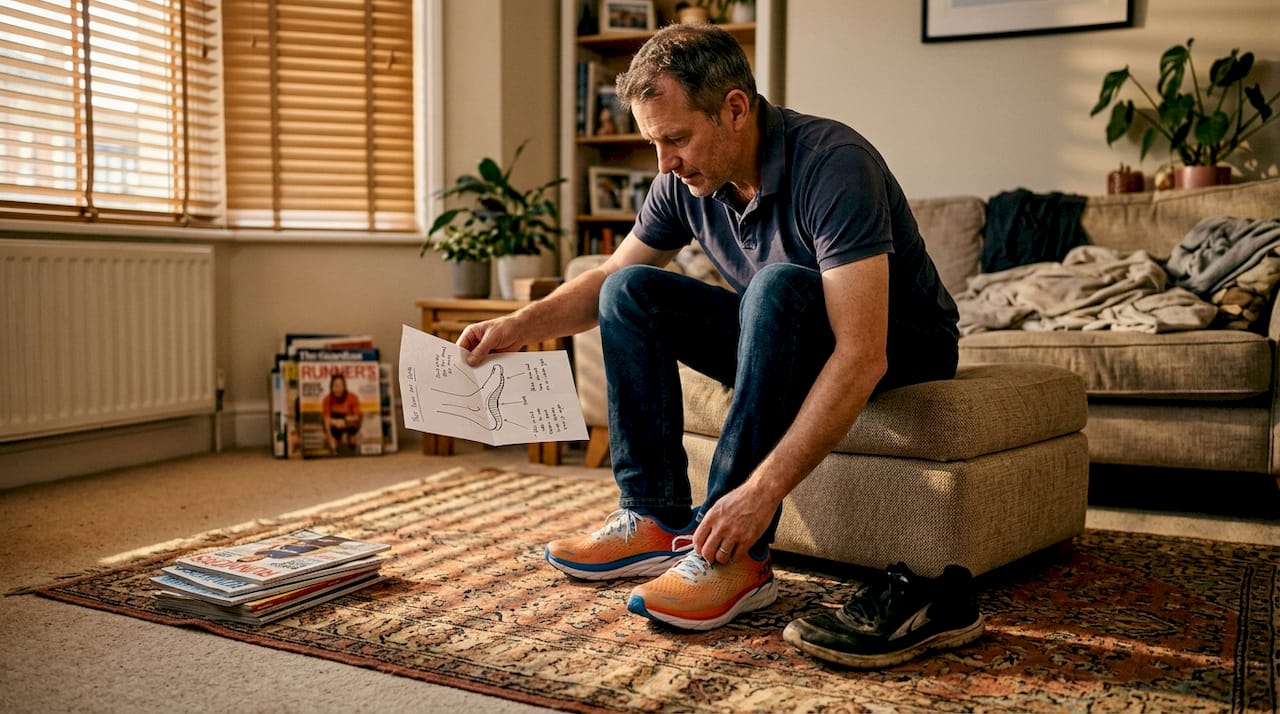
- Assess your posture and foot type first. Do you overpronate (foot rolls inward) or supinate (rolls outward)? Do you have high arches, flat feet, or a neutral profile? Each pattern calls for different support levels. A simple wet footprint test at home can reveal a lot.
- Identify your specific risk factors. Joint issues, previous injuries, and occupational demands all affect what your feet need. Someone on their feet for eight hours daily needs different technology from someone who walks thirty minutes a day.
- Match technology to your needs. Once you know your foot type and risk factors, you can match features purposefully. Overpronators often benefit from medial support; high-arch feet typically need more cushioning and flexibility rather than rigid arch support.
- Check the fit carefully. Your longest toe should have roughly a thumb’s width of space at the front. The heel should feel snug but not tight. The widest part of the shoe should match the widest part of your foot without squeezing.
- Consider the transition period. Supportive shoes for alignment are recommended for proper posture, but overly supportive designs can cause supination if they do not match your natural mechanics. Avoid extremes in either direction.
What to avoid: shoes with excessive heel drop if you have lower back pain, rigid soles that prevent natural toe flexion, and any shoe that feels uncomfortable immediately. Discomfort on day one rarely improves with wear.
Pro Tip: Always break in new tech footwear gradually. Wear them for one to two hours on day one, then increase daily. This gives your intrinsic foot muscles time to adapt. The footwear selection guide and barefoot technology for posture resources are excellent companions for this process.
The truth about shoes and posture: What most guides miss
Here is something most footwear articles will not tell you. The shoe industry has long marketed features like cushioning, raised heels, and rigid arch supports as inherently healthy. But empirical evidence on shoe features shows no strong support for health benefits of typical shoe features like cushioning, raised heels, or arch supports for healthy walking, and some features are actively detrimental.
This does not mean technology is useless. It means the relationship between shoes and health is deeply individual. A feature that helps one person may hinder another. The real mistake is trusting marketing claims over your own body’s feedback.
At YDA, we believe the best shoe is one that respects your foot’s natural mechanics while giving it the protection it needs for modern life. That means being sceptical of over-engineered solutions and instead focusing on gradual adaptation, honest fit assessment, and designs grounded in actual biomechanical research. Explore barefoot technology insights to see how this philosophy translates into real product decisions.
Find shoes that improve your posture and comfort
Having explored the science and practical steps for posture-friendly shoes, here is where you can find expertise and solutions tailored to your goals.
At YDA UK, every shoe in our range is developed around the principles discussed in this guide: natural foot mechanics, graduated support, and technology that serves your body rather than overriding it. Whether you are looking for problem feet shoes designed for specific foot conditions or want to understand the full scope of YDA shoe technology, our team is here to help you find a fit that genuinely supports your posture. Browse our range and take the next step toward footwear that works as hard as you do.
Frequently asked questions
Does the type of shoe I wear really affect my posture?
Yes, absolutely. Shoes significantly influence posture biomechanics through heel height, cushioning, arch support, and sole drop, meaning even everyday footwear choices have measurable effects on your alignment and movement patterns.
Are high heels always bad for posture?
Not always, but the risk rises sharply above 3cm. High heels and altered gait show increased patellofemoral stress and gait changes, so limiting heel height and wearing time reduces the impact considerably.
What is the best shoe type for healthy posture?
Minimalist or zero-drop designs show promise for long-term posture improvement, but minimalist shoes and transition risk highlight that abrupt changes raise injury risk. Gradual adoption with tech-infused support is the safest route.
Can overly supportive shoes cause problems?
Yes. Supportive shoes for alignment are beneficial when matched correctly, but excessive arch support can force unnatural foot movement and lead to supination, particularly in people with neutral or high-arch feet.