
What is zero drop footwear: benefits for foot health
You’ve probably heard the term ‘zero drop footwear’ thrown around in conversations about foot health, often confused with barefoot shoes. While related, they’re not identical. Zero drop refers to the heel-to-toe height differential in a shoe, specifically when there’s no elevation difference between these two points. This design choice matters more than you might think for your posture, joint health, and overall comfort. Whether you’re an active walker, runner, or simply seeking healthier footwear options, understanding zero drop footwear can transform how your feet interact with the ground and how your body moves through space.
Table of Contents
- Understanding Zero Drop Footwear And Its Benefits
- Scientific Insights Into Zero Drop Footwear Impact On Joint Loading
- Who Should Consider Zero Drop Footwear And How To Transition Safely
- Comparing Zero Drop With Other Footwear Types
- Find The Right Zero Drop Footwear For Your Feet
- Frequently Asked Questions About Zero Drop Footwear
Key takeaways
| Point | Details |
|---|---|
| Level platform design | Zero drop shoes maintain equal height from heel to toe, promoting natural foot alignment and posture. |
| Gradual transition essential | Switching too quickly can strain the Achilles tendon and plantar fascia, requiring a phased approach. |
| Joint stress reduction | Forefoot striking patterns encouraged by zero drop footwear can lower patellofemoral joint forces. |
| Individual suitability varies | People with limited ankle mobility or existing tendon issues may not benefit from zero drop designs. |
Understanding zero drop footwear and its benefits
The term ‘zero drop’ describes footwear where the heel and forefoot sit at the same height off the ground. This contrasts sharply with conventional shoes, where the heel typically sits 10-12 millimetres higher than the toes. Zero-drop shoes maintain a level plane between the heel and toes, promoting alignment and a natural stride, fundamentally changing how your foot strikes the ground.
Many people mistakenly assume zero drop shoes are identical to minimalist or barefoot footwear. While these categories overlap, they’re distinct. Minimalist shoes prioritise thin soles and flexibility but may still have a heel drop. Barefoot shoes combine minimal cushioning with zero drop and wide toe boxes. Zero drop shoes can include substantial cushioning while maintaining that crucial level platform.
Low-drop shoes feature a drop between the heel and toe that is 6 millimetres or less and can offer many of the same benefits as zero-drop shoes, providing a middle ground for those transitioning from conventional footwear. This category bridges the gap, allowing your body to adapt more gradually to reduced heel elevation.
The biomechanical advantages are compelling:
- Improved postural alignment from ankle through spine
- Reduced stress on knees and lower back
- Strengthened foot and calf muscles through natural engagement
- Enhanced proprioception and ground feel
- More efficient energy transfer during movement
Your body evolved to walk and run on level ground, not with elevated heels. Zero drop footwear respects this evolutionary design. When your heel sits higher than your toes, your centre of gravity shifts forward, forcing compensatory adjustments throughout your kinetic chain. Your knees track differently, your hips tilt, and your spine curves to maintain balance.
By restoring a level platform, zero drop shoes allow your skeleton to stack naturally. This alignment reduces unnecessary strain on joints and connective tissue. Understanding the role shoes play in joint health reveals why this matters for long-term mobility and comfort.
“The transition to zero drop footwear represents a return to biomechanical fundamentals, allowing the foot to function as nature intended rather than adapting to artificial elevation.”
The benefits extend beyond alignment. When you’re not constantly compensating for heel elevation, your gait becomes more efficient. You’ll likely notice improved balance, especially on uneven terrain. Your feet work harder, which sounds negative but actually strengthens the intrinsic muscles that support your arches and stabilise your ankles.

Scientific insights into zero drop footwear impact on joint loading
Recent biomechanical research provides fascinating insights into how footwear design and foot strike patterns influence the forces travelling through your joints. These studies help explain why zero drop footwear affects your body differently than conventional shoes.
When you run or walk, your foot can strike the ground in different ways. Rearfoot strike (RFS) means your heel contacts first, common in conventional raised-heel shoes. Forefoot strike (FFS) involves landing on the ball of your foot, naturally encouraged by zero drop designs. These patterns create dramatically different loading scenarios for your joints.
Patellofemoral contact force and AT impulses were significantly greater in novice runners than experienced runners, highlighting how adaptation and technique influence injury risk. Your body needs time to develop the neuromuscular patterns and tissue resilience for different strike patterns.
The joint force differences are substantial. Patellofemoral contact force and PFJ stress were significantly lower in forefoot strike than rearfoot strike, while Achilles tendon force and stress increased. This trade-off explains why transition protocols matter so much.
| Strike Pattern | Patellofemoral Joint Force | Achilles Tendon Load | Impact Characteristics |
|---|---|---|---|
| Rearfoot Strike | Higher | Lower | Sharp initial impact peak |
| Forefoot Strike | Lower | Higher | Gradual force application |
| Midfoot Strike | Moderate | Moderate | Balanced distribution |
Zero drop footwear naturally shifts many wearers towards forefoot or midfoot striking. This redistribution of forces can relieve chronic knee pain for some individuals whilst requiring greater calf and Achilles adaptation. The key lies in understanding that you’re not eliminating stress but redistributing it to structures better designed to handle dynamic loads when properly conditioned.
Your patellofemoral joint, where your kneecap glides over your thigh bone, experiences significant compression during rearfoot striking. Each heel strike sends a shock wave through your skeleton. Forefoot striking acts like a natural shock absorber, using your calf muscles and Achilles tendon as springs to dissipate impact forces gradually.
Pro Tip: Track your weekly mileage in a training journal during your zero drop transition, reducing total volume by 50% initially and adding no more than 10% per week to allow tissues adequate adaptation time.
This biomechanical shift matters for injury prevention and performance. Runners with anterior knee pain often find relief when adopting forefoot strike patterns, though they must simultaneously strengthen their posterior chain. The comprehensive footwear selection guide helps you identify which shoe characteristics support your individual biomechanics.
Understanding these forces helps you make informed decisions. If you have a history of Achilles problems, zero drop shoes require extra caution and gradual introduction. Conversely, if patellofemoral pain syndrome has plagued your running, the reduced knee stress from forefoot striking might provide significant relief. Learning about minimalist shoes and their health benefits offers additional context for these biomechanical principles.
Who should consider zero drop footwear and how to transition safely
Zero drop footwear isn’t universally appropriate, despite its benefits for many people. Certain individuals gain tremendous advantages whilst others face increased injury risk. Identifying where you fall on this spectrum prevents frustration and potential harm.
Ideal candidates include people with chronic knee pain, those seeking improved posture, individuals with adequate ankle mobility, and anyone wanting to strengthen foot musculature. Active individuals without significant lower limb pathology typically adapt well. You’ll likely benefit if you already walk or run with a midfoot or forefoot strike pattern.
Conversely, hikers with limited ankle motion, weak calf muscles or joint fusions may be poor candidates for zero-drop shoes. These structural limitations prevent the ankle dorsiflexion required for proper forefoot striking mechanics. Forcing the issue invites compensatory movement patterns that stress other joints.
People with severely flat feet or high arches may need additional support features beyond zero drop alone. Those recovering from Achilles tendinopathy should wait until fully healed before transitioning. If you have diabetes with peripheral neuropathy, the reduced cushioning in some zero drop models may be inappropriate.
The transition process demands patience and structure. Switching to zero-drop all at once can cause Achilles issues or plantar fasciitis, making gradual adaptation essential for injury prevention.
Follow this progression:
- Begin by wearing zero drop shoes for 20-30 minutes daily during low-impact activities like walking on flat surfaces.
- Increase wearing time by 10-15 minutes weekly, monitoring for any pain or excessive soreness in your calves, Achilles tendons, or plantar fascia.
- Introduce short intervals of light jogging or faster walking only after 4-6 weeks of comfortable daily wear.
- Alternate between zero drop and your conventional shoes for several months, gradually shifting the balance towards zero drop.
- Listen to your body’s signals, immediately reducing intensity if you experience sharp pain, persistent soreness lasting beyond 48 hours, or swelling.
- Incorporate calf stretching, ankle mobility work, and foot strengthening exercises throughout your transition period.
- Plan for a complete transition timeline of 6-12 months for athletic activities, longer if you have significant biomechanical adaptations to make.
Your tissues need time to remodel and strengthen. Tendons adapt more slowly than muscles, requiring months to increase their load-bearing capacity. The plantar fascia must gradually accommodate new stress patterns. Rushing this process courts injury.
Pro Tip: Schedule a gait analysis with a physiotherapist or podiatrist before transitioning to zero drop footwear if you have any history of lower limb injuries, as professional guidance can identify potential issues early.
Pay attention to feedback from your body. Mild muscle soreness in your calves is expected and indicates positive adaptation. Sharp pain, however, signals excessive stress. Persistent discomfort in your Achilles tendon warrants immediate reduction in zero drop usage.
The guide to buying healthy footwear online provides additional considerations for selecting appropriate zero drop models that match your foot shape and activity requirements. Not all zero drop shoes are created equal, with significant variations in cushioning, flexibility, and toe box width.
Comparing zero drop with other footwear types
Understanding how zero drop footwear performs relative to minimalist and conventional shoes helps you make informed decisions based on your priorities and biomechanics. Each category offers distinct advantages and limitations.
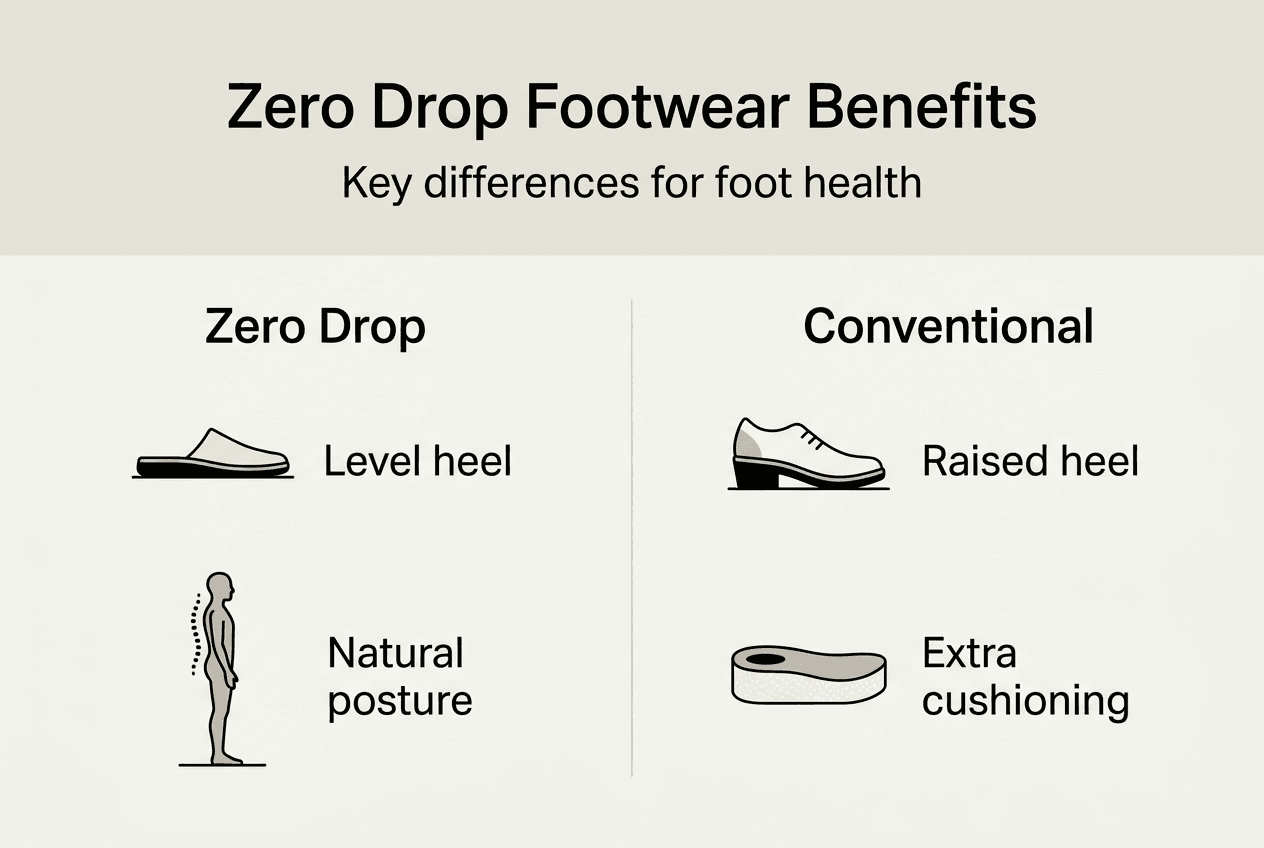
Conventional shoes with 10-12 millimetre drops provide familiar cushioning and heel elevation. They require minimal adaptation for most wearers and offer substantial impact absorption. However, peak impact loading rates were significantly lower in conventional shoes with rearfoot strike than in minimalist shoes, though this comes at the cost of altered biomechanics and reduced foot strength development.
Minimalist shoes prioritise ground feel and flexibility with thin, responsive soles. They may feature zero drop but don’t always. The reduced cushioning provides excellent proprioception, helping you feel terrain changes and adjust your gait accordingly. Adaptation requirements fall between conventional and barefoot options.
The research reveals important nuances. Joint contact forces during barefoot, minimal and conventional shod running are highly individual with variations at hip, knee and ankle, meaning your personal biomechanics significantly influence which footwear type suits you best. There’s no universal answer.
| Footwear Type | Heel Drop | Cushioning | Adaptation Time | Best For |
|---|---|---|---|---|
| Conventional | 10-12mm | High | Minimal | Long distances, beginners, cushioning preference |
| Low Drop | 4-6mm | Moderate | 2-4 months | Transitioning, mixed terrain, moderate support |
| Zero Drop | 0mm | Variable | 6-12 months | Natural gait, foot strengthening, posture improvement |
| Minimalist | Usually 0mm | Low | 6-12 months | Maximum ground feel, experienced users |
| Barefoot Style | 0mm | Minimal | 12+ months | Toe splay, complete natural movement |
Each category serves different needs and preferences. Conventional shoes excel for people requiring maximum cushioning due to joint conditions or those covering extremely long distances on hard surfaces. The familiar heel elevation requires no adaptation period.
Low drop shoes (4-6 millimetres) offer a compromise, providing some elevation whilst moving towards more natural positioning. They’re excellent transition tools or permanent solutions for those wanting partial benefits without full commitment to zero drop.
Zero drop shoes with substantial cushioning combine level platforms with impact absorption. They suit people wanting natural foot positioning without sacrificing protection on rough terrain. This category has expanded significantly as manufacturers recognise diverse consumer needs.
Minimalist zero drop shoes maximise ground feel and foot strengthening. They demand the most significant adaptation but offer the greatest proprioceptive feedback. Trail runners and those prioritising foot health often gravitate towards this category.
Consider these factors when choosing:
- Your current fitness level and injury history
- Primary activities and typical surfaces
- Willingness to invest time in adaptation
- Personal preferences for cushioning versus ground feel
- Existing foot structure and any biomechanical limitations
Exploring how shoes impact joint health across these categories reveals that optimal footwear depends heavily on individual factors rather than universal recommendations. What works brilliantly for one person may prove problematic for another.
Your ideal footwear might even vary by activity. Many people wear zero drop shoes for walking and strength training whilst using low drop or conventional shoes for long runs. This mixed approach allows you to gain benefits without forcing your body into a single paradigm.
Find the right zero drop footwear for your feet
You’ve learned how zero drop footwear can transform your foot health, reduce joint stress, and promote natural movement patterns. Now it’s time to experience these benefits firsthand with footwear designed specifically for optimal foot function.
YDA UK specialises in shoes that prioritise your foot health without compromising style or comfort. Our collection features technologically advanced designs that support natural foot positioning, whether you’re ready for zero drop or exploring supportive alternatives. Each shoe in our curated range incorporates biomechanical principles that align with what you’ve discovered in this article. Discover the innovative technology behind YDA shoes and find the perfect match for your feet’s unique needs and your lifestyle demands.
Frequently asked questions about zero drop footwear
Are zero drop shoes the same as barefoot shoes?
No, though they share the zero drop characteristic. Barefoot shoes combine zero drop with minimal cushioning, maximum flexibility, and wide toe boxes for complete toe splay. Zero drop shoes can include substantial cushioning and varying levels of structure whilst maintaining the level heel-to-toe platform.
How long does it take to transition safely to zero drop footwear?
Most people require 6-12 months for a complete transition to zero drop footwear, particularly for running or high-impact activities. Start with 20-30 minutes daily in low-impact settings, increasing gradually by 10-15 minutes weekly. Your tendons and fascia need this extended timeline to remodel and strengthen sufficiently.
Who should avoid zero drop shoes entirely?
People with limited ankle dorsiflexion, those recovering from Achilles tendon injuries, individuals with ankle or foot joint fusions, and anyone with severe biomechanical limitations should avoid zero drop shoes. Those with diabetes and peripheral neuropathy may also need the additional cushioning conventional shoes provide. Consult a healthcare professional if uncertain about your suitability.
Can zero drop footwear help with knee pain?
Many people experience reduced knee pain with zero drop footwear because the forefoot strike pattern it encourages lowers patellofemoral joint forces compared to heel striking. However, this benefit requires proper transition and may increase Achilles tendon stress. The footwear selection guide helps identify whether zero drop suits your specific knee issues.
What are the most common mistakes when switching to zero drop shoes?
Transitioning too quickly causes most problems, leading to Achilles tendinopathy or plantar fasciitis. Other mistakes include choosing minimalist zero drop shoes as your first pair rather than cushioned models, neglecting complementary strengthening exercises, ignoring pain signals, and failing to reduce overall activity volume during adaptation. Following the guide to buying healthy footwear prevents many common errors.