
Different types of shoe soles: your 2026 guide
TL;DR:
- The shoe sole is essential for grip, cushioning, and durability, impacting foot health and comfort more than the upper. Different sole materials like rubber, leather, foam, cork, and advanced TPU provide specific performance advantages suited to various activities and conditions. Properly matching tread designs and sole constructions to your routine ensures long-term comfort, safety, and footwear longevity.
The sole of a shoe is its functional foundation, determining grip, cushioning, durability, and how well the shoe suits a given terrain or activity. Most people choose footwear based on appearance, yet the different types of shoe soles matter far more to long-term comfort and foot health than the upper ever will. Whether you are managing plantar fasciitis, standing for eight hours on a warehouse floor, or dressing for a formal dinner, the sole beneath your foot is doing the real work. This guide breaks down shoe sole material types, tread designs, and construction methods so you can make a genuinely informed choice.
What are the different types of shoe soles by material?
Shoe sole materials divide into seven main categories, each with distinct performance characteristics. Understanding these differences is the starting point for any honest shoe sole comparison.
Rubber and vulcanised rubber
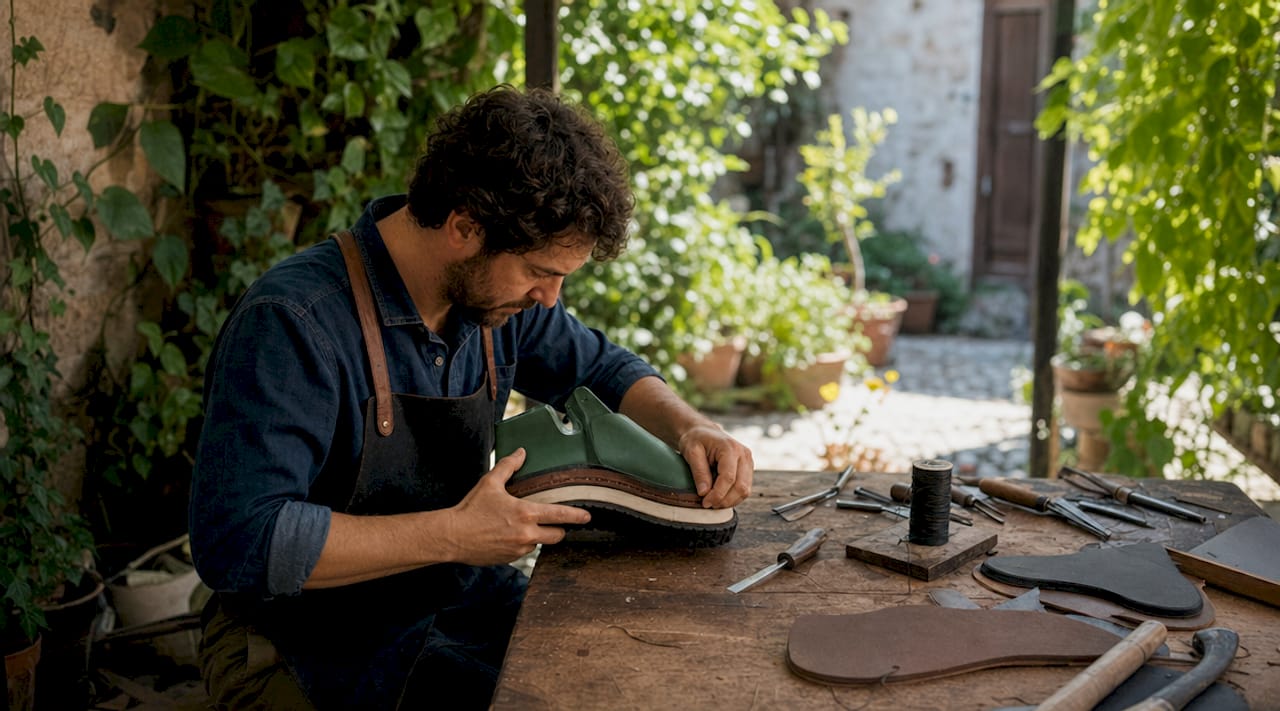
Rubber is the most widely used outsole material across footwear categories. Natural rubber offers excellent grip and flexibility, while synthetic rubber adds abrasion resistance and weather tolerance. Vulcanised rubber, used in classic canvas trainers and skateboarding shoes, is bonded to the upper under heat and pressure, creating a low-profile, highly durable construction. Rubber and TPU prioritise grip and durability over cushioning, making them the preferred choice for safety footwear and wet environments. That trade-off is worth knowing before you buy.
Leather soles
Leather soles provide elegance and breathability but are less suited for wet or rough surfaces, requiring protective overlays for longevity. They are the traditional choice for Oxford and Derby dress shoes, prized for their slim profile and the way they mould to the foot over time. The drawback is that leather offers almost no grip until it has been worn in, and even then, wet pavements remain a genuine hazard. Leather shoe sole types are best reserved for dry, formal, and indoor settings.
EVA, PU, and TPU foam materials
These three foam materials dominate midsole construction and each performs differently under load. EVA (ethylene vinyl acetate) is lightweight and soft, making it the default choice in running shoes and casual trainers. However, EVA shows measurable compression set after roughly 400 to 600 miles, meaning the cushioning degrades noticeably before the upper shows any visible wear. PU (polyurethane) is denser and heavier but holds its shape far longer. TPU (thermoplastic polyurethane) sits between the two, offering firmness, rebound, and resistance to both compression and abrasion.
TPR, PVC, and cork
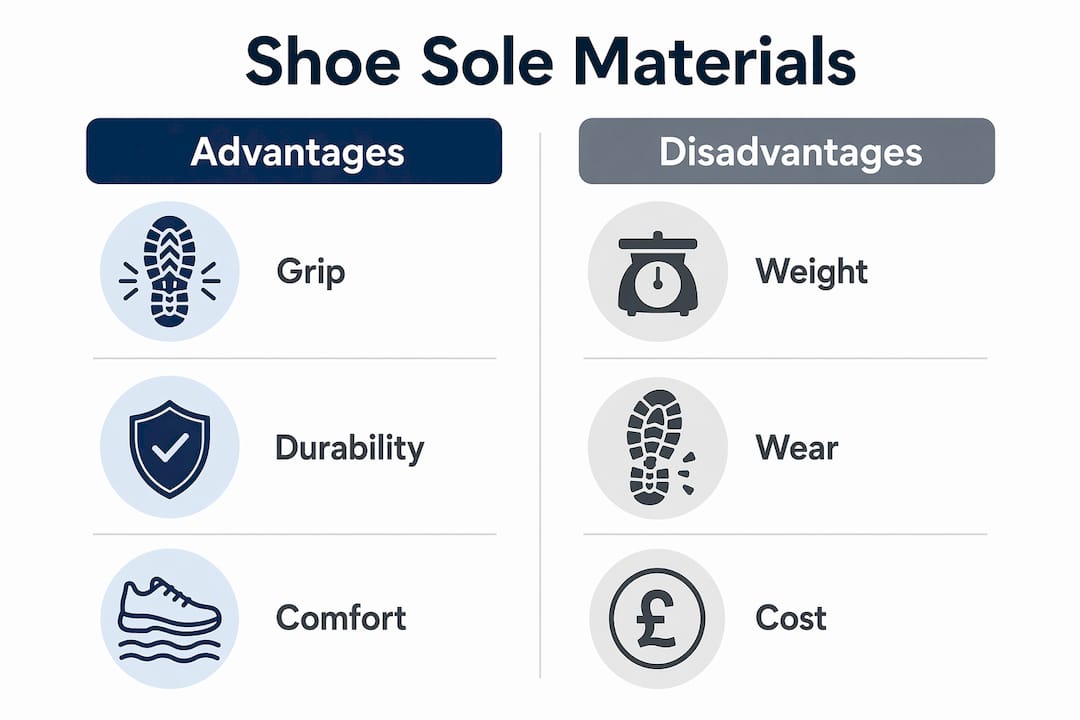
TPR (thermoplastic rubber) blends the processing ease of plastic with the grip properties of rubber, making it common in budget casual footwear and children’s shoes. PVC is cheap and waterproof but stiff and poorly breathable, limiting its use to low-cost or industrial applications. Cork is the outlier: a natural, compressible material used in footbeds and midsoles that moulds to the individual foot shape over time, offering personalised arch support and modest shock absorption.
| Material | Key strength | Key weakness | Best use |
|---|---|---|---|
| Rubber | Grip, durability | Heavy, limited cushioning | Outdoor, safety, wet conditions |
| Leather | Breathability, elegance | Poor wet traction | Formal, dry settings |
| EVA | Lightweight, soft | Compresses over time | Casual, running |
| PU | Long-lasting cushioning | Heavier than EVA | Work shoes, standing use |
| TPU | Rebound, abrasion resistance | Stiffer feel | Performance, hybrid soles |
| Cork | Personalised fit | Low durability | Footbeds, sandals |
Pro Tip: When choosing between EVA and PU, prioritise long-term cushioning retention rather than initial softness. PU midsoles maintain cushioning for 12 to 18 months under heavy use, compared to EVA’s 6 to 12 months, making PU the smarter investment for daily wear.
How do tread patterns affect grip and durability?
Tread design is as important as material when matching types of footwear soles to specific activities. The pattern underfoot determines how a sole channels water, grips uneven ground, and wears over time.
Lug soles
Lug rubber soles offer aggressive traction for outdoor use, with deep, widely spaced lugs that bite into mud, gravel, and wet grass. Boots from brands such as Vibram-soled hiking footwear use this construction as standard. The depth of the lug pattern directly correlates with grip on loose terrain, though the same depth creates discomfort on hard urban surfaces and wears faster on tarmac.
Thin rubber and Dainite soles
Thin rubber soles suit dress shoes where a slim profile is required but some grip improvement over leather is desirable. The Dainite sole is a low-profile rubber sole providing good grip and wet-weather practicality without the bulk of rugged outdoor soles. It suits daily urban wear with discreet but reliable traction, making it a practical upgrade for anyone who wears smart shoes in British weather.
Crepe soles
Crepe soles are made from natural latex rubber, producing a soft, slightly spongy underfoot feel. They were popularised by desert boots and remain associated with casual, relaxed footwear. Crepe cushions well on hard floors but wears unevenly, picks up debris, and offers limited grip on wet surfaces. Durability is the main limitation.
Hybrid and commando soles
Hybrid soles combine materials to balance competing demands. A leather and rubber hybrid, for example, retains the slim elegance of a dress sole while adding a rubber heel cap or toe tap for traction and wear resistance. Commando soles use thick, heavily lugged rubber for maximum durability and grip, originally designed for military and outdoor use but now common in heritage boot styles.
| Tread type | Grip level | Durability | Best terrain |
|---|---|---|---|
| Lug rubber | High | High | Outdoor, mud, gravel |
| Dainite | Medium | High | Urban, wet pavements |
| Thin rubber | Low to medium | Medium | Formal, dry indoor |
| Crepe | Low | Low to medium | Casual, hard floors |
| Commando | Very high | Very high | Rugged outdoor, heavy use |
| Leather/rubber hybrid | Medium | Medium to high | Smart casual, city streets |
Which sole types suit different activities and foot conditions?
Matching sole construction to your daily routine is where shoe sole material types move from theory to genuine value. The right sole for a nurse working twelve-hour shifts is entirely different from the right sole for a solicitor attending court.
For work environments involving wet floors, oil, or prolonged standing, rubber or TPU outsoles are the correct choice. Both materials prioritise grip and slip resistance in conditions where a fall carries real consequences. Pair that outsole with a PU midsole for cushioning that holds up through a full shift without compressing flat.
For everyday comfort and long hours on your feet, EVA and PU midsoles are the standard recommendation. EVA delivers immediate softness that feels impressive in the shop, but for anyone covering significant daily mileage, PU’s superior compression resistance makes it the better long-term option. You can read more about how shoe materials affect comfort to understand the full picture.
For formal occasions and dry settings, leather soles remain the benchmark. They breathe well, look refined, and develop a patina that improves with age. The practical caveat is that leather soles require a break-in period to develop any meaningful traction, and hybrid leather-rubber soles extend usability for street wear considerably.
For foot conditions such as plantar fasciitis, metatarsalgia, or arthritis, the priority shifts to shock absorption and arch support. EVA footbeds with TPU shanks offer a useful combination, as does cork, which moulds to the individual foot over time. Avoid thin leather soles or hard PVC constructions entirely if you have any chronic foot sensitivity. The importance of sole grip for foot health extends beyond safety to reducing the compensatory gait patterns that worsen joint pain.
Pro Tip: For multifunctional performance, look for shoes with a layered construction: a rubber outsole for grip, a PU base midsole for durability, and an EVA top layer for immediate cushioning. This three-layer approach covers most daily demands without compromise.
- Wet or industrial work: rubber or TPU outsole with PU midsole
- Long daily wear and commuting: PU or hybrid EVA/PU midsole
- Formal and dry settings: leather sole, optionally with rubber heel
- Outdoor and trail use: lug rubber outsole with TPU or PU midsole
- Foot conditions and sensitivities: EVA or cork footbed with structured TPU support
What are the latest advances in shoe sole construction?
Sole technology in 2026 has moved well beyond the simple rubber-or-leather choice. The most significant development is the widespread adoption of expanded TPU midsoles, known as E-TPU. E-TPU retains elasticity and rebound better than EVA and PU, suiting performance footwear needs across running, training, and everyday use. The material’s elastic memory means it returns to its original shape after compression, maintaining consistent cushioning over thousands of steps rather than degrading progressively.
Layered midsole construction has also become the norm in premium footwear. Hybrid soles combining EVA with rubber or PU with TPU optimise cushioning and durability for multifaceted needs, with softer EVA sitting above a durable PU or TPU base. This construction allows brands to tune the feel of a shoe precisely, making the top layer responsive and the base layer stable.
Sustainability is now a genuine design constraint rather than a marketing afterthought. Recycled rubber outsoles, bio-based EVA derived from sugarcane, and natural cork composites are all in active production. Brands investing in sustainable footwear materials are finding that eco-friendly constructions can match or exceed the performance of conventional materials in most use categories.
Pro Tip: When evaluating a shoe’s sole technology, ask specifically about the midsole material rather than the outsole. The outsole handles ground contact, but the midsole determines how your foot feels after four hours of wear.
Key takeaways
The sole material and construction you choose determines comfort, durability, and safety far more than any other part of the shoe.
| Point | Details |
|---|---|
| Material determines performance | Rubber and TPU prioritise grip; EVA and PU prioritise cushioning and shock absorption. |
| EVA degrades faster than PU | EVA loses cushioning after 400 to 600 miles; PU lasts 12 to 18 months under heavy use. |
| Tread pattern matches terrain | Lug soles suit outdoor use; Dainite suits urban wet conditions; leather suits dry formal settings. |
| E-TPU leads in 2026 technology | Expanded TPU midsoles offer superior energy return and consistent cushioning over time. |
| Foot conditions need specific soles | Plantar fasciitis and arthritis benefit from EVA or cork footbeds with structured TPU support. |
What I have learned from years of thinking about soles
People consistently underestimate how much the sole construction shapes the entire wearing experience. I have seen customers spend considerable money on premium leather uppers and then accept whatever sole came attached, only to find the shoes unwearable after a full day in the city. The sole is not a secondary consideration. It is the primary one.
The misconception I encounter most often is that a softer sole is always a more comfortable sole. EVA feels wonderful in the shop, but if you are on your feet for six or more hours daily, that initial softness becomes a liability as the foam compresses and stops returning energy. PU or a layered PU/EVA construction will feel slightly firmer at first and noticeably better after three months of wear.
My practical advice is to test shoe comfort by wearing the shoes for at least twenty minutes on a hard floor before committing. Walk on tile or concrete, not carpet. Notice whether the sole feels responsive underfoot or whether your foot sinks and stays sunk. That distinction tells you more about long-term comfort than any product description will.
The other thing worth saying plainly: sole choice is a terrain and occasion decision. Leather for dry, formal, urban settings. Dainite for wet city pavements. Commando for rugged outdoor use. Trying to find one sole that does everything well is a compromise that usually does nothing well.
— Panagiotis
Explore Ydauk’s sole technology for yourself
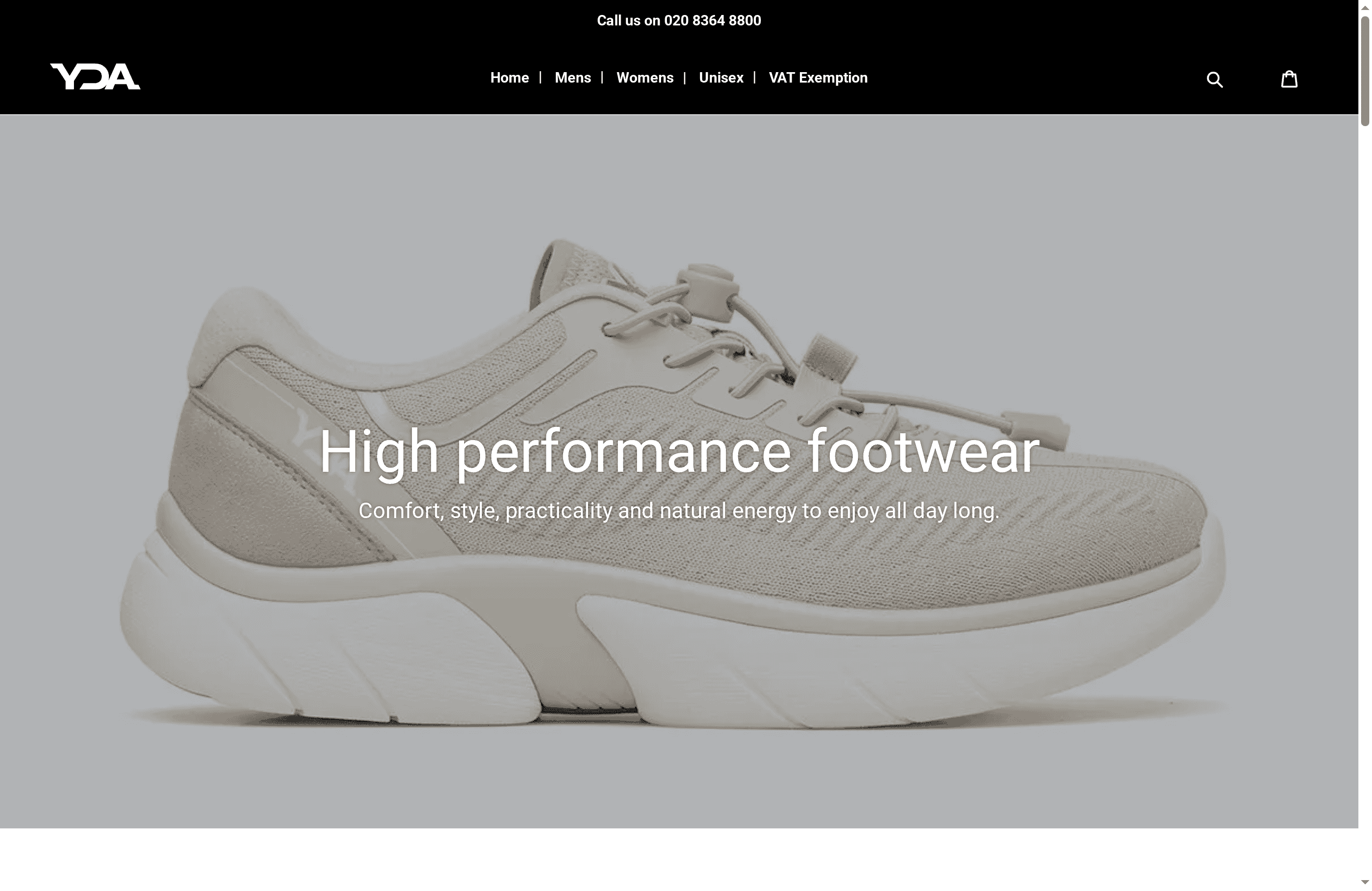
Ydauk builds its footwear around the principle that sole construction and foot health are inseparable. The YDA Technology platform applies layered midsole engineering and outsole grip science to everyday shoes, so you get the durability of TPU, the cushioning of PU, and the traction of rubber in a single wearable design. If you have spent time reading about different shoe sole designs and want to see how those principles translate into actual footwear, the YDA sole technology page is the right place to start. Every material choice Ydauk makes is grounded in the same performance data this article draws on.
FAQ
What are the most durable shoe sole materials?
Rubber and TPU are the most durable outsole materials, resisting abrasion and maintaining grip over extended use. For midsoles, PU outlasts EVA significantly, holding its cushioning for 12 to 18 months under heavy daily wear.
Are leather soles good for everyday use?
Leather soles suit dry, formal settings well but are not ideal for everyday urban use in wet climates. Hybrid leather-rubber soles offer a practical middle ground, adding traction and durability without sacrificing the slim profile of a dress shoe.
What sole type is best for plantar fasciitis?
EVA or cork footbeds with structured TPU support are the most effective combination for plantar fasciitis, providing shock absorption and arch support simultaneously. Avoid hard PVC or thin leather soles, which offer no meaningful cushioning.
What is an E-TPU midsole and why does it matter?
E-TPU (expanded thermoplastic polyurethane) is a midsole material that retains its elasticity and energy return better than standard EVA or PU over time. It is the leading midsole technology in performance footwear in 2026, offering consistent cushioning across thousands of steps.
How do I know which sole suits my activity?
Match the outsole material to your primary terrain: rubber or TPU for wet and industrial environments, leather for formal dry settings, and lug rubber for outdoor use. For the midsole, choose PU or a PU/EVA hybrid for long daily wear and EVA for lighter, occasional use.