
Sustainable Footwear Explained: Comfort and Impact
Finding sustainable footwear that truly supports foot health feels like searching for a British designer who blends style and science perfectly. More than 7 out of 10 health-conscious consumers now consider eco-friendly shoe options that prioritise comfort and advanced technology. The need for shoes that minimise environmental impact while improving energy efficiency matters to anyone with foot conditions. This guide reveals what defines progressive footwear and explains how smart choices deliver lasting well-being and confidence.
Table of Contents
- What Defines Sustainable Footwear Today
- Key Material Innovations And Their Benefits
- Production Methods Supporting Foot Health
- Environmental Impact And Energy Efficiency
- Comparing Sustainable Versus Conventional Shoes
Key Takeaways
| Point | Details |
|---|---|
| Holistic Approach to Sustainability | Modern sustainable footwear integrates environmental consciousness with innovation, focusing on material selection and manufacturing processes. |
| Innovative Materials | Sustainable footwear utilises recycled and biodegradable materials that enhance performance while minimising environmental impact. |
| Foot Health Prioritisation | Production methods now focus on ergonomic design, ensuring footwear provides support and comfort alongside sustainability. |
| Environmental Impact Reduction | Sustainable practices achieve significant reductions in carbon emissions and waste compared to conventional footwear manufacturing. |
What Defines Sustainable Footwear Today
Sustainable footwear today represents a holistic approach that transcends traditional manufacturing, integrating environmental consciousness with technological innovation. Emerging design strategies increasingly focus on reducing ecological impact through circular economy principles, transforming how we conceptualise shoe production and lifecycle management.
At its core, sustainable footwear encompasses multiple critical dimensions: material selection, manufacturing processes, supply chain transparency, and end-of-life product considerations. Modern approaches prioritise renewable or recycled materials, minimising carbon emissions, reducing waste, and creating shoes that perform exceptionally while maintaining minimal environmental footprint. The 2023 Shoe Sustainability Progress Report highlights how leading manufacturers are integrating advanced technologies to develop footwear that balances performance, comfort, and ecological responsibility.
Key characteristics of sustainable footwear include:
- Use of organic, recycled, or biodegradable materials
- Low-impact manufacturing processes
- Reduced carbon footprint during production
- Transparent supply chain management
- Designs promoting longevity and repairability
- Potential for material recycling or safe decomposition
Pro Tip: When evaluating sustainable footwear, look beyond marketing claims and examine the brand’s comprehensive sustainability report for genuine environmental commitments.
Key Material Innovations and Their Benefits
Sustainable footwear materials have undergone remarkable transformations, driven by technological innovation and environmental consciousness. Industry research on sustainable material development reveals a profound shift towards recycled, bio-based, and low-impact materials that dramatically reduce environmental footprints while maintaining superior product performance.

Contemporary material innovations encompass a diverse range of groundbreaking approaches. Manufacturers are now utilising recycled plastic bottles, reclaimed ocean waste, organic cotton, and plant-based leather alternatives to create footwear with minimal ecological impact. Scientific analysis of eco-engineered materials demonstrates significant carbon footprint reductions and supports the development of biodegradable, animal-free footwear solutions that challenge traditional manufacturing paradigms.
Key innovative materials currently transforming sustainable footwear include:
- Recycled ocean plastics
- Organic hemp fibres
- Biodegradable plant-based leather alternatives
- Regenerated nylon from fishing nets
- Cork-based composites
- Algae-derived foam materials
These materials offer multiple advantages beyond environmental sustainability, including enhanced durability, improved breathability, and reduced manufacturing energy consumption. They represent a holistic approach to footwear design that prioritises both ecological responsibility and performance quality.
The table below summarises leading sustainable material innovations and their primary benefits for the footwear industry:
| Material Type | Key Benefit | Common Application |
|---|---|---|
| Recycled Ocean Plastics | Diverts plastic waste, supports marine conservation | Outsoles, uppers |
| Organic Hemp Fibres | Low water use, natural pest resistance | Linings, canvas shoes |
| Plant-Based Leather | Animal-free, biodegradable, versatile | Uppers, trims |
| Algae-Derived Foam | Reduced petroleum use, enhanced cushioning | Insoles, midsoles |
| Regenerated Nylon | Reduces landfill waste, promotes circularity | Laces, mesh panels |
| Cork Composites | Renewable, lightweight, improves foot comfort | Footbeds, insoles |
Pro Tip: When selecting sustainable footwear, examine the specific material composition and verify the manufacturer’s environmental credentials to ensure genuine sustainability commitments.
Production Methods Supporting Foot Health
Sustainable footwear production has evolved to prioritise both foot health and environmental responsibility through innovative manufacturing techniques. Advanced design methodologies now leverage cutting-edge technologies like additive manufacturing to create shoes that provide unprecedented levels of biomechanical support and personalised comfort.
Modern production methods integrate ergonomic principles directly into the manufacturing process, transforming how footwear is conceptualised and created. Sustainable design approaches now emphasise creating shoes that not only minimise environmental impact but also actively support foot health through carefully engineered production techniques. This includes utilising breathable natural materials, implementing precise anatomical mapping, and reducing harmful chemical interventions during manufacturing.
Key production methods supporting foot health include:
- 3D scanning for personalised fit assessment
- Additive manufacturing for custom orthotic integration
- Biomechanical mapping of foot pressure points
- Ergonomic last design using advanced computer modelling
- Precision manufacturing to reduce material waste
- Advanced material selection for optimal foot support
These innovative approaches represent a paradigm shift in footwear production, where technological sophistication meets human-centric design principles. By integrating advanced manufacturing techniques with a deep understanding of foot biomechanics, manufacturers can create shoes that provide superior comfort, support, and sustainability.
Pro Tip: When evaluating footwear, look for brands that transparently discuss their production methods and demonstrate a commitment to both foot health and sustainable manufacturing practices.
Environmental Impact and Energy Efficiency
Sustainable footwear represents a critical frontier in reducing industrial environmental impacts, with innovative approaches transforming traditional manufacturing paradigms. Life cycle assessments of sustainable shoe production reveal remarkable potential for carbon footprint reduction, demonstrating that some sustainable manufacturing models can achieve over 80% decrease in environmental impact compared to conventional production methods.
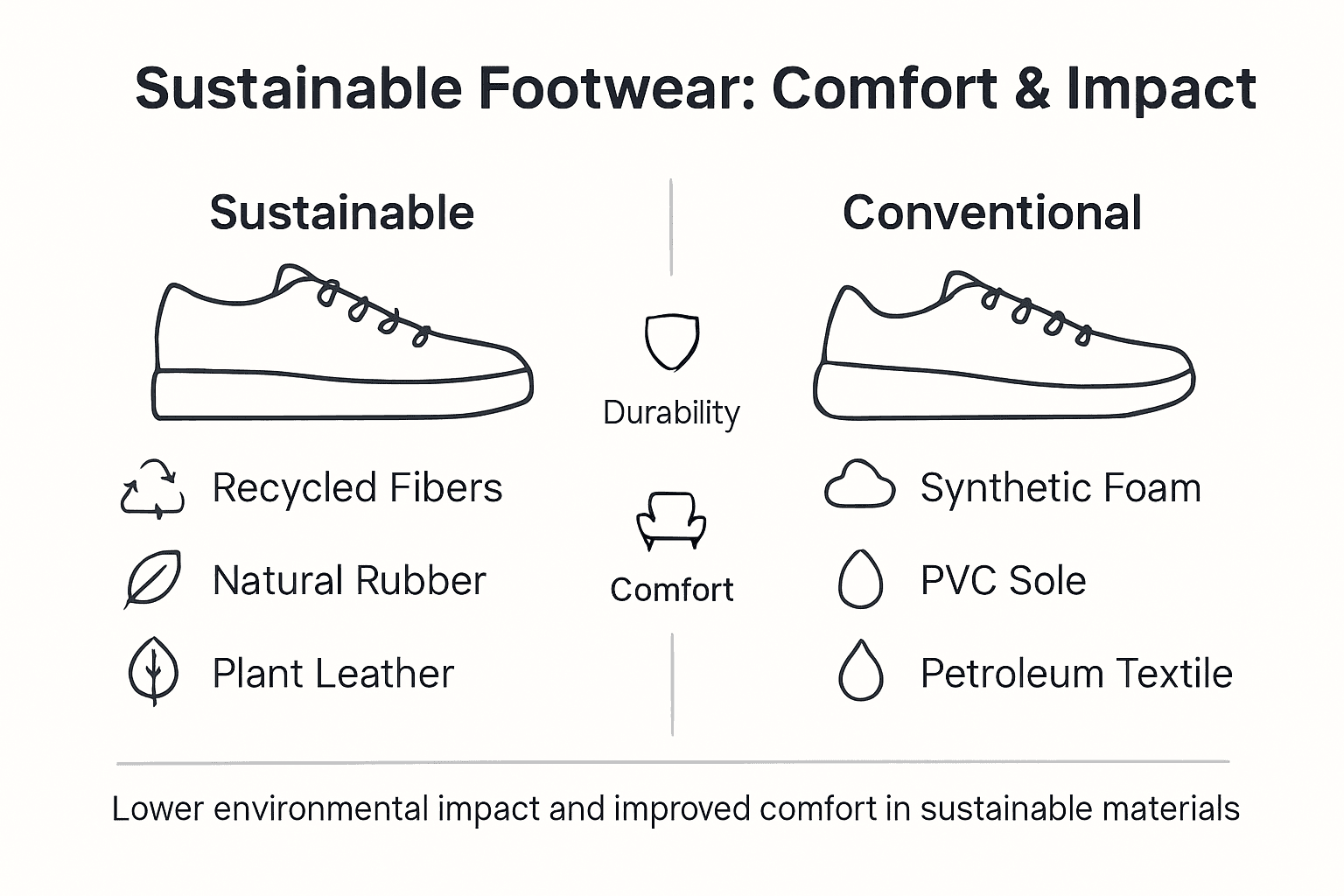
The pathway to energy-efficient footwear involves complex systemic changes that extend beyond material selection. Industry roadmaps for circularity emphasise collaborative approaches that integrate reuse, recovery, and regenerative design principles. These strategies focus on minimising waste, optimising manufacturing processes, and creating shoes with extended lifecycle potential that reduce overall energy consumption and environmental strain.
Key strategies for minimising environmental impact include:
- Utilising renewable energy in manufacturing processes
- Implementing closed-loop recycling systems
- Designing shoes for disassembly and material recovery
- Reducing transportation emissions through localised production
- Selecting low-carbon and biodegradable materials
- Developing modular shoe designs that facilitate repair and refurbishment
By embracing these innovative approaches, footwear manufacturers can significantly reduce their environmental footprint while maintaining product quality and performance. The intersection of technological innovation and ecological consciousness represents a transformative moment in sustainable shoe design.
Pro Tip: Look for footwear brands that transparently communicate their environmental impact metrics and demonstrate a comprehensive commitment to sustainable manufacturing practices.
Comparing Sustainable Versus Conventional Shoes
Comprehensive life cycle assessments reveal profound differences between sustainable and conventional footwear, highlighting significant environmental and performance disparities. Traditional shoe manufacturing typically generates substantially higher greenhouse gas emissions and consumes more non-renewable resources, whereas sustainable alternatives demonstrate remarkable efficiency in material usage and carbon footprint reduction.
The distinctions between sustainable and conventional shoes extend far beyond environmental metrics. While traditional shoes often prioritise immediate cost-effectiveness, sustainable footwear integrates advanced material science, ethical production practices, and long-term performance considerations. Industry benchmarking reports consistently demonstrate that sustainable shoes deliver superior durability, enhanced comfort, and significantly reduced environmental impact compared to their conventional counterparts.
Key comparative characteristics include:
- Carbon emissions during production
- Material sourcing transparency
- Manufacturing energy consumption
- Product lifecycle duration
- Waste generation potential
- End-of-life recyclability
Modern sustainable shoes challenge traditional performance paradigms by proving that ecological responsibility and superior product quality are not mutually exclusive. By integrating innovative materials, advanced manufacturing techniques, and circular design principles, sustainable footwear represents a transformative approach to shoe production that benefits both consumers and the global environment.
The following table highlights the differences between sustainable and conventional footwear across several critical factors:
| Aspect | Sustainable Footwear | Conventional Footwear |
|---|---|---|
| Material Origin | Recycled or renewable sources | Predominantly virgin synthetic materials |
| Energy Use | Prioritises renewable energy | Mostly fossil fuel-based energy |
| Durability | Engineered for longer lifecycle | Designed for short-term use |
| End-of-Life Options | Recyclable or biodegradable | Typically landfill disposal |
| Supply Chain Transparency | High, often third-party verified | Low, rarely communicated |
Pro Tip: When comparing shoe options, examine the manufacturer’s complete sustainability report to understand the genuine environmental and performance credentials of their products.
Step Into Sustainable Comfort with YDA UK Shoes
If you are seeking footwear that truly aligns with sustainable values while supporting your foot health and daily comfort look no further than the Shoes – YDA UK collection. This article outlines the key challenges of combining environmental impact reduction with biomechanical support and energy efficient production. At YDA UK you will find technologically advanced shoes designed not only for style but also to address these exact concerns through innovative materials and ergonomic design.

Discover how you can experience the benefits of sustainable footwear with enhanced comfort and durability by exploring our carefully curated range. Act now and take the first step towards investing in shoes that respect the planet and your feet by visiting https://ydauk.com today. For a personalised selection tailored to women’s styles visit our Womens – YDA UK section and keep up to date with our latest offerings on the Home page – YDA UK. Your journey to sustainable comfort begins here.
Frequently Asked Questions
What materials are commonly used in sustainable footwear?
Sustainable footwear often incorporates materials such as recycled ocean plastics, organic cotton, plant-based leather alternatives, and biodegradable materials, which significantly reduce environmental impact.
How does sustainable footwear compare to conventional shoes in terms of durability?
Sustainable footwear is engineered for a longer lifecycle, often using advanced materials and manufacturing processes that enhance durability, whereas conventional shoes are typically designed for short-term use.
What are some benefits of choosing biodegradable footwear?
Biodegradable footwear offers the advantage of reducing landfill waste at the end of the product’s life, as these materials break down naturally, minimising environmental pollution.
How can I ensure that a footwear brand is genuinely sustainable?
To verify a brand’s sustainability claims, examine their comprehensive sustainability reports, focusing on their materials, manufacturing processes, supply chain transparency, and environmental impact metrics.