
Types of shoe soles: a complete 2026 guide
TL;DR:
- The choice of shoe sole materials and design significantly impacts comfort, support, and durability during wear. Understanding the layers—outsole, midsole, and insole—and matching them to specific activities can extend shoe lifespan and improve foot health. Proper maintenance and informed selection help prevent foot pain and maximize footwear performance over time.
Most people think about how a shoe looks. Very few think about what’s under their foot. The type of shoes sole you choose affects how long you can walk without pain, how safe your footing is on wet ground, and how long the shoe actually lasts. Sole choice is not a minor detail. It shapes every moment of wear, yet most buying decisions still focus on colour, style, or brand. This guide explains the major shoe sole types, what each material actually does, and how to match your sole to your lifestyle.
Table of Contents
- Key takeaways
- The three layers of a shoe sole
- Common shoe sole materials explained
- How sole design affects comfort and support
- Choosing the right sole type for your activity
- Misconceptions and maintenance tips
- My take on sole choice after years in footwear
- How Ydauk approaches shoe sole technology
- FAQ
Key takeaways
| Point | Details |
|---|---|
| Three distinct sole layers | Outsole, midsole, and insole each perform a specific role in comfort and support. |
| Material drives performance | Rubber, EVA, PU, TPU, leather, and crepe each suit different terrains and activities. |
| Sole design shapes stability | Features like sole flare, cup sole, and flex grooves affect biomechanics, not just looks. |
| Match sole to activity | Running, hiking, formal wear, and casual use each need a different sole specification. |
| Care extends sole life | Proper storage and cleaning protect sole materials, especially PU and leather. |
The three layers of a shoe sole
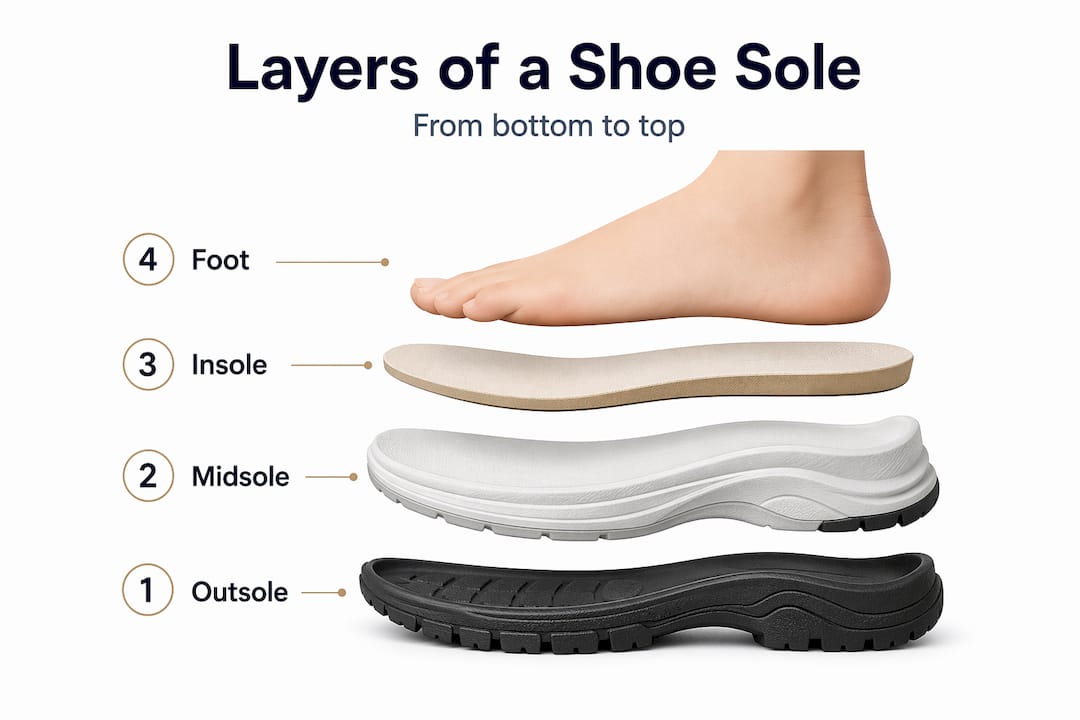
Before exploring individual materials, you need to understand that most shoes don’t have a single sole. They have three. Each layer does a different job, and the quality of each affects how the shoe behaves underfoot.
The outsole is the layer you see on the bottom. It contacts the ground directly, so it handles grip, traction, and abrasion resistance. The outsole material is chosen based on where and how you plan to walk or run. You’ll find rubber, leather, TPU, and even crepe used here.
The midsole sits between the outsole and the upper. This is where cushioning happens. Foam compounds like EVA and PU absorb impact and return energy with each step. The midsole is largely invisible to the buyer, yet it is probably the layer that affects daily comfort the most. A soft, bouncy midsole feels plush on day one but may compress over time. A firmer midsole lasts longer and maintains its structure.
The insole (also called the footbed) is the removable layer inside the shoe. It provides surface comfort and can address arch support or foot alignment issues. Aftermarket insoles improve foot alignment and reduce muscle fatigue across nearly all foot types, not just flat feet. This is often overlooked, because people assume the factory insole is sufficient.
Together, these three layers determine comfort, stability, breathability, and durability. Understanding them is the foundation for everything else in this guide.
Common shoe sole materials explained
This is where shoe sole types diverge most dramatically. The material used in each layer defines the shoe’s character. Below is a breakdown of the main options you’ll encounter.
Leather
Leather outsoles appear most often on formal and dress shoes. They have a slim profile, a refined appearance, and a unique breathability. Leather soles breathe via a 3D fibre structure that creates a pumping effect as you walk, circulating air around the foot. This makes them particularly comfortable in warm, dry conditions. The significant limitation is wet traction. Leather becomes slippery on rain-slicked pavements, and most leather soles offer poor grip until they are worn in and textured.
Rubber
Rubber is the most versatile outsole material available. Rubber soles offer excellent grip, durability, and water resistance, with density typically ranging between 1.10 and 1.40 g/cm³. You’ll find several well-known rubber sole variations in quality footwear. Dainite soles feature a studded pattern suited to city walking. Vibram soles use proprietary compounds for hiking and outdoor performance. Commando soles carry deep, chunky lugs for heavy-duty terrain. The compound matters. Not all rubber grips equally, and harder rubber can be less grippy than softer formulations.
EVA foam
Ethylene vinyl acetate, known as EVA, is the dominant material in athletic footwear midsoles. EVA foam is lightweight and provides excellent cushioning, which is why it features so heavily in running shoes and casual trainers. It compresses under load and springs back quickly, which gives that “bouncy” underfoot feeling. The trade-off is longevity. EVA foam degrades faster than denser foams, and heavily used running shoes typically need replacing after 500 to 800 kilometres of use.
Polyurethane (PU)
PU is denser and heavier than EVA, but it resists compression better over time. It’s used in work boots, walking shoes, and formal footwear that needs to handle sustained daily use. Bio-based PU is an emerging alternative worth knowing about. Standard PU soles can crumble due to hydrolysis when stored in humid conditions, but bio-based PU offers significantly better weather resistance and longevity. If you store shoes in a damp environment, this distinction matters.
Thermoplastic polyurethane (TPU)
TPU is the performance-oriented version of PU. TPU soles deliver durability, good support, and energy return, which makes them the preferred choice for cleated sports shoes and high-end running footwear with stability plates. TPU is harder underfoot than EVA but far more resilient. You’ll often find TPU used as a shank or stability plate inside a midsole rather than as a complete sole layer.
Crepe
Crepe soles come from natural latex rubber and offer a distinctly soft, cushioned underfoot feel. They appear on heritage-style shoes and desert boots, and they perform beautifully on dry, smooth surfaces. Their limitation is the same as leather. Crepe loses traction on wet ground and picks up dirt easily. They’re a comfort-first, casual-environment sole with obvious style appeal.
| Sole material | Key strength | Main limitation | Best use |
|---|---|---|---|
| Leather | Breathability, elegance | Poor wet grip | Formal, dry conditions |
| Rubber | Grip, durability | Weight | Casual, hiking, outdoor |
| EVA foam | Lightweight cushioning | Compresses over time | Running, trainers |
| PU | Long-lasting cushioning | Humidity damage | Work boots, walking shoes |
| TPU | Stability, energy return | Stiffness | Performance sport shoes |
| Crepe | Softness, comfort | Wet traction, dirt | Heritage casual footwear |
Pro Tip: Press your thumb firmly into the midsole of any shoe before buying. Slow rebound means denser foam, and slow rebound foams last longer and retain cushioning far better than foam that springs back instantly.
How sole design affects comfort and support
Material is only part of the story. The shape and structure of a sole determines how the shoe interacts with your foot’s natural mechanics. These are the sole design elements worth understanding.
- Single sole: One continuous layer from heel to toe. Common in formal shoes for a low-profile look. Minimal cushioning.
- Double or dual sole: Two layered construction. Adds cushioning and durability without excessive bulk.
- Cup sole: A moulded rubber outsole that wraps up around the sides of the shoe. Offers excellent lateral support and protection, popular in skate and casual styles.
- Wedge sole: A single angled unit sole that raises the heel without a separate heel block. Common in work boots. Reduces fatigue during prolonged standing.
- Split sole: The outsole is divided into sections under the forefoot and heel. Increases flexibility and ground feel, used in dance shoes and some trail running models.
Beyond structure, sole flare is a concept runners often misunderstand. Sole flare extends the midsole beyond the upper to guide the foot during the gait cycle. It helps runners who overpronate by nudging the foot toward a neutral position. But it is not a fix. Experts are clear that sole flare cannot replace rigid medial support for significant overpronation. If you overpronate and experience pain, consider footwear specifically designed for correcting foot mechanics.
Flex grooves cut into the outsole also matter. They allow the sole to bend at the natural flex point of the foot, reducing resistance and improving efficiency. Shallow or absent grooves on a rigid outsole force the foot to work harder, particularly for the forefoot and arch.
Pro Tip: Arch support benefits nearly all foot types, not just flat feet. Neutral alignment through arch support reduces strain on the entire kinetic chain. Do not wait for pain to appear before considering a supportive sole or insole.
Choosing the right sole type for your activity
Knowing what the materials do is useful. Knowing how to apply that knowledge to your actual life is more useful. Here is how to approach sole selection by activity.
- Walking in the city: Rubber outsoles with moderate tread deliver the grip and durability city pavements demand. A PU midsole offers the longevity needed for daily use. For formal settings, a leather sole with a rubber heel tip is a sensible compromise between style and wet-weather safety.
- Running on roads: Look for EVA midsoles with a reasonable thickness. The lighter the shoe, the more you feel the ground. For more protection, look at shoes with TPU stability components. Read the outsole technology details before deciding.
- Hiking and trail use: Deep multi-directional lugs and heel brakes in rubber outsoles provide the superior grip trail terrain demands. Vibram compounds are widely trusted here. The sole needs to shed mud and grip rock simultaneously. That requires a specific lug geometry and compound hardness.
- Formal occasions: Leather soles suit dry, indoor environments. Avoid them in wet weather unless the shoe has a rubberised toe and heel. Classic Goodyear-welted construction allows resoling when the leather wears through.
- Casual everyday wear: Crepe and cup soles cover most needs here. If comfort is the priority, check that the midsole has genuine foam density rather than a thin layer over a hard base. For active lifestyles, matching your sole to your daily activity demands makes a measurable difference over weeks of wear.
| Activity | Recommended outsole | Recommended midsole |
|---|---|---|
| City walking | Rubber (moderate tread) | PU |
| Road running | Rubber or blown rubber | EVA or TPU |
| Hiking and trail | Rubber (deep lugs) | EVA with TPU shank |
| Formal dress | Leather (with rubber heel) | Single or double sole |
| Casual daily wear | Crepe or cup rubber | EVA or PU |
Misconceptions and maintenance tips
Several common beliefs about shoe soles are simply wrong, and they lead to poor buying decisions and neglected footwear.
- “Leather soles are uncomfortable.” This is only true before break-in. Leather moulds gradually to your foot’s shape and becomes increasingly comfortable over weeks of wear. The discomfort is upfront investment, not permanent.
- “All rubber soles grip the same.” Compound hardness, lug pattern, and rubber type vary widely. A hard rubber outsole on a fashion trainer shares almost nothing with a soft Vibram trail compound. Grip is not guaranteed by rubber alone.
- “Shining your sole improves it.” Polish and shine are for the leather upper. Applying product to your outsole can reduce grip and accelerate surface degradation. The sole should be cleaned, not conditioned.
- PU sole storage matters. Keep PU-soled shoes in a cool, dry place. Humidity causes hydrolysis, a chemical breakdown that makes the sole literally crumble apart. This is not a fault in the shoe. It is a material characteristic that proper storage prevents.
- Resoling is worth considering. Quality leather and Goodyear-welted shoes can be resoled multiple times, extending their lifespan significantly. A resoled quality shoe often outlasts several budget pairs. Ask your cobbler about compatible sole options for your shoe construction.
My take on sole choice after years in footwear
I’ve spoken with enough people about foot pain to know that nearly all of it comes down to one thing: the sole choice didn’t match the person’s foot or their lifestyle. Fashion won. Function lost.
Here’s what I genuinely believe: your foot’s biomechanics should lead every shoe purchase, not the colour or the silhouette. If you overpronate, a flat leather sole will eventually hurt you. If you stand for ten hours a day, a thin EVA midsole will bottom out within months. These are predictable, avoidable problems.
The most underrated development in modern footwear is the hybrid sole. Combining a rubber outsole with a bio-based PU or TPU midsole gives you durability, weather resistance, and cushioning in a single shoe. This is no longer a premium-only feature. It’s appearing at accessible price points, and it deserves more attention than it gets.
I also think people dramatically underestimate what stability features do for long-term foot health. A sole that keeps your foot in neutral alignment reduces strain on the ankle, knee, and lower back. You don’t feel those benefits immediately. You notice them three months later when you’re not in pain.
Prioritise comfort and support. Style can follow.
— Panagiotis
How Ydauk approaches shoe sole technology
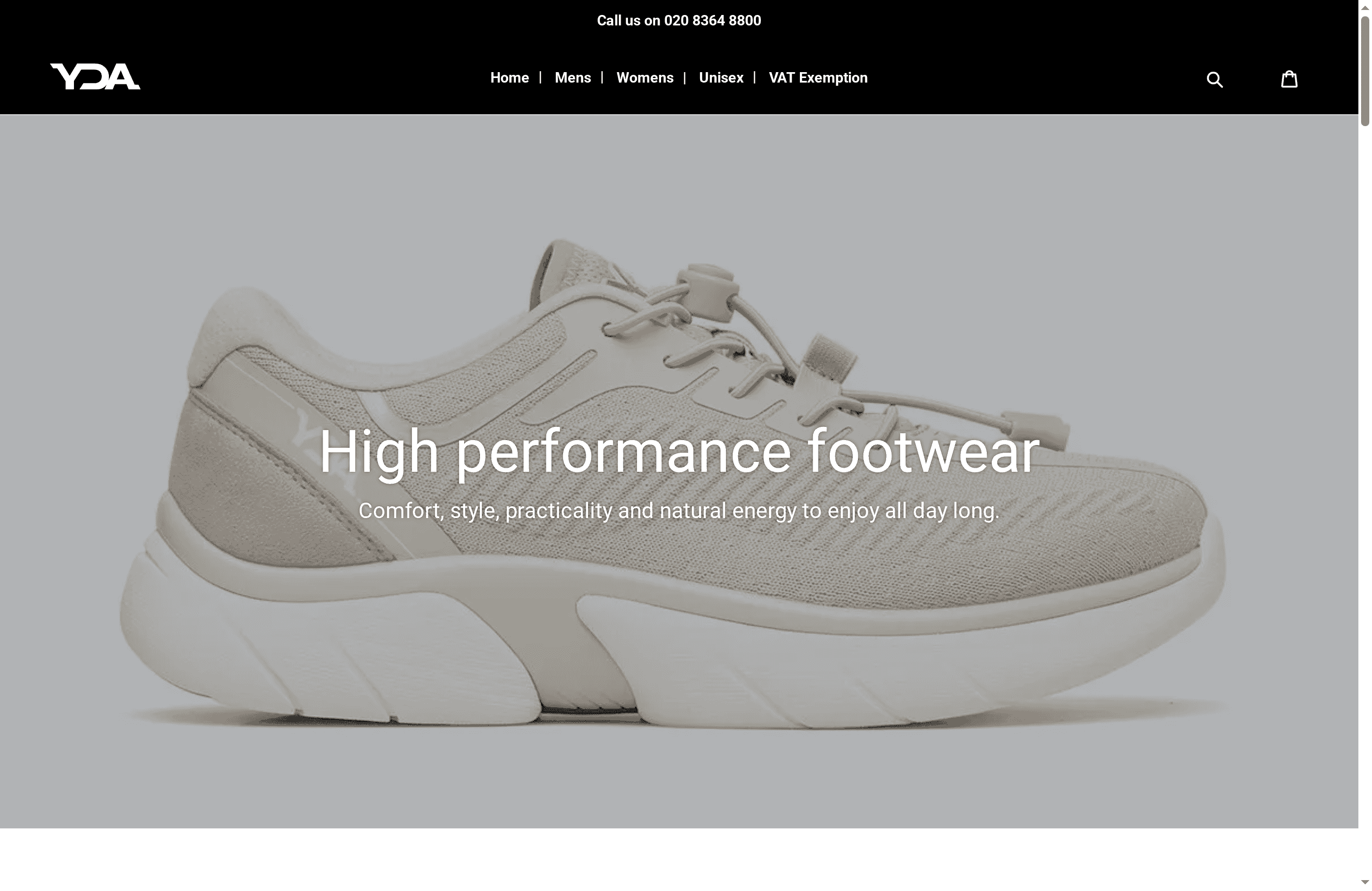
Ydauk builds footwear around a straightforward idea: the sole should work as hard as the person wearing it. The YDA shoe technology combines advanced sole materials with foot health principles, so every layer from outsole to insole is designed with function in mind. The result is footwear that offers genuine cushioning, real stability, and breathable comfort across long days of wear. If you’ve spent any time researching how to choose shoe soles, you’ll recognise that Ydauk applies exactly the design thinking this guide describes: matching materials to biomechanics, not just to aesthetics. Explore the full range and technology overview at Ydauk to find footwear where the sole actually matches your needs.
FAQ
What is a shoe sole?
A shoe sole is the bottom portion of a shoe, comprising three layers: the outsole (ground contact), the midsole (cushioning), and the insole (internal footbed). Each layer contributes to comfort, support, and durability.
What is the best sole type for running shoes?
EVA foam midsoles paired with rubber outsoles are the standard for road running shoes, offering lightweight cushioning and reliable grip. TPU components are added for stability in performance models.
Which sole material lasts the longest?
TPU and dense PU soles typically outlast EVA foam in terms of structural integrity. Rubber outsoles also offer strong durability, particularly on varied terrain where softer materials would wear quickly.
Are leather soles good for everyday use?
Leather soles work well in dry, formal environments and become more comfortable over time as they mould to the foot. They are not suited to wet weather or rugged terrain due to poor wet traction.
How do I know when my shoe sole needs replacing?
Check the outsole for worn-through tread, particularly under the heel and ball of the foot. A midsole that no longer springs back when pressed, or a shoe that feels flat and hard underfoot, signals the cushioning has compressed beyond usefulness.