
Best type of shoe for standing all day: 2026 guide
TL;DR:
- Proper footwear for standing all day combines structural support like firm heel counters and arch support rather than relying solely on cushioning. Achieving the right fit, including toe box width and heel snugness, is critical to prevent foot pain and injury over extended periods. Shoes with durable support, removable insoles, and appropriate environmental features help maintain comfort and foot health during long hours of standing.
If you spend most of your working day on your feet, you already know the toll it takes. Aching arches, sore heels, and fatigue that creeps up through your calves are all familiar signs that your footwear is not doing its job. Many people reaching for the best type of shoe for standing all day assume that the softer the shoe, the better the relief. That assumption is wrong, and it costs people real comfort. This guide cuts through the noise to explain exactly what structural features, fit principles, and shoe types actually work when you are standing for hours at a stretch.
Table of Contents
- Key takeaways
- What makes the best type of shoe for standing all day
- Fit and sizing: the overlooked factor
- Comparing shoe types for all-day standing
- Matching your shoe choice to your specific needs
- My honest take on choosing shoes for standing
- Why Ydauk is worth exploring
- FAQ
Key takeaways
| Point | Details |
|---|---|
| Structure beats softness | Cushioning alone is not enough; a firm heel counter and arch support are equally critical for long-standing comfort. |
| Fit matters as much as features | Over 60% of adults wear the wrong shoe size, which causes foot pain regardless of how well-designed the shoe is. |
| Running shoes lead the category | Walking and running style shoes offer the best combination of shock absorption, torsional rigidity, and stability. |
| Shoe type must match environment | The right choice for a kitchen worker differs from that of a retail assistant; flooring and movement patterns matter. |
| Replace shoes regularly | Cushioning and structural support degrade with wear; even a great shoe becomes a liability if it is past its life. |
What makes the best type of shoe for standing all day
Most people focus on how a shoe feels in the first ten seconds of trying it on. Comfort at rest is not the same as comfort after eight hours of standing. The features that actually determine whether you finish the day with aching feet or not are structural, and understanding them changes how you shop.
Cushioning with integrity. Good cushioning absorbs the repeated impact of standing and shifting weight, but it needs to remain firm enough to prevent the shoe from collapsing under you. High-cushion shoes often compress and lose support over time, which means a shoe that felt great in week one can become the source of your pain by month three.
Arch support. Your arch acts as a natural shock absorber, and it needs backing to do that job properly. Podiatrists recommend arch support tailored to your foot type, whether you have flat feet, a neutral arch, or a high arch. A flat-footed person standing all day in a neutral shoe is fighting their own anatomy.
Firm heel counter. The heel counter is the structured cup at the back of the shoe that holds your heel in place. A firm heel counter prevents the small, repetitive micro-motions that irritate the Achilles tendon and plantar fascia over long periods. If you can squeeze the back of a shoe flat with your fingers, it is not going to protect your heel.
Breathable materials. Feet swell during the day and generate significant heat. A shoe built from breathable mesh or perforated uppers reduces moisture build-up, which in turn lowers the risk of blisters and skin irritation after hours of wear.
Slight heel lift. A heel that sits approximately 12 to 15 millimetres higher than the forefoot reduces strain on the Achilles tendon and calf muscles. This is why a completely flat shoe, despite feeling minimal and natural, can actually leave you in more pain after a full day of standing.
Removable insoles. Removable insoles allow you to replace the factory footbed with a custom orthotic or a specialist insole, giving you personalised arch correction without needing to change the shoe itself.
Pro Tip: Before buying any shoe for all-day standing, press your thumb firmly into the midsole. If it compresses all the way to the outsole, the cushioning will not last a full shift.
Fit and sizing: the overlooked factor
A beautifully engineered shoe will still destroy your feet if it does not fit properly. Over 60% of adults wear the wrong shoe size, and the consequences go well beyond minor discomfort. Ill-fitting footwear is a leading cause of plantar fasciitis, blisters, and nerve compression in the forefoot.
Here is how to get the fit right:
- Measure your feet in the afternoon. Feet swell throughout the day. Measuring in the morning means you may end up with shoes that feel tight by 3pm.
- Check the toe box width. Wide toe boxes allow your toes to splay naturally, which improves balance and reduces pressure on the smaller toe joints. You should be able to wiggle all five toes freely.
- Check the length with room to spare. There should be roughly a thumb’s width of space between your longest toe and the end of the shoe. No gap means you are risking nail bruising on long shifts.
- Assess the heel fit. Your heel should sit snug without slipping. A heel that lifts even slightly with each step will create friction and eventually a blister.
- Walk and stand in the shoe for at least five minutes in the shop. Many shoes feel comfortable while seated and reveal their problems the moment you put weight on them for any length of time. You can use this practical shoe testing guide to work through the key checks.
Pro Tip: If you use custom orthotics, bring them with you when trying on new shoes. The factory insole takes up volume, and your orthotic may change the fit considerably once swapped in.
Heel-to-toe drop is another fit consideration that often gets ignored. A moderate drop of around 6 to 10 millimetres suits most people who spend long periods standing, as it supports a natural foot position without placing stress on the heel or forefoot. Extremely high drops push your weight forward; very low drops can overload the calf and Achilles.
Comparing shoe types for all-day standing
Not every shoe category is built equally when it comes to prolonged standing. Understanding the trade-offs helps you match the right type to your job and environment.
| Shoe type | Best features | Typical use case | Main drawbacks |
|---|---|---|---|
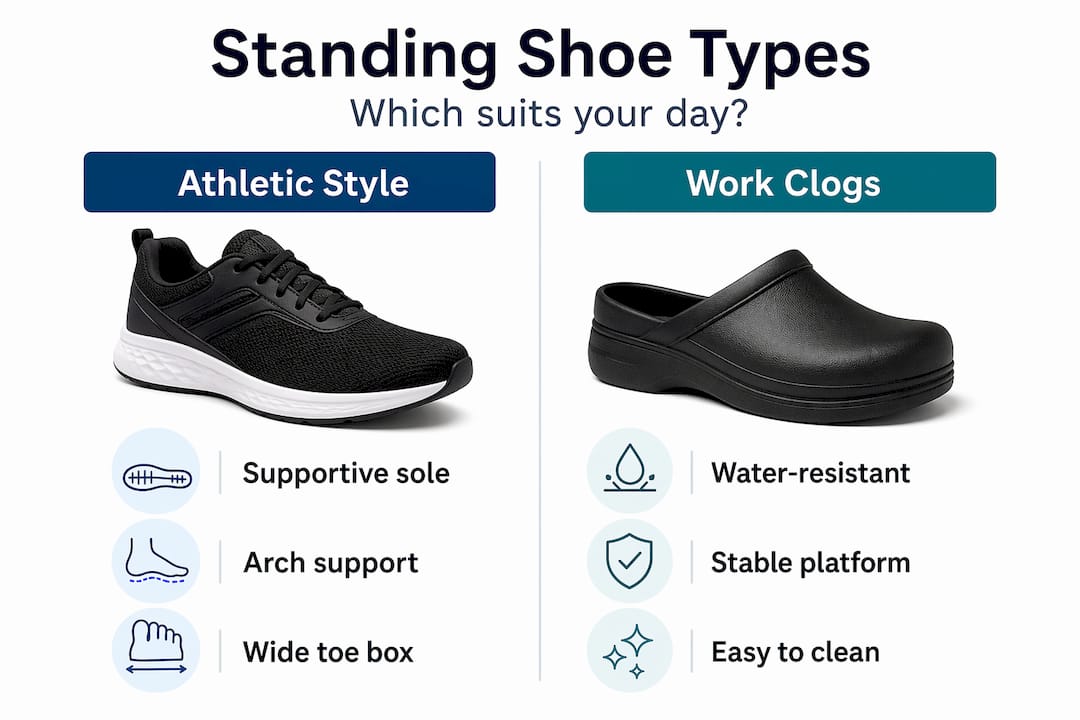
| Running/walking shoes | Superior cushioning, torsional rigidity, breathable uppers | Retail, service, healthcare | Can look casual; not always dress-code appropriate |
| Clogs | Easy on/off, stable base, slip-resistant soles | Kitchens, clinical settings | Less lateral support; limited fit adjustment |
| Supportive loafers/dress shoes | Office-appropriate, firm heel counter options available | Office and corporate environments | Often narrower toe boxes; less cushioning |
| Sandals with arch support | Breathable, adjustable fit | Warm environments, light-duty standing | Minimal ankle support; not suitable for active or hazardous jobs |
Running and walking style shoes consistently come out ahead as the best shoes for working on your feet all day. Torsional rigidity of 3 out of 5 or above is a practical benchmark to look for. A shoe you can twist easily in the middle is a shoe that will allow your foot to roll inward under load, which leads to fatigue and injury over time.
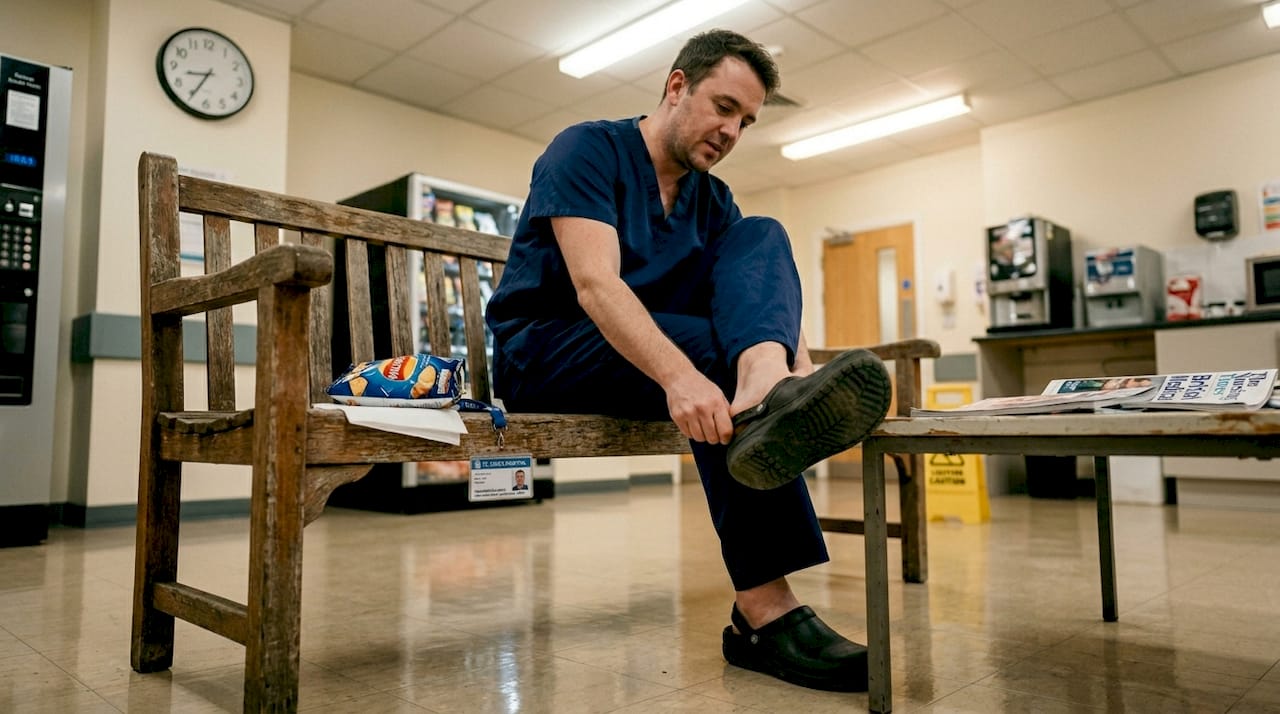
Clogs, particularly those used in catering and healthcare, offer genuine value in specific environments. Their stable, rocker-style soles reduce the effort of shifting weight, and many models include anti-slip outsoles for wet surfaces. The limitation is lateral stability. On dynamic standing jobs where you pivot and turn frequently, clogs can leave the ankle unsupported.
Dress shoes deserve more nuance than they usually receive in conversations about the most comfortable shoes for standing all day. The category includes many poorly constructed options, but purpose-built supportive dress shoes with a firm heel counter, contoured footbed, and a wider toe box exist and perform well. The key is avoiding styles that prioritise silhouette over structure.
For guidance on balancing comfort and appearance when choosing shoes for standing, this shoe buying workflow covers the key decisions clearly.
Matching your shoe choice to your specific needs
Choosing the best shoes when on feet all day is not a one-size-fits-all decision. Your job, your flooring, your foot type, and even your movement patterns within the shift all influence what will work best.
- Kitchen and food service workers need slip-resistant outsoles as a non-negotiable. Clogs or closed-toe running shoes with anti-slip ratings are the practical choice. Hard kitchen tiles are unforgiving, so maximum cushioning with structural rigidity is the priority.
- Retail and service workers cover significant ground and do a mixture of standing and walking. Running shoes with a wide stable platform and responsive cushioning work well here, combined with a toe box wide enough to accommodate foot swell during longer shifts.
- Office workers standing at sit-stand desks often make the mistake of wearing dress shoes for their standing periods. A supportive loafer or a quality walking shoe under smart trousers offers far better protection for the hours spent upright.
- People with flat feet or overpronation need motion control features: a structured medial post, a firmer midsole on the inner edge, and a heel counter rigid enough to resist inward roll.
- People with high arches need extra cushioning and a flexible forefoot to compensate for the reduced natural shock absorption their arch provides.
When it comes to breaking in new shoes, do it gradually. Wear them for two to three hours on your first few shifts rather than committing to a full eight-hour day immediately. Even the best shoes for all day wear need to adapt to your foot shape, and rushing the process leads to blisters that put you back in your old, worn-out pair.
Common mistakes when choosing shoes for standing
Getting the shoe type and fit right is one thing. Avoiding the decisions that quietly undermine your comfort is another matter entirely.
- Choosing a shoe that is too soft or flexible. A shoe that folds in half when you bend it offers almost no arch or heel stability. Poor footwear support is directly linked to inflammatory conditions such as plantar fasciitis and neuromas.
- Prioritising style over structure. Many people buy a shoe because it looks good, then wonder why their feet hurt. Style and support are not mutually exclusive, but structure must come first.
- Ignoring toe box width. Narrow toe boxes are one of the most common fit errors. They compress the forefoot, restrict natural splay, and cause pressure points that worsen significantly over a full day on your feet.
- Relying on cushioning alone. Cushioning without a firm heel counter is like sleeping on a soft mattress with no bed frame. The motion control under load is what reduces fatigue, not just the padding underfoot.
- Wearing shoes past their useful life. Midsole materials compress permanently over time. Most supportive shoes for all-day standing need replacing every 500 to 800 kilometres of use, or roughly every 12 to 18 months of daily wear.
Pro Tip: Press your thumb into the heel of your current shoes. If the foam does not spring back quickly, the structural support is already compromised. No amount of insole upgrades will fix a dead midsole.
My honest take on choosing shoes for standing
I have spent considerable time studying footwear for people who stand all day, and the single most consistent mistake I see is chasing softness. People feel a pillowy shoe and assume their feet will thank them. What actually happens is that an ultra-soft shoe without structural rigidity allows the foot to pronate and shift continuously, and that constant micro-movement is exhausting. The muscles and tendons are working the whole time just to stabilise what the shoe should be stabilising for them.
What I have found to be genuinely reliable is a combination of firm heel counter, moderate cushioning with lasting resilience, and correct fit. The last point is the one people underestimate most. I have seen people invest in excellent shoes and still end up in pain because they sized up to accommodate a wide foot rather than finding a genuinely wide-fit option. The length was off, the heel was slipping, and the toe box was still wrong. Fit customisation, whether through wide-fit sizing or supportive footwear choices tailored to your arch type, is where the real gains are.
The readers who tell me they finally sorted their standing-related foot pain are almost always the ones who stopped buying shoes based on appearance or brand reputation alone and started applying a structured approach to what their specific feet actually need.
— Panagiotis
Why Ydauk is worth exploring
If you are ready to take standing comfort seriously, Ydauk has developed footwear with the structural principles covered in this guide built directly into the design.
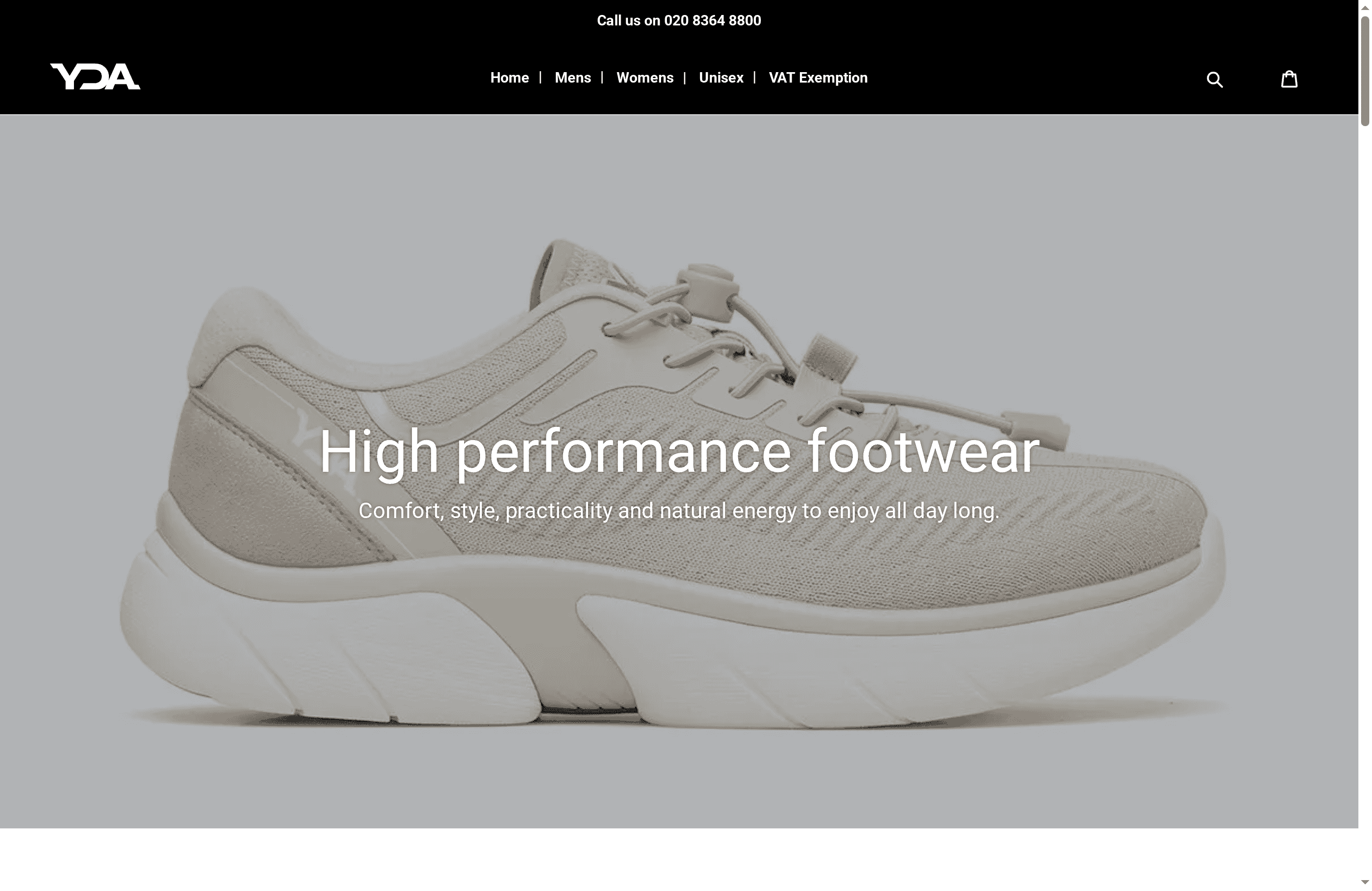
Ydauk’s YDA shoe technology applies specialist foot health engineering to deliver the kind of arch support, heel counter integrity, and cushioning balance that podiatrists actually recommend. The shoes are designed with removable insoles to accommodate orthotics, and the fit options reflect the reality of how different feet need different support structures. Whether you are on your feet in a professional environment or at home for long periods, Ydauk’s range is built around what genuinely works rather than what simply looks good on a shelf.
FAQ
What is the best type of shoe for standing all day?
Running or walking style shoes with torsional rigidity, a firm heel counter, arch support, and a wide toe box consistently perform best for all-day standing. They combine shock absorption with the structural stability needed to reduce foot fatigue over long shifts.
Is cushioning enough to make a shoe comfortable for standing?
No. While cushioning helps absorb impact, softness alone does not solve standing discomfort. A firm heel counter and proper arch support are equally critical to prevent fatigue and overuse injuries like plantar fasciitis.
How do I know if my shoe fits correctly for standing all day?
Your heel should sit snug without lifting, there should be a thumb’s width of space at the toe, and your toes should be able to splay freely inside the toe box. Proper shoe fit is as important as any design feature when it comes to preventing pain during prolonged standing.
How often should I replace shoes I wear for standing all day?
Most supportive shoes for all-day standing need replacing every 500 to 800 kilometres of use, which typically equates to every 12 to 18 months of regular daily wear. When the midsole foam no longer springs back under thumb pressure, the structural support has already degraded.
Can I use orthotics in regular shoes for standing all day?
Yes, provided the shoe has removable insoles and sufficient internal volume to accommodate the orthotic without causing the shoe to feel tight. Always bring your orthotics when fitting new shoes to check the combined fit.