
Why avoid tight shoes: protecting your foot health
TL;DR:
- Tight shoes cause immediate skin injuries like blisters, corns, and calluses, which can become infected.
- Chronic tight footwear leads to deformities such as bunions and hammertoes, requiring surgical correction.
- Ill-fitting shoes impair circulation and nerve function, increasing risks for pain, numbness, and slow healing.
Most people assume that a snug shoe means a supportive shoe. It feels logical. But that belief quietly causes more foot damage than almost any other footwear habit. Tight shoes compress, squeeze, and restrict your feet in ways that build up over months and years, leading to problems that range from painful blisters to permanent structural changes in your bones. This guide breaks down exactly what happens when your shoes are too tight, why the effects reach far beyond your feet, and what you can do right now to protect your long-term comfort and health.
Table of Contents
- How tight shoes cause immediate discomfort and skin problems
- Long-term foot deformities linked to tight footwear
- How tight shoes harm nerves and circulation
- The domino effect: tight shoes and postural pain throughout your body
- Why shoe comfort is not just a luxury—it’s a critical health choice
- Find your perfect fit with comfort-first shoes
- Frequently asked questions
Key Takeaways
| Point | Details |
|---|---|
| Early damage warning | Blisters and calluses are often the first clear signs your shoes are harming your feet. |
| Risk of long-term deformity | Persistent tight footwear can cause bunions, hammertoes, or ingrown toenails. |
| Nerve and blood issues | Tight shoes can lead to nerve pain or poor circulation that you may not notice immediately. |
| Whole-body discomfort | Foot problems from tight shoes can cause knee, hip, or back pain due to altered posture. |
| Fit before fashion | Prioritising comfort and correct fit when choosing shoes protects your long-term health much more than style does. |
How tight shoes cause immediate discomfort and skin problems
The first signs of trouble are usually the ones we dismiss. A small blister on your heel. A patch of hardened skin on your little toe. A red mark where the shoe’s edge digs in. These feel like minor inconveniences, but they are your body’s early warning system.
Tight shoes cause blisters, corns, and calluses due to friction and pressure against the skin. When your foot is constantly rubbing against a surface that doesn’t give, the skin responds by forming a protective layer. That’s a callus. When fluid builds up beneath the skin from repeated friction, you get a blister. Corns form when pressure concentrates on a single point, particularly over bony areas like the tops of toes.
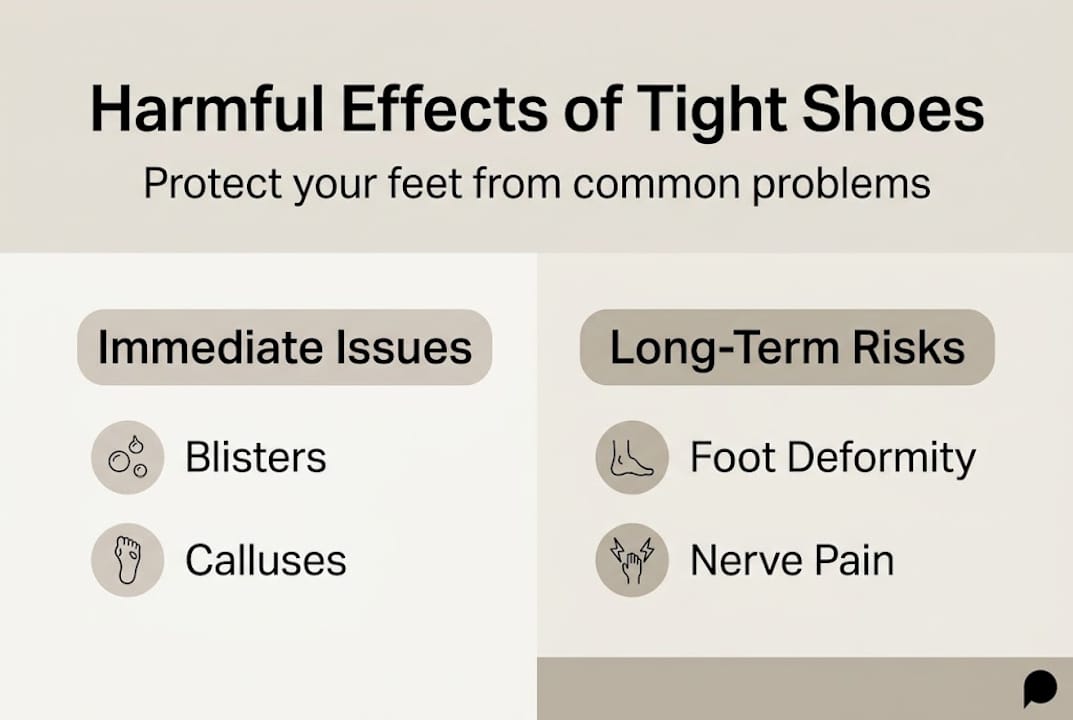
These are not cosmetic problems. Left untreated, blisters can burst and become infected. Corns can grow deep enough to cause sharp pain with every step. Calluses can crack and bleed, especially in dry conditions. The foot ailments caused by ill-fitting shoes are well-documented, and they almost always begin with these overlooked early signs.
Here are the most common immediate skin and surface problems caused by tight shoes:
- Blisters on the heel, ball of the foot, or toes
- Corns on the tops or sides of toes where pressure concentrates
- Calluses on the sole or sides of the foot from repeated friction
- Redness and chafing along the edges of the shoe
- Ingrown toenails caused by the shoe pressing the nail into the surrounding skin
Pro Tip: If you notice redness or a hot spot during the day, don’t push through it. That sensation is your skin beginning to break down. Addressing it early prevents a small problem from becoming a painful wound.
“The skin on your feet is tough, but it is not indestructible. Repeated pressure in the same spot will always cause damage, no matter how gradually it builds.”
The Mayo Clinic risk factors overview highlights how footwear that compresses the foot is a primary driver of many common foot conditions. The daily habit of ignoring minor discomfort is exactly how these conditions escalate into something much harder to treat.
Long-term foot deformities linked to tight footwear
Beyond immediate pain and surface injuries, the long-term risks of tight shoes can be far more serious. When you repeatedly force your foot into a shape it was not designed to hold, the bones and joints begin to adapt. And not in a good way.
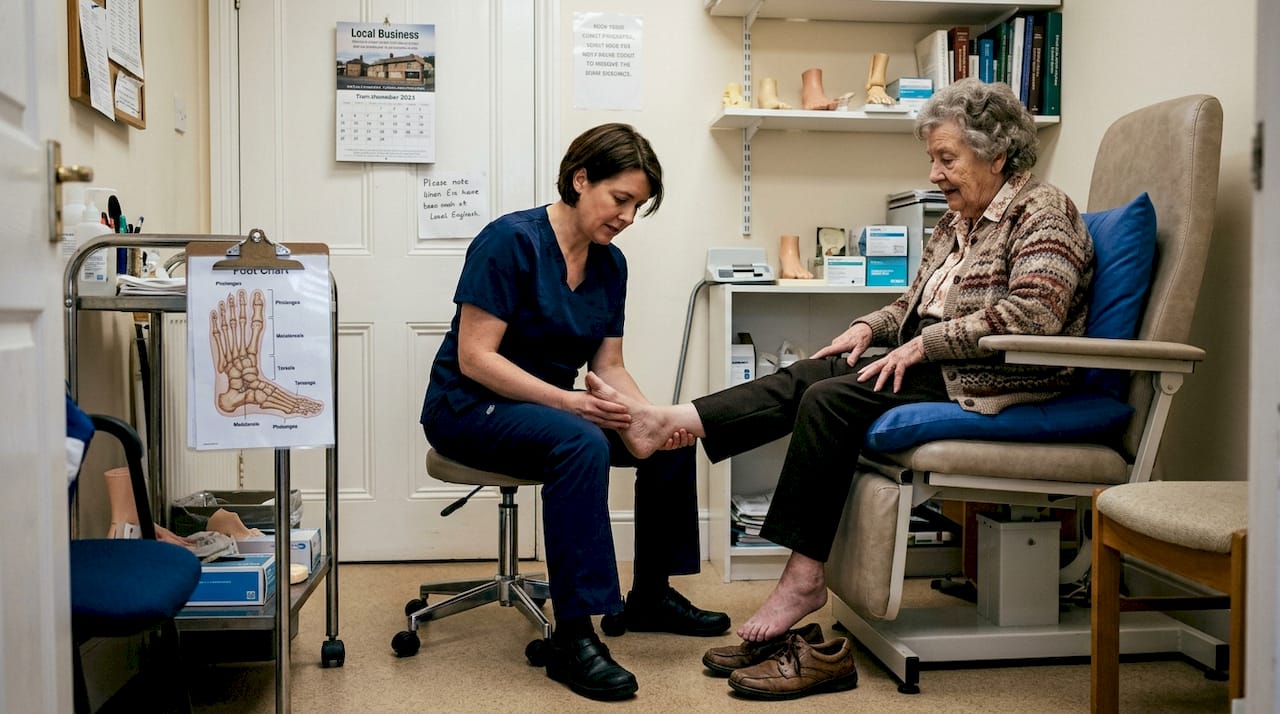
Tight shoes contribute to deformities like bunions, hammertoes, and ingrown toenails by compressing toes and altering bone alignment. A bunion forms when the big toe is pushed inward over time, causing the joint at its base to protrude outward. A hammertoe occurs when a toe becomes permanently bent at the middle joint, often because the shoe is too short or too narrow.
Here is how these deformities typically develop:
- Compression begins: The shoe presses the toes together or forces them into an unnatural angle.
- Soft tissue adapts: Tendons and ligaments shorten or tighten around the new position.
- Bone alignment shifts: Over months or years, the bones themselves begin to reposition.
- The deformity becomes fixed: What started as a flexible, correctable problem becomes a rigid structural change.
- Surgical intervention may be required: At this stage, conservative treatments like orthotics or wider shoes may no longer be enough.
Studies suggest that people wearing ill-fitting shoes face an over 60% increased risk of developing painful foot conditions including metatarsalgia, a condition where the ball of the foot becomes inflamed and acutely painful.
Understanding the importance of proper shoe fit is not just about comfort in the short term. It is about preserving the structural integrity of your feet for decades. If you notice your toes beginning to overlap, a visible bump forming at the base of your big toe, or a toe that no longer lies flat, these are warning signs that structural change is already underway. Exploring proper shoe fitting for health guidance can help you course-correct before the damage becomes permanent.
How tight shoes harm nerves and circulation
Even when foot shape seems unchanged, the dangers of tight shoes can affect nerves and blood vessels in ways that are easy to miss. You might feel a tingling sensation in your toes after a long day. Or a burning feeling across the ball of your foot. Or your feet simply go numb. These are not random. They are the result of compression on nerves and blood vessels.
Nerve compression from tight shoes causes peripheral neuropathy symptoms like pain, burning, and Morton’s neuroma. Morton’s neuroma is a thickening of the tissue around a nerve between the toes, most often between the third and fourth toes. It feels like standing on a pebble that isn’t there. It is caused directly by repeated nerve compression, and tight, narrow shoes are the leading trigger.
| Symptom | Likely cause | Who is most at risk |
|---|---|---|
| Tingling or numbness in toes | Nerve compression | Everyone, especially diabetics |
| Burning sensation across the ball | Morton’s neuroma | People in narrow shoes |
| Cold feet despite warm conditions | Restricted blood flow | Those with circulatory conditions |
| Slow-healing sores or blisters | Poor circulation | Diabetics, older adults |
| Fatigue in feet and legs | Reduced blood return | People on their feet all day |
For people with diabetes, these risks are significantly amplified. Diabetic peripheral neuropathy already reduces sensation in the feet, meaning a tight shoe can cause serious damage without the person even feeling it. A sore that might heal in days for a healthy person can take weeks or months for a diabetic, increasing the risk of infection and, in severe cases, amputation.
Research published on plantar fasciitis and footwear also links poor shoe fit to increased strain on the plantar fascia, the band of tissue running along the sole of the foot. When circulation is compromised and the fascia is under stress, recovery from any foot injury slows dramatically.
Pro Tip: If you are buying shoes for pain relief, always measure both feet and fit to the larger one. Feet swell throughout the day, so try shoes on in the afternoon when your feet are at their largest. Explore buying shoes for pain relief for more practical guidance.
The domino effect: tight shoes and postural pain throughout your body
The story doesn’t stop at your feet. Tight shoes can throw off your entire body. When your feet hurt, you change the way you walk. You shift weight, alter your stride, and compensate with your ankles, knees, hips, and lower back. Over time, these compensations become habits, and those habits cause pain far removed from your feet.
Ill-fitting shoes alter gait and posture, causing knee, hip, and back pain that many people never connect to their footwear. Your body is a chain. A problem at the base affects everything above it.
| Body area | Effect of tight shoes | Effect of well-fitted shoes |
|---|---|---|
| Feet | Blisters, deformity, nerve pain | Stable, supported, comfortable |
| Ankles | Restricted movement, instability | Natural range of motion maintained |
| Knees | Increased stress on joints | Even load distribution |
| Hips | Misalignment, muscle imbalance | Balanced posture and stride |
| Lower back | Chronic pain, disc pressure | Reduced spinal strain |
Here are some signs that your back, knee, or hip pain may actually be starting in your shoes:
- Pain that worsens after a full day in a particular pair of shoes
- One side of your body hurting more than the other
- Relief when you switch to looser or more supportive footwear
- A noticeable change in how you walk when barefoot versus shod
“Your feet are the foundation of your entire body. A compromised foundation means a compromised structure above it.”
The good news is that this chain reaction works in reverse too. Switching to better-fitting footwear can bring relief at multiple levels simultaneously. Reducing pain with better footwear is often one of the fastest and most cost-effective changes a person can make. A thoughtful footwear selection for comfort process can prevent years of unnecessary pain and treatment.
Why shoe comfort is not just a luxury—it’s a critical health choice
Here is the uncomfortable truth: most of us choose shoes the wrong way. We choose by appearance first, price second, and fit somewhere after that. The fashion industry and retail environment are designed to make this worse, with narrow displays, pressure to buy in-store, and marketing that links style to identity rather than function to health.
We have seen, time and again, that people who prioritise fit and foot health from the outset avoid a cascade of problems that others spend years and significant money trying to fix. Back pain that clears up. Knee discomfort that disappears. Fatigue that lifts. Not from surgery or medication, but from simply wearing the right shoes.
The connection between footwear and whole-body wellbeing is rarely discussed in everyday health conversations. People see a physiotherapist for their back, a GP for their knees, and never once consider that their shoes are the root cause. Understanding the health-oriented shoe shopping process is a genuinely underrated health skill.
Comfort is not a luxury feature. It is the baseline requirement. Any shoe that causes pain is not doing its job, regardless of how it looks or what it costs.
Find your perfect fit with comfort-first shoes
Now that you understand the wide-reaching impact of tight footwear, the next step is finding shoes that actively support your feet rather than work against them.

At YDA UK, every shoe is designed with foot health at its core. The YDA shoe technology combines advanced materials and ergonomic design to support natural foot movement, reduce pressure points, and promote healthy circulation. Whether you are dealing with existing foot discomfort or simply want to prevent future problems, YDA UK’s range offers a practical, evidence-informed solution. Explore the full collection and take the first step towards footwear that genuinely works for your body.
Frequently asked questions
What are the first signs that my shoes are too tight?
Blisters, redness, tingling, or numbness after a short time wearing your shoes suggest they are too tight. Tight shoes cause blisters and calluses through friction and pressure, and these are the earliest warning signs to act on.
Can tight shoes cause permanent foot damage?
Yes, long-term use can result in deformities like bunions or hammertoes that sometimes require surgery. Tight shoes alter bone alignment progressively, and once structural changes are fixed, conservative treatment may no longer be sufficient.
How do tight shoes affect people with diabetes?
Tight shoes can worsen nerve issues and slow healing, significantly increasing the risk of ulcers and infections. Nerve compression from tight shoes causes peripheral neuropathy symptoms that are especially dangerous when sensation is already reduced.
Is foot pain always related to shoe fit?
Shoe fit is a very common cause, but not the only one. Other factors include injuries, medical conditions, and overuse. That said, metatarsalgia and plantar fasciitis are frequently triggered or worsened by poor-fitting footwear, making fit the first thing worth investigating.