
What makes a comfortable shoe: a buyer's guide
TL;DR:
- Proper shoe comfort depends primarily on a precise fit that matches your foot shape and prevents pressure points. Cushioning and support must be balanced and tailored to your biomechanics to ensure long-term comfort and stability. Regularly testing, rotating, and replacing shoes help maintain peak comfort and foot health over time.
Most people assume that what makes a comfortable shoe is simply how soft it feels when you press the sole in the shop. That assumption leads to a lot of disappointed feet. Shoe comfort is actually a perceptual experience, one shaped by the brain’s response to stable, predictable foot-shoe interactions. Fit, cushioning, arch support, materials, and construction all work together. Get one wrong and the others cannot compensate. This guide breaks down each factor so you can make smarter choices the next time you buy.
Key takeaways
| Point | Details |
|---|---|
| Fit is the foundation | Shoes that do not match your foot shape cause pressure points regardless of cushioning quality. |
| Cushioning needs balance | Excessive softness reduces stability; a firm, energy-returning midsole tends to feel better over long wear. |
| Arch support must match your foot | Flat feet, neutral arches, and high arches each need a different type of support to avoid strain. |
| Materials affect breathability and fatigue | Lightweight, breathable uppers reduce moisture and reduce how tired your feet feel by the end of the day. |
| Replace before cushioning fails | Midsole foam degrades silently; replacing shoes every 300 to 500 miles prevents comfort loss. |
What makes a comfortable shoe: fit first
Before cushioning, before materials, before anything else, fit is the factor that defines the qualities of comfortable shoes. Think of fit as the mechanical relationship between your foot and the shoe. When that relationship is off, pressure concentrates in the wrong places, your foot shifts inside the shoe, and discomfort follows regardless of how much foam is underfoot.
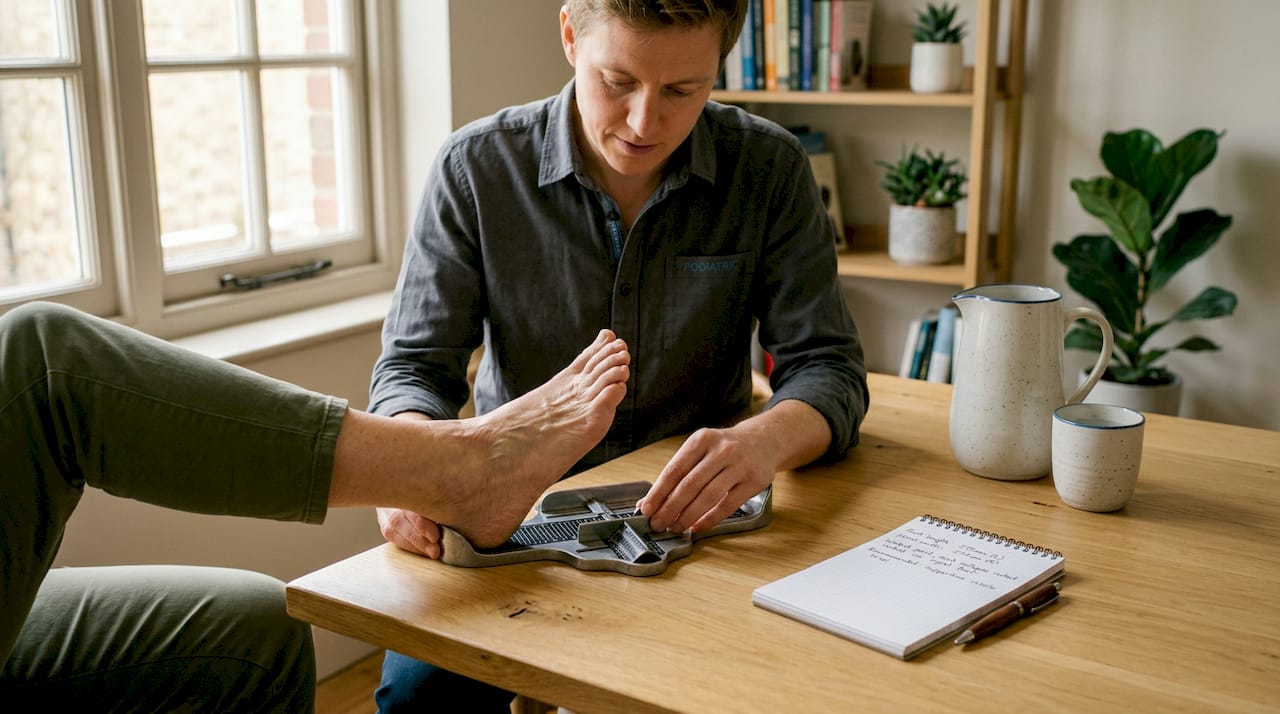
The first thing most people get wrong is measuring their feet at the wrong time of day. Feet swell during the day, which means a shoe that feels fine in the morning may pinch by the afternoon. Measure and try shoes in the late afternoon or evening to get a true picture of your foot size.
Here is what to check when assessing fit:
- Length: You need roughly a thumb’s width of space between your longest toe and the end of the shoe. Toes pressed against the front lead to bruising and nail damage over time.
- Width: The widest part of the shoe should align with the widest part of your foot. Side seams that cut in are a warning sign.
- Toe box: A wider toe box allows your toes to splay naturally as you push off, which reduces fatigue and forefoot pain.
- Heel fit: The heel should feel snug but not tight. More than a few millimetres of lift indicates the shoe is too long or too loose at the back.
Improper fit can cause knee buckling and back pain, according to podiatrist Dr Joy Rowland at the Cleveland Clinic. Comfort, she explains, is tied to support and alignment rather than cushioning thickness alone.
Pro Tip: If you are between sizes, go up rather than down. You can compensate for a slightly longer shoe with an insole, but you cannot stretch a shoe that is too short.
Cushioning: more is not always better
Cushioning is the most marketed feature in footwear and also the most misunderstood. The idea that a softer shoe is a more comfortable shoe sounds logical, but research consistently challenges it. Excessive cushioning can reduce stability and actually compromise the consistent sensory feedback your brain needs to feel secure on its feet.
Good cushioning does three things well. It absorbs impact on hard surfaces. It distributes load across the foot evenly. And it returns a portion of that energy forward to reduce fatigue. Modern energy-returning foams, often found in performance-focused midsoles, address all three. Basic foam does the first but fails the third over time.
There is also a durability problem that most buyers overlook:
- Midsole foam compresses with use. The material that gives a shoe its bounce gradually loses its structure, often long before the upper shows any visible wear.
- Compression happens faster on hard surfaces. Daily pavement walking accelerates degradation compared to softer terrain.
- Silent failure is the norm. You may not notice the cushioning has gone until you start experiencing foot or knee pain, because the change is gradual.
- Replace shoes regularly to maintain comfort. Runner’s World recommends rotating or replacing shoes at least once a year, with 300 to 500 miles as a useful usage benchmark.
Cushioning alone is insufficient for all-day comfort, according to a walking shoe guide that tested models after four to five hours of continuous wear. The shoes that held up best combined stable platforms with moderate, structured foam rather than maximum softness.
Arch support and foot type
Not all feet are the same shape, and treating them as if they are is one of the most common mistakes when choosing supportive shoes. Arch support is not a one-size-fits-all feature. Support and cushioning must be matched to your foot biomechanics to avoid discomfort and injury over time.

The table below outlines how different arch types interact with different shoe categories, which is useful when you are trying to understand types of supportive footwear:
| Foot type | Arch characteristic | Recommended shoe type |
|---|---|---|
| Flat feet / low arch | Overpronation, foot rolls inward | Stability or motion-control shoe with firmer medial support |
| Neutral arch | Moderate pronation | Neutral shoe with moderate cushioning and support |
| High arch | Underpronation, less natural shock absorption | Neutral shoe with extra cushioning and flexible sole |
Fitness, casual, and stability walking shoes differ in heel-to-forefoot drop, cushioning depth, and sole flexibility. Matching the shoe category to your gait and activity type is just as important as the support level itself.
Pro Tip: If you are unsure of your arch type, try the wet test. Wet the sole of your foot and step onto a piece of card. A full footprint generally indicates a flat arch; a narrow connection between heel and forefoot suggests a high arch.
Materials, breathability, and construction
Once fit, cushioning, and support are addressed, the materials and construction details determine how comfortable a shoe feels during extended wear. This is where many everyday shoes fall short even when they have good bones.
Key features to look for when assessing materials and construction:
- Breathable uppers: Mesh or engineered knit materials allow air to circulate, reducing moisture build-up and the skin irritation that follows. A hot, damp environment inside a shoe accelerates fatigue and increases friction-based discomfort.
- Lightweight design: Every gram of shoe weight multiplies across thousands of steps. Lighter shoes reduce muscular effort, particularly through the hip flexors, over long periods of walking.
- Firm heel counter: Shoes should have a firm heel counter to provide rear-foot stability and proper alignment. Squeeze the back of any shoe you are considering. If it collapses easily, it will not hold your heel in place under load.
- Toe box shape: A shoe with a naturally rounded toe box mirrors the actual shape of the human foot. Pointed or narrow box designs force the toes together, restricting natural splay and increasing pressure on the forefoot.
- Sole flexibility at the right point: Test shoe flexibility at the ball of the foot, not the midfoot. A sole that bends where the foot bends supports natural walking motion; one that bends at the arch disrupts it.
The distinction between how to choose comfortable footwear versus how to choose fashionable footwear often comes down to these construction details. Style rarely compromises on upper material. Comfort-focused design prioritises it.
Testing and maintaining comfort over time
Knowing what to look for is only half the challenge. The other half is testing shoes properly and keeping them in good shape once you own them. Here is a practical approach:
- Try shoes at the end of the day. Your feet are at their largest then, so you are testing against the worst-case scenario. A shoe that fits well in the evening will fit well at all times.
- Walk on a hard surface for at least ten minutes. Shop carpet is forgiving. Pavement is not. Hard floors in the shop reveal pressure points and heel slip far more honestly.
- Assess cushioning durability over hours, not minutes. Evaluate cushioning by wearing shoes for several hours rather than relying on a brief try-on. Initial impressions can mislead.
- Track usage and replace proactively. If you walk daily, 300 to 500 miles arrives sooner than you think. Many people replace shoes based on upper wear rather than midsole fatigue, which is the wrong signal.
- Rotate between two pairs. Giving foam 24 hours to decompress between wears extends the lifespan of each pair and maintains a more consistent cushioning experience.
Comfort develops over time as the brain forms a stable sensory model, which means initial comfort ratings during a short try-on can be genuinely misleading. A shoe that feels extraordinary for five minutes may feel mediocre after two hours. The reverse is also true. Learning to read comfort beyond the first impression is a skill worth developing. A useful resource is this guide on checking shoe comfort for all-day wear, which covers breathability and arch firmness in practical terms.
My honest take on shoe comfort
I have watched people spend significant money on shoes that left them with sore feet within a week. In almost every case, the issue was not brand or price. It was fit. The shoes were not shaped like their feet.
What I have learned over years of paying close attention to footwear is that the first thing most people prioritise is the wrong thing. Cushioning is seductive. It is tangible and immediate. You press the sole, it feels soft, and you associate that with comfort. But a well-constructed shoe that fits your foot precisely will outlast a plush one that does not by months of comfortable daily wear.
The other thing most articles will not tell you is this: your foot type genuinely changes how you should shop. If you overpronate and you buy a neutral shoe with lots of cushioning, you are not getting comfort. You are getting an expensive way to develop knee pain. Matching support to your actual biomechanics matters more than any single feature.
My advice is to be sceptical of how a shoe feels in the first five minutes. That feeling is partly novelty, partly the expectation of softness. Test it longer. Walk on a hard floor. Return the next day and notice if your memory of the comfort holds up. The best shoes for daily wear are ones where energy return, fit, and structure all work together without any single feature drawing attention to itself.
— Panagiotis
Discover Ydauk’s approach to comfort
If this guide has given you a clearer sense of what to look for, Ydauk’s range is worth exploring with those criteria in mind.
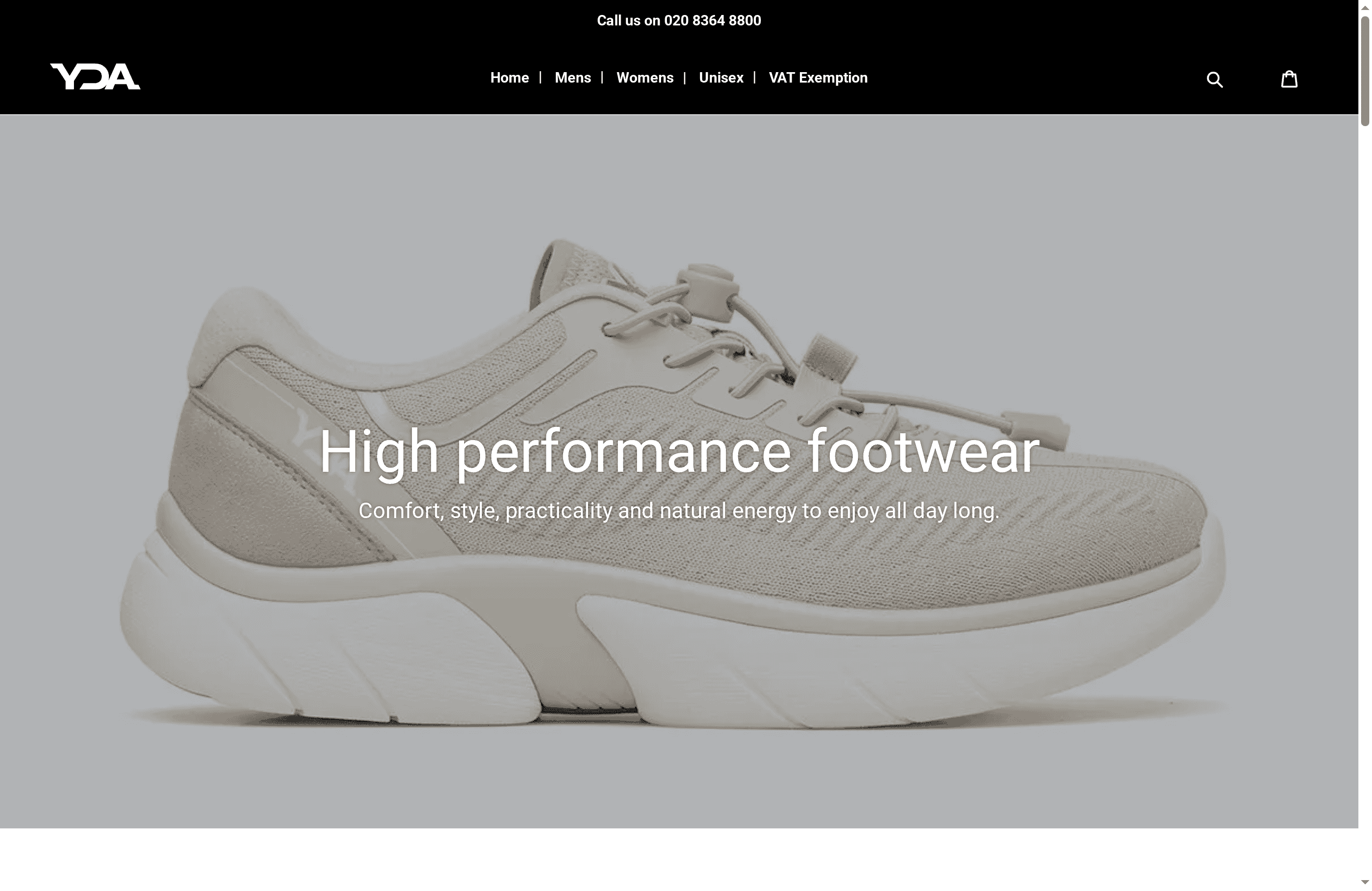
Ydauk is built around the principles covered here. YDA shoes incorporate energy-returning midsoles, anatomically considered toe boxes, and foot-health-focused construction that goes beyond surface-level cushioning. The YDA shoe technology behind each design addresses fit, support, and material quality together rather than treating them as separate features. If you are ready to apply what you have read, the Ydauk range is a practical place to start.
FAQ
What is the most important factor in shoe comfort?
Fit is the single most important factor. A shoe that does not match the shape and size of your foot will cause pressure and discomfort regardless of cushioning or support features.
How do I know if my arch support is right?
If your shoes cause pain along the inner ankle, outer edge of the foot, or the heel after extended wear, your arch support likely does not match your foot type. A wet footprint test or a podiatrist assessment can identify your arch category.
Can too much cushioning make a shoe uncomfortable?
Yes. Excessive cushioning reduces the stable, predictable contact your brain uses to regulate balance and gait. A firmer, structured midsole often provides more consistent comfort over long wear than a very soft one.
When should I replace my shoes?
Replace shoes every 300 to 500 miles of use, or at least once a year for daily wearers. Midsole foam degrades before the upper shows obvious wear, so visual inspection alone is not a reliable guide.
Does shoe breathability actually affect comfort?
Significantly. Non-breathable uppers trap heat and moisture, which increases friction and skin irritation. Mesh or knit uppers keep conditions inside the shoe more stable, particularly during extended wear.