
Types of foot support: your 2026 guide to the right fit
TL;DR:
- Foot support includes insoles, orthotics, and braces that correct biomechanics, redistribute pressure, or cushion the foot.
- Selecting the appropriate support category—soft, semi-rigid, or rigid—is essential for effective relief and recovery.
Foot support is defined as any insert, insole, orthotic, or brace added to footwear to correct biomechanical alignment, redistribute pressure, or cushion the foot. The three core types of foot support are soft or cushioning supports, semi-rigid supports, and rigid functional orthotics. Each category serves a distinct purpose, and choosing the wrong one can delay recovery or worsen an existing condition. Brands such as Superfeet Green and Powerstep Pinnacle sit in the semi-rigid category, while gel heel cups and foam inserts represent the soft end of the spectrum. Appropriate arch support acts as a preventive first line of defence against conditions like plantar fasciitis and posterior tibial tendon dysfunction.
1. What are the main types of foot support?
The three main types of foot support are soft or cushioning, semi-rigid, and rigid functional. Soft supports prioritise comfort and pressure relief. Semi-rigid supports balance cushioning with structural control. Rigid supports deliver maximum biomechanical correction for serious structural problems. Understanding which category you need is the single most important step before you spend a penny.
2. Soft or cushioning supports: comfort without correction
Soft supports are made from foam, gel, or memory foam and work by absorbing shock and redistributing pressure across the foot. They do not correct structural biomechanical issues. Their strength is comfort, which makes them the right choice for specific conditions rather than a universal fix.
Who benefits most from soft supports:
- People with fat pad atrophy, where the natural cushioning under the heel and ball of the foot has thinned with age
- Those with mild metatarsalgia, a burning or aching pain across the ball of the foot
- People managing diabetic foot care, where pressure offloading reduces ulcer risk
- Older adults who need extra cushioning for daily walking
Gel heel cups are a common example. They sit inside the shoe and absorb impact at the heel strike. Foam inserts cover the full length of the foot and spread load more evenly. Cushioning footwear technology has advanced considerably, with layered foam constructions now offering better durability than basic single-density foam.
Pros and cons of soft supports:
| Pros | Cons |
|---|---|
| Immediate comfort with no break-in period | No structural or biomechanical correction |
| Widely available and affordable | Compress and lose effectiveness relatively quickly |
| Suitable for sensitive or diabetic feet | Not appropriate for moderate to severe overpronation |
| Lightweight and easy to transfer between shoes | May feel too soft for active or high-impact use |
Pro Tip: Foot volume increases through the day due to swelling and activity. Shop for supports late in the afternoon or evening to get the most accurate fit for your maximum foot size.
3. How do semi-rigid supports work and when should you choose them?
Semi-rigid supports are the most widely used foot support option for active people and those with mild to moderate conditions. They combine a firmer shell, typically made from plastic, cork, or carbon fibre, with a softer top layer for comfort. This construction gives you both structural guidance and cushioning in a single insert.
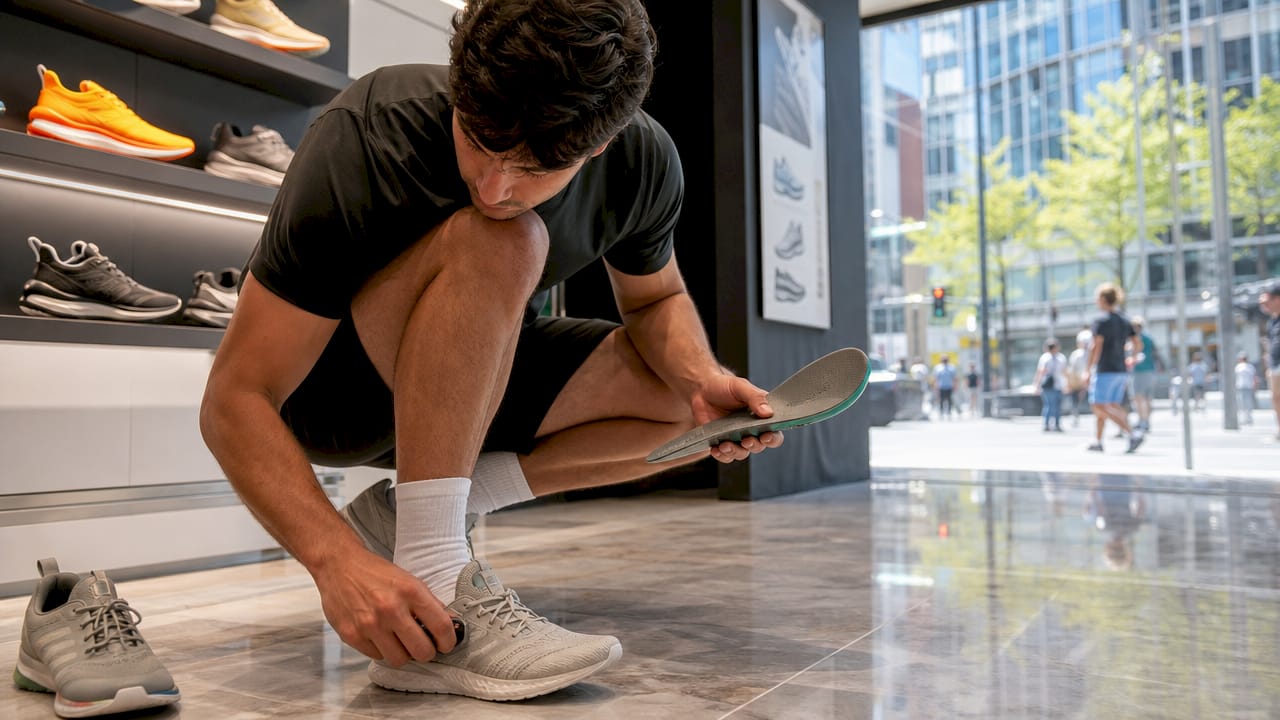
Semi-rigid over-the-counter arch supports provide 60–70% of the therapeutic benefit of custom-made orthotics for straightforward plantar fasciitis. That figure matters because it means most people with mild plantar fasciitis do not need to spend hundreds of pounds on custom orthotics to get meaningful relief.
Superfeet Green is one of the most recognised semi-rigid options, offering a deep heel cup and firm arch support. Powerstep Pinnacle and Spenco Total Support are two further examples that sit in this category. All three are available over the counter without a clinical prescription.
Pros and cons of semi-rigid supports:
| Pros | Cons |
|---|---|
| Effective for mild to moderate overpronation | May feel firm initially for those used to flat insoles |
| Suitable for most foot types and daily activities | Not sufficient for severe structural deformities |
| Far more affordable than custom orthotics | Quality varies significantly between brands |
| Available in multiple sizes and shoe types | May require trimming to fit certain footwear |
Semi-rigid supports suit runners, people who stand for long hours, and those with general arch fatigue. They are the sensible starting point for most people before considering custom options.
4. When are rigid functional orthotics necessary?
Rigid orthotics are made from hard materials including polypropylene, carbon fibre, and graphite. They deliver maximum motion control and are reserved for serious structural corrections. They are not a comfort product. They are a clinical tool.
Rigid orthotics are indicated for conditions including posterior tibial tendon dysfunction, severe overpronation, high-arched feet with instability, and post-surgical support. A podiatrist typically prescribes and fits them after a full biomechanical assessment.
The break-in period for rigid orthotics is 2–4 weeks. Initial discomfort is normal and expected. Wearing them for short periods and gradually increasing daily use is the standard approach.
Pros and cons of rigid orthotics:
| Pros | Cons |
|---|---|
| Maximum biomechanical correction | Require professional fitting and assessment |
| Durable and long-lasting | Significant break-in period with initial discomfort |
| Effective for severe structural conditions | More expensive than over-the-counter options |
| Consistent correction across different footwear | Too rigid for high-arched feet, which need movement |
Pro Tip: A professional assessment before choosing rigid orthotics is not optional. High arches require cushioning, not rigid control. Using a rigid orthotic on a high-arched foot creates pressure points and can worsen pain significantly.
5. How to identify which foot support suits your foot type
The wet foot test is the simplest way to identify your arch type at home. Wet the sole of your foot, step onto a piece of paper or card, and examine the print. A full print with no curve inward indicates flat feet. A narrow connection between heel and ball indicates a high arch. A moderate curve shows a neutral arch.
Each foot type matches a different support category:
| Foot type | Recommended support | Common conditions |
|---|---|---|
| Flat (pronated) | Rigid or firm semi-rigid | Overpronation, plantar fasciitis, posterior tibial tendon dysfunction |
| Neutral | Semi-rigid | General arch fatigue, mild plantar fasciitis |
| High arch (supinated) | Soft or cushioning | Metatarsalgia, stress fractures, lateral ankle instability |
Flat feet benefit from rigid arch supports or motion-control inserts to prevent ankle rolling and reduce tendon stress. High arches, by contrast, need cushioning that allows controlled movement. Applying a rigid support to a high arch creates pressure points rather than relief.
Activity level also matters. A person with mild flat feet who walks occasionally needs less correction than a runner covering 30 miles per week with the same foot type. Symptom severity should guide how far along the spectrum from soft to rigid you need to go. If you are unsure, a podiatrist or physiotherapist can assess your gait and recommend the appropriate category. The benefits of physiotherapy for foot pain extend well beyond insole selection and include gait retraining and targeted strengthening.
6. Specialist foot support options beyond the three core types
Beyond the three main categories, several specialist options address specific problems that standard insoles cannot resolve.
Specialist foot support options and their uses:
- Bunion pads: Gel or foam pads that cushion the bony prominence at the base of the big toe, reducing friction inside the shoe
- Metatarsal pads: Small dome-shaped inserts placed behind the ball of the foot to offload pressure from the metatarsal heads
- Heel liners: Thin cushioned inserts that prevent heel slippage and reduce friction for people with narrow heels
- Ankle-foot orthoses (AFOs): Rigid or semi-rigid braces that support the ankle and lower leg, used after injury, surgery, or for neurological conditions. Ossur bracing is one well-known example in this category
Replacement timing matters as much as the type you choose. Running shoes and insoles with arch support should be replaced every 300–500 miles due to material fatigue. Once the foam or shell compresses, the support is no longer functioning as designed, even if the outer surface looks intact.
Pricing varies considerably. Some over-the-counter options cost under £15, while custom-moulded orthotics require clinical consultations and are priced accordingly. Custom options are worth the investment for rigid deformities, diabetic offloading, and athletes with specific loading patterns. For most everyday conditions, a quality semi-rigid over-the-counter insert is the more practical starting point.
Pro Tip: When trying specialist pads or insoles in-store, go in the afternoon. Foot volume is at its largest later in the day, so a fit that feels right at 4pm will not feel tight by evening.
Key takeaways
Choosing the correct foot support type based on your arch shape and condition is the single most effective way to relieve foot discomfort and prevent long-term injury.
| Point | Details |
|---|---|
| Match support to foot type | Flat feet need rigid or firm semi-rigid support; high arches need cushioning. |
| Semi-rigid is the best starting point | Over-the-counter semi-rigid supports deliver 60–70% of custom orthotic benefit for plantar fasciitis. |
| Rigid orthotics need professional fitting | A 2–4 week break-in period is normal; never self-prescribe rigid supports. |
| Replace supports regularly | Insoles and running shoes lose effectiveness after 300–500 miles of use. |
| Use the wet foot test first | Identifying your arch type at home takes two minutes and guides every purchase decision. |
Why rigid does not always mean better: a frank view
People consistently assume that a firmer, more structured support will deliver better results. That assumption is wrong, and it leads to wasted money and prolonged discomfort. I have seen this pattern repeatedly. Someone with high arches buys a rigid insert because it feels more substantial in the hand. Within a week, their pain has worsened rather than improved.
The logic behind foot support is not about maximum firmness. It is about matching the mechanical behaviour of the support to the mechanical needs of the foot. A high-arched foot already has too much rigidity. Adding more locks the foot into a position that concentrates load rather than distributing it.
My honest recommendation is to start with a quality semi-rigid over-the-counter option like Superfeet Green or Powerstep Pinnacle before committing to custom orthotics. For most people with mild to moderate conditions, this is sufficient. If you have tried a well-fitted semi-rigid support for six to eight weeks without improvement, that is the point to seek a podiatrist’s assessment. Patience with the process matters as much as the product you choose. The right foot support takes time to show its full benefit, particularly if your foot has been compensating for a structural issue for years.
— Panagiotis
Ydauk and the technology behind foot-healthy footwear
Foot support does not begin and end with insoles. The shoe itself plays a central role in how well your foot is supported throughout the day.
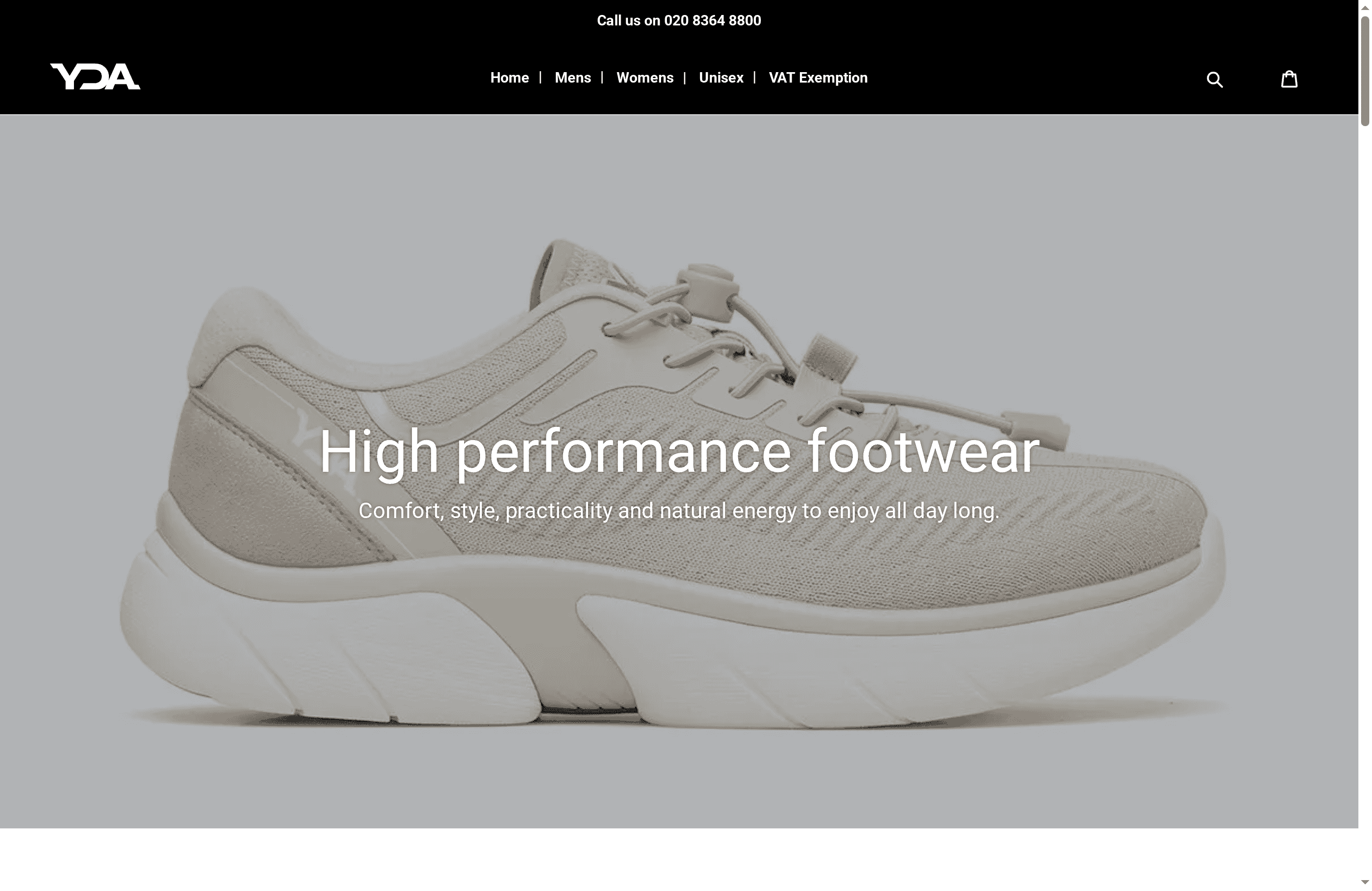
Ydauk builds its footwear around YDA Technology, a design approach that integrates arch support, cushioning, and stability directly into the shoe’s construction. Rather than relying on a separate insert to do the work, the shoe itself is engineered to support the foot from the ground up. This matters particularly for people who spend long hours on their feet or who need consistent support across different activities. Explore the YDA Shoes technology page to see how each design element addresses specific foot health needs.
FAQ
What are the three main types of foot support?
The three main types are soft or cushioning supports, semi-rigid supports, and rigid functional orthotics. Each category addresses different levels of foot condition severity and biomechanical need.
Is foot support for flat feet different from regular insoles?
Flat feet require medial arch support and motion control to prevent ankle rolling and tendon stress. Standard flat insoles provide no structural correction and are not suitable for flat feet.
How do I know when to replace my foot supports?
Replace running shoes and arch support insoles every 300–500 miles, as material fatigue reduces both cushioning and motion control. Visible compression or a return of previous symptoms are reliable signs that replacement is overdue.
Can I use over-the-counter supports instead of custom orthotics?
For mild to moderate conditions like plantar fasciitis, high-quality semi-rigid over-the-counter supports deliver 60–70% of the benefit of custom orthotics. Custom options are recommended for severe structural deformities, diabetic offloading, or sport-specific loading patterns.
What is the wet foot test and how does it help?
The wet foot test involves wetting the sole of your foot and stepping onto paper to reveal your arch shape. The resulting footprint shows whether you have flat, neutral, or high-arched feet, which directly guides which type of support you need.