
Best orthotic shoes: your 2026 buying guide
TL;DR:
- Orthotic shoes are specially designed footwear with extra depth, firm midsoles, and removable insoles to support custom orthotics and reduce foot pain. The best models, like New Balance 990v6 and Brooks Adrenaline GTS 24, accommodate orthotics effectively through structural features such as torsional rigidity and width options. Selecting the right shoe depends on your foot condition, arch type, and proper fit, with careful attention to construction standards and supported by podiatrist-informed criteria.
Orthotic shoes are specifically engineered footwear that provide biomechanical support, accommodate custom or over-the-counter orthotics, and reduce foot pain caused by conditions such as plantar fasciitis, flat feet, and high arches. Knowing what are the best orthotic shoes means understanding far more than cushioning. Brands like New Balance, Brooks, Vionic, Hoka, and ASICS each approach the problem differently, and the right choice depends on your arch type, foot condition, and whether you need to fit a custom device inside the shoe. This guide cuts through the noise with podiatrist-informed criteria and a direct comparison of the top models available in 2026.
What features define the best orthotic shoes?
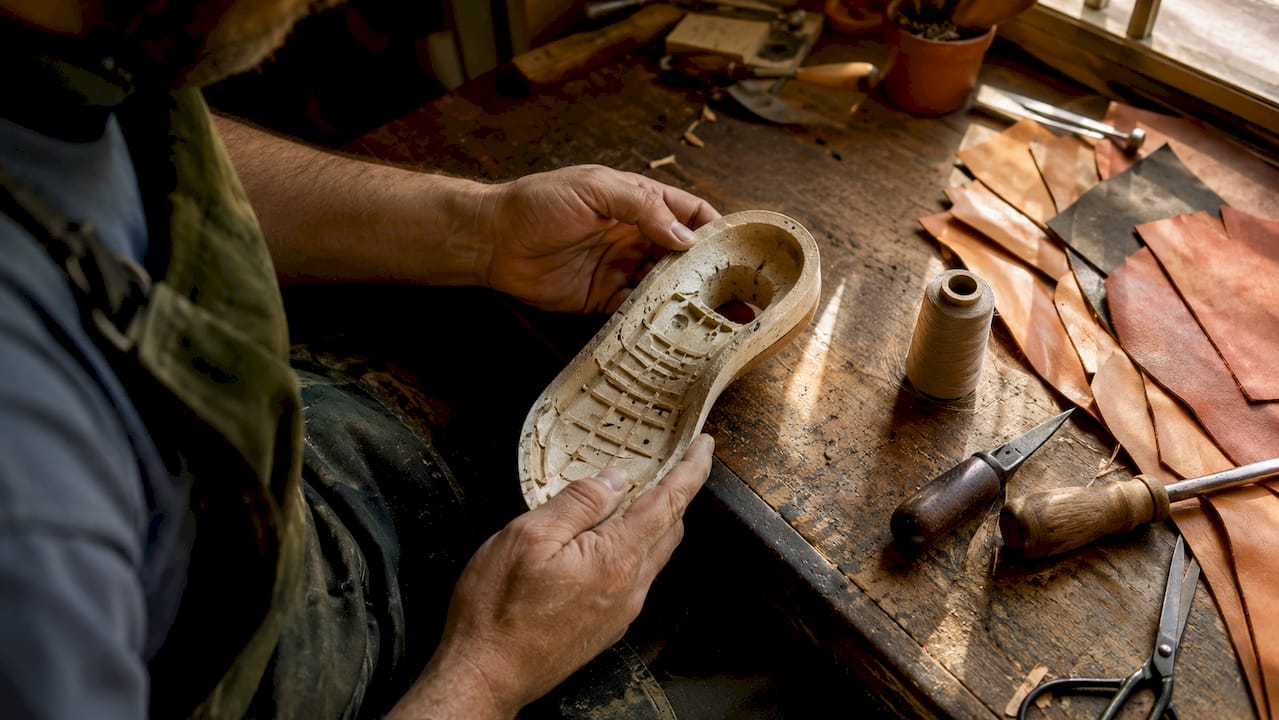
The single most important structural feature in any orthotic shoe is an extra-depth last with a deep heel cavity. Without this, a custom orthotic will push your foot upward, causing heel slippage and pressure points that worsen the very problem you are trying to solve. Extra depth is not a marketing phrase. It is a measurable construction standard that separates genuine orthotic footwear from ordinary comfort shoes labelled as orthopaedic.
Beyond depth, the midsole is where most buyers go wrong. A firm midsole with torsional rigidity is non-negotiable for anyone with flat feet or plantar fasciitis. The shoe should flex only at the toes while remaining firm through the arch. Shoes with excessive foam softness lack this rigidity, which forces your foot muscles to overwork and can intensify pain over time.
Key features to look for when evaluating any orthotic shoe:
- Removable insole: The factory insole must lift out cleanly to make room for your orthotic without stacking layers.
- Heel-to-toe drop: For low arches and plantar fasciitis, a drop of 8mm or more reduces strain on the plantar fascia by slightly elevating the heel.
- Stability or motion control rating: Overpronators need medial post support; neutral arches need less correction.
- Wide width availability: Orthotics add bulk. Shoes offered in 2E or 4E widths give you room to accommodate the device without compressing the forefoot.
- APMA Seal of Acceptance: The American Podiatric Medical Association awards this seal to shoes evaluated for promoting good foot health. It is not a guarantee, but it is a credible starting filter.
Pro Tip: Twist the shoe in your hands before buying. If it wrings like a towel, the midsole lacks torsional rigidity and will not support an orthotic effectively regardless of how comfortable it feels in the shop.
How do the top orthotic shoe models compare?
The market for top rated orthotic footwear is crowded, but a handful of models consistently earn podiatrist recommendations based on measurable structural criteria rather than marketing claims.
The New Balance 990v6 is the benchmark for orthotic accommodation. It offers an extra-deep toe box, a removable insole with 18mm of orthotic space, and wide widths in 2E and 4E. Priced between £140 and £160, it suits flat feet, plantar fasciitis, and anyone transitioning from custom orthotics to a new shoe. The 990v6 is not a fashion-forward silhouette, but it is the most clinically reliable option on this list.
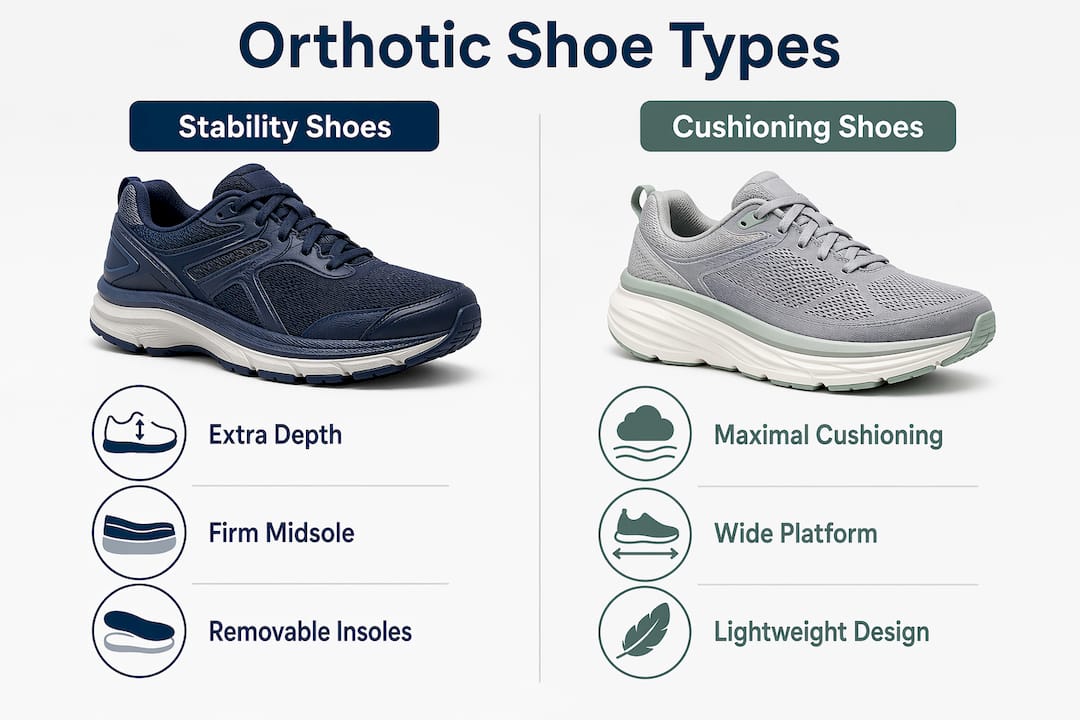
The Brooks Adrenaline GTS 24 is the strongest choice for runners who need stability without sacrificing cushioning. Its GuideRails system controls excess movement at the knee and ankle rather than simply posting the arch, which makes it effective for overpronation and plantar fasciitis relief. The breathable upper and responsive midsole also make it a comfortable everyday trainer.
The Hoka Bondi takes a different approach with maximal cushioning and a wide, stable platform. It is the preferred recommendation for neuropathy, hallux rigidus, and post-surgical recovery where impact reduction is the priority. The wide base accommodates orthotics without the shoe feeling unstable underfoot.
| Model | Best for | Support type | Width options | Price range |
|---|---|---|---|---|
| New Balance 990v6 | Flat feet, plantar fasciitis | Motion control, extra depth | 2E, 4E | £140–£160 |
| Brooks Adrenaline GTS 24 | Running, overpronation | Stability, GuideRails | B, D, 2E | £130–£145 |
| Hoka Bondi 8 | Neuropathy, post-surgical | Maximal cushioning | B, D, 2E | £155–£175 |
| ASICS Gel-Kayano | Overpronation, long-distance | Motion control | B, D | £140–£160 |
| Vionic Walker Classic | Casual wear, arch support | Built-in orthotic footbed | B, D, W | £110–£130 |
Pro Tip: If you are buying orthotic shoes online, check whether the retailer lists the insole depth in millimetres rather than just “removable insole.” Eighteen millimetres or more is the threshold for fitting most custom orthotics comfortably. You can find guidance on orthotic-friendly features to cross-reference before purchasing.
How to choose orthotic shoes based on your foot condition
Selecting the right shoe starts with knowing your arch type, because the support requirements for high arches and low arches are almost opposite. High arches are rigid and absorb shock poorly, so they need shoes with generous cushioning and some flexibility to allow natural foot movement. Low arches or flat feet overpronate and need stability features and a firmer midsole to prevent the arch from collapsing further. You can read more about this in Ydauk’s guide to shoes for flat feet.
Follow these steps when matching a shoe to your condition:
- Identify your arch type. Wet your foot and step on a piece of paper. A full footprint with no visible arch indicates flat feet. A thin connection between heel and forefoot indicates a high arch.
- Match the heel drop to your arch. Low arches and plantar fasciitis benefit from 8mm or more of heel drop. High arches generally do better with a lower drop of 4 to 6mm to allow the foot to move naturally.
- Check the midsole firmness. Press your thumb firmly into the arch area of the midsole. If it compresses easily, the shoe will not provide adequate support for an orthotic.
- Size up by half a size. Adding orthotics to a shoe that fits your bare foot will compress the toe box and restrict natural toe splay. Going up half a size compensates for the added bulk.
- Choose lace-up over slip-on where possible. Lace-up designs allow you to adjust the fit around the orthotic precisely. Slip-on styles can feel loose at the heel once an orthotic raises the foot slightly inside the shoe.
- Test with your actual orthotic in the shop. Bring your custom or over-the-counter device and insert it before walking. A shoe that feels perfect without the orthotic may feel entirely different once the device is inside.
Avoid the common error of choosing a shoe purely by feel in the shop without an orthotic inserted. The fit changes significantly once the device is in place, and many people end up returning shoes that seemed ideal on the shelf.
What are the most common misconceptions about orthotic shoes?
The most damaging misconception is that any shoe labelled “orthopaedic” will fit an orthotic properly. The term orthopaedic has no regulated definition in footwear retail. A shoe can carry that label while having a standard-depth last that leaves no room for a custom device. The only reliable indicators are extra-depth construction, a removable insole, and ideally the APMA Seal of Acceptance.
A second widespread error is equating softness with support. Overly cushioned shoes force foot muscles to compensate for the lack of structural stability, which can worsen plantar fasciitis and arch pain over time. The sensation of sinking into a soft sole feels comfortable initially, but it signals an absence of the torsional rigidity that genuine orthotic footwear requires.
Common mistakes to avoid when buying orthotic shoes:
- Assuming a standard removable insole means the shoe is orthotic-ready. Many shoes have thin, non-structural insoles that lift out but leave insufficient depth for a custom orthotic.
- Ignoring shoe width. A shoe with the correct length but insufficient width will compress the forefoot around the orthotic, causing pressure and discomfort.
- Choosing over-the-counter orthotics for severe conditions. Products like PowerStep Pinnacle work well for mild to moderate issues and cost around £35 to £40. However, custom orthotics starting at £300 are necessary for structural deformities, severe overpronation, or post-surgical needs.
- Replacing the shoe without replacing the orthotic. Orthotics wear out independently of the shoe. A new shoe with an old, compressed orthotic will not deliver the support you expect.
Pro Tip: Before purchasing, search the manufacturer’s product page for the phrase “extra-depth” or check whether the shoe appears in the APMA’s accepted products list. These two checks take under two minutes and will filter out the majority of unsuitable options.
Key takeaways
The best orthotic shoes combine extra-depth construction, a firm midsole with torsional rigidity, and a removable insole to accommodate custom or over-the-counter orthotics effectively.
| Point | Details |
|---|---|
| Extra depth is non-negotiable | Shoes must have deep heel cavities and extra-depth lasts to fit custom orthotics without pressure points. |
| Firmness beats softness | A firm midsole that flexes only at the toes provides more genuine support than soft, highly cushioned foam. |
| Size up with orthotics | Go half a size larger when adding orthotics to allow for bulk and natural toe splay. |
| Match the shoe to your arch | High arches need cushioning and flexibility; low arches need stability and motion control. |
| Verify with APMA Seal | The APMA Seal of Acceptance is a credible filter for shoes evaluated for genuine foot health benefits. |
What I have learnt from years of recommending orthotic shoes
The question I hear most often is whether an expensive custom orthotic will fix everything regardless of the shoe it goes into. The honest answer is no. I have seen patients spend £400 on a custom device and then insert it into a fashion trainer with a standard-depth last, and wonder why their plantar fasciitis has not improved. The shoe is not a passive container. It is half the intervention.
What I find consistently is that the New Balance 990v6 and Brooks Adrenaline GTS 24 outperform most alternatives not because of their brand recognition but because their construction genuinely accommodates the orthotic without compromising heel fit. The Hoka Bondi is the outlier that surprises people. Its maximal cushioning looks like exactly the kind of softness I warn against, but the wide platform and structural base provide enough rigidity to work well for specific conditions like neuropathy.
The trend I am watching closely in 2026 is the move toward shoes that integrate orthotic-level support directly into the midsole, reducing the need for a separate device. Ydauk’s approach to YDA technology is an example of this direction. Whether integrated support will fully replace custom orthotics for clinical conditions remains to be seen, but for everyday foot health and comfort, the gap is narrowing faster than most people realise.
My practical advice: do not start with the orthotic. Start with the shoe. Get the construction right first, then decide whether an over-the-counter insert like PowerStep Pinnacle is sufficient or whether a custom device is warranted. That sequence saves money and produces better outcomes.
— Panagiotis
Discover Ydauk’s orthotic-friendly footwear technology
If you are ready to move beyond generic comfort shoes and invest in footwear built around genuine foot health principles, Ydauk’s range is worth your attention.
Ydauk designs shoes around YDA technology, which focuses on biomechanical support, energy efficiency, and accommodation for orthotics. The construction prioritises the structural features this guide has outlined: depth, rigidity, and fit. Whether you are managing plantar fasciitis, flat feet, or simply want footwear that supports your feet through a full day on your feet, Ydauk’s product range combines clinical thinking with everyday style. Explore the full collection and find the model that matches your foot condition and lifestyle.
FAQ
What makes a shoe genuinely orthotic-friendly?
A genuinely orthotic-friendly shoe has an extra-depth last, a removable insole, and a firm midsole with torsional rigidity. These three features allow a custom or over-the-counter orthotic to sit correctly without causing heel slippage or pressure points.
Are orthotic shoes the same as orthopaedic shoes?
The terms are often used interchangeably, but they are not identical. Orthopaedic is an unregulated label in footwear retail, while orthotic-ready shoes meet specific construction standards such as extra depth and removable insoles that allow orthotic devices to function properly.
Do I need custom orthotics or will over-the-counter insoles work?
Over-the-counter options like PowerStep Pinnacle work well for mild to moderate conditions and cost significantly less than custom devices. Custom orthotics, which start at around £300, are necessary for structural deformities, severe overpronation, or conditions that have not responded to standard insoles.
Should I size up when buying shoes for orthotics?
Yes. Adding an orthotic to a shoe that fits your bare foot will compress the toe box and restrict natural toe splay. Going up half a size accommodates the bulk of the device and maintains a comfortable, functional fit.
Which shoe is best for plantar fasciitis with orthotics?
The New Balance 990v6 and Brooks Adrenaline GTS 24 are the most consistently recommended options for plantar fasciitis. Both offer extra depth, removable insoles, and the heel-to-toe drop needed to reduce strain on the plantar fascia when used with orthotics.