
Why sustainable shoe materials matter: 47% less carbon impact
Most people assume sustainable shoes mean compromising on style, comfort, or durability. That’s simply not true anymore. Modern sustainable shoe materials not only reduce environmental impact significantly but can match or even exceed traditional synthetics in performance. Natural fibre reinforced rubber delivers the same durability as petroleum-based alternatives whilst cutting carbon emissions by over a third. This guide reveals how sustainable materials benefit your comfort, foot health, and the planet, the real tradeoffs you need to know, and exactly what to look for when shopping for eco-conscious footwear that doesn’t sacrifice quality.
Table of Contents
- Key takeaways
- Understanding the environmental benefits of sustainable shoe materials
- Performance and health benefits of natural and sustainable shoe materials
- Tradeoffs and challenges in sustainable footwear choices
- How to choose sustainable shoes that balance style, comfort, and impact
- Shop stylish and sustainable footwear at YDA UK
- Frequently asked questions
Key Takeaways
| Point | Details |
|---|---|
| Carbon savings per pair | Choosing biodegradable shoes over synthetics can cut around five kilograms of CO2 emissions per pair, roughly the same as driving twenty kilometres in an average petrol car. |
| Durability comparable to synthetics | Natural fibre reinforced rubber delivers the same durability as petroleum based alternatives while cutting emissions. |
| Biodegradable benefits hinge on composting | Industrial composting facilities can break down biodegradable materials completely within months, returning nutrients to the soil. |
| Beware greenwashing claims | Certifications often do not cover the full lifecycle, so buyers should seek credible third party verification. |
Understanding the environmental benefits of sustainable shoe materials
The footwear industry’s environmental footprint starts long before you lace up your trainers. Synthetic shoes generate substantial carbon emissions primarily during materials production and manufacturing processes. A single pair of synthetic running shoes produces approximately 14 kg of CO2, with the majority of emissions occurring before the shoes ever reach your feet.
Biodegradable alternatives tell a different story. These shoes emit significantly less carbon throughout their lifecycle, cutting emissions by roughly one-third compared to conventional synthetics. The reduction comes from using renewable natural materials that require less energy-intensive processing than petroleum-based polymers. Materials like natural rubber, organic cotton, and plant-based fibres reduce reliance on fossil fuels whilst offering comparable performance characteristics.
However, the environmental benefits depend heavily on what happens after you’re done wearing them. Industrial composting facilities can break down biodegradable materials completely within months, returning nutrients to the soil. Without access to these facilities, biodegradable shoes in landfills decompose far more slowly, limiting their environmental advantage. The anaerobic conditions in landfills prevent proper breakdown, meaning your eco-friendly shoes might sit intact for years.
Sustainability extends beyond carbon emissions alone. Water consumption, land use, and chemical inputs during material cultivation all factor into the total environmental equation. Some natural materials require substantial irrigation or agricultural land, potentially offsetting carbon savings. Cotton production, for instance, demands significant water resources even when grown organically.
Key environmental advantages of sustainable shoe materials include:
- Reduced dependence on petroleum-based synthetics and non-renewable resources
- Lower manufacturing emissions when using plant-based or recycled components
- Potential for complete biodegradation with proper composting infrastructure
- Decreased microplastic pollution from natural fibre alternatives
- Support for regenerative agriculture practices when materials are responsibly sourced
The shift toward sustainable footwear represents more than a trend. It’s a response to the mounting environmental costs of fast fashion and disposable consumer goods. Brands pioneering sustainable shoe innovation are proving that environmental responsibility and product quality aren’t mutually exclusive.
Carbon Impact: Choosing biodegradable shoes over synthetics prevents roughly 5 kg of CO2 emissions per pair, equivalent to driving about 20 kilometres in an average petrol car.
Performance and health benefits of natural and sustainable shoe materials
Sustainable doesn’t mean sacrificing performance. Natural materials deliver measurable advantages in durability, stability, and comfort that rival or surpass synthetic alternatives. The key lies in understanding how these materials function in real-world conditions.
Natural fibre reinforced rubber demonstrates impressive mechanical properties, with recoverable deformation rates matching petroleum-based compounds. This means the sole springs back after compression just as effectively as synthetic rubber, maintaining cushioning and support throughout the shoe’s lifetime. Natural fibres also enhance aging resistance, helping shoes maintain their structural integrity longer despite exposure to UV light, moisture, and temperature fluctuations.
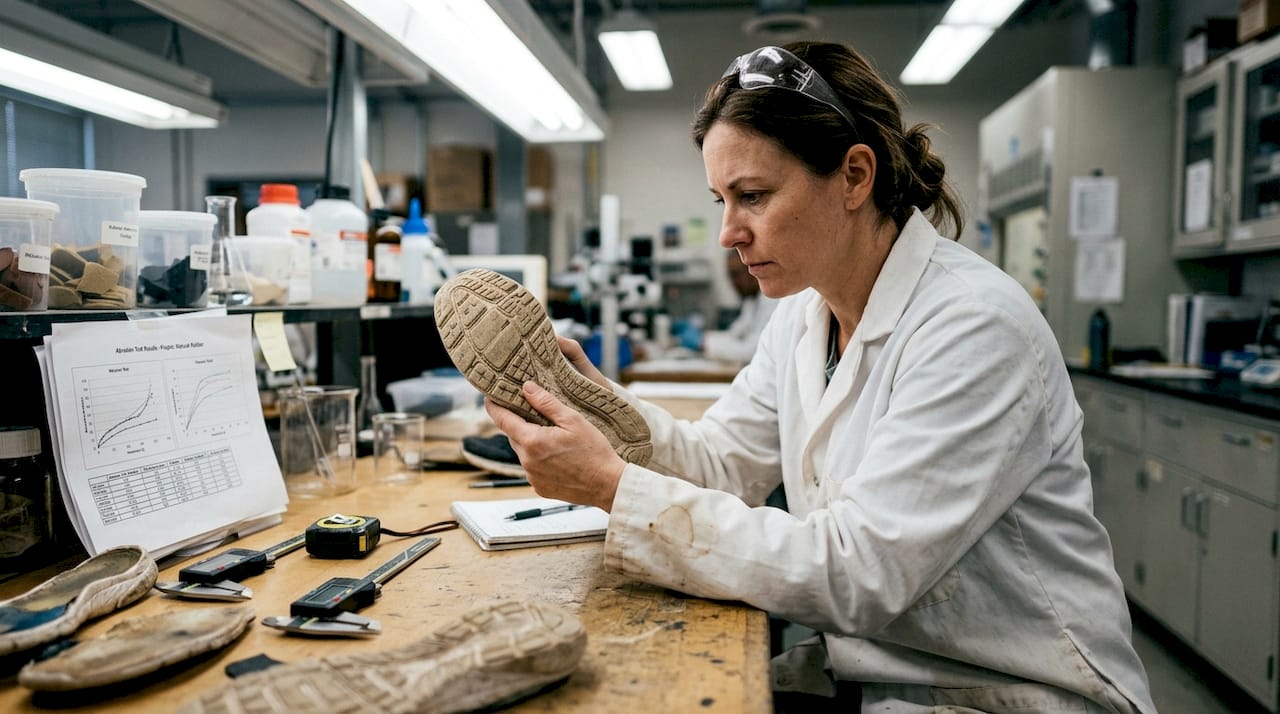
Anti-slip performance matters for safety and confidence in varied conditions. Natural fibre composites provide excellent traction on multiple surfaces, with some formulations exceeding synthetic grip levels. The fibres create micro-textures that enhance friction without compromising flexibility, giving you stable footing whether you’re navigating wet pavements or uneven terrain.
Leather remains one of the most durable shoe materials available, often lasting well over 1,600 kilometres of walking. High-quality leather moulds to your foot shape over time, creating a custom fit that improves comfort with wear. The material’s natural breathability allows moisture vapour to escape whilst blocking liquid water, keeping feet drier and reducing the risk of blisters and fungal infections.
Foot health benefits extend beyond breathability. Natural materials typically contain fewer synthetic chemicals that can cause skin irritation or allergic reactions. Cotton, hemp, and wool uppers allow better air circulation than polyester or nylon, reducing heat buildup and moisture accumulation. This creates a healthier environment for your feet, particularly important if you wear shoes for extended periods.
Comfort factors worth considering:
- Temperature regulation through natural material breathability
- Moisture-wicking properties that keep feet drier throughout the day
- Reduced chemical exposure from petroleum-derived synthetic treatments
- Natural antimicrobial properties in materials like wool and bamboo
- Adaptability as materials like leather conform to individual foot shapes
The combination of sustainable materials and thoughtful design creates footwear that supports both environmental and personal health goals. Understanding vegan footwear options helps you navigate choices between animal-derived and plant-based sustainable materials, each offering distinct advantages.
Pro Tip: Look for shoes combining natural fibre reinforced soles for stability with breathable organic cotton or wool uppers for all-day comfort. This pairing delivers performance and foot health benefits whilst minimising environmental impact.
Tradeoffs and challenges in sustainable footwear choices
Sustainability isn’t a simple equation. The environmental benefits of eco-friendly materials come with genuine tradeoffs that deserve honest examination. Making informed choices requires understanding these complexities rather than accepting marketing claims at face value.
Biodegradable shoes typically have 23% shorter lifespans than synthetic equivalents, with abrasion degradation occurring 19% faster. This creates a sustainability paradox: lower manufacturing emissions but potentially higher total impact if shoes need replacing more frequently. A synthetic shoe lasting three years might ultimately prove more sustainable than a biodegradable pair requiring replacement every two years, despite the latter’s lower production footprint.
Water and land use present additional complications. Natural materials like organic cotton require substantial irrigation, particularly in water-stressed regions. Hemp and flax demand less water but still need agricultural land that could serve other purposes. The environmental calculus shifts depending on where and how materials are grown, making blanket sustainability claims misleading.
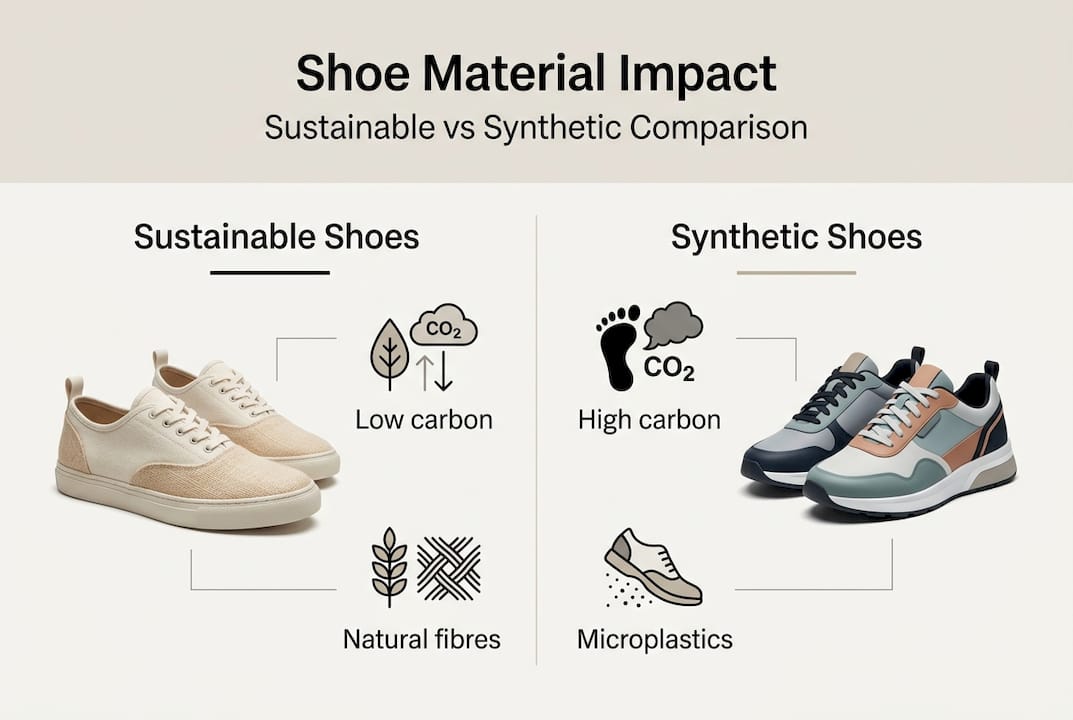
Microplastic pollution complicates material choices further. Synthetic shoes shed tiny plastic particles during wear and washing, contributing to environmental contamination. Natural materials avoid this issue but may introduce different concerns. Some biodegradable polymers require specific conditions to break down properly, potentially persisting in marine environments if they end up in waterways.
Greenwashing remains rampant in the footwear industry. Brands highlight sustainable aspects whilst obscuring less flattering details. A shoe with recycled polyester uppers might still use petroleum-based soles and adhesives. “Eco-friendly” labels often lack standardised definitions, allowing companies to make vague environmental claims without substantive backing.
| Factor | Synthetic shoes | Biodegradable shoes | Consideration |
|---|---|---|---|
| Carbon emissions | 14 kg CO2 per pair | 9.2 kg CO2 per pair | 34% reduction favours biodegradable |
| Lifespan | Baseline | 23% shorter | Durability advantage to synthetics |
| Abrasion resistance | Baseline | 19% faster degradation | Synthetics last longer under heavy use |
| Microplastic shedding | High | Minimal to none | Natural materials avoid pollution |
| End-of-life options | Landfill/incineration | Industrial composting needed | Infrastructure availability varies |
Durability deserves special emphasis. The most sustainable shoe is one you don’t need to replace. A well-constructed pair lasting five years beats a biodegradable option requiring replacement every 18 months, regardless of manufacturing emissions. This reality challenges the assumption that biodegradable automatically means better.
Certifications offer limited guidance. No single standard covers complete lifecycle impacts including biodegradability, microplastic generation, and social factors like fair labour practices. Multiple certifications might address individual aspects, but consumers must research beyond logos to understand true sustainability.
Navigating these tradeoffs requires examining what sustainable shoes actually mean in practice rather than theory. Understanding the full impact of sustainable footwear choices helps you prioritise factors that matter most for your values and circumstances. Challenges in sustainable running shoes illustrate how even specialised performance footwear grapples with these competing demands.
Pro Tip: Consider total lifecycle impact rather than isolated factors when choosing shoes. A durable pair with moderate emissions often beats a biodegradable option with shorter lifespan, especially if local composting infrastructure doesn’t exist.
How to choose sustainable shoes that balance style, comfort, and impact
Armed with knowledge about benefits and tradeoffs, you can make practical decisions that align with your priorities. Follow these steps to evaluate sustainable footwear options systematically.
-
Assess durability indicators before environmental claims. Check construction quality, sole attachment method, and material thickness. Stitched soles typically outlast glued ones. Reinforced toe boxes and heel counters extend lifespan. A well-made shoe from conventional materials often beats a poorly constructed “eco-friendly” alternative.
-
Verify material transparency and sourcing details. Reputable brands provide specific information about where materials come from and how they’re processed. Vague terms like “eco-conscious” or “earth-friendly” without supporting details signal potential greenwashing. Look for certifications like Global Organic Textile Standard or Leather Working Group ratings.
-
Evaluate local end-of-life infrastructure availability. Biodegradable shoes only deliver environmental benefits if you can compost them properly. Research whether industrial composting facilities in your area accept footwear. Some brands offer take-back programmes, collecting worn shoes for proper processing.
-
Match material properties to your intended use. High-impact activities demand different characteristics than casual wear. Natural fibre reinforced rubber works brilliantly for everyday walking but might not suit marathon training. Leather excels for dress shoes requiring longevity but feels too warm for summer trainers.
-
Test comfort thoroughly before committing. Sustainable materials mean nothing if shoes hurt your feet. Walk around the shop, check arch support, assess toe box width, and verify heel grip. Remember that some natural materials like leather require breaking in, whilst others like canvas feel comfortable immediately.
Common sustainable materials and their characteristics:
- Organic cotton: Breathable, soft, requires more water than hemp but widely available and affordable
- Natural rubber: Excellent durability and grip, biodegradable with proper composting, performs comparably to synthetic rubber
- Recycled polyester: Reduces waste and petroleum use but still sheds microplastics during wear and washing
- Piñatex (pineapple leaf fibre): Innovative leather alternative, lightweight and breathable, requires specialised care
- Cork: Naturally antimicrobial, moulds to foot shape, renewable harvest from tree bark without felling
- Hemp: Exceptionally durable, needs minimal water and pesticides, softens with wear whilst maintaining strength
- Merino wool: Temperature regulating, moisture-wicking, naturally odour-resistant, renewable but requires animal farming
Style needn’t suffer for sustainability. Modern eco-conscious brands offer designs spanning minimalist trainers to elegant dress shoes. The aesthetic limitations that plagued early sustainable footwear have largely disappeared as designers master working with natural materials.
Comfort and performance depend on thoughtful material pairing. Selecting shoes for energy and comfort requires understanding how different components work together. Stretchable materials in healthy shoes demonstrate how innovation creates options that adapt to individual foot shapes whilst maintaining sustainable credentials.
Price often reflects true cost. Sustainable shoes typically cost more upfront due to quality materials and ethical manufacturing. However, superior durability means lower cost per wear over time. A £120 pair lasting four years beats £60 shoes requiring replacement annually.
Shop stylish and sustainable footwear at YDA UK
Ready to experience footwear that prioritises both your comfort and environmental responsibility? YDA UK combines sustainable materials with innovative foot health technology, creating shoes that perform beautifully whilst reducing ecological impact. Our collection features carefully selected designs that don’t compromise on style or quality.

Explore our shoes collection to discover options crafted with breathable natural materials and advanced comfort engineering. Whether you need everyday trainers or specialised footwear, we’ve designed each pair to support your feet throughout long days. If you experience foot challenges requiring extra attention, our problem feet solutions combine therapeutic support with sustainable construction, proving that health-conscious footwear can be environmentally conscious too.
Frequently asked questions
Are sustainable shoe materials less durable than traditional ones?
Sustainable materials can match synthetic durability in many applications, with natural fibre reinforced rubber performing comparably to petroleum-based compounds. However, some biodegradable options do have shorter lifespans, degrading about 23% faster than conventional synthetics. Overall durability depends heavily on construction quality and intended use rather than materials alone. Look for brands that prioritise longevity alongside sustainability, as a well-made shoe from any material will outlast a poorly constructed alternative.
How does sustainability in shoe materials benefit my foot health?
Natural fibres used in sustainable shoes often improve breathability, allowing moisture vapour to escape whilst preventing liquid water entry. This reduces irritation, blisters, and fungal infections compared to non-breathable synthetics. Materials like organic cotton, wool, and hemp contain fewer synthetic chemicals that can cause allergic reactions or skin sensitivity. Leather options mould to your foot shape over time, creating custom fit that improves comfort, whilst vegan alternatives using plant-based materials offer similar breathability without animal products.
What should I consider to dispose of sustainable shoes responsibly?
Biodegradable shoes require industrial composting facilities to break down completely, as landfill conditions prevent proper decomposition. Check whether local waste management accepts footwear in composting programmes before assuming biodegradable shoes will decompose naturally. Many brands now offer take-back schemes, collecting worn shoes for proper processing or recycling. If neither option exists locally, sustainable disposal guidance can help you find the most responsible end-of-life solution for your specific situation.
Are certifications reliable indicators of sustainable shoe quality?
No single certification covers complete lifecycle impacts including manufacturing emissions, biodegradability, microplastic generation, and social responsibility. Certifications like Global Organic Textile Standard or Leather Working Group ratings address specific aspects but don’t guarantee overall sustainability. Consumers should research brands’ transparency about sourcing, manufacturing processes, and end-of-life options rather than relying solely on certification logos. Multiple certifications together provide better assurance than any single standard, but independent verification of claims remains important.