
Vegan Footwear: Impact on Foot Health and Ethics
Over one billion pairs of shoes are produced in British factories and sold worldwide every year, but only a fraction meet ethical vegan standards. For eco-conscious consumers, the quest for true vegan footwear is about more than avoiding animal materials. Today’s designers blend cutting-edge plant-based innovations with uncompromising attention to foot health and style. This guide uncovers surprising facts, busts common misconceptions, and reveals how next-generation vegan shoes compete with traditional options across quality, comfort, and sustainability.
Table of Contents
- Defining Vegan Footwear And Common Misconceptions
- Materials And Innovations In Vegan Shoes
- Performance, Comfort, And Health Benefits
- Eco-Friendly, Ethical, And Style Considerations
- Comparing Vegan Footwear With Leather Alternatives
Key Takeaways
| Point | Details |
|---|---|
| Vegan Footwear Redefines Sustainability | Vegan footwear eliminates all animal-derived materials, embracing ethical sourcing and modern manufacturing innovations. |
| Innovative Materials Enhance Performance | Cutting-edge materials like mycelium leather and Piñatex provide durability and comfort, surpassing traditional leather alternatives. |
| Health and Comfort Benefits | Vegan shoes offer superior breathability and moisture management, significantly improving foot health. |
| Consumer Demand for Transparency | Increasingly, consumers are prioritising brands that demonstrate clear sustainability and ethical manufacturing practices. |
Defining Vegan Footwear and Common Misconceptions
Vegan footwear represents a radical departure from traditional shoe manufacturing, challenging long-standing industry practices by eliminating all animal-derived materials. Comprehensive research from leading vegan fashion experts reveals that true vegan shoes extend far beyond simply avoiding leather, encompassing a holistic approach to ethical material selection.
Contrary to widespread misconceptions, vegan footwear is not synonymous with compromised quality or limited style options. Modern manufacturing techniques have revolutionised sustainable shoe production, creating alternatives that match or exceed traditional leather products in durability, comfort, and aesthetic appeal. These shoes are crafted using innovative materials like recycled plastics, plant-based synthetics, organic cotton, and advanced bio-engineered fabrics that provide exceptional performance while maintaining strict ethical standards.
Key characteristics that define authentic vegan footwear include complete elimination of:
- Animal-derived leather
- Animal-based glues
- Wool or silk components
- Fur trims
- Any hidden animal-derived processing agents
Insider Tip Always verify product certifications and thoroughly investigate material sourcing when purchasing vegan footwear to ensure genuine ethical manufacturing practices.
Materials and Innovations in Vegan Shoes
The landscape of vegan footwear materials has undergone a transformative revolution, with cutting-edge innovations challenging traditional manufacturing paradigms. Global research into bio-based material alternatives reveals an extraordinary array of sustainable materials that are reshaping the footwear industry, offering environmentally conscious consumers unprecedented choices beyond conventional leather.
Innovative plant-based materials are at the forefront of this technological transformation. Researchers have developed extraordinary alternatives including mycelium leather derived from fungal networks, pineapple leaf fibre (Piñatex), apple leather created from fruit waste, and cactus-based materials that provide remarkable durability and texture. Detailed studies from sustainable textile research demonstrate these materials’ potential to significantly reduce environmental impact while maintaining high-performance characteristics.
The most promising vegan shoe materials currently include:
- Mycelium leather
- Recycled ocean plastics
- Organic cotton
- Pineapple leaf fibres (Piñatex)
- Apple leather
- Cork
- Synthetic bio-engineered fabrics
These materials not only provide ethical alternatives but also offer innovative performance characteristics that frequently surpass traditional leather in sustainability, breathability, and environmental responsibility.
The following table summarises leading innovative materials in vegan footwear and their principal benefits:
| Material | Main Origin | Performance Highlight |
|---|---|---|
| Mycelium leather | Fungal networks | Highly breathable, lightweight |
| Piñatex | Pineapple leaves | Robust texture, excellent durability |
| Recycled ocean plastic | Marine plastics | Strong, reduces ocean waste |
| Apple leather | Fruit industry | Soft finish, upcycled resource |
| Organic cotton | Cotton plants | Superior breathability, skin-friendly |
| Cactus-based material | Cactus plants | Water-efficient, supple feel |
Pro Tip When assessing vegan shoe materials, examine their entire life-cycle environmental impact, not just their immediate production process.
Performance, Comfort, and Health Benefits
Innovative vegan footwear technologies have dramatically transformed the perception of comfort and performance in ethical shoe design. Modern vegan shoes now offer remarkable advantages that challenge traditional leather footwear, combining advanced synthetic fibres with plant-based materials to create exceptional wearing experiences that prioritise both foot health and environmental responsibility.

The performance characteristics of contemporary vegan shoes extend far beyond mere ethical considerations. Advanced materials like organic cotton, hemp, and recycled synthetic fabrics provide superior breathability, flexibility, and lightweight comfort. These innovative textiles actively respond to foot biomechanics, offering enhanced moisture-wicking properties and reduced friction, which can significantly mitigate common foot health challenges such as blisters, sweating, and skin irritation.
Key performance benefits of modern vegan footwear include:
- Enhanced breathability
- Superior moisture management
- Reduced allergenic potential
- Lightweight design
- Increased flexibility
- Improved temperature regulation
- Reduced environmental impact
Market research indicates that an increasing number of consumers are recognising these technological advances, with statistical evidence showing growing preference for vegan footwear driven by comfort, health awareness, and ethical considerations.
Pro Tip When selecting vegan shoes, prioritise materials that offer both biomechanical support and breathable performance to ensure optimal foot health and comfort.
Eco-Friendly, Ethical, and Style Considerations
Market trends in sustainable fashion reveal a profound transformation in consumer expectations, where ethical considerations now deeply intersect with style and environmental responsibility. Modern vegan footwear has transcended its early reputation as a niche market, emerging as a sophisticated, design-forward category that meets stringent ecological standards while delivering exceptional aesthetic appeal.
The contemporary vegan shoe landscape represents a nuanced fusion of environmental consciousness, technological innovation, and design excellence. Manufacturers are increasingly utilising advanced plant-based materials like pineapple leather, recycled ocean plastics, and organic cotton to create shoes that challenge traditional leather footwear in durability, comfort, and visual sophistication. These materials not only reduce carbon footprint but also provide designers unprecedented creative freedom to experiment with textures, colours, and structural designs.
Key considerations in ethical vegan footwear design include:
- Carbon footprint reduction
- Sustainable material sourcing
- Transparent manufacturing processes
- Fair labour practices
- Minimal waste production
- Biodegradability of materials
- Long-term product lifecycle
Ethical consumers are increasingly demanding transparency, pushing brands to develop comprehensive sustainability strategies that extend beyond material selection to encompass entire production ecosystems.
Pro Tip Research brands’ complete sustainability reports to understand the true environmental and social impact of your footwear choices.
Comparing Vegan Footwear with Leather Alternatives
Comprehensive academic research reveals a nuanced landscape of technological and ethical considerations when comparing vegan and traditional leather footwear. The comparison extends far beyond simple material substitution, encompassing complex factors of manufacturing processes, environmental impact, durability, and consumer perception that challenge longstanding assumptions about shoe production.
Understanding the comparative advantages requires a multifaceted approach. Vegan alternatives demonstrate remarkable innovation in addressing environmental concerns, with materials like mushroom leather, pineapple fibre, and recycled plastics offering compelling performance characteristics. These modern materials frequently outperform traditional leather in breathability, lightweight design, and reduced ecological footprint, challenging conventional notions of quality and durability.
Key comparative dimensions include:
- Manufacturing carbon emissions
- Water consumption
- Material sourcing ethics
- Production waste generation
- Long-term durability
- Biodegradability
- Animal welfare implications
Detailed sustainability analyses demonstrate that vegan materials are not merely ethical alternatives but represent a sophisticated technological response to environmental challenges in footwear production.
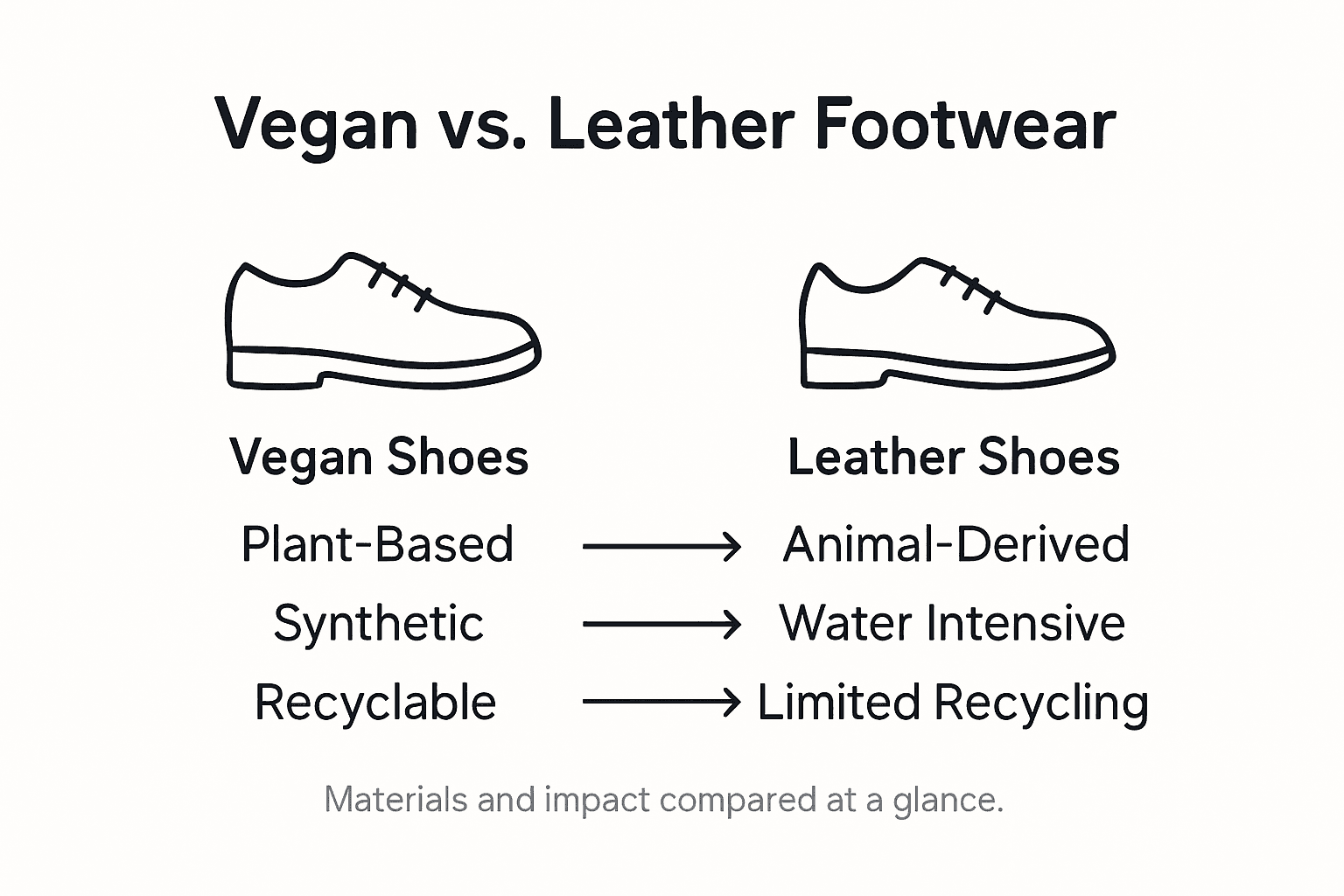
To clarify the key differences between vegan and traditional leather footwear, see the comparative summary below:
| Dimension | Vegan Footwear | Traditional Leather Footwear |
|---|---|---|
| Source Materials | Plant-based, synthetic, recycled | Animal hide, chemical tanning |
| Carbon Emissions | Lower, especially with bio-based | Higher, due to intensive processes |
| Water Usage | Significantly reduced | Extensive, throughout production |
| Durability | Comparable but varies by material | Consistently high but resource-heavy |
| Animal Welfare Impact | No animal harm | Direct impact on livestock |
| End-of-Life Disposal | Potentially biodegradable options | Mostly non-biodegradable |
| Ethical Transparency | Increasingly traceable sourcing | Varied, sometimes opaque |
Pro Tip Request detailed material composition and manufacturing transparency from shoe brands to make truly informed ethical purchasing decisions.
Discover Footwear That Supports Both Your Health and Ethical Values
Choosing vegan footwear means prioritising not only ethical materials but also your foot health and comfort. The article emphasises challenges like finding shoes that combine advanced breathability, biomechanical support, and sustainable design—crucial for anyone seeking high performance without compromising animal welfare or environmental responsibility. If you want footwear that embraces these concepts, look no further.
Explore our expertly curated Shoes – YDA UK collection where cutting-edge technology meets compassionate design. 
Step into a world where comfort, style, and ethical innovation coexist flawlessly. Visit https://ydauk.com now and experience shoes engineered to enhance foot health using sustainable materials. To find options designed specifically for women, browse our Womens – YDA UK selection and make your ethical footwear choice today.
Frequently Asked Questions
What materials are used in vegan footwear?
Vegan footwear is made from a variety of innovative materials, including mycelium leather, pineapple leaf fibres (Piñatex), apple leather, recycled ocean plastics, organic cotton, and synthetic bio-engineered fabrics. These materials provide ethical alternatives and often surpass traditional leather in terms of sustainability and performance.
How does vegan footwear compare to traditional leather in terms of foot health?
Modern vegan shoes often offer superior breathability, flexibility, and moisture management, which can enhance foot health by reducing issues like blisters and skin irritation. The advanced materials used in vegan footwear can provide better comfort and support compared to traditional leather options.
Are vegan shoes durable enough for everyday wear?
Yes, many modern vegan shoes are designed to be durable and can withstand everyday wear. The innovative materials used, such as mushroom leather and recycled plastics, often provide comparable or superior durability relative to traditional leather, while also maintaining ethical standards.
How do I ensure the ethical sourcing of vegan footwear?
To ensure ethical sourcing of vegan footwear, it’s important to verify product certifications, investigate the material sourcing, and review a brand’s sustainability reports. This transparency can provide insights into their manufacturing practices and environmental impact.
Recommended
- What Are Sustainable Shoes? Complete Guide 2025 – YDA UK
- Footwear Technology Explained: Comfort and Performance – YDA UK
- 7 Key Footwear Innovations 2025 for Healthier Feet – YDA UK
- How to Shop for Foot Health: A Step-by-Step Guide – YDA UK
- Vorteile Vegane Ernährung: Der vollständige Leitfaden – Kühlkern UG (Haftungsbeschränkt)