
Your complete step-by-step foot care routine
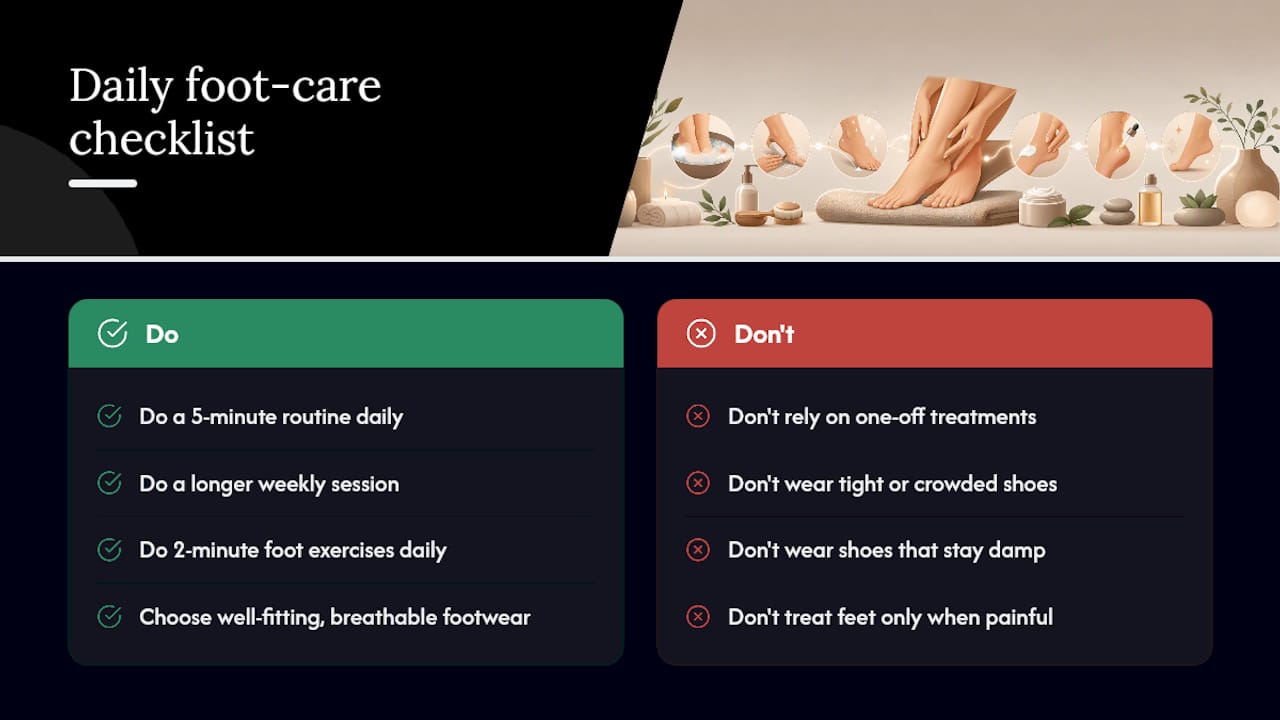
A solid daily foot care routine takes under five minutes: wash with mild soap and lukewarm water, dry thoroughly (especially between the toes), moisturise heels and soles with an emollient or urea-based balm, pull on clean moisture-wicking socks, and inspect your feet briefly before bed. Do that daily. Once a week, file any hard skin gently and trim nails straight across. Once a month, check your footwear for wear and rotation. One rule overrides everything else: never moisturise between the toes, and if you have diabetes, reduced sensation, or poor circulation, avoid all sharp instruments on your feet and see a podiatrist for callus and nail care.
According to AA Podiatry, a simple, consistent routine outperforms any one-off treatment. Dry, cracked heels, hard skin, blisters, and fungal flare-ups are almost always the result of skipped habits rather than bad luck.
Pro Tip: Set a 60-second foot check as part of your bedtime routine. Catching a small crack or blister early costs you nothing; ignoring it can cost you weeks.
Key takeaways
A consistent daily foot care routine, done in under five minutes, prevents the vast majority of common foot problems, from fungal infections to cracked heels to ingrowing nails.
| Point | Details |
|---|---|
| Dry between the toes every time | Trapped moisture is the primary cause of fungal infections; pat dry carefully after every wash. |
| Moisturise heels and soles only | Apply urea-based balm (10–25% urea) to heels and soles; never between the toes. |
| Trim nails straight across | Cut with wide toenail clippers, leave a sliver of white, and file edges smooth to prevent ingrowing nails. |
| Rotate shoes and let them dry | Allow at least 24 hours between wears to reduce bacterial and fungal load inside the shoe. |
| Ydauk for daily support | Ydauk’s YDA Technology footwear is designed to reduce pressure points and complement a regular foot care routine. |
Table of Contents
- Your step-by-step foot care routine: daily, weekly, and monthly
- How to do a deeper weekly foot care session
- Common mistakes podiatrists see, and how to avoid them
- How socks and shoes fit into your foot health routine
- When should you see a podiatrist?
- Your 60-second weekly foot MOT
- Why consistency beats any single treatment
- Supportive footwear that works alongside your routine
- Sources
Your step-by-step foot care routine: daily, weekly, and monthly
This is the full sequence, drawn from podiatrist-approved guidance and organised by frequency so you know exactly what to do and when.
Daily steps (morning or evening, 3–5 minutes)
- Wash your feet with mild soap and lukewarm water. Hot water strips natural oils and dries the skin faster than almost anything else. Pay attention to the soles and around the nails.
- Dry completely. Pat, do not rub, and work carefully between every toe. Trapped moisture between the toes is the primary driver of tinea pedis (athlete’s foot). This single step prevents more problems than any cream.
- Moisturise heels and soles. Apply an emollient or urea-based balm (10–25% urea for dry or cracked skin) to the heels, soles, and tops of the feet. Stop short of the interdigital spaces. Moisture between the toes creates exactly the warm, damp environment fungal infections need.
- Apply foot powder if needed. If your feet sweat heavily, a light dusting of talc-free foot powder or an antiperspirant spray helps manage moisture through the day.
- Put on clean, moisture-wicking socks. Natural fibres such as merino wool or synthetic blends designed to wick sweat away from the skin both work well. Cotton holds moisture against the skin once wet, so it is a weaker choice for active use.
- Wear supportive, well-fitting shoes. Shoes that crowd the toes or slip at the heel cause blisters, nail damage, and over time, structural problems.
- Evening inspection. Before bed, look at the soles, heels, and between the toes. You are looking for new redness, cracks, blisters, or anything that was not there yesterday.
Weekly add-ons (10–15 minutes)
- Gentle filing. Use a pumice stone or foot file/emery board on dry or slightly damp skin to reduce hard skin on the heels and balls of the feet. Work in one direction with light pressure. Two to three sessions per week is enough for most people; once weekly is fine for mild hard skin.
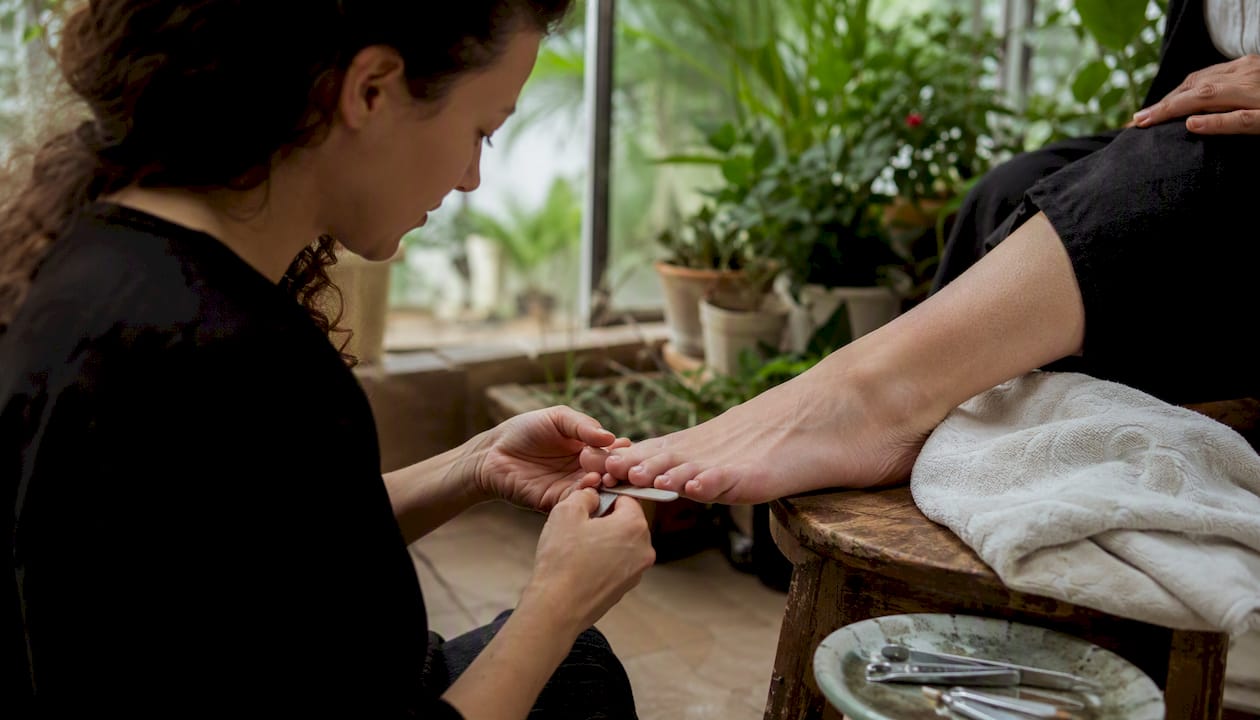
- Toenail trimming. Clip nails straight across with wide toenail clippers (never curved into the corners, which risks ingrowing nails). File any sharp edges smooth with an emery board. Nails should sit just above the tip of the toe.
- Deeper moisturising. After filing, apply a slightly thicker layer of urea balm or an occlusive such as petroleum jelly (Vaseline) to the heels and soles. Wearing cotton socks overnight seals the moisture in.
Monthly checks
- Inspect your shoes for uneven wear on the soles, which can signal gait issues worth discussing with a podiatrist.
- Rotate your footwear and check that no pair has become too compressed or misshapen to support the foot properly.
- Assess whether your nails, heels, and skin are responding to the routine. If cracking persists despite regular moisturising, a higher-strength urea formulation or a podiatry appointment is the next step.
Tools you need: pumice stone, foot file or emery board, wide toenail clippers, emollient or urea-based heel balm, petroleum jelly, antifungal cream (to keep on hand), antiseptic for small wounds, and a good moisturiser suited to dry skin.
Pro Tip: Trim nails after a shower when they are slightly softened. Dry, brittle nails split more easily and are harder to cut cleanly.
How to do a deeper weekly foot care session
A weekly spa-style session is optional but genuinely useful if you have dry or cracked heels. Skip it during any active infection, open wound, or fungal flare-up.
When to do it: once a week, ideally in the evening so the overnight period does the heavy lifting.
- Warm rinse or brief soak. A short warm rinse (5 minutes maximum) softens the skin enough for filing. Avoid long soaks; practitioners distinguish brief cleansing from prolonged soaking, and extended soaking can actually dry the skin by stripping its natural oils.
- Gentle exfoliation. Use a pumice stone or foot file on the heels and balls of the feet. Work gently. The goal is to reduce the surface layer of hard skin, not to sand down to raw skin. Never use a razor blade or scalpel on calluses at home.
- Urea-based balm application. Apply a urea heel balm (10–25% urea) to the heels and soles while the skin is still slightly warm. Urea works as both a humectant and a mild keratolytic, meaning it draws moisture in and softens thickened skin at the same time.
- Occlusive seal. Cover the balm with a thin layer of petroleum jelly, then pull on a pair of cotton socks. Podiatrists recommend this overnight method specifically for softening hardened skin on the heels.
- Morning check. Rinse and dry as normal. If the skin looks significantly better after two or three sessions, you are on the right track. If deep cracks persist or bleed, that is a podiatry referral, not a home treatment.
- Avoid aggressive metal foot files or cheese-grater style tools; they remove too much skin too fast.
- Antifungal cream belongs in your kit for early signs of athlete’s foot (itching, peeling, redness between toes), not as a routine preventive.
- People with diabetes should skip home soaks and exfoliation tools entirely and rely on professional podiatric care for hard skin management.
Common mistakes podiatrists see, and how to avoid them
Most foot problems are preventable. The errors below account for the majority of avoidable issues that podiatrists treat.
- Moisturising between the toes. The most common mistake, according to podiatrist-approved guidance. The interdigital spaces need to stay dry. Applying cream there traps moisture and invites fungal infection.
- Using blades on calluses. Razor blades, scalpels, and corn-planing tools sold for home use carry a real risk of cutting too deep, causing bleeding, and opening a route for infection. For most people, a pumice stone is sufficient. For people with diabetes or reduced sensation, AA Podiatry is explicit: no sharp instruments at home, full stop. Debridement must be done by a professional.
- Cutting nails into the corners. Rounding the nail edges or cutting too short at the sides is the primary cause of ingrowing toenails. Cut straight across, leave a sliver of white nail visible, and file the edge smooth.
- Ignoring footwear. Tight shoes, worn-down soles, and shoes that never get a chance to dry are active contributors to blisters, nail damage, and fungal load. Footwear is a health intervention, not just a style choice.
- Treating persistent problems at home. A blister that keeps returning, a nail that has changed colour, or a sore that has not healed in two weeks are not home-treatment territory.
Diabetes and high-risk conditions
People with diabetes, peripheral neuropathy, or poor circulation face a different risk profile entirely. Reduced sensation means a small cut or blister can go unnoticed and deteriorate quickly. The CDC’s foot hygiene guidance underlines the importance of daily washing and thorough drying to prevent infection. For this group, the rules are stricter:
- Inspect feet daily, ideally with a mirror for the soles.
- Never use sharp instruments, corn plasters, or medicated pads at home.
- See a podiatrist for nail trimming and callus care on a regular schedule (every 8–12 weeks is a common professional recommendation).
- Any wound, redness, or swelling that does not resolve within 24 hours warrants prompt medical review.
Pro Tip: If you have diabetes, keep a small mirror and a torch near where you sit in the evening. A 30-second sole check before bed costs nothing and catches problems before they escalate. For footwear guidance specific to this group, diabetic foot protection steps covers the key considerations.
How socks and shoes fit into your foot health routine
Footwear is not a footnote to foot care. The right shoes and socks actively reduce pressure points, manage moisture, and prevent the structural problems that accumulate over years.
Getting shoe fit right
- Toe box space. You need roughly a thumb’s width between the longest toe and the end of the shoe. Crowded toes cause nail damage and blisters.
- Heel security. The heel should sit firmly without slipping. Slippage causes friction blisters at the back of the heel.
- Width. The widest part of the shoe should match the widest part of the foot without squeezing. Shoe width matters particularly for people with wider feet or swelling.
- Time of day. Feet swell naturally through the day. Measure or try on shoes in the late afternoon or evening to avoid buying a pair that feels fine in the morning but tight by 6pm.
Socks
| Sock material | Moisture management | Best use |
|---|---|---|
| Merino wool | Excellent | All-day wear, active use |
| Synthetic moisture-wicking blend | Very good | Sport, high-sweat activity |
| Cotton | Poor when wet | Low-activity, dry conditions only |
| Bamboo | Good | Everyday wear, sensitive skin |
Change socks daily as a minimum. If your feet sweat heavily, change mid-day. Never wear damp socks for extended periods.
Shoe rotation and drying
Shoes need at least 24 hours to dry out fully between wears. Wearing the same pair every day keeps the interior damp, which raises bacterial and fungal load significantly. Remove insoles after each wear to speed drying. A comfortable shoe buying workflow that builds in rotation from the start prevents this problem entirely.
When should you see a podiatrist?
Home care handles the routine. These signs mean it is time to get professional eyes on your feet.
Urgent symptoms
- Persistent pain that does not resolve with rest or better footwear.
- Swelling, warmth, or redness that spreads or does not improve within 48 hours.
- A sore, crack, or blister that has not healed after two weeks, particularly if you have diabetes.
- Sudden changes in skin colour (pale, blue, or darkening) or skin texture.
- Signs of infection: increasing redness, warmth, pus, or a wound that smells.
UCLA Health recommends immediate evaluation for persistent foot pain, skin colour or texture changes, swelling or warmth, non-healing sores, and visible nail changes such as thickening, discolouration, or detachment.
Routine podiatry reasons
- Ingrowing toenails that recur despite correct trimming technique.
- Fungal nail infection that has not responded to over-the-counter antifungal treatment after 3 months.
- Chronic calluses that reform quickly after filing.
- Foot pain that suggests a gait or structural issue worth an orthotic assessment.
A first podiatry appointment typically involves a full foot assessment: skin condition, nail health, circulation, sensation, and gait. You leave with a personalised care plan, not just a treatment. For people with diabetes, diabetic footwear selection is often part of that conversation.
Your 60-second weekly foot MOT
Run through this once a week, ideally after a shower when the skin is clean and the light is good.
- Heels and soles: any new cracks, dry patches, or areas of hard skin forming?
- Between the toes: any peeling, itching, redness, or unusual moisture?
- Nails: any discolouration (yellow, white, brown), thickening, or nails lifting from the bed?
- Skin colour: any patches that look pale, red, or darker than the surrounding skin?
- Swelling: any puffiness around the ankles or across the top of the foot?
- Blisters or hot spots: any areas that feel tender or show early blister formation?
For minor findings: hydrate dry heels immediately, cover small wounds with a clean dressing and antiseptic, and monitor daily. If a finding persists beyond a week or worsens, book a podiatry appointment. If mobility or vision makes self-inspection difficult, ask someone to check the soles for you, or use a long-handled mirror. Photographing any skin change on your phone gives you a useful baseline to track whether it is improving or worsening.
Why consistency beats any single treatment
The research is fairly clear on this: Harvard Health’s review of foot care with ageing frames foot health as a direct contributor to mobility and quality of life, not a cosmetic concern. Feet carry the full weight of every step you take, and the problems that sideline people — plantar fasciitis, ingrowing nails, infected blisters, chronic calluses — almost always develop from neglected small habits rather than a single event.
What most guides understate is how much footwear does the heavy lifting. A daily moisturising routine applied inside shoes that crowd the toes or never dry out is fighting a losing battle. The routine and the footwear have to work together. Stretching and simple foot exercises (calf raises, toe spreads, ankle circles) take two minutes and maintain the flexibility that makes every other part of the routine easier to sustain as you age.
The other thing worth saying plainly: one-off treatments do not work. A single pedicure, a single pumice session, a single overnight Vaseline application will not fix chronic dry heels. What works is the same five-minute sequence, repeated daily, with a slightly longer session once a week. That is it. The people who struggle with persistent foot problems are almost always the ones who treat their feet reactively, when something hurts, rather than maintaining them the way they would maintain anything else that gets daily heavy use.
Supportive footwear that works alongside your routine
Well-designed shoes do not just protect the foot from external damage. They distribute pressure more evenly across the sole, reduce the friction that causes blisters, and support the arch in a way that makes the daily routine more effective rather than constantly undoing it.

Ydauk’s footwear is built around YDA Technology, which focuses on energy efficiency and foot health in everyday wear. The shoes are designed to complement a care routine rather than replace it: the right shoe reduces the mechanical stress that creates calluses and pressure points in the first place, meaning your pumice stone and heel balm have less work to do. For readers who want footwear engineered with foot health in mind, the benefits of supportive footwear page explains what to look for and why it matters. Visit Ydauk to see the current range and find a pair that fits your daily routine.
Sources
- Daily Foot Care Routine: Podiatrist-Approved Step-by-Step - Podiatrists in Richmond, VA | Achilles Foot and Ankle Center
- What Is the Best Foot Care Routine for Your Feet? | AA Podiatry
- Foot hygiene | CDC
- Healthy feet, happy life | Harvard Health
This article is general information, not a substitute for advice from a qualified doctor. Consult a qualified healthcare professional about your own circumstances before acting on anything here.