
Step-by-step foot care guide for comfort and support
TL;DR:
- Consistent foot care routines involving proper supplies, inspection, and moisturising prevent common problems and promote healing.
- People with diabetes must be especially meticulous, inspecting daily with care to avoid infections and complications.
- Structured routines outperform quick fixes, as gradual maintenance allows early problem detection and sustainable improvement.
Sore, tired, or cracked feet are not something you simply put up with. Whether you are standing all day at work, managing a long-term condition, or just noticing that your feet feel worse than they used to, the difference between ongoing discomfort and genuine relief often comes down to having a structured, practical routine. This guide walks you through everything from the tools you need, to targeted routines for specific problems, to knowing when to seek professional help. Follow it step by step, and you will start noticing real improvements faster than you might expect.
Table of Contents
- Essential tools and preparation for foot care
- Daily baseline routine for healthier feet
- Specialised care for common foot issues
- Verifying progress and troubleshooting common mistakes
- Why step-by-step routines outperform quick fixes for foot health
- Next steps for enhanced comfort and support
- Frequently asked questions
Key Takeaways
| Point | Details |
|---|---|
| Daily care routine | Washing, drying, and moisturising feet regularly is key to preventing most problems. |
| Specialised issue management | Target athlete’s foot, cracked heels, and ingrown nails with stepwise routines and timely professional care. |
| Diabetes-specific precautions | Inspect feet daily, avoid sharp interventions, and prioritise proper footwear for diabetes management. |
| Supportive footwear matters | Shoes and orthotics play a vital role in maintaining comfort and foot health. |
| Consistency beats quick fixes | Step-by-step routines offer lasting results and reduce setbacks compared to rapid self-treatments. |
Essential tools and preparation for foot care
Good foot care does not require a clinic or expensive gadgets. What it does require is the right handful of supplies and a consistent approach. Before you begin any routine, gather everything you need so that you are not cutting corners halfway through.
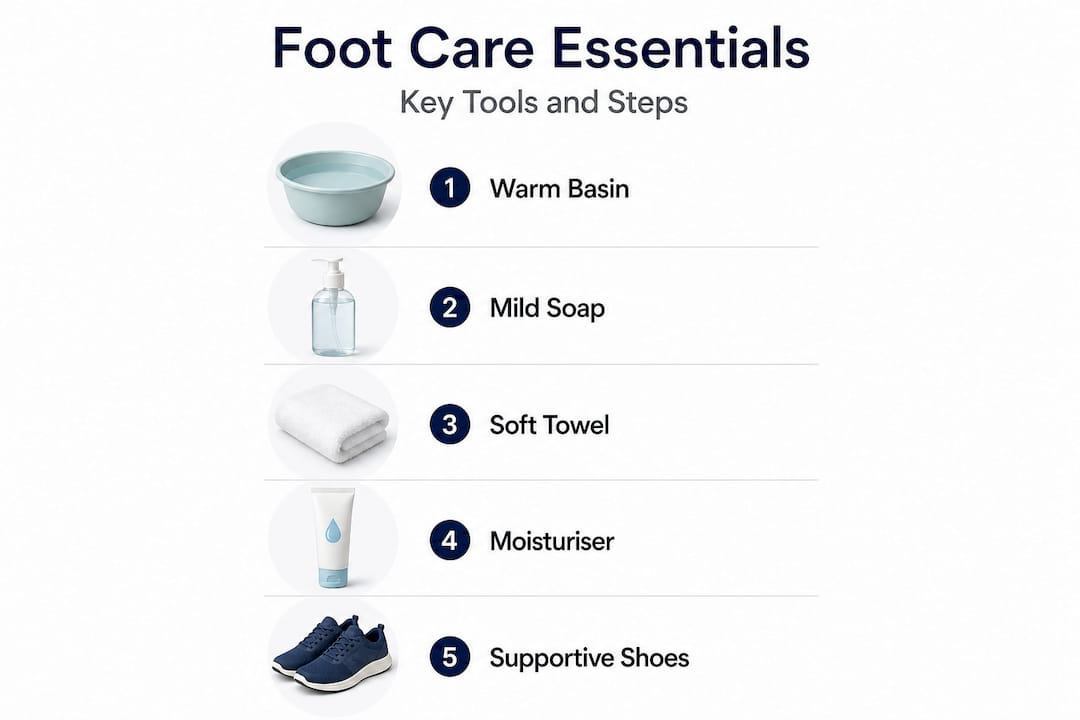
The core toolkit
Here is what a well-prepared foot care kit should contain:
- Gentle, pH-balanced soap to clean without stripping natural moisture
- Warm water basin large enough to soak both feet comfortably
- Clean, soft towels dedicated to foot use only
- Ceramide-based moisturiser for dry skin and harder-to-heal heels
- Antifungal cream or powder for fungal concerns
- Cotton pads and clean cotton wool for application and padding
- Sterile bandages and plasters for minor wounds or nail protection
- A small mirror or magnifying mirror to inspect the soles and heel areas
- Nail scissors with rounded tips for safe trimming
Avoid razor blades, corn-cutting knives, or any sharp DIY instruments. These cause far more damage than they solve, particularly if your skin is sensitive or your circulation is reduced.
Preparation steps that matter
Set up your workspace on a non-slip surface. Fill the basin with warm (not hot) water. A temperature you would comfortably use for a baby’s bath is the right level. Water that is too hot damages skin and can be dangerous for those with reduced sensation.
| Preparation element | Why it matters |
|---|---|
| Warm (not hot) water | Prevents scalding and protects sensitive skin |
| Non-slip mat | Reduces fall risk during soaking |
| Dedicated towels | Prevents cross-contamination and fungal spread |
| Good lighting | Helps spot skin changes and early warning signs |
| Moisturiser on hand | Ensures you apply while skin is still slightly damp |
As Mayo Clinic advises, a practical baseline routine involves washing with warm water, drying thoroughly especially between the toes, and then moisturising dry areas whilst keeping moisture away from between the toes. This principle applies whether or not you have a specific condition.
Pro Tip: Choose a ceramide-based moisturiser specifically for feet. Ceramides reinforce the skin’s natural barrier, which means moisture stays in rather than evaporating within hours. Standard body lotions often lack this ingredient.
Checking your problem feet care guide before you begin your routine can help you identify whether you need to add any specialist products to your kit. Likewise, if you are unsure which products to prioritise, reading up on shopping for foot health will save you money and guesswork at the pharmacy.
“Prevention is always more straightforward than treatment. A five-minute daily routine is worth far more than a two-week recovery from a preventable problem.”
Daily baseline routine for healthier feet
With your tools ready, building a consistent daily routine is your most important step. The goal is simple: clean, dry, and moisturised feet every single day.
Step-by-step baseline routine
- Fill the basin with warm water and a small amount of gentle soap.
- Soak feet for five to ten minutes to soften skin and loosen debris.
- Wash carefully, including between each toe and around the heel.
- Pat dry thoroughly using a clean towel. Do not rub vigorously. Pay extra attention to the spaces between the toes.
- Inspect your feet before applying anything. Look for redness, cracking, blisters, or any unusual changes.
- Apply moisturiser to the tops, soles, and heels. Avoid applying between the toes, as retained moisture there encourages fungal growth.
- Put on clean, breathable socks if you are going indoors, or appropriate footwear if heading out.
This sequence, supported by Mayo Clinic’s foot care guidance, works for the vast majority of people as a protective daily habit. It takes less than fifteen minutes and prevents a wide range of problems before they start.
How the routine differs for people with diabetes
People managing diabetes need to be more meticulous, not because the routine changes dramatically, but because the stakes of missing a small wound or skin change are significantly higher. Peripheral neuropathy can reduce sensation, making it easy to miss a blister or cut.
| Routine element | General population | People with diabetes |
|---|---|---|
| Daily washing | Recommended | Essential |
| Between-toe drying | Advised | Strictly required |
| Mirror inspection | Optional | Daily, non-negotiable |
| Callus removal | Self-care acceptable | Professional only |
| Moisturising | As needed | Every day |
| Footwear check | Occasional | Before each wear |
Pro Tip: Use a handheld mirror to inspect the soles of your feet each morning if bending is difficult. You are looking for redness, swelling, unusual warmth, or any break in the skin. Catching changes early can prevent serious escalation.
For readers who want to go further with their caring for problem feet routine, pairing this baseline approach with proper footwear choices is equally important. Equally, learning about maintaining foot comfort over the longer term gives you a fuller picture of how lifestyle and care intersect.
Specialised care for common foot issues
With the baseline covered, let us look at how to adapt your routine for the four most frequent foot complaints: athlete’s foot, cracked heels, ingrown toenails, and plantar fasciitis.
Athlete’s foot
Athlete’s foot (tinea pedis) thrives in warm, moist conditions. The antifungal treatment duration is as important as the treatment itself. Many people stop applying cream as soon as symptoms fade, and then wonder why the problem returns within a fortnight.
- Wash feet and dry thoroughly, especially between the toes.
- Apply antifungal cream, gel, or powder directly to affected areas.
- Continue application for at least a week beyond the disappearance of symptoms.
- Wear breathable footwear and moisture-wicking socks.
- Avoid walking barefoot in communal areas like gym changing rooms or swimming pool surrounds.
Cracked heels
Cracked heels are more than a cosmetic issue. Deep fissures can bleed, become infected, and cause genuine pain with each step. The Cleveland Clinic recommends washing with lukewarm water daily, moisturising immediately after drying, and giving urea-based or ceramide-containing products at least two weeks to show a meaningful response.
- Avoid picking or filing aggressively, which removes protective layers
- Apply moisturiser at night and cover with a cotton sock for deeper absorption
- Stay consistent even if you see no change in the first week
Ingrown toenails
An ingrown toenail feels minor until it becomes infected. For mild cases, the conservative home approach involves soaking the foot in warm water for fifteen to twenty minutes, gently lifting the nail edge, and placing a small piece of clean cotton or dental floss beneath it to encourage outward growth.
- Soak the affected foot in warm water for fifteen to twenty minutes, three to four times daily.
- Gently lift the ingrown edge after soaking when the skin is soft.
- Place a small amount of clean cotton or waxed dental floss beneath the lifted edge.
- Bandage the toe to protect it and reduce pressure.
- Wear open footwear or wide-toed shoes to reduce pressure on the nail.
If you notice increasing redness, pus, or severe pain that does not respond to home care within a few days, stop self-treating and see a clinician promptly.
Plantar fasciitis
Plantar fasciitis causes sharp heel pain, typically worst with the first steps of the morning. The Mayo Clinic approach focuses on icing, stretching, limiting the activities that aggravate the pain, and wearing properly supportive footwear or orthotics. If symptoms do not improve within two weeks of consistent self-care, physical therapy is the next step.
- Ice the heel for fifteen minutes after activity
- Stretch the calf and plantar fascia before getting out of bed
- Replace worn-out footwear immediately
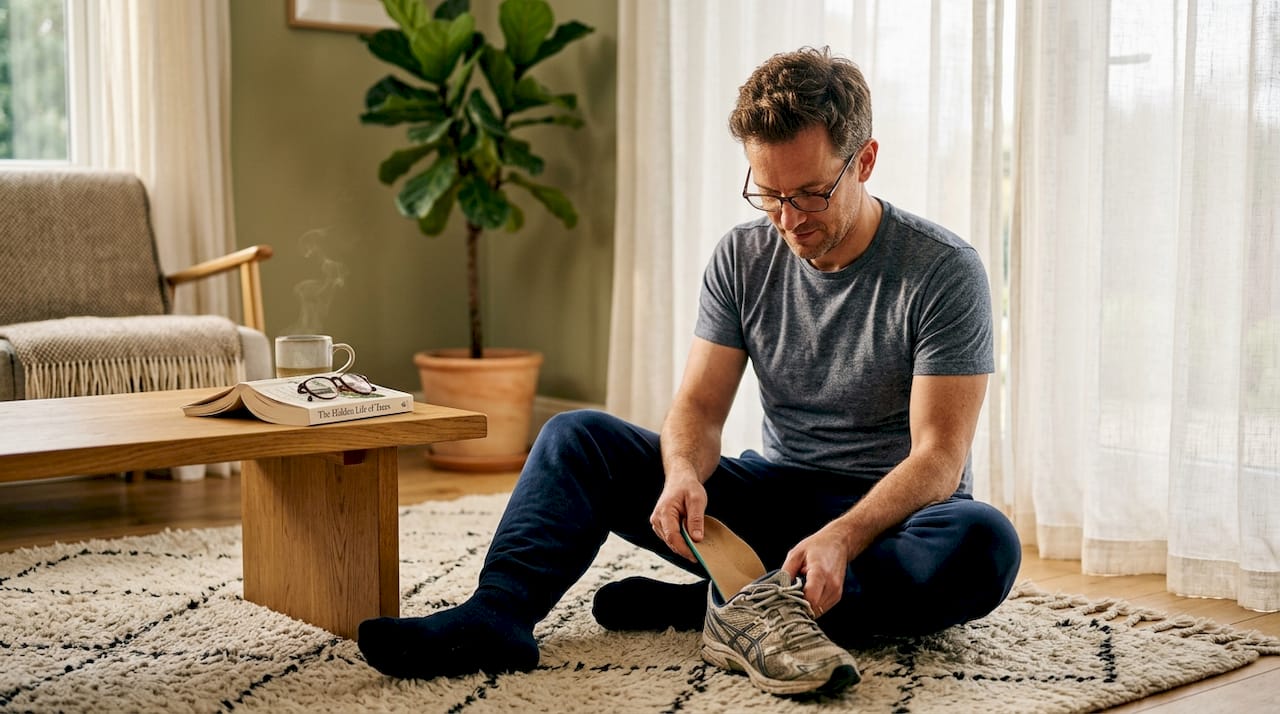
- Consider footwear for plantar fasciitis that provides appropriate arch support
Orthotics can significantly reduce strain on the plantar fascia by redistributing load. If you are exploring this route, orthotic-friendly footwear options make a measurable difference when combined with a stretching programme.
Verifying progress and troubleshooting common mistakes
After following your routines consistently for one to two weeks, you should begin to see measurable signs of improvement. Knowing what to look for keeps you on track and helps you identify when something needs more attention.
Signs of positive progress
- Skin feels softer and less tight across the heels and soles
- Cracking is shallower or healing visibly
- Fungal irritation between toes has reduced noticeably
- Morning heel pain is less intense or briefer in duration
- No new blisters, sores, or raw patches appearing
Warning signs that need professional input
- Persistent redness or warmth that does not settle within a few days
- Swelling that is worsening, not improving
- Pus or discharge from any wound or nail
- Pain that is severe, spreading, or not responding to home care
- Numbness or loss of sensation that was not there before
The Mayo Clinic diabetes prevention guidance is particularly clear on this: daily inspection using a mirror, proper sock and shoe fit, and avoiding DIY removal of calluses, corns, or warts are non-negotiable steps for people with diabetes. However, these principles benefit everyone, not just those managing blood sugar.
Pro Tip: Take a photo of any skin change you are monitoring. Comparing images taken a week apart is far more reliable than trying to remember whether a patch looked bigger or redder than before.
The most common mistakes people make
- Using water that is too hot, which dries skin and can scald vulnerable areas
- Applying moisturiser between the toes, which traps moisture and encourages fungal growth
- Cutting toenails too short or rounding the edges, which encourages ingrowth
- Skipping days of treatment because symptoms seem to have resolved
- Using sharp implements to remove calluses or corns at home
If you want a fuller understanding of what healthy feet look like and how to monitor them effectively, the complete foot health guide offers a broader perspective that complements this step-by-step approach. For those managing diabetes specifically, the diabetic footwear selection guide is a practical companion resource.
Why step-by-step routines outperform quick fixes for foot health
There is a persistent temptation to look for the fastest possible solution when feet hurt. A pumice stone session, a new cream, a single physiotherapy appointment. These things have value in isolation, but they rarely solve anything on their own. Here is the uncomfortable truth we have observed time and again: foot health improves gradually, and the people who stick to structured routines outperform those who chase quick fixes every single time.
Quick fixes carry real risks. Aggressively removing a callus at home may leave raw, unprotected skin that cracks within days. Stopping antifungal treatment too early almost guarantees a relapse. Trying a new insole without understanding your foot mechanics might shift pain from the heel to the knee. Each shortcut introduces a new variable that is harder to troubleshoot.
Step-by-step routines, by contrast, create a baseline. When something changes, you notice it quickly because you have been checking consistently. You know what your skin looked and felt like a week ago. You know which products you used and in which order. This means that when something is not working, you can adjust one element at a time rather than guessing from scratch.
Consistency also compounds. A fortnight of diligent moisturising transforms heel skin far more than three sessions of intensive treatment followed by two weeks of neglect. The skin barrier rebuilds gradually. Inflammation from plantar fasciitis reduces when the load is managed day by day, not just on the days when pain is unbearable.
We also notice that people who follow structured routines are more likely to catch early warning signs before they become serious problems. A blister spotted on Monday is a two-minute plaster job. The same blister ignored until Friday can become an infected wound requiring medical attention.
If you are choosing footwear to support your routine, the buying healthy footwear guide will help you make choices that reinforce your care routine rather than undermine it.
Next steps for enhanced comfort and support
You now have a thorough framework for managing your foot health from the ground up. The right daily habits, the right products, and the right knowledge to spot trouble early make an enormous difference to how your feet feel month after month.

At YDA, we understand that good foot care does not stop with creams and routines. The shoes you wear every day either support your progress or work against it. Our YDA shoe technology is engineered specifically to combine everyday style with genuine foot health benefits, providing the structural support and energy efficiency that sore or problem feet genuinely need. Explore the technology behind our footwear and see how the right pair can become a meaningful part of your foot care routine.
Frequently asked questions
What is the best way to prevent athlete’s foot from returning?
Keep feet dry between the toes after washing, apply antifungal treatment consistently, and continue treatment for at least a week after all symptoms disappear to prevent reinfection.
How can I tell if a foot issue needs a professional?
If you observe persistent redness, swelling, pus, spreading pain, or a wound that is not healing within a few days of home care, consult a healthcare professional for proper assessment.
Are there special routines for people with diabetes?
Yes. Daily foot inspection using a mirror, strict avoidance of DIY callus or corn removal, and ensuring socks and shoes fit correctly are essential extra steps for anyone managing diabetes.
How long should I use urea cream for cracked heels?
Give urea cream at least two weeks of consistent daily use before evaluating results. The Cleveland Clinic advises patience with this product category, as skin barrier repair takes time.
Can I safely treat an ingrown toenail at home?
Mild cases can be managed at home with warm soaking and careful cotton placement beneath the nail edge, but persistent pain, pus, or any sign of infection requires a clinician’s assessment without delay.