
Diabetic foot protection steps: your 2026 guide
TL;DR:
- Daily foot inspection, hygiene, and proper footwear are essential habits to prevent amputations in diabetics. Regular professional exams and prompt wound care further reduce the risk of serious complications. Consistent routines and supportive footwear are crucial for effective diabetic foot management.
Diabetic foot protection steps are the daily routines that prevent minor injuries from becoming life-altering complications. Over 85% of diabetes-related amputations are preceded by foot ulcers that early inspection could have caught. That single fact reframes everything. This is not about extreme medical intervention. It is about building simple, consistent habits around inspection, hygiene, and footwear that collectively form the most effective defence against ulcers and amputation available to you today.
What do diabetic foot protection steps actually involve?
Diabetic foot protection, known clinically as therapeutic foot self-care, is a structured daily routine covering inspection, hygiene, moisturising, nail care, and footwear management. Each step targets a specific vulnerability created by diabetes. The two most significant are peripheral neuropathy, which removes your ability to feel pain, and poor circulation, which slows healing. Together, they turn a small blister into a serious wound faster than most people expect.
Up to 50% of diabetes patients develop neuropathy significant enough to require a daily inspection routine. That means half of all people with diabetes cannot rely on pain to signal a problem. Visual inspection becomes your primary diagnostic tool, not a backup.
The steps covered in this guide follow the clinical recommendations current as of 2026, drawing on guidance from Mayo Clinic, Diabetes Australia, and AdventHealth. You do not need specialist equipment. You need consistency.
How to perform a daily foot inspection correctly
Daily self-inspection is the single most effective step in preventing diabetic foot ulcers. It takes under five minutes and requires nothing more than good lighting, a mirror or smartphone camera, and your full attention.
Follow this sequence every day, ideally after bathing when skin is clean:
- Check the tops of both feet. Look for redness, swelling, cuts, or any change in skin colour.
- Examine between every toe. This is where fungal infections and small cuts hide most often. Use your fingers to separate toes if vision is limited.
- Inspect the soles. Use a handheld mirror or point your phone camera downward. Look for blisters, calluses, cracked skin, or any wound.
- Check the heels. Heel cracks are common and can deepen quickly without sensation to warn you.
- Feel for temperature differences. One foot noticeably warmer than the other can indicate inflammation or early infection.
- Note any swelling. Swelling that appears without obvious cause warrants a call to your GP or podiatrist within 24 hours.
Any wound that has not begun to close within 24–48 hours needs professional assessment. The healing response in neuropathy is delayed, so what looks minor can escalate quickly without intervention.
Pro Tip: Wear white cotton socks at home. White socks help identify bleeding or discharge from small injuries you cannot feel, giving you an early warning system that costs nothing.
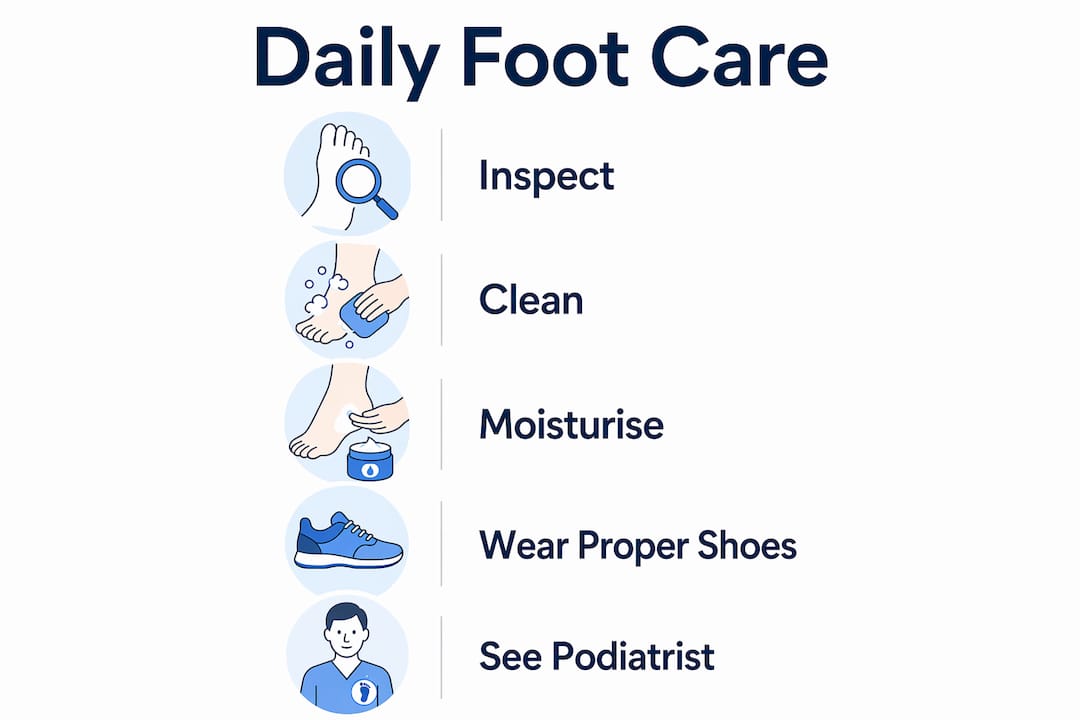
Neuropathy can mask foot injuries entirely, which is why many patients are genuinely surprised to find wounds during inspection. Do not skip this step because your feet feel fine. Feeling fine is not the same as being fine.
What does proper foot hygiene involve for diabetics?
Foot hygiene for people with diabetes goes beyond basic washing. Each element of the routine targets a specific risk, and getting the details right matters.
Key practices to follow daily:
- Wash with lukewarm water only. Test the temperature with your elbow or wrist before your foot enters the water. Washing with lukewarm water and drying thoroughly prevents fungal infections that are far more common in diabetic patients.
- Dry thoroughly between every toe. Trapped moisture between toes creates the ideal environment for fungal growth. Pat gently rather than rubbing.
- Moisturise the tops and soles. Use a fragrance-free cream or lotion daily to prevent cracking. Dry skin breaks down faster and creates entry points for infection.
- Never moisturise between the toes. This is the one exception. Moisture between toes increases infection risk rather than reducing it.
- Trim nails straight across. Cut nails to follow the natural line of the toe. File any sharp edges with an emery board. Never cut down into the corners, as this causes ingrown nails.
- Never cut nails too short. Cutting below the tip of the toe risks breaking skin you cannot feel.
Pro Tip: If your nails are thick, discoloured, or difficult to cut, ask a podiatrist to manage them. Attempting to cut damaged nails at home is one of the most common causes of preventable foot injuries in diabetic patients.
Regular exercise that promotes circulation also supports skin and tissue health. A short daily walk, even indoors, keeps blood moving to your feet and supports the healing capacity that diabetes can reduce.
How should you choose footwear to protect diabetic feet?
Footwear is not a cosmetic choice when you have diabetes. The right shoe prevents pressure injuries. The wrong one causes them, often without you noticing until significant damage has occurred.
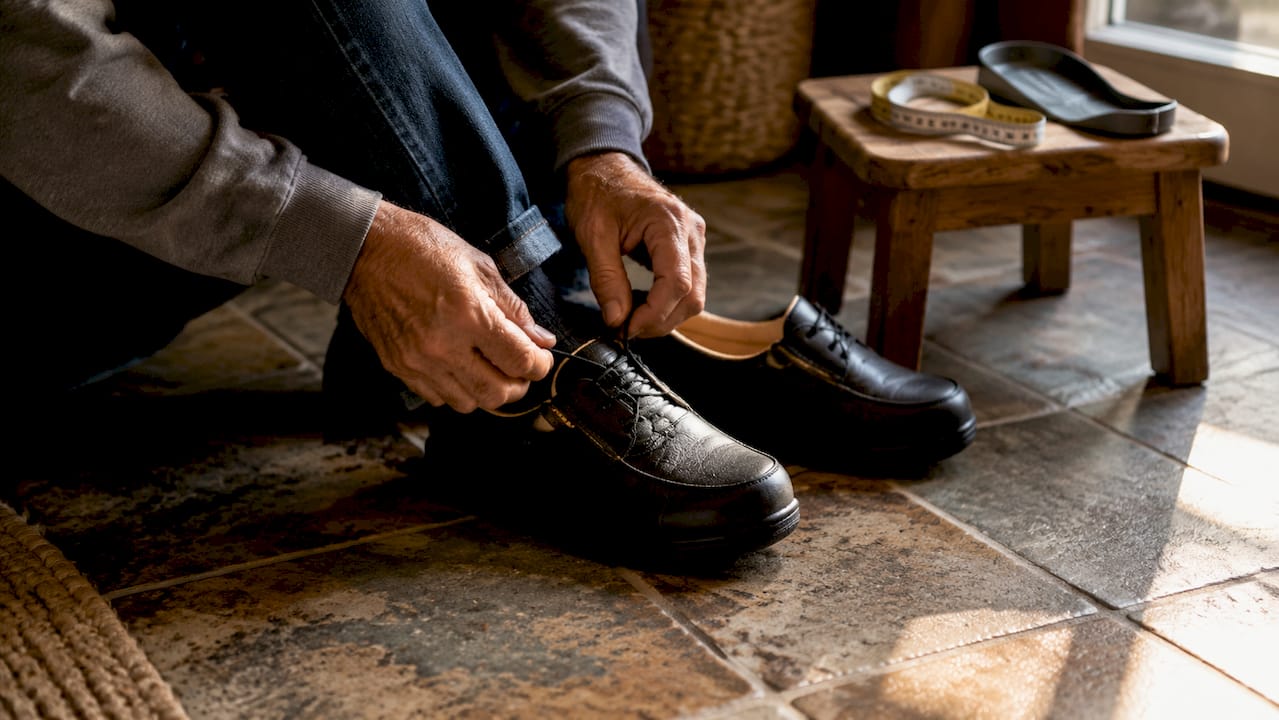
What to look for in a diabetic-friendly shoe
| Feature | Why it matters |
|---|---|
| Wide toe box | Prevents pressure on toes and reduces callus formation |
| Cushioned insole | Absorbs impact and distributes weight evenly |
| Seamless interior lining | Eliminates friction points that cause blisters |
| Adjustable fastening | Accommodates swelling throughout the day |
| Firm, supportive sole | Reduces ground pressure on vulnerable areas |
Supportive shoes with wide toe boxes distribute pressure more evenly and directly reduce the formation of calluses and ulcers. This is not a preference. It is a clinical recommendation.
Additional footwear rules to follow:
- Check inside every shoe before putting it on. Run your hand around the interior to feel for seams, debris, or damage. Patients must feel inside shoes before wearing to catch anything that could cause injury.
- Break in new shoes gradually. Wear them for one to two hours on the first day, then increase daily. New therapeutic footwear has a break-in period and gradual wear prevents pressure spots from forming.
- Wear diabetic socks. Socks made of cotton or acrylic fibres with non-constricting elastic bands reduce skin irritation and improve circulation compared to standard socks.
- Never walk barefoot, even indoors. Patients should never walk barefoot because neuropathy means a sharp object or hot surface can cause serious injury before you register any sensation.
For a detailed breakdown of what to look for when buying, the Ydauk diabetic footwear selection guide covers fit, materials, and features specific to foot health needs. If neuropathy is already affecting your feet, the Ydauk guide on neuropathy footwear comfort addresses pressure relief in more depth.
When should you see a podiatrist for diabetic foot care?
Professional foot examinations are not optional for people with diabetes. They are a scheduled part of your care, not a response to crisis.
Professional foot exams every 12 months are the minimum for low-risk patients. High-risk patients, including those with neuropathy, previous ulcers, or circulation problems, should be seen every two to three months. These appointments detect changes you cannot see at home, including early nerve damage, circulation reduction, and structural foot changes.
Seek urgent care within 24 hours if you notice any of the following:
- A wound or sore that has not begun to heal after 24–48 hours
- Redness, warmth, or swelling that spreads beyond the original injury
- A foul smell from any area of the foot
- Skin that has turned dark or black
- Fever alongside any foot symptom
Transitioning from reactive to proactive foot care is the most important mindset shift in diabetic foot management. Waiting until something hurts is not a strategy. By the time pain arrives in a neuropathic foot, the injury is often already serious.
Your podiatrist can also prescribe therapeutic footwear, perform debridement of calluses and thickened skin, and coordinate with your GP or diabetes care team. Routine preventive care, including podiatry every 2–3 months for high-risk patients, drastically reduces amputation risk.
Common mistakes that undermine your diabetic foot care routine
Even patients who understand the importance of foot care make avoidable errors. These are the most frequent ones.
- Assuming no pain means no problem. Many patients mistakenly believe foot sensation implies safety. Neuropathy means the absence of pain is not a reliable signal. Visual inspection is the only reliable check.
- Skipping inspection on busy days. A missed day is a missed opportunity to catch something early. Pair your inspection with an existing habit, such as after your morning shower, to make it automatic.
- Moisturising between the toes. This is one of the most common hygiene errors and directly increases fungal infection risk.
- Wearing new shoes all day without breaking them in. Pressure spots form within hours and can cause blisters before you feel discomfort.
- Delaying professional care. Waiting to see if a wound improves on its own is the single most common reason minor injuries become serious infections.
- Walking barefoot at home. Many patients are careful outdoors but walk barefoot indoors. A dropped item, a rough floor edge, or a hot surface can cause significant injury in seconds.
Checklists and habit-forming routines paired with daily activities improve long-term adherence to foot protection habits. A short checklist on your bathroom mirror is more effective than willpower alone.
Key takeaways
Consistent daily foot inspection combined with proper footwear and scheduled podiatry appointments is the most effective approach to preventing diabetic foot ulcers and amputation.
| Point | Details |
|---|---|
| Daily inspection is non-negotiable | Check all foot surfaces every day, including between toes and soles, using a mirror or camera. |
| Hygiene details matter | Wash in lukewarm water, dry thoroughly between toes, and never moisturise between them. |
| Footwear prevents ulcers | Choose wide-toe-box shoes, check interiors before wearing, and never walk barefoot indoors. |
| Professional care is preventive | See a podiatrist at least annually, or every 2–3 months if you are high-risk. |
| Act on wounds within 24–48 hours | Any unhealed wound after 24–48 hours requires professional assessment, not watchful waiting. |
What I have learned from years of watching patients manage their feet
By Panagiotis
The patients who avoid serious foot complications are rarely the ones with the best medical knowledge. They are the ones who have made inspection and footwear habits as automatic as brushing their teeth.
What I have observed consistently is that adherence collapses when foot care feels like a medical task rather than a daily routine. The moment it becomes something you do because of your diabetes rather than something you simply do, it starts getting skipped. The most effective thing I have seen is pairing the inspection with something already fixed in the day: the shower, the morning coffee, getting dressed.
I also think the footwear conversation is handled badly in most clinical settings. Patients are told what to buy but not how to use it. The break-in period, the pre-wear check, the sock choice: these details are what separate a shoe that protects from one that injures. Patient adherence to therapeutic footwear is a documented challenge, and the evidence is clear: the most effective shoe is the one worn consistently, every single day.
My honest recommendation is this. Do not wait for a wound to take foot care seriously. The patients I have seen avoid amputation are the ones who treated prevention as their primary job, not their podiatrist’s.
— Panagiotis
How Ydauk’s footwear technology supports your foot protection routine

Ydauk designs shoes specifically around the foot health needs that matter most to people with diabetes. The YDA shoe technology addresses pressure distribution, interior lining quality, and structural support in ways that standard footwear does not. If you are building a diabetic foot care routine and need footwear that works with it rather than against it, Ydauk’s range is built for exactly that purpose. For practical guidance on selecting the right fit, the Ydauk shoe fit for diabetics guide walks you through the key decisions. Good habits deserve good footwear to support them.
FAQ
How often should I inspect my feet if I have diabetes?
Inspect your feet every single day, ideally after washing. Patients with neuropathy should treat daily inspection as non-negotiable because pain cannot be relied upon to signal injury.
What are the early signs of a diabetic foot ulcer?
Early signs include redness, warmth, swelling, a small open sore, or skin that appears darker than the surrounding area. Any wound not healing within 24–48 hours requires professional assessment.
Can the right shoes really prevent diabetic foot complications?
Yes. Supportive shoes with wide toe boxes and seamless interiors distribute pressure evenly and eliminate friction points. Wearing the wrong footwear, or walking barefoot, is one of the leading causes of preventable diabetic foot injuries.
Is moisturising between the toes safe for diabetic feet?
No. Moisturising between the toes traps moisture and increases the risk of fungal infection. Apply cream to the tops and soles of the feet only.
When does a diabetic foot problem become a medical emergency?
Seek urgent care if you notice spreading redness, a foul smell, darkened skin, fever, or any wound that has not begun to heal within 24–48 hours. These signs indicate infection that can escalate rapidly without treatment.