
Understanding diabetic neuropathy and protecting your feet
TL;DR:
- People with diabetes should monitor their feet regularly for early signs of nerve damage to prevent serious complications. Proper footwear and daily foot checks are essential in managing neuropathy and avoiding injuries or infections. Proactive foot care can significantly reduce the risk of ulcers, hospitalizations, and amputations associated with diabetic neuropathy.
Numb or tingling feet might seem like a minor inconvenience, but for people with diabetes, these sensations are far from trivial. They can be early signals of diabetic neuropathy, a form of nerve damage that quietly progresses and leaves your feet dangerously exposed to injury. Most people either dismiss these feelings or wait until symptoms become severe before seeking help. That delay can be the difference between manageable discomfort and life-altering complications. This article explains what diabetic neuropathy is, what symptoms to watch for, what it means for your feet, and how the right footwear choices can actively protect you.
Table of Contents
- What is diabetic neuropathy?
- Symptoms and warning signs to watch for
- Why diabetic neuropathy matters for your feet
- Choosing the right footwear: Reducing your risks
- What most people get wrong about diabetic foot health
- Next steps: Protecting your feet with the right technology
- Frequently asked questions
Key Takeaways
| Point | Details |
|---|---|
| Recognise early symptoms | Even mild tingling or numbness in your feet could indicate diabetic neuropathy and deserves attention. |
| Prioritise foot protection | Loss of sensation means injuries can go unnoticed, raising the risk of ulcers and infection—daily foot care is essential. |
| Choose footwear wisely | Properly fitted, cushioned shoes tailored to your risk level help prevent injuries you may not feel due to neuropathy. |
| Get routine checks | Annual foot screenings and self-checks are crucial for preventing serious complications. |
What is diabetic neuropathy?
Diabetic neuropathy is not a single condition. It is an umbrella term for several types of nerve damage caused by diabetes. Diabetic neuropathy is nerve damage that most often affects the legs and feet, though it can extend to other organ systems depending on which nerves are involved. The nervous system is essentially your body’s wiring, carrying messages between your brain and every part of your body. When those wires are damaged, the signals become unreliable or stop altogether.
The root cause lies in blood sugar control. Prolonged high blood sugar damages nerves and the small blood vessels that nourish them, with abnormal blood fats also contributing over time. Think of it like a power surge repeatedly frying electrical wiring. The damage accumulates slowly, often for years, before noticeable symptoms appear.
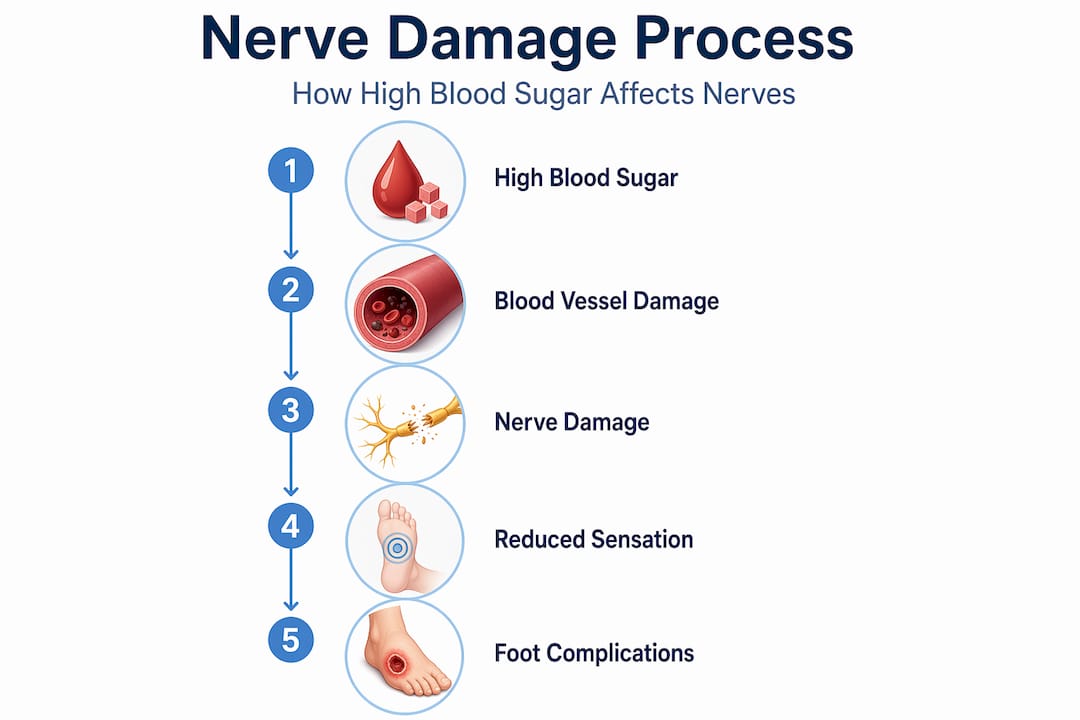
Here is a summary of the four main types of diabetic neuropathy:
| Type | Nerves affected | Common effects |
|---|---|---|
| Peripheral (distal symmetric) | Legs, feet, hands, arms | Pain, tingling, numbness, weakness |
| Autonomic | Heart, digestion, bladder, sweat glands | Dizziness, digestive issues, abnormal sweating |
| Focal (mononeuropathy) | Single nerves, often in the wrist, thigh, or eye | Sudden, localised pain or weakness |
| Proximal | Hips, thighs, buttocks | Muscle weakness, pain in the lower body |
Peripheral neuropathy is by far the most common type seen in diabetes. It progresses from the extremities inward, which is why the feet and lower legs are typically the first and most severely affected areas. This pattern is what makes daily foot care so critical for anyone living with diabetes.
Why does high blood sugar cause this damage? A few key mechanisms are at work:
- Glucose toxicity: Excess sugar enters nerve cells directly, triggering chemical changes that impair nerve function.
- Reduced blood flow: Damaged small blood vessels mean nerves receive less oxygen and fewer nutrients.
- Oxidative stress: High blood sugar generates harmful molecules called free radicals that attack nerve tissue.
- Protein changes: Glucose binds to proteins in nerve coverings, making them stiff and poorly functional.
Each of these processes compounds the others, which is why blood sugar management is the single most powerful tool you have against neuropathy progression.
Symptoms and warning signs to watch for
Understanding the medical definition helps, but recognising symptoms in your own body is where knowledge becomes genuinely protective. The tricky thing about diabetic neuropathy is that its symptoms can range from entirely absent to intensely painful, and they can change over time.
Common symptoms include pain, numbness, tingling, a burning or pins-and-needles sensation, and a reduced ability to feel pain or temperature changes. Some people also experience autonomic symptoms such as digestive difficulties, urinary issues, or irregular heart rate. What makes this particularly confusing is that two people with a similar degree of nerve damage can have completely different experiences.
Here are the main warning signs to look out for:
- Burning or sharp pain in the feet or legs, often worse at night
- A persistent pins-and-needles feeling, particularly in the toes
- Numbness or reduced sensation in the feet or lower legs
- Unusual sensitivity where even light touch feels painful (called allodynia)
- Muscle weakness in the feet or difficulty lifting the front of the foot
- Loss of balance or coordination, especially in low light
- Extreme temperature sensitivity or inability to feel hot and cold
Symptoms are often worse at night and can be asymmetric, affecting one foot more than the other, at least initially. This variability is why many people dismiss their symptoms as tiredness or poor circulation rather than nerve damage.
The most dangerous symptom of diabetic neuropathy is not pain. It is the loss of sensation. When you cannot feel an injury on your foot, a small blister, cut, or pressure sore can progress to a serious wound before you ever notice it.
Pro Tip: Do not wait for obvious pain before seeking assessment. If you have noticed even mild tingling, occasional numbness, or a slight change in sensation in your feet, mention it to your GP or diabetes nurse at your next appointment. Early intervention slows progression significantly.
Why diabetic neuropathy matters for your feet
The stakes for your feet are higher than most people realise. Reduced sensation means you may walk on a wound, blister, or foreign object for hours or even days without knowing it. This is not an exaggeration. It is a well-documented pattern that leads to serious complications.

Reduced protective sensation means injuries go unnoticed, wounds are harder to heal, and infections can develop rapidly in people with diabetic neuropathy. Diabetes also affects circulation and immune response, which means healing is slower and infection risk is higher, a dangerous combination when injuries go undetected.
Here is what that looks like in practice:
| Scenario | Undetected neuropathy | Actively managed neuropathy |
|---|---|---|
| Small blister from new shoes | Unnoticed, worsens to open wound | Caught during daily foot check, treated promptly |
| Foreign object in shoe | Worn for hours, causes ulcer | Detected before putting shoe on |
| Dry, cracked skin | Progresses to fissures and infection risk | Managed with moisturising and regular inspection |
| Poor-fitting footwear | Creates pressure ulcers undetected | Flagged by discomfort cues and visual checks |
| Early redness or swelling | Missed, escalates to serious infection | Noticed and addressed quickly |
Annual foot screening is a clinical standard in diabetes care, but many people do not realise what it actually involves. Guidelines recommend screening at diagnosis and then at least annually, using standardised tools including the 10-g monofilament test and the Ipswich touch test to assess loss of protective sensation (LOPS).
A typical diabetic foot exam includes the following steps:
- Visual inspection: Checking for cuts, blisters, calluses, corns, nail problems, or skin changes.
- Monofilament test: A fine filament is pressed against specific points on the sole to check whether you can feel it. Loss of sensation at these points indicates LOPS.
- Vibration assessment: A tuning fork is used to check whether you can feel vibrations in your toe joints and ankle bones.
- Pulse examination: The foot pulses are felt to assess whether blood flow is adequate.
- Ankle reflexes: Reduced reflexes can indicate peripheral nerve damage.
- Review of footwear: The clinician checks whether your current shoes are appropriate for your foot shape and risk level.
People with diabetic neuropathy and poor foot care are significantly more likely to experience serious foot infections, hospitalisation, and lower limb amputation. The majority of diabetes-related amputations are preceded by a foot ulcer that could have been prevented with earlier intervention.
Do not treat annual screening as a box-ticking exercise. Use it as an opportunity to ask questions, get your risk level classified, and update your footwear approach accordingly.
Choosing the right footwear: Reducing your risks
With the risks clearly understood, footwear becomes one of your most practical and effective lines of defence. Shoes are not merely a fashion choice when you have neuropathy. They are part of your medical management.
Footwear choices for people with diabetic neuropathy aim specifically to reduce pressure, friction, and injury risk, particularly across the plantar forefoot (the ball of the foot). The right shoe, however, must be matched to your specific risk level and clinical situation. A low-risk individual and a high-risk individual need very different levels of protection and support.
Here is a general framework based on risk level:
- Low risk: No sensory loss or foot deformity. Standard well-fitting footwear with adequate cushioning is usually sufficient, but fit should be checked regularly.
- Intermediate risk: Some sensory loss or a foot deformity present. Extra-depth shoes with cushioned insoles and a wider toe box are recommended to reduce pressure points.
- High risk: History of ulcers, significant deformity, or previous amputation. Custom-made or prescription footwear, often with orthotics, is typically required under podiatric supervision.
When shopping for shoes, use this checklist:
- Cushioning: A well-padded sole absorbs impact and reduces pressure on vulnerable areas.
- Width: Shoes should be wide enough that no part of the foot is squeezed or compressed.
- Depth: Extra depth in the toe box prevents toenails from rubbing against the upper.
- Seams: Internal seams should be minimal or absent. Even small seams can create pressure points that cause blisters on numb feet.
- Closures: Laces, velcro, or adjustable straps allow you to accommodate foot swelling, which is common in people with diabetes.
- Toe room: There should be at least a thumb’s width between the longest toe and the end of the shoe.
- Heel counter: A firm but padded heel counter keeps the foot stable and reduces the risk of the shoe slipping.
For more practical guidance, our article on footwear for neuropathy comfort explores how specific shoe features translate into real-world protection. You can also read more about choosing shoes for neuropathy to understand how to balance clinical function with everyday style.
Daily foot checks and proper fit alongside cushioned shoes, seamless socks without tight bands, and shoes that give toes adequate space are all fundamental habits that actively prevent the injuries neuropathy might otherwise leave undetected.
Pro Tip: Pair every shoe change with a quick foot inspection. Look between your toes, check your heels, and run your hand inside the shoe before putting it on. This 30-second habit can prevent serious complications from objects, friction, or deformity inside the shoe.
What most people get wrong about diabetic foot health
Here is an uncomfortable truth. Most people with diabetes think foot complications are something that happens to others. People who have been diabetic for decades. People with very poor blood sugar control. People who are clearly “high risk.” That belief is where the problem starts.
Nerve changes in diabetes can begin surprisingly early, often before a formal diagnosis of neuropathy is made. The nervous system does not wait for a dramatic tipping point. Damage accumulates gradually, and by the time symptoms are obvious enough to demand attention, the nerve damage is already well established. Waiting for dramatic warning signs is one of the most common and most costly mistakes people with diabetes make.
The second misunderstanding is thinking that annual check-ups are enough. They are necessary, but they are not sufficient on their own. Daily attention is where real protection happens. Checking your feet every day, rotating your footwear, washing and drying between your toes, and noticing even minor changes in sensation are habits that no annual appointment can replace.
The third error is treating footwear as a vanity decision. People often choose shoes based on appearance alone, even after a neuropathy diagnosis. But a stylish shoe with a narrow toe box, minimal cushioning, or rigid seaming can cause real harm when sensation is reduced. Comfort and protection must lead the decision, with style following behind.
Our article on diabetic footwear tips unpacks this in further detail, including practical guidance on rotating shoes and identifying early warning signs of poor fit before they become clinical problems.
The reality is that proactive foot management, daily checks, appropriate footwear, and regular clinical screening, is not just for people already in crisis. It is for everyone with diabetes, starting from diagnosis.
Next steps: Protecting your feet with the right technology
You now have a solid understanding of diabetic neuropathy, its risks, and how footwear fits into your protection strategy. The logical next step is making sure your shoes are genuinely designed for the job.

At YDA, we develop footwear with the specific functional demands of foot health in mind. Our YDA footwear technology has been designed to address the pressure, cushioning, and fit requirements that people living with neuropathy depend on every day. From advanced sole cushioning systems to seamless interiors and adaptable closures, each design decision is rooted in protecting your feet. Explore our range to find footwear that works as hard at keeping you safe as it does at keeping you comfortable.
Frequently asked questions
How can I tell if I have diabetic neuropathy in my feet?
Watch for tingling, burning, or numbness in your toes or soles, as common symptoms include pain and tingling, along with reduced ability to feel temperature. Ask your care team for a formal foot examination if you notice any of these changes.
Is diabetic neuropathy reversible?
Most nerve damage cannot be reversed, but high blood sugar damages nerves progressively, meaning that tighter blood sugar control can slow or stop further deterioration even if existing damage remains.
What features should diabetic-friendly shoes have?
Look for cushioned soles, a wide and deep toe box, soft or seamless interiors, and adjustable fastenings, as cushioned shoes with toe space and seamless socks help prevent pressure points and undetected injuries.
Should I see a specialist for diabetic foot problems?
Yes, absolutely. Guidelines recommend annual screening using tools like the 10-g monofilament test, and your GP, practice nurse, or podiatrist can assess your specific risk level and recommend appropriate footwear and care.