
Blister free in 7–14 days: Podiatrist ramp up to break in shoes
Break in new shoes by wearing them for short spells at home first, protecting known hotspots with moleskin or balm, and rechecking fit before you commit to a full day out in them. Most shoes settle into genuine comfort within 7 to 14 days of this kind of steady, progressive wear, though leather often needs longer. Before that first outing, do three things: check the fit standing up, choose the right sock, and pad any spot that already feels tight. Patience here saves you a fortnight of blisters.
TL;DR:
- Leather shoes and boots typically take two to four weeks, with some heavier constructions requiring even longer to fully relax.
- Regular, structured wear with short sessions at first, then gradually increasing activity, minimizes blister risks and accelerates comfort.
- Proper fit checks before wearing, including heel hold, sock choice, and hotspot padding, prevent common foot injuries from the start.
- Alternating new shoes with comfortable pairs during the break-in period speeds up adaptation and reduces strain on the feet.
- Shoes that continue to pinch after four weeks likely have a fit issue that no amount of breaking in can fix, making early returns advisable.
Table of Contents
- How long does it take to break in new shoes?
- What’s the best way to break in shoes without blisters?
- How do you prepare your shoes and feet before wearing them?
- Different shoe types need different break-in methods
- Treating hotspots, blisters, and knowing when to stop
- What do podiatrists actually recommend?
- Why careful break-in matters more than people think
- Shoes designed to make break-in easier from day one
- Sources
- FAQ
How long does it take to break in new shoes?
Timelines depend heavily on material and construction, so a stiff leather boot and a canvas trainer are not playing the same game. A podiatrist-recommended structured progression over 7 to 14 days works for most everyday shoes, but leather can take up to three weeks to fully relax.
Typical ranges by type:
- Leather shoes and boots: 2 to 4 weeks, sometimes longer for full-grain or heavy welted construction
- Trainers: 2 to 3 weeks, or roughly 5 to 10 miles of accumulated wear
- Heels: 1 to 2 weeks with short, deliberate wear sessions
- Canvas and fabric shoes: 1 to 2 weeks, usually the fastest of the lot
These figures come from typical break-in durations across shoe types. Humid climates and dense, stiff construction slow things down; softer materials and dry conditions speed them up. If a shoe still pinches or rubs after three to four weeks of honest effort, it probably never will. That is a fit problem, not a break-in problem.
What’s the best way to break in shoes without blisters?
A gradual wear plan is the single most effective safeguard against blisters, according to podiatry guidance on structured ramp-ups. The idea is simple: short, low-stakes wears first, then longer and more demanding ones once your feet and the shoe have both adjusted.
- Days 1 to 3: Wear the shoes at home for 20 to 40 minutes at a time, on carpet or a flat floor. Walk around, sit down, climb a few stairs. Low-demand only.
- Days 4 to 7: Step outside for short errands, an hour at most. This is where you introduce medium-demand activity, like a walk to the shop rather than a hike.
- Week 2: Extend to half days, then a full day, once nothing has flared up. High-demand activity, such as a long shift on your feet or a hilly walk, comes last.
After every session, check your feet for heat, redness, or a specific pressure point, and check the shoe for heel slippage. Any of those repeating in the same spot is your early warning sign.
Alternate new shoes with an older, comfortable pair rather than wearing the new ones every single day. Rest days let skin recover and give you a fair comparison of how the new shoe actually feels once the initial stiffness eases.
Pro Tip: Break in two pairs at once if you can, one for morning errands and one for evening. Splitting the load across a week gets you to full comfort faster than back-to-back daily wear, and your feet get proper recovery time in between.
How do you prepare your shoes and feet before wearing them?
Most blister problems start before you even leave the house, with a fit or sock choice that was wrong from the outset. A few minutes of preparation prevents the worst of it.
- Check fit standing, not sitting. Feet swell during the day, so stand up and check there’s roughly a thumb’s width of space between your longest toe and the front of the shoe.
- Test the heel hold. Walk a few steps; your heel should lift only slightly, not slide freely up and down.
- Choose the right sock. Moisture-wicking or double-layer socks beat cotton, because reduced sweat absorption limits the friction damage that causes blisters in the first place.
- Try heel-lock lacing. Threading the laces through the extra eyelet near the ankle and crossing them before tying locks the heel in place and stops slippage.
- Swap insoles if needed. A firmer or thicker insole can correct volume issues that no amount of wearing-in will fix.
- Pad hotspots early. Apply moleskin or an anti-friction balm to the heel, the ball of the foot, and toe borders before you feel a problem, not after.
A practical guide to identifying shoe fit issues is worth running through if you are unsure whether a shoe is simply stiff or actually the wrong size.
Different shoe types need different break-in methods
Leather, boots, trainers, heels, and canvas shoes all misbehave in different ways, so the same technique will not serve all of them equally.
- Leather: Wear thick socks at home to gently stretch the upper, since thick or double-layer socks reduce direct friction while nudging the material to relax. Light conditioning helps too, but avoid blasting leather with heat from a hairdryer, which can crack the finish rather than soften it. For a fuller method, see how to soften new leather shoes without damaging them.
- Boots: Expect the longest ramp-up of any category. Flex the shaft by hand before wearing, start on flat ground, and only introduce uneven terrain once the ankle collar has softened.
- Trainers: Keep early runs or walks short, and alternate with an older, broken-in pair. Nike’s own guidance suggests 5 to 10 miles or 3 to 5 runs is usually enough to settle a new pair in, and alternating pairs lowers injury risk from a sudden change in cushioning.
- Heels: Use paste-style pads or heel cushions from the first wear, and keep early outings to an hour or two before attempting a full day.
- Canvas and fabric: These break in fastest of all. A light dampening followed by wearing thick socks while the shoe dries can speed up stretching without harming the material.
Treating hotspots, blisters, and knowing when to stop
A red mark that fades within an hour is normal adaptation. A blister, persistent numbness, or pain that gets worse each time you wear the shoe is not, and it usually means the fit is wrong rather than the shoe simply needing more time.
- Clean any blister, cover it with a hydrocolloid dressing or moleskin, and leave it be rather than picking at the skin.
- Stop wearing the shoe immediately if you notice numbness, sharp pain, or pressure that doesn’t ease once you take the shoe off.
- People with diabetes or circulation issues should seek professional care early rather than self-managing any blister or open sore, since minor foot injuries can escalate quickly in these cases.
- If a shoe still hurts after a fair, structured break-in attempt, use the retailer’s return or exchange policy rather than persisting through pain.
Roughly 7 to 14 days of structured wear is the benchmark podiatrists point to for most shoes reaching comfortable status. If you’re well past that with no improvement, the shoe is telling you something about its fit, not its stiffness.
What do podiatrists actually recommend?
Podiatry guidance is consistent on one point: gradual wear paired with an honest fit check beats forcing a shoe to submit through sheer persistence. Overstretching leather or using aggressive heat can permanently damage the upper and the support structure built into the shoe, so mechanical stretchers and measured conditioning are the safer route when a shoe genuinely needs more room.
The safest rule in breaking in any shoe is simple: short sessions, protected hotspots, and a willingness to stop and reassess fit if discomfort doesn’t ease within the first one to two weeks.
For deeper care advice, Panagiotis has written further practical guides covering how to test shoe comfort at home before committing to longer wear.
Why careful break-in matters more than people think
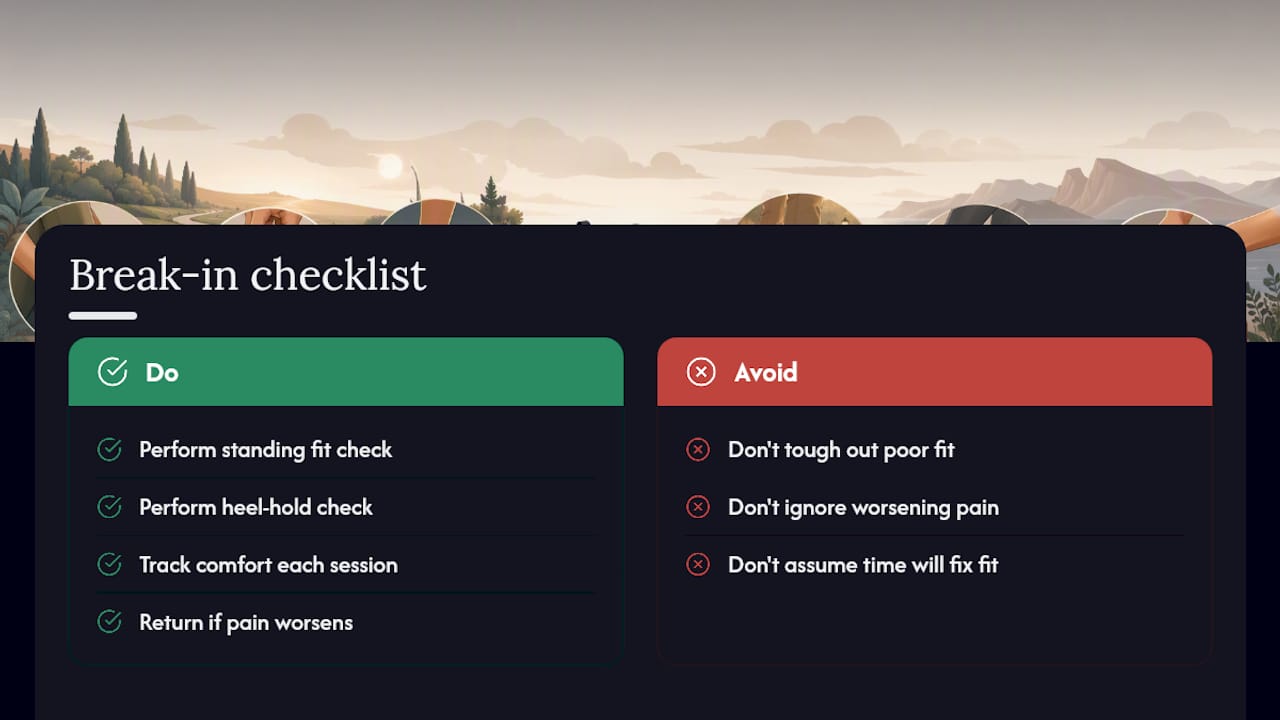
Toughing out a bad fit rarely fixes anything. If pain gets worse rather than better across a structured break-in period, the shoe doesn’t fit, full stop, and no amount of wearing it in will change that. Some footwear is designed around foot health first, so the break-in period is about settling in rather than surviving.
A simple keep-or-return checklist helps: did the fit pass standing and heel-hold checks, did comfort improve session by session, and did any pain ease rather than worsen? If the answer to any of those is no, return it.
— Panagiotis
Shoes designed to make break-in easier from day one
Some of the discomfort in new shoes traces back to a shoe that was never quite right for your foot, no matter how carefully you break it in. YDA’s high-performance footwear is built around technology designed to stabilise and support each step, aiming to reduce that adjustment period rather than leave you fighting stiffness for a fortnight. The YDA Technology behind these shoes focuses on comfort and energy efficiency for everyday wear, which matters most in exactly the early days covered above.

If you’re shopping for your next pair, start with the fit checks and sock advice in this guide, then browse YDA’s current range to see which options match your foot shape and how you use your shoes day to day. Whether you need supportive everyday shoes or something suited to a foot condition like diabetes, the product pages on Ydauk list availability and full pricing including VAT, so you can check stock and make your choice with the ramp-up plan above already in hand.
Sources
- 6 Podiatry Tips To Break In New Shoes Without Blisters Fast - Achilles Foot and Ankle Center
- Moleskin for blisters — Healthline
- How to break in new shoes without foot pain: podiatrist tips — Michigan Foot & Ankle
- How Many Times Do You Need to Wear Shoes to Break Them In? | Footwear Magazine
- How to break in running shoes — Nike
FAQ
What is the fastest way to break in shoes?
Short, repeated wear sessions at home, building up gradually, is faster and safer than any single long outing. Pairing this with moisture-wicking socks and moleskin on known hotspots speeds up comfort without risking blisters.
Is it normal for new shoes to hurt at first?
Mild stiffness or light pressure in the first few wears is normal, but sharp pain, numbness, or discomfort that worsens each session is not. That pattern usually points to a fit problem rather than a shoe that simply needs more time.
How do I break in a new pair of shoes?
Start with 20 to 40 minute sessions at home, check for heat and pressure points afterwards, then gradually extend to short outings and eventually full days over one to two weeks. Alternate with an older pair and pad any hotspot before it becomes a blister.
How long do new shoes take to break in?
Most shoes become comfortable within 7 to 14 days of structured wear, though leather can take up to three weeks and boots often sit at the longer end of that range. Trainers and canvas shoes tend to settle faster, usually within one to two weeks.