
Correct shoe fitting steps: your 2026 guide
TL;DR:
- Proper shoe fitting involves measuring feet in the late afternoon to account for swelling and selecting footwear that supports foot length, width, and arch. Users should confirm fit by checking toe space, heel grip, and flex point, avoiding common mistakes like sizing only the smaller foot or relying solely on size labels. Regular re-measuring ensures shoes accommodate changes in foot shape and support long-term foot health.
Correct shoe fitting is the process of measuring and selecting footwear that provides proper length, width, and support to your feet, preventing pain and injury. Most people wear the wrong shoe size without realising it, not because they are careless, but because shoe sizes vary between brands and countries, and feet change shape throughout life. Following the correct shoe fitting steps removes the guesswork and gives you a reliable, repeatable method. The result is a shoe that protects your foot mechanics, reduces fatigue, and keeps you comfortable across every activity.
What tools and conditions do you need for accurate shoe fitting?
Getting the conditions right before you measure is as important as the measurement itself. Feet swell by 5–8% during the day due to walking and gravity. That means a shoe fitted in the morning may feel tight by evening. Always measure and try on shoes in the late afternoon or evening for the most accurate result.
You need the following before you start:
- A sheet of plain A4 paper and a pen or pencil
- A ruler or tape measure marked in centimetres
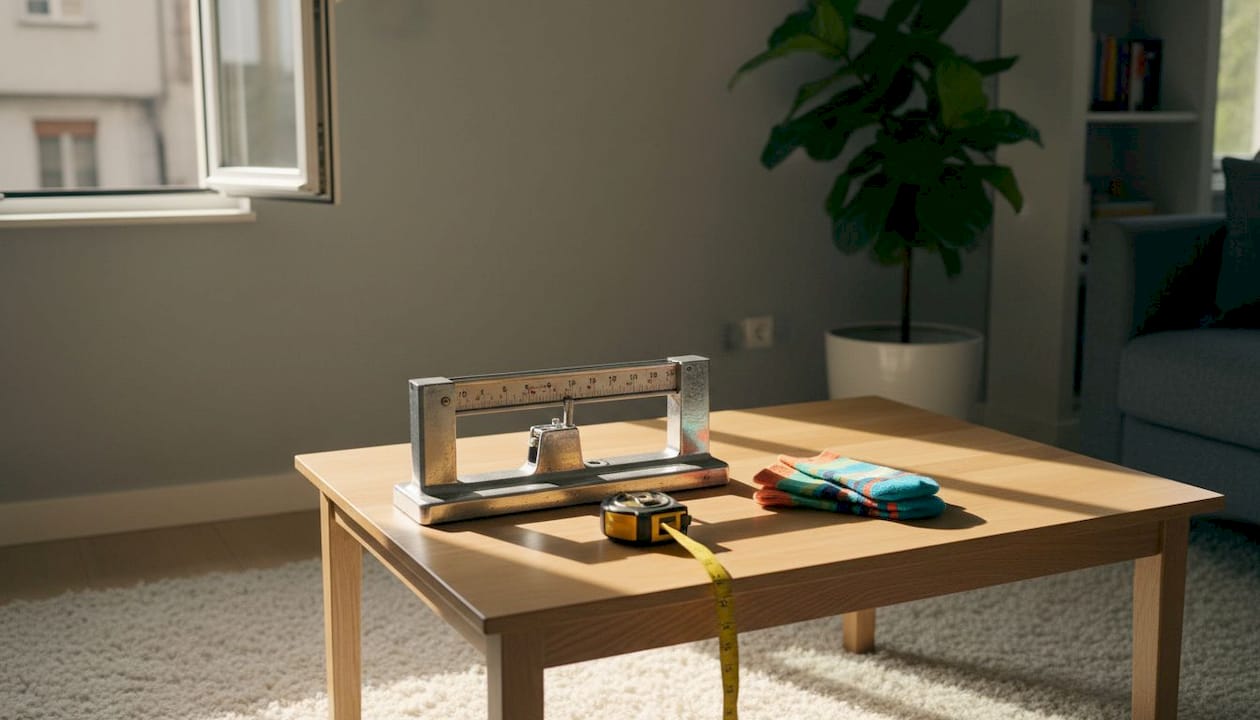
- A Brannock device if you have access to one (available in most specialist shoe shops)
- A flat, hard floor surface, not carpet
- The socks you intend to wear with the shoes
Pro Tip: Wear the exact socks you plan to use with the shoe during fitting. Sock thickness affects fit by 2–3 mm, which is enough to change comfort in athletic footwear.
Stand upright when measuring, not seated. Your body weight spreads the foot slightly, which gives a truer reading. Measure both feet every time, because most people have one foot larger than the other.
How do you measure your feet correctly at home?
Measuring both foot length and width is the foundation of any accurate shoe fit. A single length number is not enough. Width and arch length determine whether a shoe supports your foot mechanics or fights against them.
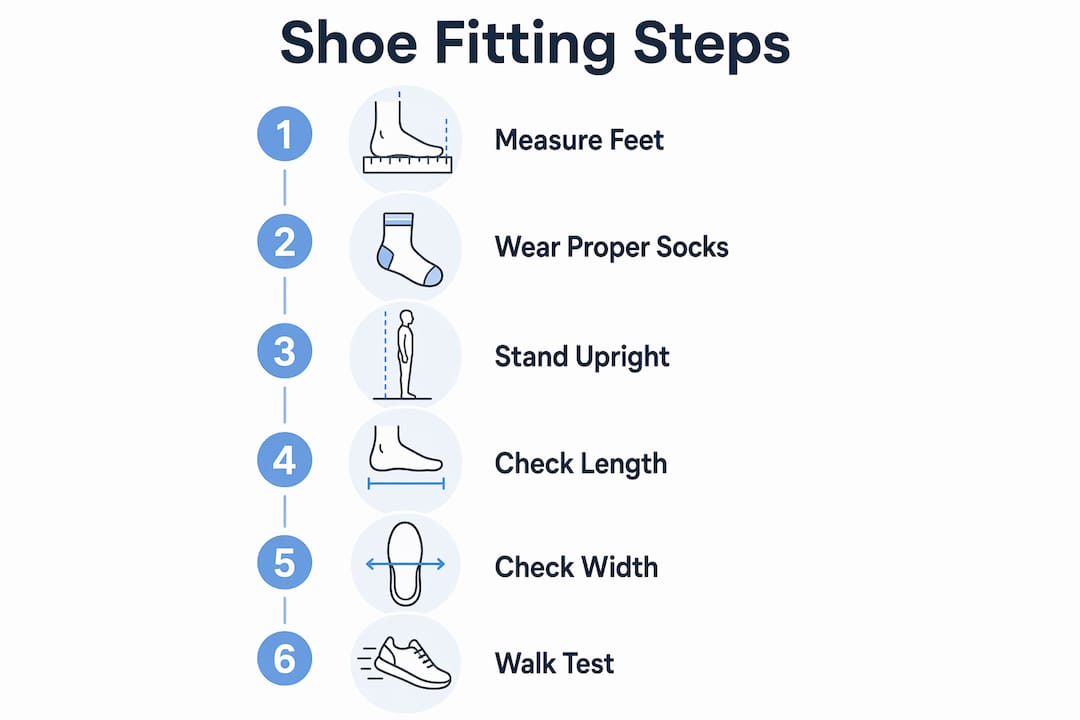
Follow these steps in order:
- Place the paper on a flat, hard floor. Stand on it with your full weight on the foot.
- Trace the outline of your foot with the pen held vertically, keeping it flush against your skin.
- Mark the longest toe and the back of the heel. Measure this distance in centimetres for your foot length.
- Mark the widest points across the ball of your foot (the metatarsal heads). Measure this distance for your foot width.
- Mark the arch length by noting where the ball of your foot sits relative to the heel. This tells you where the shoe should flex.
- Repeat for the other foot. Use the measurements from the larger foot to select your size.
| Measurement | What to measure | Why it matters |
|---|---|---|
| Foot length | Longest toe to heel | Determines shoe length size |
| Foot width | Widest part of ball | Determines width fitting (standard, wide, extra wide) |
| Arch length | Heel to ball of foot | Aligns shoe flex point with natural foot bend |
Pro Tip: A Brannock device measures length, arch length, and width simultaneously. If you visit a shoe shop, ask staff to use one rather than relying on a simple length-only measurement.
Once you have your measurements in centimetres, use them as your primary reference. Sizing varies between brands and regional systems, so a UK 8 in one brand may fit like a 7.5 in another. Your centimetre measurements stay constant.
How do you evaluate shoe length, width, and fit when trying on?
Numbers on a measuring chart confirm your starting point. The physical try-on confirms whether a shoe actually fits your foot. These two stages work together, and skipping the second one is one of the most common fitting errors.
Check each of the following when you put a shoe on:
- Toe box space: There should be approximately 1–1.5 cm of space between your longest toe and the end of the shoe. This gap prevents nail damage and subungual bruising during walking or running.
- Width alignment: The widest part of your foot must sit within the shoe’s widest part without bulging over the sole or feeling pinched. Sizing up in length to compensate for width causes heel instability.
- Heel grip: The heel should feel snug with minimal movement. A heel slip of more than 3 mm is a sign the shoe is too large or the wrong shape for your heel. Excessive slip leads to blisters and Achilles strain.
- Flex point: Bend the shoe gently and check where it flexes. The shoe should flex at the ball of the foot, at the metatarsophalangeal joints. A shoe that flexes in the arch or mid-sole undermines natural foot mechanics.
- Walk test: Walk at least ten paces on a hard floor. Your heel should not lift, your toes should not feel compressed, and the upper should not dig into any part of your foot.
The walk test is non-negotiable. A shoe that feels acceptable while standing often reveals problems the moment you move. For a broader approach to assessing comfort, the shoe comfort test covers additional checks worth running before you commit to a purchase.
What are the most common shoe fitting mistakes?
Most fitting errors come from habits rather than ignorance. People repeat what they have always done, and the problems accumulate slowly until pain or injury forces a change.
Relying on a shoe size label is the single most common fitting mistake. Size numbers differ by brand, country, and style. A shoe that fits is one that matches your foot measurements, not one that matches a number you have worn for years.
The most frequent mistakes are:
- Measuring too early in the day. Feet are at their smallest in the morning. A shoe fitted then may feel tight by the afternoon when your feet have swollen.
- Fitting to the smaller foot. Always fit to the larger foot and use a thin insole or tongue pad in the other shoe if needed.
- Expecting shoes to break in. A shoe that causes discomfort on the first wear will not improve with time. Discomfort signals a poor fit, not a shoe that needs wearing in.
- Ignoring width. Many people buy shoes in a standard width without checking whether their foot actually fits that category. Wide and extra-wide fittings exist for a reason.
- Skipping the flex test. The flex point alignment with the metatarsophalangeal joints is a critical but frequently overlooked factor in long-term foot comfort.
How do you adapt shoe fit for different foot shapes and conditions?
Not every foot fits a standard last. Flat feet, high arches, bunions, hammer toes, and size discrepancies between feet all require specific adjustments to the fitting process.
Most adults experience foot changes into their 40s and 50s due to ageing, weight fluctuation, and pregnancy. Re-measuring before every new shoe purchase is the only reliable way to catch these changes before they lead to poor fit.
For feet that differ in size, fit to the larger foot and compensate for the smaller one with a thin insole or tongue pad. Buying two pairs in different sizes is rarely necessary and creates more problems than it solves.
| Foot condition | Fitting adjustment |
|---|---|
| Flat feet | Choose shoes with firm arch support and a structured midsole |
| High arches | Look for cushioned midsoles and a deeper toe box |
| Bunions | Select a wide or extra-wide fitting with a soft, flexible upper |
| Hammer toes | Choose a deep toe box with extra height to avoid pressure on the joint |
| Diabetic feet | Prioritise seamless interiors, extra depth, and soft materials to prevent pressure points |
Pro Tip: Arch type affects where your foot needs support, not just cushioning. A footwear selection guide built around foot mechanics will help you match shoe construction to your specific arch profile.
Width fittings are labelled differently across brands, but the principle is consistent. Standard width suits most feet. Wide and extra-wide fittings add volume across the ball of the foot without changing the length. Never size up in length to gain width. That trade-off costs you heel stability and flex point alignment.
Key takeaways
Correct shoe fitting requires measuring both feet in centimetres late in the day, then confirming fit through toe space, width alignment, heel grip, and flex point checks before purchase.
| Point | Details |
|---|---|
| Measure late in the day | Feet swell by 5–8% during the day, so afternoon measurements give the most accurate result. |
| Use centimetres, not size labels | Sizing varies between brands and countries; your centimetre measurements are the reliable constant. |
| Fit to the larger foot | Always select shoe size based on the larger foot and pad the other shoe if needed. |
| Check the flex point | The shoe must flex at the ball of the foot, not the arch, to support natural foot mechanics. |
| Repeat measurements regularly | Foot shape changes with age, weight, and life events, so re-measure before every new purchase. |
What I have learnt from years of watching people buy the wrong shoes
Most people treat shoe shopping as a style decision with a size check at the end. That ordering is backwards. Fit determines whether a shoe protects your foot or damages it, and no amount of good design compensates for a shoe that does not match your measurements.
The detail I see ignored most often is the flex point. People check toe space and heel grip, which are visible and easy to test, but they rarely bend the shoe to see where it flexes. A shoe that flexes in the wrong place creates a lever against your foot with every step. Over a full day of walking, that adds up to real fatigue and, eventually, real pain.
I also think the advice to re-measure regularly is undervalued. Adults assume their feet stopped changing after their twenties. They did not. Pregnancy, weight change, and the gradual flattening that comes with age all shift your measurements. The shoe size you wore at 25 may not serve you at 45. Measuring takes five minutes and removes all the uncertainty.
The best shoe is not the most expensive one or the most recognisable brand. The best shoe is the one that fits your foot correctly, supports your arch type, and flexes where your foot bends. Everything else is secondary. For a practical breakdown of how flexibility affects long-term foot health, the shoe flexibility guide on Ydauk’s blog is worth reading before your next purchase.
— Panagiotis
Ydauk footwear: built around how feet actually fit
Ydauk designs shoes around the principles covered in this guide, with YDA Technology focused on arch support, width accommodation, and flex point alignment built into the construction of each pair.

The YDA shoe technology page explains how Ydauk approaches fit at the design level, including the structural choices that support different foot types. If you have worked through the fitting steps above and know your measurements, Ydauk’s product range gives you a starting point built on foot health principles rather than generic sizing. Customer support is available by phone if you need guidance matching your measurements to a specific style.
FAQ
What is the correct toe box space in a well-fitted shoe?
A correctly fitted shoe leaves approximately 1–1.5 cm between your longest toe and the end of the shoe. This gap prevents nail damage and allows natural toe movement during walking.
When is the best time to measure your feet for shoe fitting?
Measure your feet in the late afternoon or evening. Feet swell by 5–8% during the day, so morning measurements can lead to shoes that feel tight by the end of the day.
Should I fit shoes to my left or right foot?
Always fit shoes to your larger foot, regardless of which side that is. Use a thin insole or tongue pad in the other shoe to compensate for any size difference.
How do I know if a shoe’s flex point is correct?
Bend the shoe gently and check where it folds. The shoe should flex at the ball of the foot, at the metatarsophalangeal joints. A shoe that bends in the arch or mid-sole will undermine your natural foot mechanics.
Why do shoe sizes differ between brands?
Shoe size numbers are not standardised across brands or countries. Measuring your feet in centimetres and fitting by feel gives a more reliable result than relying on a labelled size alone.