
Walking shoe tips: your 2026 guide to comfort and health
TL;DR:
- Choosing the right walking shoe depends on fit, support, cushioning, and durability to prevent foot injuries. Shoes should have proper toe space, snug heels, and a wide toe box for comfort and stability. Structural features like heel counters, medial posts, and appropriate material choices enhance foot health and walking efficiency.
The right walking shoe is defined by four non-negotiable qualities: fit, support, cushioning, and durability. Get any one of these wrong and you risk blisters, joint pain, or long-term foot damage. These walking shoe tips draw on podiatrist and physical therapist guidance to help you choose footwear that genuinely works for your feet, your gait, and your daily life. Whether you walk for fitness, commuting, or recovery, the principles are the same.
1. Essential walking shoe tips: start with the right fit
Fit is the single most important factor when choosing walking footwear. A shoe that looks perfect on the shelf can cause real harm if it does not match your foot’s actual dimensions.
The key fit parameters are:
- Toe space: A correctly fitted shoe needs one full thumb-width of space between your longest toe and the front of the shoe. That is roughly 0.5 to 0.75 inches. Less than this causes blisters and toe pain on longer walks.
- Heel fit: The heel should sit snugly with no slipping. Slippage creates friction and leads to blisters at the back of the foot.
- Toe box width: The toe box must be wide enough for your toes to spread naturally. A wide toe box improves balance and propulsion throughout the walking cycle.
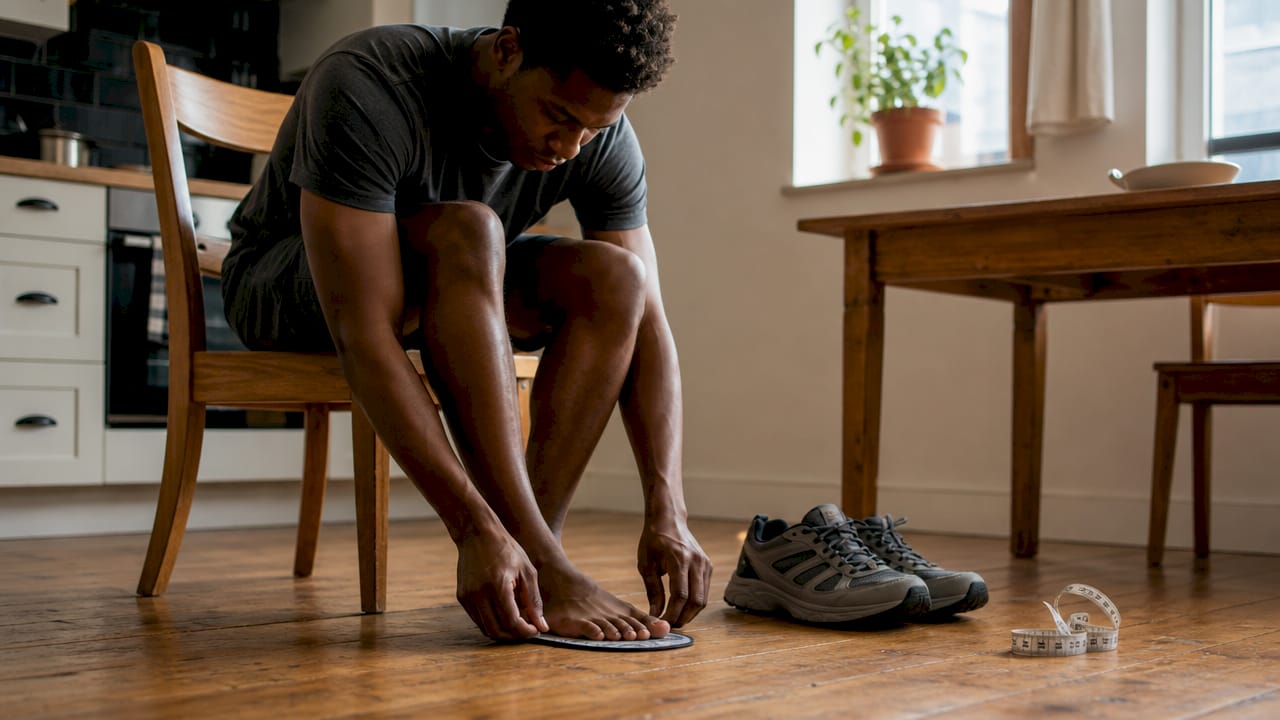
Pro Tip: Remove the manufacturer’s insole and stand on it with bare feet. Your foot should not hang over any edge. This insole fit test reveals true width suitability far better than the label size alone.
Always try shoes on later in the day. Foot swelling increases by 5–10% by evening, so a shoe that fits at 9AM may pinch by 3PM. Shopping in the afternoon or evening removes that risk entirely.
2. Stability and support features that actually matter
Structural support is what separates a genuine walking shoe from a casual trainer. Several specific features determine whether a shoe protects your joints or quietly undermines them.
- Heel counter: A firm heel counter wraps around the back of the foot and controls rearfoot motion. Without it, the ankle rolls inward or outward with every step.
- Medial post: A denser foam wedge on the inner side of the midsole resists overpronation. Walkers who roll inward need this feature to protect the knee and hip.
- Arch support: Proper arch support distributes weight across the foot and reduces stress on the ankle, knee, and hip. Flat or unsupported arches transfer that load directly to the joints.
- Heel-to-toe drop: Physical therapists recommend a drop of 8mm or less for a neutral foot position and better muscle engagement. You can read more about this in Ydauk’s guide to understanding heel drop.
- Sole flexibility: The sole should bend at the ball of the foot, not the arch. A sole that flexes in the middle offers poor support and accelerates fatigue.
A heel-to-toe drop greater than 10–12mm can restrict natural foot motion and place excess strain on the Achilles tendon and calf. Lower drop shoes encourage a more natural gait and stronger foot muscles over time.
The role of stability in footwear is well documented. Choosing a shoe with the right structural features from the start prevents compensatory movement patterns that cause pain further up the kinetic chain.
3. Materials and construction: what to look for
The materials in a walking shoe determine how long it lasts, how well it breathes, and how comfortable it feels after the first hour.
Uppers should be made from breathable mesh or stretch fabric. These materials allow air circulation, reduce moisture build-up, and accommodate minor foot swelling during longer walks. Stiff leather or synthetic uppers may look durable but create pressure points and restrict natural foot movement.
Outsoles need durable rubber with a tread pattern suited to your terrain. A flat outsole works on smooth pavements but offers poor grip on wet or uneven surfaces. Look for multi-directional lugs if you walk on mixed terrain.
Cushioning requires balance. A firm but flexible sole with moderate cushioning lets the foot feel the ground and develop strength. Excessively cushioned maximalist shoes can destabilise the ankle, particularly in people with fat pad atrophy, where the natural cushioning under the heel has thinned.
| Feature | What to look for | What to avoid |
|---|---|---|
| Upper material | Breathable mesh or stretch fabric | Stiff synthetic or non-ventilated leather |
| Outsole | Durable rubber with directional tread | Flat, smooth soles on varied terrain |
| Cushioning | Moderate, firm, and responsive | Excessive stack height with no ground feel |
| Midsole | EVA or TPU foam with rebound | Compressed or worn foam |
Pro Tip: Replace walking shoes every 300–500 miles or every 6–12 months, whichever comes first. Worn cushioning looks fine from the outside but no longer absorbs impact effectively.
4. How to choose walking shoes for specific foot health concerns
Foot conditions change what you need from a shoe. A shoe that works perfectly for a neutral gait can cause real harm for someone with overpronation or a bunion.
- Bunions and hammertoes: Choose a shoe with a wide, deep toe box and no seams over the forefoot. Pressure on a bunion from a narrow toe box accelerates deformity and causes constant pain. Guides on wide-fit hiking boots offer useful principles that apply equally to walking shoes.
- Overpronation: Look for motion control or stability shoes with a medial post and firm heel counter. Neutral cushioned shoes offer no resistance to inward rolling and can worsen knee alignment over time.
- Supination (underpronation): Choose a neutral shoe with generous cushioning on the outer edge. Stability shoes push the foot further outward and increase the risk of ankle sprains.
- Plantar fasciitis: Prioritise firm arch support and a slight heel lift. A completely flat shoe places the plantar fascia under constant tension throughout the gait cycle.
- Orthotics users: Check that the shoe has a removable insole and enough depth to accommodate a custom orthotic without compressing the foot against the upper.
The function-first approach is the standard podiatrists recommend. Style matters, but a shoe chosen purely for appearance and lacking structured support can worsen biomechanical issues rather than simply fail to correct them. Gradual adaptation also matters. If you are switching from a high-heel-drop shoe to a lower drop model, reduce the transition over several weeks to avoid calf and Achilles strain.
Key takeaways
The most effective approach to choosing walking shoes is to prioritise fit, structural support, and appropriate materials before considering style or brand.
| Point | Details |
|---|---|
| Fit comes first | Allow 0.5–0.75 inches of toe space and test width using the insole removal method. |
| Shop in the evening | Foot swelling peaks later in the day, so afternoon fitting gives the most accurate result. |
| Match support to your gait | Overpronators need medial posts; supinators need neutral cushioning on the outer edge. |
| Replace shoes regularly | Cushioning degrades after 300–500 miles regardless of how the outsole looks. |
| Heel drop affects your whole body | A drop of 8mm or less supports neutral posture and reduces joint stress up the kinetic chain. |
Why I think most people choose walking shoes the wrong way
I have spent years watching people pick walking shoes based on colour, brand recognition, or the thickness of the sole. The thick sole, in particular, is a persistent myth. Shoppers assume more cushioning means more comfort. Podiatrists know it often means less stability and weaker foot muscles over time.
The most common mistake I see is buying a shoe that fits well standing still but was never tested in motion. Walk around the shop for at least five minutes. Go up and down a step if there is one nearby. The heel should not slip. The toe box should not compress your forefoot when you push off. A shoe that passes the standing test but fails the walking test is the wrong shoe.
The second mistake is ignoring heel drop. Most people have never heard the term. Yet switching from a 12mm drop shoe to a zero-drop shoe overnight is the equivalent of suddenly walking barefoot after years in heels. The calf and Achilles need weeks to adapt. Start with a drop of 6–8mm if you are transitioning, and build from there.
My honest advice is this: treat shoe shopping as a fitting appointment, not a browsing session. Bring your current shoes so a specialist can read the wear pattern. Bring your orthotics if you use them. Try at least three pairs and walk in each one. The shoe shopping process is worth doing properly. Your feet carry you every day. They deserve that level of attention.
— Panagiotis
Ydauk’s technology-driven approach to walking comfort
Ydauk designs walking shoes around YDA Technology, a proprietary system built to support foot health and energy efficiency in everyday wear. The approach aligns with podiatrist recommendations on arch support, heel drop, and sole flexibility.

Ydauk’s YDA shoe technology combines structured stability with breathable construction, addressing the core criteria that make a walking shoe genuinely functional rather than merely comfortable-looking. The range is designed for walkers who need their footwear to perform across long days, varied terrain, and specific foot health requirements. If you are ready to apply these principles to your next purchase, the Ydauk collection is a practical place to start.
FAQ
How much toe space should a walking shoe have?
A correctly fitted walking shoe needs 0.5 to 0.75 inches of space between the longest toe and the front of the shoe. This prevents blisters and allows natural toe movement during the walking cycle.
What heel-to-toe drop is best for walking?
Physical therapists recommend a heel-to-toe drop of 8mm or less for walking. This supports a neutral foot position and encourages better muscle engagement compared to high-drop shoes.
When should I replace my walking shoes?
Replace walking shoes every 300–500 miles or every 6–12 months. Cushioning degrades well before the outsole shows visible wear, so mileage is a more reliable guide than appearance.
What features help with overpronation in walking shoes?
Stability shoes with a medial post and firm heel counter are the recommended choice for overpronation. These features resist inward rolling and protect knee and hip alignment over time.
Is a wide toe box really necessary?
A wide toe box is considered non-negotiable by podiatry experts. It allows the toes to splay naturally, which improves balance and propulsion and reduces the risk of bunions and hammertoe progression.