
Guide to stylish health shoes for comfort in 2026
Finding footwear that delivers both style and genuine foot health benefits remains a challenge for many health-conscious individuals. For those managing diabetes or specific foot conditions, the stakes are even higher, with 6 out of 10 diabetics wearing wrong-size shoes that increase injury risk. This guide walks you through selecting shoes that protect your feet whilst maintaining the aesthetic appeal you deserve, covering everything from essential features to verification techniques that ensure your investment truly supports long-term foot wellness.
Table of Contents
- Understanding The Importance Of Stylish Health Shoes
- Preparing To Choose The Right Stylish Health Shoes
- Executing Your Selection: Picking Stylish And Healthy Footwear
- Verifying Comfort And Health Benefits After Purchase
- Discover Stylish Health Shoes Designed For Your Feet
- Frequently Asked Questions
Key takeaways
| Point | Details |
|---|---|
| Pressure reduction matters | Properly designed footwear significantly reduces plantar pressure, crucial for preventing diabetic foot ulcers and injuries |
| Essential features | Wide toe boxes, adjustable closures, seamless interiors, and stiff outsoles combine to enhance comfort and foot protection |
| Technology choices | Zero-drop designs and motion control systems offer distinct benefits suited to different foot conditions and activity levels |
| Professional guidance | Consulting a podiatrist ensures personalised shoe selection that addresses your specific foot health requirements |
| Material considerations | Breathable fabrics and moisture-wicking properties prevent bacterial growth and maintain optimal foot hygiene |
Understanding the importance of stylish health shoes
Your footwear choices directly influence your foot health, comfort, and injury prevention. Many people prioritise style over function, unknowingly compromising their wellbeing. This trade-off becomes particularly dangerous for individuals with diabetes or neuropathy, where proper footwear design reduces plantar pressure and mitigates ulcer risk.
The consequences of ill-fitting shoes extend beyond temporary discomfort. Incorrect sizing remains surprisingly common, with research showing that footwear importance for diabetics cannot be overstated when preventing serious complications. Pressure points, friction, and inadequate support create conditions for blisters, calluses, and more severe injuries that heal slowly in diabetic patients.
Modern health shoes successfully merge functionality with aesthetics. Key features include:
- Cushioning systems that absorb impact whilst maintaining ground feel
- Arch support structures tailored to different foot types
- Breathable materials preventing moisture accumulation
- Seamless construction eliminating irritation points
- Adjustable fastenings accommodating daily foot volume changes
These technological advances mean you no longer sacrifice style for health. Contemporary designs incorporate medical-grade features within fashionable silhouettes suitable for various occasions. The diabetic shoes guide demonstrates how specialised footwear now rivals conventional shoes in appearance whilst delivering superior protection.
Investing in properly designed health shoes prevents costly medical interventions and maintains your mobility independence for years to come.
Understanding this foundation helps you make informed decisions when selecting your next pair. The right shoes support natural foot mechanics, distribute pressure evenly, and accommodate orthotics when necessary, all whilst complementing your personal style preferences.
Preparing to choose the right stylish health shoes
Successful shoe selection begins with understanding your unique foot characteristics. Measure both feet in the afternoon when natural swelling peaks, noting length, width, and arch height. Many retailers offer digital scanning services providing precise measurements, though traditional Brannock devices remain reliable when used correctly.
Your foot condition significantly influences ideal shoe features. Diabetics with neuropathy require extra protection against unnoticed injuries, whilst those with arthritis benefit from easy-entry designs. The shoe fit for diabetics resource explains condition-specific requirements in detail, helping you identify non-negotiable features.
Essential health shoe characteristics include:
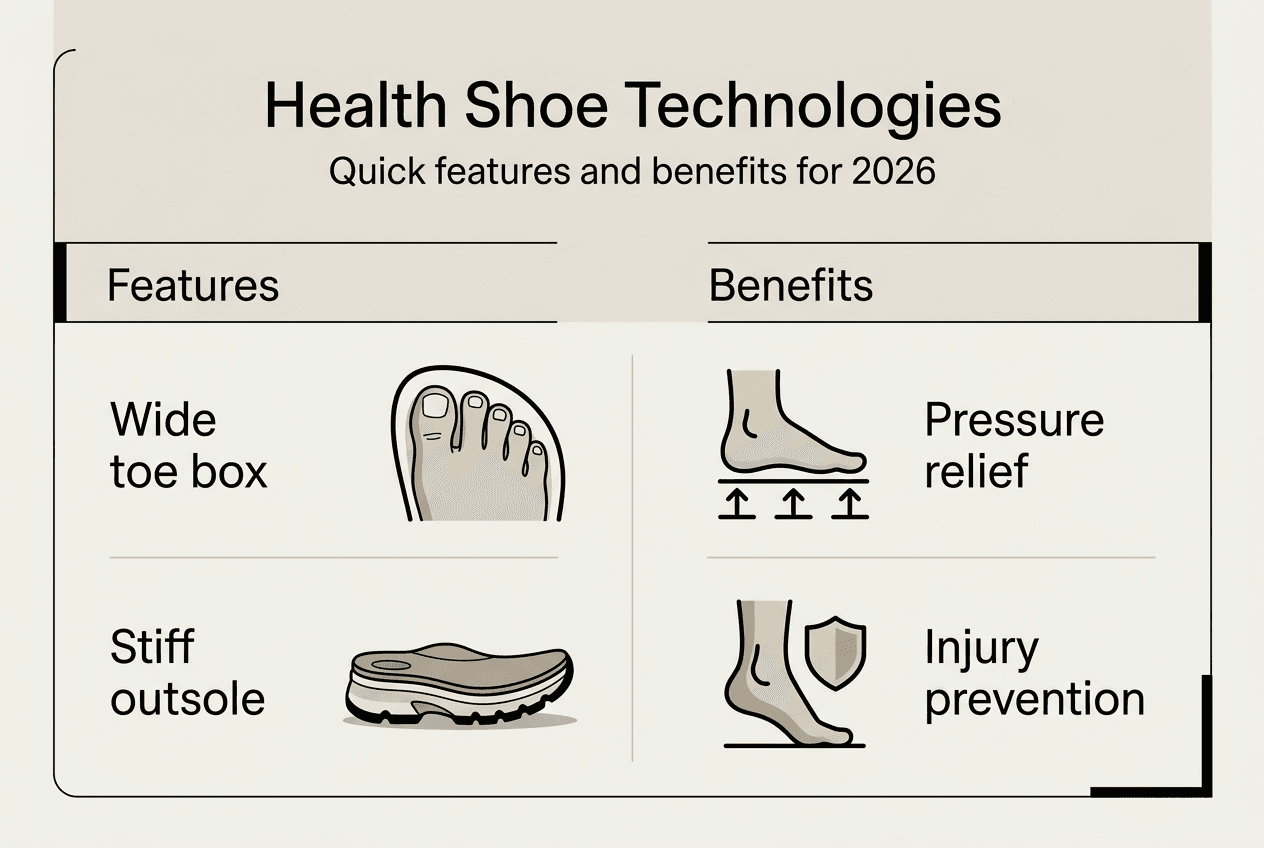
- Wide toe boxes allowing natural toe splay without compression
- Adjustable closures like laces, straps, or hook-and-loop fastenings accommodating swelling
- Seamless interiors preventing friction and hot spots
- Removable insoles creating space for custom orthotics
- Firm heel counters providing rearfoot stability
Research confirms that diabetic shoes with wide toe boxes and seamless construction significantly reduce pressure and friction. These features prevent complications whilst maintaining comfort during extended wear. The shoe width for diabetics guide explores width options beyond standard sizing.
Stiff outsoles deserve special attention. Studies show stiff outsoles reduce metatarsal pressure in high-risk diabetic patients, though excessive rigidity may limit natural foot motion. Balance becomes key when selecting sole stiffness.

| Feature | Primary Benefit | Ideal For |
|---|---|---|
| Wide toe box | Prevents compression, allows natural splay | Bunions, hammertoes, swelling |
| Adjustable closures | Accommodates volume fluctuations | Oedema, daily swelling patterns |
| Seamless interior | Eliminates friction points | Neuropathy, sensitive skin |
| Stiff outsole | Reduces forefoot pressure | Diabetic ulcer prevention |
| Removable insole | Enables custom orthotic use | Arch issues, plantar fasciitis |
Pro Tip: Always try shoes later in the day when your feet have naturally expanded to their largest size, ensuring comfortable fit throughout daily activities without excessive tightness during peak swelling periods.
Gather information about your gait pattern through professional analysis if possible. Overpronation, supination, or neutral mechanics each benefit from specific support features. This preparation phase ensures you enter the selection process armed with knowledge, making choices based on evidence rather than marketing claims or aesthetic appeal alone.
Executing your selection: picking stylish and healthy footwear
Begin your selection by identifying shoe styles that merge health features with your aesthetic preferences. Athletic trainers, casual slip-ons, dress shoes, and boots now incorporate medical-grade technologies without compromising appearance. Modern manufacturing techniques embed supportive structures within sleek designs, making health shoes indistinguishable from conventional footwear.
Compare different technological approaches to find your optimal match:
| Technology | Benefits | Limitations | Best For |
|---|---|---|---|
| Zero-drop sole | Promotes natural foot movement, strengthens intrinsic muscles | Requires adaptation period, may stress Achilles initially | Active individuals, those seeking natural gait |
| Stiff outsole | Reduces forefoot pressure, protects metatarsal heads | Limits flexibility, may feel unnatural initially | Diabetics at ulcer risk, plantar plate issues |
| Motion control | Prevents excessive pronation, enhances stability | Heavier construction, potentially restrictive | Overpronators, those needing rearfoot control |
| Rocker sole | Facilitates smooth rollthrough, reduces joint stress | Alters natural gait pattern, balance adjustment needed | Arthritis, limited ankle mobility |
The zero drop footwear benefits article explores how minimal heel elevation affects biomechanics. This design suits those transitioning towards more natural movement patterns, though gradual adaptation prevents strain.
Consider specialised options designed for diabetic feet. The Apex® X-Last Women’s Reina Runner provides motion control and midfoot stability specifically engineered for diabetic requirements. Such targeted designs incorporate multiple protective features within athletic styling.
Prioritise breathability and moisture management:
- Select uppers constructed from mesh, leather, or technical fabrics allowing air circulation
- Verify moisture-wicking linings that draw perspiration away from skin
- Look for antimicrobial treatments preventing bacterial and fungal growth
- Check drainage ports or ventilation systems in appropriate shoe categories
- Ensure adequate tongue padding preventing lace pressure whilst maintaining breathability
The shoe technology benefits guide examines how various innovations address specific diabetic footwear needs. Understanding these technologies helps you evaluate marketing claims critically, distinguishing genuine advances from superficial features.
Pro Tip: Choose shoes with removable insoles even if you don’t currently use custom orthotics, as this feature provides future flexibility and allows you to assess depth accommodation by temporarily removing the factory insole during fitting.
Examine construction quality carefully. Double stitching, reinforced stress points, and quality materials indicate durability. Health shoes represent an investment in wellbeing, so prioritise longevity over initial cost savings. Well-constructed footwear maintains supportive properties longer, providing better value despite higher upfront expense.
Don’t overlook closure systems. Traditional laces offer maximum adjustability but require dexterity. Hook-and-loop straps simplify entry for those with limited hand function. Elastic lacing systems combine convenience with customisable tension. Select closures matching your physical capabilities and daily routine requirements.
Verifying comfort and health benefits after purchase
Purchasing health shoes marks the beginning, not the end, of your selection process. Proper verification ensures your investment delivers promised benefits. Start by testing shoes indoors on various surfaces before committing to outdoor wear, preserving return eligibility whilst assessing real-world performance.
Conduct daily comfort checks during the initial wear period:
- Inspect feet for redness, pressure marks, or irritation after each wearing session
- Monitor any numbness, tingling, or unusual sensations indicating poor fit
- Check for consistent heel slippage suggesting inadequate size or lacing
- Assess toe box space ensuring adequate room without excessive movement
- Evaluate arch support contact, confirming proper alignment without gaps
Follow this structured wear-in approach:
- Wear new shoes for one to two hours indoors on the first day, monitoring comfort continuously
- Gradually increase wearing time by one hour daily, allowing feet to adapt to new support patterns
- Introduce varied surfaces and activities progressively, starting with level walking before stairs or inclines
- Adjust lacing or closures between sessions, experimenting with tension distribution for optimal comfort
- Document any persistent discomfort locations, noting whether issues improve or worsen with continued wear
For individuals with neuropathy, visual inspection becomes crucial since proper footwear prevents diabetic foot injuries that reduced sensation might otherwise mask. Check feet using mirrors or ask family members to examine areas you cannot easily see. The choosing shoes for neuropathy comfort article provides specific guidance for those with diminished protective sensation.
Monitor these warning signs requiring immediate attention:
- Blisters forming despite proper sizing and gradual break-in periods
- Persistent pressure points that don’t resolve with lacing adjustments
- Increased pain in joints, arches, or heels during or after wearing
- Skin discolouration or temperature changes in localised foot areas
- Gait alterations or compensatory movement patterns developing
Seek podiatrist consultation when experiencing persistent issues. Professional assessment identifies whether problems stem from shoe design, sizing errors, or underlying foot conditions requiring medical intervention. Podiatrists can recommend specific modifications, custom orthotics, or alternative footwear options addressing your unique needs.
Document your shoes’ performance over time. Note when cushioning compresses, support structures weaken, or materials deteriorate. Most health shoes require replacement every 500 to 800 kilometres of walking, though individual factors like body weight, gait mechanics, and activity intensity influence longevity. Continuing to wear compromised footwear negates health benefits and risks injury.
Consider maintaining multiple pairs for different activities. Rotating shoes allows materials to recover between wearings, extends overall lifespan, and provides backup options when one pair requires cleaning or repair. This approach also lets you match specific shoe features to particular activities, optimising protection and performance across your daily routine.
Discover stylish health shoes designed for your feet
Your journey towards better foot health deserves footwear that doesn’t compromise on style or protection. YDA specialises in shoes for problem feet that merge cutting-edge foot care technology with contemporary designs suitable for any occasion.
Our collection addresses the specific challenges faced by individuals with diabetes, neuropathy, and other foot conditions. Each design incorporates motion control systems, breathable materials, and removable orthotic-friendly insoles within fashionable silhouettes. The technology of YDA shoes demonstrates our commitment to evidence-based design principles that prioritise your comfort and wellbeing. Explore our range today and experience how proper footwear transforms your daily comfort without sacrificing the style you love.
Frequently asked questions
Are stylish health shoes suitable for all foot conditions?
Stylish health shoes accommodate many common foot conditions including diabetes, neuropathy, arthritis, and plantar fasciitis through targeted design features. However, severe deformities, acute injuries, or post-surgical recovery may require specialised medical footwear prescribed by podiatrists. Consulting a foot specialist ensures your specific condition receives appropriate support, as not all styles suit every problem.
How can I ensure the perfect fit for diabetic footwear?
Measure both feet in the afternoon when natural swelling peaks, recording length, width, and volume measurements accurately. The shoe fit for diabetics guide recommends trying multiple sizes and widths, prioritising comfort over vanity sizing. Look for wide toe boxes, adjustable fastenings, and seamless interiors that accommodate daily foot volume fluctuations without creating pressure points.
What maintenance helps prolong health shoes’ effectiveness?
Regular cleaning with appropriate products for your shoe materials prevents deterioration and maintains hygiene standards. Air shoes thoroughly between wearings, allowing moisture to evaporate and materials to recover their shape. Replace insoles every three to six months depending on wear intensity, and retire shoes once cushioning compresses or support structures weaken, typically after 500 to 800 kilometres of use.
Can I use custom orthotics with stylish health shoes?
Most quality health shoes feature removable insoles creating adequate depth for custom orthotics without compromising fit. Verify depth accommodation by removing the factory insole and inserting your orthotic during fitting, ensuring sufficient toe box height and overall volume. Some designs specifically engineer extra depth models accommodating thicker orthotic devices whilst maintaining proportional aesthetics and proper heel-to-toe drop ratios.
How long should the break-in period last for new health shoes?
Properly fitted health shoes typically require one to two weeks of gradual wear increases, starting with short indoor sessions and progressively extending duration and activity intensity. Excessive discomfort beyond mild adaptation sensations indicates sizing or design issues rather than normal break-in requirements. Quality health footwear should feel comfortable immediately, with break-in simply allowing materials to conform to your unique foot shape rather than forcing feet into uncomfortable positions.
Recommended
- Footwear Selection Guide 2025: Choose Shoes for Health and Comfort – YDA UK
- 7 Examples of Stylish Footwear for Foot Health and Comfort – YDA UK
- 7 Footwear Technology Trends 2025 for Healthier Feet – YDA UK
- 7 Key Footwear Innovations 2025 for Healthier Feet – YDA UK
- Master streetwear trends in 2026: Your complete guide – INCIDENT