
What is a last on a shoe: the complete guide
TL;DR:
- A shoe last is a 3D mold that shapes a shoe’s upper and controls its fit and silhouette. The last’s design determines comfort, foot health, and overall fit, with different types crafted for various footwear categories. Modern lasts are made from durable plastics and are essential for achieving a precise fit that lasts over time.
A shoe last is defined as the three-dimensional mould around which a shoe’s upper is built, controlling its shape, size, and internal volume from the very first stitch to the final wear. Without a last, a shoe has no form. Every decision a shoemaker makes about fit, silhouette, and comfort traces back to this single tool. Understanding what a last does explains why two shoes in the same size can feel completely different on your foot.
What is a last on a shoe and why does it matter?
A shoe last is the essential mould that shapes the shoe’s upper and defines fit, toe shape, silhouette, and overall volume. It is a foot-shaped form, traditionally carved from wood or cast iron, over which the upper material is stretched and fixed during manufacture. The last is removed once the shoe holds its shape, but its influence remains in every millimetre of the finished product.
The term “last” comes from the Old English word laest, meaning footprint. Shoemakers have used lasts for centuries, but the concept is often confused with “lasting,” which is the manufacturing step of pulling the upper over the last. They are distinct but interrelated: the last is the tool, and lasting is the process where the shoe takes on its fit, shape, and durability.
What makes the last so consequential is the number of measurements it controls. A well-designed last determines up to 30 precise measurements, including girth, instep height, heel-to-ball distance, and toe spring. That level of detail is what separates a shoe that fits well from one that merely fits.
What materials are shoe lasts made from?
The material a last is made from determines how well it performs under the pressure of manufacturing. The wrong material deforms, splits, or wears out before the production run is complete.
Traditional lasts were carved from beech wood or cast in cast iron. Beech wood remains popular in bespoke shoemaking because it is easy to carve, holds nails well, and can be adjusted by a craftsman. Cast iron lasts were used for heavy-duty production but fell out of favour due to their weight and cost.
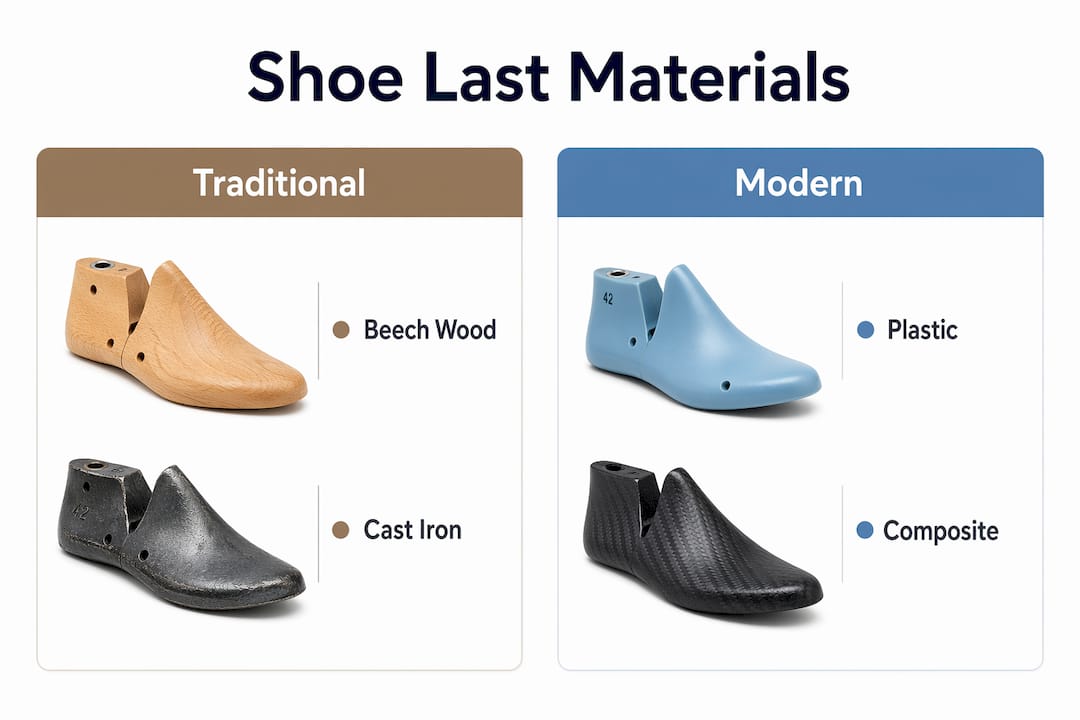
Modern factory production relies on high-density polyethylene plastic, specifically HMW-HDPE. These plastic lasts withstand thousands of stretching cycles and resist deformation under the mechanical pressure of lasting machines. That durability makes them the standard choice for volume manufacturing.
Beyond material, lasts also differ in construction:
- Solid lasts are single rigid forms, used for open-toe shoes and sandals where the last can be slid out easily after construction.
- Hinged lasts contain an internal spring mechanism that allows the last to collapse inward. This is necessary for closed-toe shoes where a rigid form cannot be removed without damaging the finished upper.
Pro Tip: If you are buying bespoke shoes, ask whether the maker uses a wooden or plastic last. Wooden lasts can be adjusted to your foot measurements; plastic lasts are fixed and suited to standard sizing.
What are the different types of shoe lasts?
Last types vary significantly by footwear category. A last designed for a running trainer bears almost no resemblance to one made for a formal Oxford. The differences lie in toe shape, heel pitch, instep height, and the overall silhouette the last creates.
Common last types include men’s robust lasts, women’s narrower lasts, and bespoke custom lasts refined through fit testing. Here is how they compare across major footwear categories:
| Shoe type | Toe shape | Heel pitch | Instep height | Last construction |
|---|---|---|---|---|
| Athletic/trainer | Rounded, wide | Low (0–10mm) | Medium | Solid or hinged |
| Formal Oxford | Pointed or chisel | Medium (15–20mm) | Low to medium | Hinged |
| High heel | Narrow, tapered | High (50mm+) | Low | Hinged |
| Casual loafer | Rounded or almond | Low to medium | Medium to high | Solid |
| Bespoke custom | Tailored to wearer | Variable | Variable | Wooden, adjustable |
The toe shape alone changes how a shoe looks and feels. A rounded toe last gives more room for the toes to spread, which reduces pressure during long wear. A pointed last creates a sleeker silhouette but compresses the forefoot. Neither is wrong; they serve different purposes.
Heel pitch is the angle between the heel and the ball of the foot built into the last. A high heel pitch shifts body weight forward, which is why high-heeled shoes require a very different last geometry to distribute pressure correctly. Athletic lasts keep heel pitch minimal to support a natural gait cycle.
Key differences between last categories:
- Athletic lasts prioritise volume and flex, accommodating foot swell during exercise.
- Formal lasts prioritise silhouette, often sacrificing toe room for aesthetic line.
- Bespoke lasts are the only type adjusted to an individual’s foot anatomy, including arch height and asymmetry between left and right feet.
How does last shape influence fit, comfort, and foot health?
Last shape is the single most important factor in shoe comfort. Choosing the right last changes the entire fit and comfort experience more than material quality or construction method. That is a claim most shoppers find surprising, but it holds up under scrutiny.

Here is why. Shoe size tells you the length of a shoe. The last tells you everything else: the width at the ball of the foot, the height of the instep, the curve of the arch, and the angle of the toe box. Two shoes labelled size 9 can have completely different internal volumes if they were built on different lasts.
The internal volume defined by the last includes girth, instep height, and toe spring, all of which must match your foot anatomy for genuine comfort. Girth is the circumference of the foot at its widest point. Instep height is the distance from the sole to the top of the foot. Toe spring is the upward curve at the toe of the last, which affects how the shoe rolls during walking.
The practical consequences of a poor last match are significant:
- Pressure points form where the last’s volume is too narrow or too shallow for your foot shape.
- Heel slippage occurs when the last’s heel cup is too wide or too shallow for your heel bone.
- Toe crowding happens when the toe box is too short or too tapered, forcing toes together.
- Arch fatigue develops when the last’s arch curve does not correspond to your foot’s natural arch height.
- Instep pain results from a last with too low an instep height pressing against the top of the foot.
Pro Tip: When trying on shoes, pay attention to the instep first. If the shoe feels tight across the top of your foot within the first five minutes, the last’s instep height is too low for your anatomy. No amount of wear will change that.
“Breaking in a shoe does not fix a poor match to last shape. Discomfort usually stems from last-shape mismatch, not material stiffness.” — k.shoes shoe last guide
This point deserves emphasis. Many people endure weeks of discomfort expecting leather or fabric to conform to their foot. The material may soften slightly, but the last’s geometry is fixed. If the arch and instep alignment does not match your foot from the start, the shoe will never feel right. Understanding this saves both money and discomfort.
Ydauk’s approach to last design and foot health explores this relationship in detail, showing how last geometry directly affects long-term foot support.
How to choose shoes based on last design
Most consumers never see the last that built their shoes. But you can learn to read a shoe’s last characteristics from the outside, and that knowledge changes how you shop.
Here is what to look for:
- Toe box shape: Stand the shoe on a flat surface and look at the toe from above. A wide, rounded toe box signals a last with generous forefoot volume. A narrow, tapered toe signals a last built for silhouette over space.
- Heel cup depth: Press your thumb into the heel of the shoe. A deep, firm heel cup indicates a last designed to hold the heel securely. A shallow cup will allow slippage.
- Instep height: Look at the shoe from the side. A high instep arch in the upper suggests the last accommodated a higher instep. A flat upper profile suggests a low-instep last.
- Toe spring: Place the shoe on a flat surface. If the toe lifts noticeably off the ground, the last has a pronounced toe spring, which aids walking roll but can feel odd when standing still.
Premium brands invest in proprietary lasts refined over years of anatomical data and fit testing. Standard sizing is a baseline; better fit results from advanced last development. This is why two trainers from different brands in the same size can feel entirely different. One brand’s size 9 last may be built wider, with a higher instep, than another’s.
For athletic footwear, a sneakers size chart can help you cross-reference brand-specific sizing with last-influenced fit differences. Pairing that with knowledge of last shapes gives you a much clearer picture before you buy.
If you find a shoe that fits well, note the brand and model. That brand’s last is compatible with your foot anatomy. Staying within that brand’s range, or asking a specialist retailer which other brands use a similar last geometry, is the most reliable way to replicate a good fit. Ydauk’s shoe chart guide offers practical sizing advice that accounts for these last-driven differences.
Key takeaways
The shoe last is the single most influential factor in how a shoe fits, feels, and performs over time.
| Point | Details |
|---|---|
| Last definition | A last is the 3D mould that shapes a shoe’s upper and controls all fit dimensions. |
| Material choice | Modern lasts use HMW-HDPE plastic for durability; bespoke lasts use adjustable beech wood. |
| Last type by category | Athletic, formal, casual, and bespoke lasts differ in toe shape, heel pitch, and instep height. |
| Fit over size | Last geometry determines internal volume; two shoes in the same size can fit very differently. |
| Breaking in is a myth | A poor last match cannot be corrected by wear; discomfort stems from geometry, not material stiffness. |
Why the last is the most underrated concept in footwear
Most people spend time comparing sole materials, upper fabrics, and brand names when buying shoes. I spent years doing the same. What changed my thinking was trying on two pairs of shoes in identical sizes from different makers and finding one felt like it was built for my foot and the other felt like a compromise from the first step.
The difference was the last. Not the leather. Not the construction. The last.
What frustrates me about mainstream shoe retail is that last information is almost never shared with the consumer. You can find out the sole compound, the upper material, and the colourway. You cannot easily find out whether the last suits a high instep or a wide forefoot. That gap in information costs people money and comfort every day.
The trend I find genuinely encouraging is the move towards anatomically informed last design in performance footwear. Brands that invest in last development based on real foot data are producing shoes that fit better from the first wear. Ydauk’s focus on foot health technology sits squarely in this direction. The future of footwear is not smarter materials. It is smarter lasts.
If you take one thing from this article, let it be this: before you buy your next pair of shoes, assess the toe box shape, the instep height, and the heel cup. Those three features tell you more about how the shoe will fit than any size label ever will.
— Panagiotis
Ydauk’s approach to last technology and shoe comfort
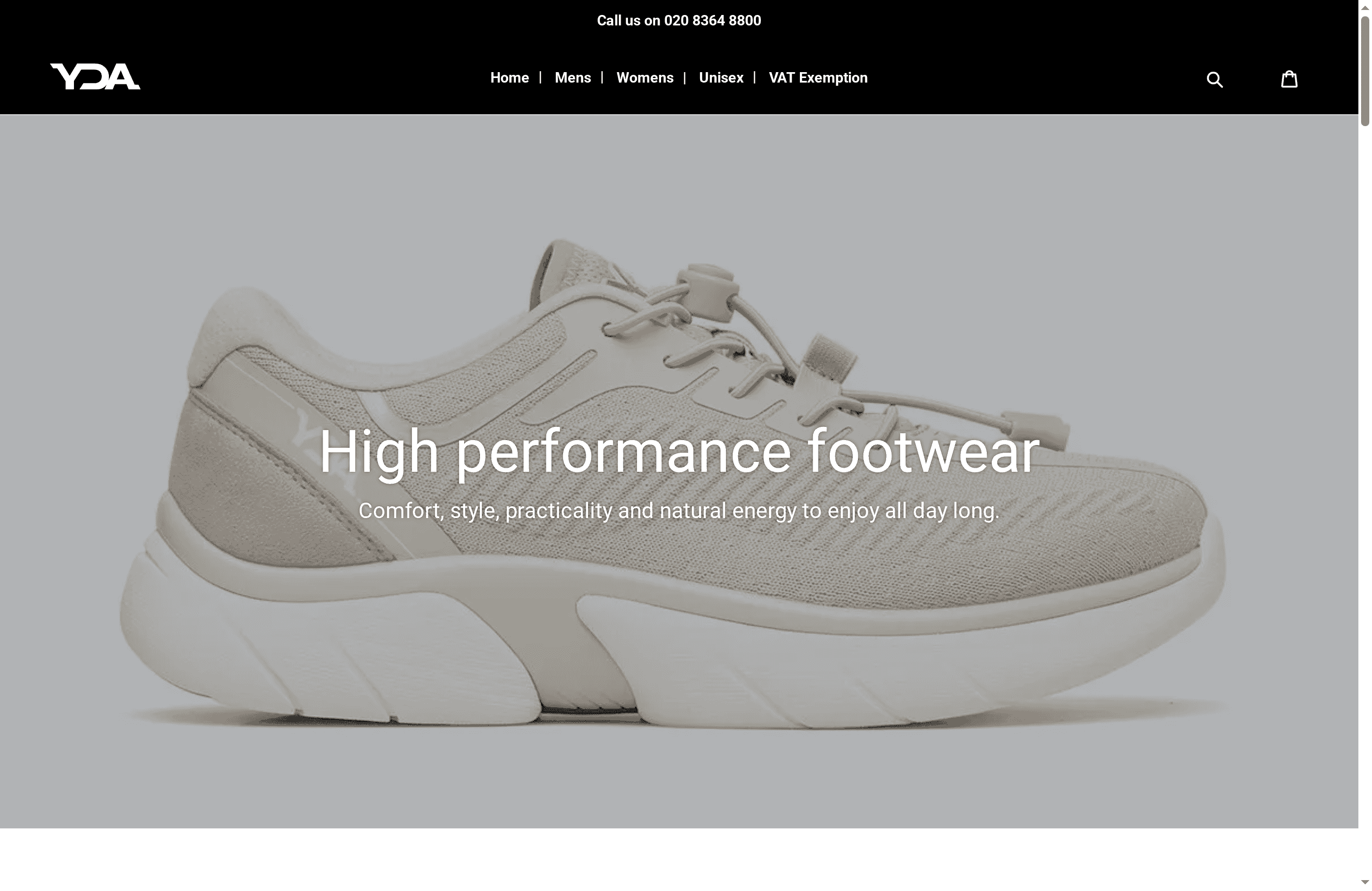
Ydauk builds its footwear around the principle that last design is the foundation of foot health. Every shoe in the Ydauk range is developed with attention to the anatomical measurements that a last controls, from instep height to toe spring, to deliver comfort that holds up through long days on your feet. The YDA Technology behind each pair reflects years of research into how last geometry affects energy return, pressure distribution, and long-term foot support. If you want to understand how last innovation translates into a shoe you can actually wear all day, explore the YDA shoe technology page for a detailed look at what sets Ydauk’s approach apart. For ongoing comfort advice, the Ydauk guide on maintaining shoe comfort is worth bookmarking.
FAQ
What is a last on a shoe in simple terms?
A last is the foot-shaped mould over which a shoe is built during manufacture. It determines the shoe’s shape, internal volume, and fit characteristics.
Does the last affect shoe size?
The last shapes the internal volume of a shoe, which means two shoes with the same size label can fit very differently depending on the last used. Size indicates length; the last controls width, instep height, and toe room.
What is the difference between a solid and a hinged last?
A solid last is a single rigid form used for open-toe shoes. A hinged last contains an internal spring that allows it to collapse for removal from closed-toe shoes without damaging the upper.
Can breaking in a shoe fix a bad last fit?
No. Discomfort from a poor last match stems from geometry, not material stiffness. The last’s shape is fixed, and no amount of wear will change the instep height or toe box volume.
Why do premium shoe brands use proprietary lasts?
Premium brands develop exclusive lasts refined through anatomical data and fit testing. These proprietary last designs produce a more precise fit than standard industry lasts, which is a key part of what justifies the price difference.