
Understanding pronation in running for healthier strides
TL;DR:
- Pronation is a natural, multi-component foot movement critical for impact absorption and propulsion during running.
- Understanding individual pronation patterns and their effects helps in selecting optimal footwear, reducing injury risk, and improving running efficiency.
Pronation has earned a bad reputation in running circles, yet most runners who hear the word treat it like a diagnosis rather than a description. The truth is that pronation is a natural, necessary part of how your foot absorbs impact, transfers load, and propels you forward with each stride. Biomechanically, pronation involves coordinated motions such as rearfoot eversion, ankle dorsiflexion, and forefoot abduction, making it a complex, multi-component movement rather than a simple matter of flat arches or wobbly ankles. Understanding what pronation actually means will change how you approach your footwear, your training, and your long-term running health.
Table of Contents
- What is pronation? Breaking down the biomechanics
- Types of pronation: A spectrum, not a category
- How pronation affects your running: Mechanics, fatigue, and injury risk
- Choosing shoes for your pronation pattern
- Why most runners misunderstand pronation (and what actually matters)
- Support your running health with advanced footwear technology
- Frequently asked questions
Key Takeaways
| Point | Details |
|---|---|
| Pronation is complex | Pronation involves several coordinated foot and ankle movements, not just arch collapse. |
| Every runner is unique | Pronation patterns vary greatly and exist along a spectrum, not in fixed types. |
| Fatigue alters mechanics | Tiredness can affect pronation control, potentially increasing injury risk. |
| Shoe choice matters | Selecting footwear suited to your pronation type helps reduce discomfort and supports performance. |
What is pronation? Breaking down the biomechanics
With the common misconception challenged, let us explore what pronation truly means from a biomechanical standpoint.
Pronation is your foot’s natural inward rolling motion during the stance phase of running, the period when your foot is in contact with the ground. When your heel strikes the surface, your foot rolls inward and downward as the arch flattens slightly. This motion acts like a shock absorber, distributing the forces of impact across multiple structures in the foot and lower leg. Without it, every step would send a jarring jolt straight up your skeleton.
The counterpart to pronation is supination (sometimes called underpronation), which is the outward rolling motion of the foot. While pronation brings the arch down and inward, supination lifts it back up and outward as your foot prepares to push off. Both motions are essential to a healthy gait cycle.
“Pronation is not just a matter of arch height. It involves coordinated motions such as rearfoot eversion, ankle dorsiflexion, and forefoot abduction, making it a multi-component foot movement that requires precision to assess accurately.”
What most runners get wrong is assuming that a lower arch equals overpronation, or that a high arch equals supination. Arch height is a static measure. Pronation is a dynamic movement. You can have a low arch and move with perfectly functional mechanics, or a mid-height arch and pronate excessively under load. Understanding foot pronation explained in terms of movement patterns rather than foot shape is the foundation of smarter shoe selection.
| Feature | Pronation | Supination |
|---|---|---|
| Direction of roll | Inward | Outward |
| Arch behaviour | Flattens | Rises |
| Primary function | Shock absorption | Propulsion |
| Common concern | Excessive inward roll | Insufficient shock absorption |
| Affected structures | Medial arch, ankle, knee | Lateral ankle, IT band |
Types of pronation: A spectrum, not a category
Having established the basic biomechanics, it is important to recognise that pronation is not a one-size-fits-all phenomenon.
The traditional model groups runners into three categories: neutral pronators, overpronators, and supinators (underpronators). This system is easy to communicate, which is why gait analysts, shoe shop staff, and physiotherapists have used it for decades. The problem is that it oversimplifies what is actually a continuous spectrum of movement, and it can lead runners towards shoe choices that do not reflect their real mechanics.
Neutral pronation is the middle ground. The foot rolls inward by a moderate, controlled amount, the arch loads and unloads efficiently, and the force path through the foot is reasonably well distributed. Most runners fall somewhere in this range.
Overpronation describes an exaggerated inward roll, often seen as the heel rolling sharply inward, the ankle collapsing, and the arch flattening beyond what is functional. This is the category most commonly linked to conditions such as plantar fasciitis, shin splints, and knee pain. However, it is worth noting that not every overpronator develops injuries.

Supination means insufficient inward rolling. The foot stays on its outer edge for longer than it should, reducing shock absorption. Runners who supinate are often more prone to lateral ankle sprains and stress fractures.
What modern research makes clear is that these categories are guides, not boxes. Excessive pronation is quantified using different kinematic variables, and between-runner variability means there are multiple functional pronation patterns rather than a single definition. The thresholds for what constitutes “excessive” are also being updated as our measurement tools improve.
To begin identifying your own pattern, look out for these common signs:
- Overpronation signs: Wear on the inner heel and ball of your shoe, knee pain that worsens on longer runs, arch or heel soreness after training
- Supination signs: Wear on the outer edge of your shoe, frequent ankle rolling, tightness in the IT band or calves
- Neutral signs: Even wear across the forefoot, no recurring localised pain, good running economy on varied terrain
You can also explore pronation patterns in runners in more detail, particularly if you notice that your symptoms change across different training sessions or surfaces.
| Pronation type | Arch tendency | Typical shoe wear | Common symptoms |
|---|---|---|---|
| Neutral | Moderate flattening | Even across sole | Generally minimal |
| Overpronation | Excessive flattening | Inner heel and ball | Knee, arch, shin pain |
| Supination | Minimal flattening | Outer edge | Lateral ankle, IT band |

How pronation affects your running: Mechanics, fatigue, and injury risk
Understanding the diversity of pronation types, let us consider how these patterns interact with your running and day-to-day training.
Pronation directly influences how efficiently your body transfers energy through each stride. When your mechanics are well-matched to your footwear and your training load, pronation is invisible. When something is off, you start to notice it through discomfort, fatigue, or recurring injuries.
Here is how pronation shapes your running in practical terms:
- Load distribution. Controlled pronation spreads ground reaction force across a larger surface area of the foot, reducing peak stress on any single structure. Poor distribution means certain areas bear disproportionate load over thousands of strides.
- Knee alignment. Excessive inward rolling at the foot typically creates a corresponding inward rotation at the tibia (shin bone) and knee. Over time, this can stress the patellofemoral joint, the area around the kneecap, particularly during longer runs.
- Muscle demand. Your intrinsic foot muscles, tibialis posterior, and calf complex all work harder to control excessive pronation. When these muscles tire, their protective function diminishes.
- Running economy. Efficient pronation supports a smooth propulsive phase. Mechanical inefficiencies from either overpronation or supination tend to reduce running economy, meaning you burn more energy to maintain the same pace.
One of the most important, and least discussed, aspects of pronation is what happens when you get tired. Fatigue changes lower-limb mechanics in runners with pronated feet, potentially reducing muscle control of foot joints and altering ground reaction forces. In practical terms, this means your foot may pronate more, or less consistently, in the final kilometres of a long run compared to the first few. Injuries that appear to come from nowhere during the latter stages of a race often have their roots in fatigue-driven mechanical changes.
Pro Tip: Do not just assess your gait when you are fresh. If you can, record yourself running after 45 to 60 minutes of training. The mechanics you see then, when managing fatigue with footwear becomes genuinely relevant, are far more informative than how your foot moves in the first five minutes. Understanding the impact of foot fatigue on your mechanics is one of the best investments you can make in injury prevention.
Common running injuries associated with altered pronation mechanics include:
- Plantar fasciitis: Excessive arch loading from overpronation strains the plantar fascia, the thick band of tissue along the bottom of the foot
- Medial tibial stress syndrome (shin splints): Repeated torsional forces through the lower leg from inward rolling
- Patellofemoral pain syndrome: Knee pain driven by the rotational chain from foot to knee
- IT band syndrome: Often linked to supination and the resulting lateral tension through the hip and thigh
- Achilles tendinopathy: Both overpronation and supination can place excessive demand on the Achilles under high training loads
Choosing shoes for your pronation pattern
Once you understand how pronation impacts your running, the next vital step is choosing the right footwear.
Running shoes designed for different pronation patterns vary significantly in their construction. Neutral shoes offer cushioning without directional correction and suit runners with efficient mechanics across the full pronation spectrum. Stability shoes incorporate a firmer medial post (a denser foam on the inner side of the midsole) that slows and limits inward rolling. Motion-control shoes are the most structured option, designed for runners with marked overpronation and often featuring a rigid heel counter and a flatter sole geometry.
Here is how to match shoe type to your pattern:
- Neutral pronators: Neutral or lightly cushioned shoes with flexible midsoles will feel most natural and allow your foot to move through its preferred range of motion freely
- Overpronators: Stability or motion-control shoes help guide the foot without eliminating natural movement; look for medial post support and a stable heel platform
- Supinators: Neutral shoes with generous cushioning on the lateral side, combined with a flexible sole that allows some inward motion, are the typical recommendation
Signs that your current shoes may not be matching your mechanics include recurrent hotspots on one side of the foot, inner or outer edge wear that appears rapidly, an uncomfortable feeling of rolling inward or outward, and recurring injuries that resolve when you switch shoes.
Pro Tip: Pronation categories are useful for communication but what matters is how your mechanics behave under actual running conditions including speed, surface, and fatigue. Whenever possible, get your gait analysed while running on a treadmill or track rather than simply walking across a shop floor. A short walk reveals very little about what your foot does at a 5-minute kilometre pace. You can find practical guidance on selecting shoes for pronation to support a more informed buying decision.
Key features to look for based on your pronation type:
- Medial post density: Firmer foam on the inner midsole for overpronators; even, responsive foam throughout for neutral runners
- Heel counter rigidity: More structure for overpronators; more flexibility for supinators who need lateral shock absorption
- Midsole height and stack: Higher cushioning stacks generally slow pronation speed, which can be beneficial or problematic depending on your pattern
- Toe box width: A wider toe box supports natural forefoot splay during the propulsive phase, reducing compensatory pronation
Why most runners misunderstand pronation (and what actually matters)
In our experience working with runners across a wide range of abilities and body types, the greatest mistake is treating pronation as a fixed problem to be corrected rather than a dynamic behaviour to be understood.
The running industry spent decades telling people that overpronation was the root of all running injuries. Gait analysis consisted of a short treadmill walk, an arch measurement, and a shoe recommendation based on a three-category system. While this approach helped many runners, it also sent plenty of well-intentioned people into heavily controlling shoes that their bodies did not actually need, sometimes creating new problems while trying to solve imagined ones.
What matters far more than your pronation category is whether your current mechanics are producing symptoms. A runner with pronounced overpronation who trains consistently without pain, maintains good cadence, and recovers well does not necessarily need a motion-control shoe. A runner with moderate pronation who develops medial knee pain every time mileage increases very likely does. The difference is context, not category.
We also believe strongly in the value of time-pressured, real-world gait analysis. Your foot behaves differently at mile one versus mile twelve. It behaves differently on tarmac versus trail. It responds differently when you are running in warm weather versus cold. Pronation is not static, and your footwear solution should account for the conditions in which you actually run, not just the environment of a running shop. Seeking out footwear expertise for runners grounded in real running scenarios rather than retail convenience is worth the extra effort.
The shift we advocate for is from “What is my pronation type?” to “Do my current shoes and mechanics support comfortable, efficient running at the distances and speeds I train at?” That second question is harder to answer but infinitely more useful.
Support your running health with advanced footwear technology
Understanding your pronation is only the beginning. Translating that knowledge into the right footwear is where real improvement happens, and modern shoe technology makes this more achievable than ever.
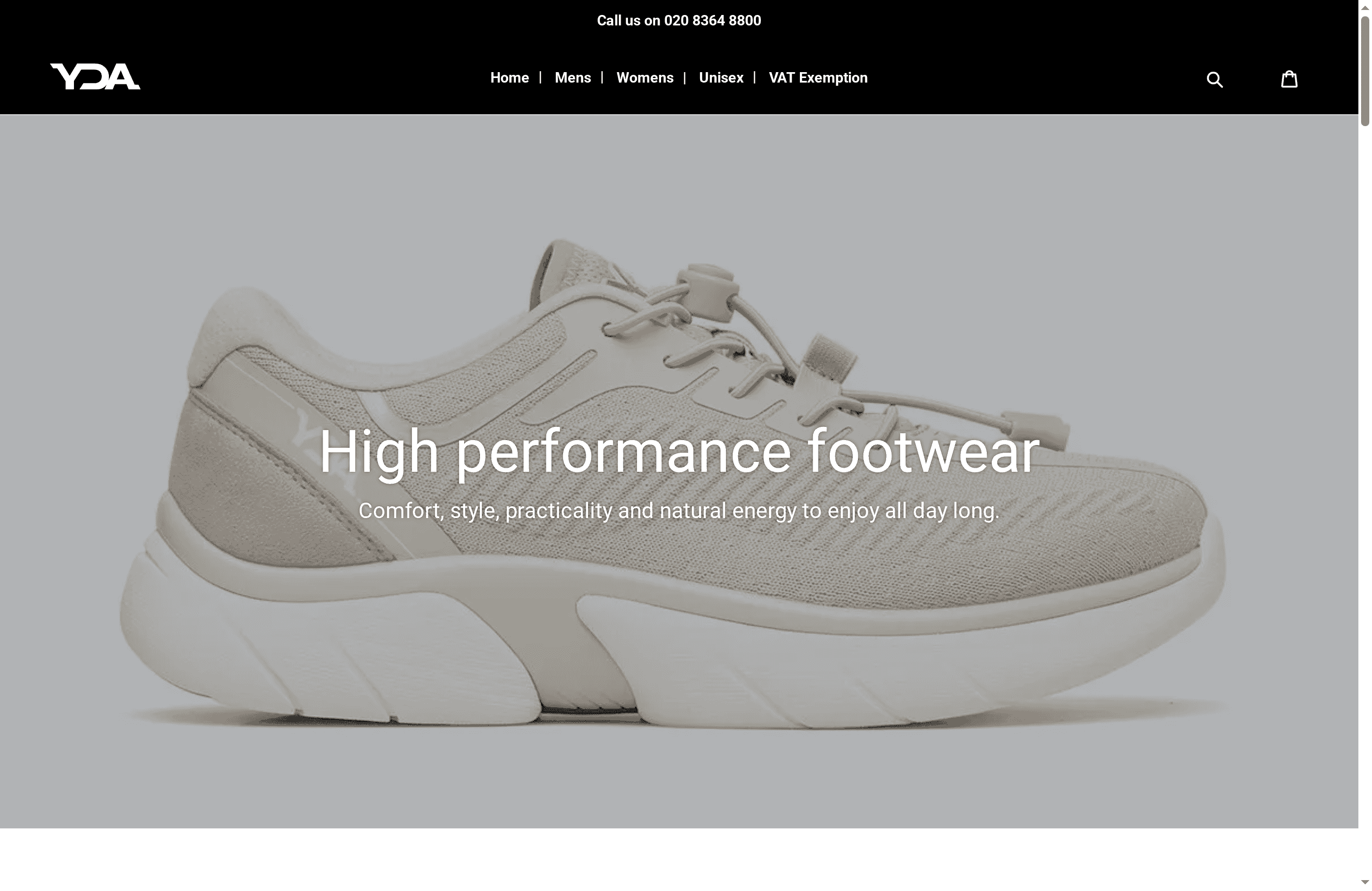
At YDA, we have built our footwear range around the principle that dynamic foot support should respond to how your foot actually moves, not just where it sits statically. Our YDA shoe technology is designed to support healthy pronation mechanics by combining responsive cushioning with structural guidance that adapts across different levels of effort and fatigue. Whether you are logging easy recovery kilometres or pushing pace on harder sessions, the right shoe should support your mechanics at every stage. Explore our specialist running footwear to find a solution matched to your running pattern and health goals.
Frequently asked questions
Can pronation be corrected or should it be?
Pronation itself is natural and generally does not need correction unless it is causing discomfort or affecting your performance. Pronation is best understood as part of a continuum, and what matters most is whether your mechanics are producing symptoms under real running conditions.
How do I know if my pronation is excessive?
Excessive pronation is best identified by a qualified gait professional using movement analysis tools, as visual self-assessment is rarely reliable. Between-runner variability is significant and the thresholds for what constitutes excessive pronation are still being refined as measurement methods improve.
Can pronation lead to injury if left unaddressed?
Pronation alone is rarely the sole cause of injury, but fatigue alters lower-limb mechanics in runners with pronated feet, which can reduce muscle control and increase injury risk over time, particularly in higher mileage training.
Do I need special shoes for pronation if I am not injured?
If you are comfortable and injury-free, specialist shoes are not always necessary. Pronation categories are most useful when they are matched to real symptoms and running-condition mechanics rather than applied as blanket labels to every runner.