
Foot Fatigue Explained: Impact on Everyday Performance
Runners and busy professionals often notice a familiar ache after hours on their feet, making even simple movement a challenge. The search for relief is more than a matter of comfort—it shapes how you move, work, and approach your daily routines. With evidence showing that foot health directly influences mobility, balance, and overall physical function, understanding and addressing foot fatigue is vital for anyone committed to an active lifestyle. Discover practical insights and innovative solutions designed to keep every step comfortable and energised.
Table of Contents
- What Foot Fatigue Means For Health-Conscious People
- Key Causes And Everyday Triggers Of Foot Fatigue
- Recognising Symptoms And When To Take Action
- Health Consequences And Lifestyle Impact
- Modern Footwear Solutions For Lasting Relief
Key Takeaways
| Point | Details |
|---|---|
| Importance of Foot Health | Foot fatigue can significantly affect overall mobility, balance, and ability to maintain an active lifestyle; recognising its early signs is crucial for management. |
| Causes of Foot Fatigue | Key contributors include prolonged standing, inadequate footwear, and muscle imbalance, which can exacerbate discomfort. |
| Recognising Symptoms | Persistent pain, decreased mobility, and changes in foot structure are critical indicators that warrant professional assessment for underlying conditions. |
| Modern Footwear Solutions | Innovative footwear technologies, such as ergonomic support and customisable fits, provide tailored solutions to mitigate foot fatigue and enhance comfort. |
What Foot Fatigue Means for Health-Conscious People
Foot fatigue represents a complex physiological condition that profoundly impacts daily performance and overall mobility for health-conscious individuals. Understanding its nuanced implications goes beyond simple discomfort—it directly influences our ability to maintain an active, dynamic lifestyle.
Research indicates that foot health plays a critical role in maintaining optimal physical function. Comprehensive biomechanical studies reveal that poor foot condition can significantly limit mobility, balance, and the capacity to perform routine activities effectively. For individuals committed to maintaining peak physical condition, recognising early signs of foot fatigue becomes paramount.
The physiological mechanisms underlying foot fatigue are multifaceted and involve several key factors:
- Muscular strain from prolonged standing or walking
- Inadequate footwear support
- Biomechanical inefficiencies in foot structure
- Reduced blood circulation in lower extremities
- Cumulative stress on ligaments and tendons
Biomechanical performance can be dramatically impacted by persistent foot fatigue. Lightweight shoe technology demonstrates significant potential in mitigating these challenges by providing enhanced comfort and reducing potential movement restrictions.
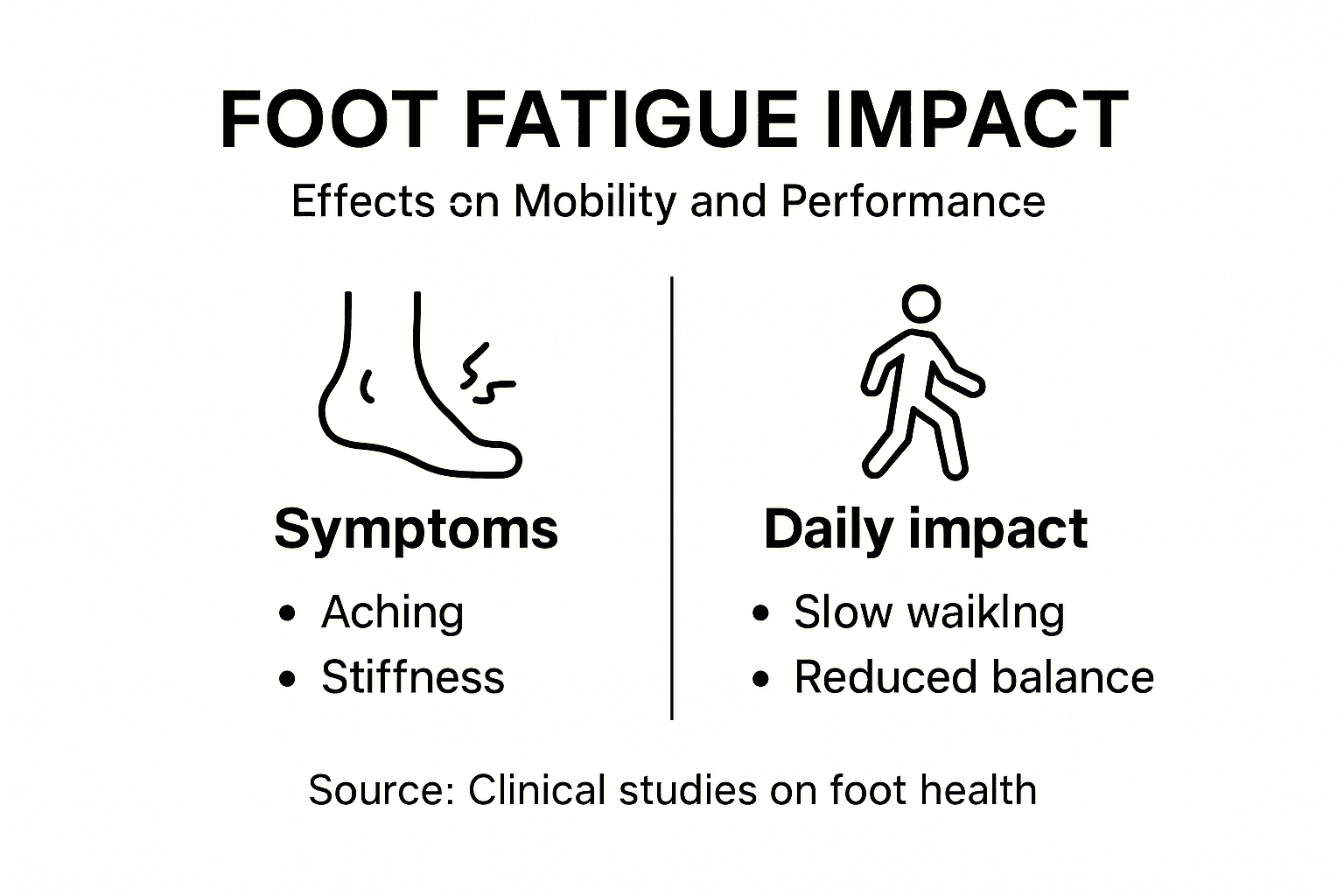
Health-conscious individuals must recognise that foot fatigue is not merely a temporary inconvenience but a critical indicator of potential underlying biomechanical challenges. Proactive management involves understanding individual foot mechanics, investing in appropriate footwear, and implementing targeted recovery strategies.
Pro tip: Integrate daily foot mobility exercises and invest in shoes with proper arch support to minimise fatigue-related complications.
Key Causes and Everyday Triggers of Foot Fatigue
Foot fatigue emerges from a complex interplay of physiological, occupational, and biomechanical factors that significantly impact an individual’s daily performance and comfort. Understanding these triggers is crucial for developing effective prevention and management strategies.
Occupational strain represents a primary contributor to foot fatigue, particularly for professionals engaged in jobs requiring prolonged standing or repetitive movements. Workers in sectors such as healthcare, retail, hospitality, and manufacturing are especially vulnerable to developing chronic foot discomfort and muscular exhaustion.
The key causes of foot fatigue encompass multiple interconnected dimensions:
- Prolonged standing or walking
- Inadequate footwear support
- Repetitive movement patterns
- Muscle weakness and imbalance
- Poor biomechanical alignment
- Underlying medical conditions
- Insufficient rest and recovery periods
Biomechanical variations play a critical role in foot fatigue development. Research on muscle co-contraction demonstrates that individuals with specific foot structures, such as pronated feet, experience more significant fatigue-related challenges during physical activities.
Individuals with pre-existing conditions like flat feet, high arches, or previous foot injuries are particularly susceptible to experiencing accelerated foot fatigue. The cumulative impact of these factors can lead to decreased mobility, increased discomfort, and potential long-term musculoskeletal complications.
Pro tip: Rotate between different types of supportive footwear throughout the day to distribute pressure and minimise repetitive strain on foot structures.
Recognising Symptoms and When to Take Action
Identifying the early warning signs of foot fatigue is crucial for maintaining optimal physical performance and preventing long-term musculoskeletal complications. Foot and ankle disorders can manifest through a range of symptoms that signal the need for immediate attention and intervention.
The primary indicators of developing foot fatigue include:
- Persistent aching or throbbing pain in feet
- Decreased balance and stability
- Reduced mobility and range of motion
- Muscle weakness and stiffness
- Discomfort during walking or standing
- Increased sensitivity to physical activity
- Swelling or inflammation around foot joints
Mobility limitations become particularly pronounced as foot fatigue progresses. Symptoms affecting mobility can significantly impact an individual’s daily functioning, with older adults experiencing more pronounced challenges in maintaining physical independence.

Critical moments for seeking professional assessment include experiencing consistent pain lasting more than a week, noticeable changes in foot structure, difficulty performing routine activities, or a sudden decline in balance and flexibility. These symptoms may indicate underlying biomechanical issues requiring specialised medical intervention.
Prevention and early detection remain the most effective strategies for managing foot fatigue. Understanding your body’s signals and responding proactively can help mitigate potential long-term health complications and maintain overall physical well-being.
Pro tip: Conduct a weekly self-assessment of foot comfort and mobility, documenting any persistent changes or discomfort for professional review.
Health Consequences and Lifestyle Impact
Foot fatigue extends far beyond temporary discomfort, representing a significant health challenge with profound implications for overall physical well-being and daily functioning. Occupational strain and musculoskeletal risks demonstrate how prolonged foot stress can dramatically transform an individual’s lifestyle and physical capabilities.
The comprehensive health consequences of chronic foot fatigue include:
- Reduced physical activity levels
- Increased risk of lower back complications
- Compromised postural control
- Diminished work performance
- Higher susceptibility to chronic pain
- Potential development of compensatory movement patterns
- Psychological impacts from persistent discomfort
Biomechanical disruptions become increasingly pronounced as foot fatigue progresses. Prolonged standing consequences reveal how sustained foot stress can trigger a cascade of musculoskeletal disorders affecting not just feet, but entire lower extremity function.
The lifestyle implications extend beyond physical limitations, potentially impacting mental health, professional productivity, and overall quality of life. Individuals experiencing persistent foot fatigue often find themselves progressively withdrawing from physical activities, social engagements, and professional opportunities due to ongoing discomfort and reduced mobility.
Prevention and proactive management remain the most effective strategies for mitigating these comprehensive health risks. By understanding the intricate connections between foot health and overall physical function, individuals can implement targeted interventions to maintain their active lifestyle and prevent long-term complications.
Here is a comparison of foot fatigue impacts and recommended footwear solutions:
| Impact of Foot Fatigue | Lifestyle Consequence | Recommended Footwear Feature |
|---|---|---|
| Reduced mobility | Lower activity levels | Advanced cushioning |
| Poor balance | Increased fall risk | Ergonomic arch support |
| Chronic discomfort | Diminished productivity | Pressure distribution tech |
| Postural instability | Heightened back pain | Adaptive midsole design |
Pro tip: Invest in comprehensive foot health assessments annually to identify and address potential biomechanical issues before they escalate into chronic conditions.
Modern Footwear Solutions for Lasting Relief
Addressing foot fatigue requires innovative approaches that blend advanced technological design with personalised biomechanical support. Custom-fitted shoe technologies have revolutionised our understanding of foot health, providing targeted solutions that extend far beyond traditional footwear concepts.
Key characteristics of modern foot fatigue solutions include:
- Advanced cushioning materials
- Ergonomic arch support systems
- Pressure distribution technologies
- Lightweight construction
- Adaptive midsole designs
- Breathable performance fabrics
- Customisable fit mechanisms
Biomechanical engineering plays a crucial role in developing footwear that actively combats fatigue. Lightweight shoe innovations demonstrate remarkable potential in reducing physical strain by incorporating scientifically designed features that support natural foot movement and distribute mechanical stress.
The evolution of footwear design now prioritises individual physiological needs, recognising that a universal approach cannot address the complex biomechanical variations among different users. Modern solutions focus on creating adaptive technologies that respond dynamically to an individual’s unique movement patterns, weight distribution, and activity levels.
Comprehensive foot health requires a holistic approach that combines sophisticated footwear design, personalised fit, and an understanding of individual biomechanical requirements. By integrating advanced materials, ergonomic principles, and precise engineering, contemporary footwear solutions offer unprecedented levels of comfort and support.
The following table summarises the benefits of modern footwear technologies:
| Footwear Technology | Main Benefit | Who Benefits Most |
|---|---|---|
| Customisable fit | Personalised comfort | Users with foot variations |
| Breathable fabrics | Reduced moisture build-up | Active individuals |
| Lightweight construction | Lower physical effort | People with fatigue issues |
| Ergonomic arch support | Improved biomechanical alignment | Those with flat/high arches |
Pro tip: Consider consulting a biomechanical specialist to understand your specific foot structure and obtain personalised footwear recommendations that match your unique physiological needs.
Discover Footwear That Fights Foot Fatigue and Supports Your Active Life
Foot fatigue can hold back even the most health-conscious individuals by reducing mobility and causing persistent discomfort. If aches, poor balance, or tired feet limit your daily performance it is time to prioritise footwear designed with your foot health in mind. The article highlights how ergonomic arch support, advanced cushioning, and lightweight construction are key to combating foot fatigue and enhancing biomechanical alignment.

Explore the range of innovative shoes on YDA UK that combine style with scientifically designed foot health technologies. Investing in footwear that adapts to your unique biomechanics and provides pressure distribution can help you regain comfort and confidence with every step. Don’t wait until foot fatigue affects your productivity and quality of life. Visit https://ydauk.com now to find high-performance footwear tailored for lasting relief and superior everyday comfort.
Frequently Asked Questions
What are the main causes of foot fatigue?
Foot fatigue can arise from several factors, including prolonged standing or walking, inadequate footwear support, repetitive movements, muscle weakness or imbalance, poor biomechanical alignment, underlying medical conditions, and insufficient rest and recovery periods.
How can I recognise the symptoms of foot fatigue?
Common symptoms of foot fatigue include persistent aching or throbbing pain in the feet, decreased balance and stability, reduced mobility, muscle weakness or stiffness, discomfort during walking or standing, and increased sensitivity to physical activity.
What preventative measures can I take to avoid foot fatigue?
To prevent foot fatigue, consider integrating daily foot mobility exercises, investing in properly supportive footwear, rotating between different types of shoes throughout the day, and ensuring adequate rest and recovery periods for your feet.
When should I seek professional help for foot fatigue?
Seek professional assessment if you experience consistent foot pain lasting more than a week, any noticeable changes in foot structure, difficulty performing routine activities, or a sudden decline in balance and flexibility. These may indicate underlying issues that require medical intervention.
Recommended
- Why Foot Fatigue Occurs – Impact on Daily Comfort – YDA UK
- Role of Footwear in Reducing Fatigue: Key Insights – YDA UK
- Anti-Fatigue Footwear: Style and Health Benefits Explained – YDA UK
- How Shoes Impact Energy – Boosting Comfort and Health – YDA UK
- Bald Spot on Leg: Causes, Solutions, and Prevention | MyHair