
Why Foot Fatigue Occurs – Impact on Daily Comfort
Over 60 percent of British adults report foot fatigue after hours on their feet. For those who value daily comfort, the search for stylish yet supportive footwear becomes more than a fashion choice. Persistent discomfort signals deeper issues linked to footwear design, activity level, and even medical conditions. Gain clear insights into how small changes in your daily routine, combined with the right shoes, can make a meaningful difference in easing foot strain and improving overall well-being.
Table of Contents
- Foot Fatigue Defined And Common Misconceptions
- Biomechanical Factors Causing Foot Fatigue
- Role Of Footwear In Fatigue Development
- Medical Conditions Linked To Tired Feet
- Preventing And Managing Foot Fatigue
Key Takeaways
| Point | Details |
|---|---|
| Understanding Foot Fatigue | Foot fatigue is a complex condition involving not just tiredness, but biomechanical issues and potential tissue damage, highlighting the importance of proper assessment and management. |
| Importance of Footwear | Choosing appropriate footwear is crucial in preventing foot fatigue as it affects shock absorption, alignment, and overall foot health. |
| Identifying Underlying Conditions | Persistent foot fatigue may indicate broader health issues, such as metabolic or inflammatory disorders, necessitating medical evaluation for early intervention. |
| Proactive Management Strategies | Incorporating regular foot exercises, investing in supportive footwear, and maintaining lifestyle modifications are essential for effective foot fatigue management and prevention. |
Foot fatigue defined and common misconceptions
Foot fatigue is a complex physiological condition that extends far beyond simple muscle tiredness. Unlike popular misconceptions, it involves intricate interactions between multiple foot structures and can signal underlying biomechanical challenges. Understanding complex foot structures reveals that foot fatigue encompasses more than just feeling worn out after a long day.
Contrary to widespread belief, foot fatigue is not merely temporary exhaustion but a nuanced condition involving inflammation and potential tissue damage. The plantar fascia, a critical fibrous band supporting the foot’s arch, plays a significant role in this process. When overstretched or repeatedly stressed, this tissue can become inflamed, leading to persistent discomfort that goes well beyond normal muscular tiredness. Plantar fascia inflammation represents a key mechanism behind what many people incorrectly dismiss as simple leg weariness.
Recognising the true nature of foot fatigue involves understanding its multifaceted origins. It can stem from various factors including biomechanical issues, repetitive strain, improper footwear, or underlying medical conditions. The condition is not uniform and can manifest differently across individuals, making personalised assessment crucial. Some people might experience sharp pain, while others encounter a more generalised sense of heaviness or discomfort in their feet.
Pro tip: Invest in supportive footwear and perform regular foot stretching exercises to help prevent and mitigate potential foot fatigue complications.
Biomechanical factors causing foot fatigue
Foot biomechanics represent a complex interplay of structural and muscular systems that directly influence fatigue development. Changes in plantar pressure distribution demonstrate how repeated physical activities can fundamentally alter foot mechanics, leading to progressive exhaustion and potential injury risks. The human foot comprises numerous bones, ligaments, and muscles working synchronously to support body weight and facilitate movement.

Physical activities trigger significant biomechanical adaptations within foot structures. During prolonged exercise or repetitive motions, muscle groups experience progressive weakening, which disrupts normal force distribution and shock absorption mechanisms. Decreased foot stability mechanisms emerge as muscles fatigue, causing altered gait patterns and uneven pressure across different foot regions. This biomechanical breakdown increases vulnerability to strain and potential musculoskeletal complications.
The intricate nature of foot biomechanical fatigue involves multiple interconnected factors. Different activities produce unique stress patterns, with running, marching, and agility exercises creating distinct muscle exhaustion profiles. Factors such as individual foot arch structure, muscle strength, flexibility, and previous injury history significantly influence how quickly biomechanical breakdown occurs. Professional athletes and individuals with physically demanding occupations often experience more pronounced biomechanical stress due to repetitive motions and prolonged standing.
Pro tip: Regularly perform foot-specific strengthening exercises and invest in supportive footwear that matches your unique biomechanical profile to mitigate fatigue-related risks.
Role of footwear in fatigue development
Footwear plays a critical role in managing and preventing foot fatigue, acting as the primary interface between the human body and the ground. Inadequate footwear support can dramatically accelerate muscle exhaustion and compromise overall foot health. The mechanical interactions between shoes and feet involve complex biomechanical principles that directly influence energy expenditure, comfort, and potential injury risk.
The structural design of footwear significantly impacts how mechanical loads are distributed across foot muscles and ligaments. Different shoe characteristics such as arch support, cushioning density, heel counter stability, and toe box width determine the body’s ability to absorb shock and maintain proper alignment. Poorly fitted shoes can exacerbate fatigue by forcing muscles to compensate for structural inadequacies, leading to increased strain and potential long-term musculoskeletal complications.
Variations in individual foot anatomy necessitate personalised footwear selection. Factors like arch height, foot width, previous injury history, and specific activity requirements all influence the ideal shoe design. Professional athletes, workers with extended standing duties, and individuals with pre-existing foot conditions require particularly nuanced footwear choices that provide targeted support and minimize mechanical stress. Understanding these intricate relationships helps prevent progressive muscle exhaustion and reduces the likelihood of developing chronic foot-related discomfort.
Pro tip: Invest time in professional foot assessment and select footwear that matches your unique biomechanical profile, prioritising support and comfort over aesthetic considerations.
Medical conditions linked to tired feet
Foot fatigue often serves as an early warning sign for various underlying medical conditions, extending far beyond simple muscle exhaustion. Systemic health conditions manifesting in foot symptoms can provide critical insights into a person’s overall physiological state. Conditions ranging from metabolic disorders to autoimmune diseases frequently present initial symptoms through persistent foot discomfort and unexplained fatigue.
Chronic inflammatory conditions such as rheumatoid arthritis and lupus significantly impact foot health and energy levels. Persistent joint inflammation affecting mobility can create a complex cascade of symptoms that extend well beyond localised pain. These conditions often involve multifactorial fatigue mechanisms, including reduced physical activity, disrupted sleep patterns, and ongoing inflammatory responses that compromise muscle and joint function.
A comparison of conditions commonly linked to ongoing foot fatigue:
| Condition Type | Example Condition | Key Foot Impact | Early Significance |
|---|---|---|---|
| Inflammatory | Rheumatoid arthritis | Persistent joint swelling and pain | Indicates systemic inflammation |
| Metabolic | Diabetes | Nerve damage and muscle weakness | Suggests metabolic imbalance |
| Nutritional | Vitamin D deficiency | Bone fragility and fatigue | Reflects possible diet issues |
| Autoimmune | Lupus | Muscle soreness and tenderness | May reveal immune response |
Metabolic and nutritional disorders also play a substantial role in foot fatigue development. Conditions like diabetes can cause peripheral neuropathy, leading to sensory changes and muscular weakness in the feet. Vitamin deficiencies, particularly vitamin D, can contribute to bone weakness and muscle fatigue, creating a complex interplay of systemic health challenges. Individuals experiencing consistent foot discomfort should consider comprehensive medical evaluation to rule out potential underlying health issues that might be contributing to their symptoms.
Pro tip: Schedule regular medical check-ups and maintain a comprehensive health journal documenting your foot fatigue patterns to help healthcare professionals identify potential systemic health concerns.
Preventing and managing foot fatigue
Effective management of foot fatigue requires a comprehensive approach targeting multiple physiological and lifestyle factors. Proactive prevention strategies involve understanding individual biomechanical needs and implementing targeted interventions. This holistic approach encompasses footwear selection, exercise routines, and mindful movement patterns that support optimal foot health and reduce potential strain.
Strengthening and flexibility exercises play a crucial role in foot fatigue prevention. Targeted movements focusing on foot and ankle muscles help improve resilience and reduce vulnerability to overuse injuries. Specific techniques include toe curls, arch stretches, and calf muscle conditioning that enhance muscular support and improve overall foot biomechanics. Corrective footwear and orthotics can provide additional support by addressing individual structural variations and redistributing mechanical stress during daily activities.
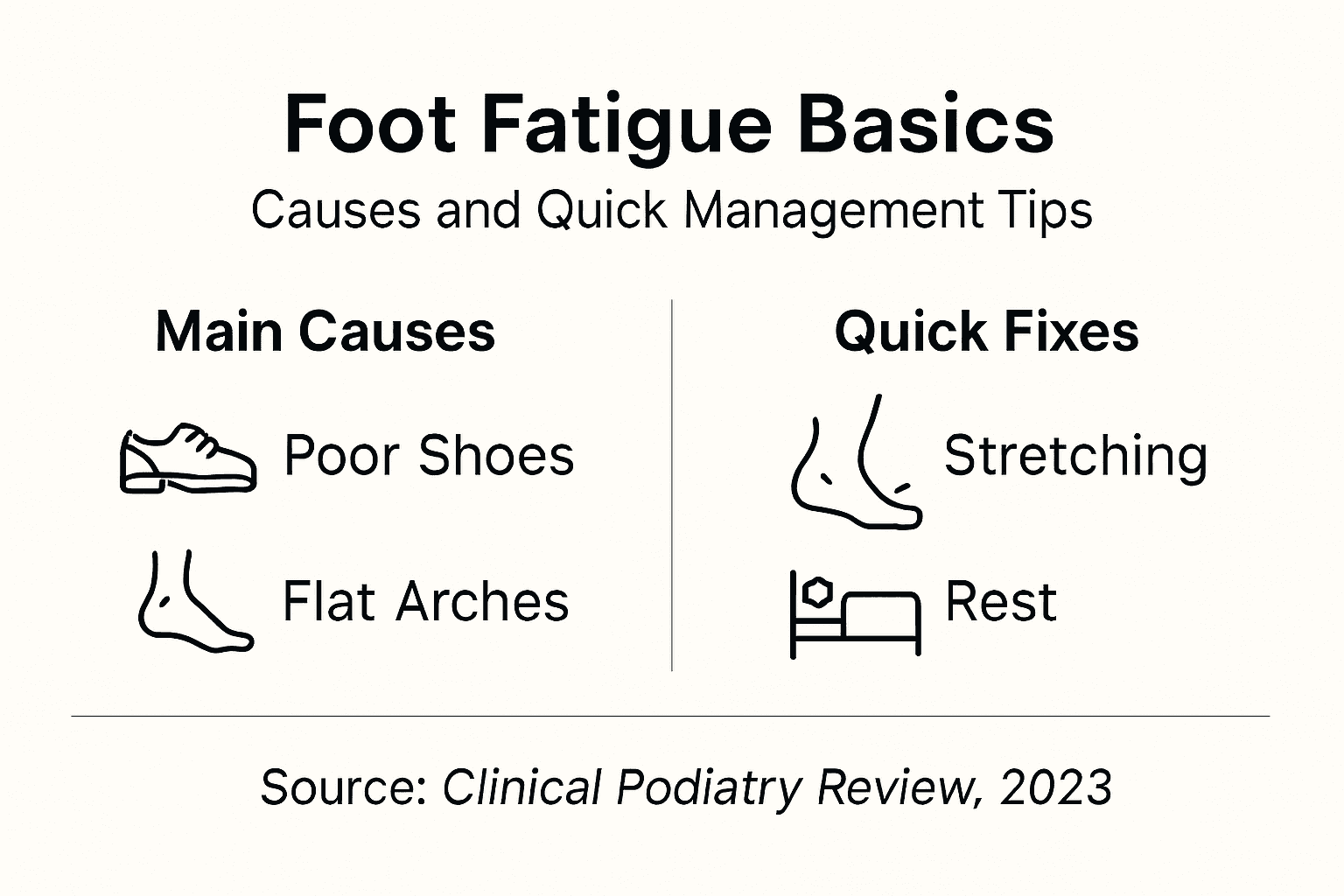
Lifestyle modifications represent another critical component of foot fatigue management. This includes implementing regular rest periods, maintaining a healthy body weight, and alternating between different types of physical activities to prevent repetitive strain. Individuals with sedentary occupations should incorporate movement breaks, while those with standing jobs should utilise compression socks and invest in ergonomic footwear that provides adequate support and cushioning.
A summary of practical strategies to help prevent and manage foot fatigue:
| Strategy Area | Example Action | Expected Benefit |
|---|---|---|
| Exercise | Regular toe curls | Strengthens foot muscles |
| Footwear Choice | Supportive insoles | Enhanced shock absorption |
| Lifestyle Modification | Scheduled movement breaks | Reduces sustained foot strain |
| Self-assessment | Weekly foot checks | Early detection of problems |
Pro tip: Conduct a weekly foot self-assessment, checking for changes in skin texture, temperature, and comfort to catch potential issues before they develop into more serious conditions.
Discover Footwear Designed to Combat Foot Fatigue and Boost Daily Comfort
If you are struggling with persistent foot fatigue caused by biomechanical challenges or improper support as discussed in the article, it is essential to choose footwear that actively supports your foot health. At YDA UK, you will find a curated selection of high-performance shoes engineered with advanced technologies that address key pain points like muscle exhaustion, plantar fascia strain, and poor shock absorption. These shoes combine style with comfort, helping to maintain foot stability and reduce fatigue throughout your day.

Take control of your daily comfort now by exploring our innovative footwear solutions specially designed to provide the support your feet need to stay energized. Start your journey towards healthier feet by visiting YDA UK today and experience how the right shoes make all the difference in preventing and managing foot fatigue.
Frequently Asked Questions
What are the common causes of foot fatigue?
Foot fatigue can be caused by various factors including biomechanical issues, problems with footwear, repetitive strain from physical activities, and underlying medical conditions such as arthritis or diabetes.
How can I prevent foot fatigue during physical activities?
Prevent foot fatigue by investing in supportive footwear, performing regular foot-specific strengthening and stretching exercises, alternating physical activities to avoid overuse, and ensuring proper rest periods.
What role does footwear play in foot fatigue?
Footwear significantly impacts foot fatigue by influencing how mechanical loads are distributed. Inadequately fitted or unsupportive shoes can exacerbate muscle exhaustion and increase the risk of injuries.
What signs should I look for to identify potential foot fatigue?
Signs of foot fatigue include a sensation of heaviness, sharp pain, or persistent discomfort in the feet, which may indicate underlying issues. Regular self-assessments can help detect changes early and prevent more serious conditions.
Recommended
- Role of Footwear in Reducing Fatigue: Key Insights – YDA UK
- Anti-Fatigue Footwear: Style and Health Benefits Explained – YDA UK
- Role of Footwear in Daily Comfort: Complete Guide – YDA UK
- 7 Key Advantages of Lightweight Footwear for Healthy Living – YDA UK
- How to Choose Christian Footwear for Faithful Style – Walk In His Footsteps