
supination in feet: causes, signs, and footwear solutions
TL;DR:
- Supination involves outward foot rolling, causing poor shock absorption and increased injury risk.
- High arches, calf tightness, and previous ankle injuries are common causes of supination.
- Proper footwear with cushioning and lifestyle adjustments can help manage symptoms and prevent damage.
Most people blame flat feet when their heels or ankles flare up, yet a surprisingly different culprit is often at work. supination explained affects a meaningful share of the adult population, quietly causing ankle sprains, shin pain, and worn-out shoe soles without ever announcing itself. If you have struggled with recurring discomfort despite trying cushioned insoles or arch supports designed for flat feet, supination may be the reason your efforts have fallen flat. This guide defines exactly what supination is, reveals who is most at risk, explains how to tell it apart from similar conditions, and gives you practical footwear and lifestyle strategies to move comfortably every day.
Table of Contents
- What is supination in feet?
- Common causes and risk factors for supination
- typical symptoms and related foot problems
- supination versus pronation and forefoot supinatus: understanding key differences
- practical tips: footwear choices and lifestyle adjustments for supinated feet
- Why most advice on supination misses the mark
- explore comfortable footwear solutions for supinated feet
- frequently asked questions
Key Takeaways
| Point | Details |
|---|---|
| Supination explained simply | Supination is when your foot rolls outward and weight is placed on the edge, leading to distinct symptoms and risks. |
| Risks of ignoring supination | Left untreated, it can cause pain, injury, and affect overall mobility. |
| Right footwear matters | Choosing shoes designed for supinated feet can relieve symptoms and improve daily comfort. |
| Diagnosis and prevention | Self-tests help identify supination, but expert advice ensures best management and prevention. |
What is supination in feet?
To understand why foot discomfort often persists despite common treatments, let’s clarify what supination truly means for your feet.
Supination, also called underpronation or oversupination, is the outward rolling of the foot during the gait cycle, where body weight travels primarily along the outer edge rather than distributing evenly or rolling slightly inward as in normal walking. It is essentially the opposite of overpronation, which is the excessive inward roll most people associate with flat feet.
During a healthy stride, the foot naturally supinates at push-off to create a rigid lever for propulsion. The problem begins when supination is excessive or sustained throughout the entire gait cycle, preventing the foot from absorbing shock properly. Think of it like a car tyre that is permanently tilted outward: the outer edge wears away rapidly while the rest of the tyre barely touches the road.
“The outer edge of the foot acts as the primary contact point in supination, meaning the foot’s natural shock-absorbing mechanism is significantly compromised with every step.”
Here is a quick comparison of the three main gait patterns:
| Feature | Normal gait | supination | overpronation |
|---|---|---|---|
| Weight distribution | Even across sole | outer edge of foot | Inner edge and arch |
| arch type common | Medium arch | High arch | Low or flat arch |
| shock absorption | Good | Poor | Often excessive |
| injury risk | Low | ankle sprains, stress fractures | shin splints, knee pain |
Research suggests high arches linked to supination appear in roughly 4 to 5 per cent of university students and 10 to 15 per cent of the broader adult population. That is a significant number of people who may be wearing entirely the wrong type of shoe for their foot mechanics. Understanding the foot-friendly features that work specifically for supinated feet begins with this foundational knowledge of what supination actually is.
Common causes and risk factors for supination
Having defined supination, it is important to uncover why it occurs and who is most at risk.
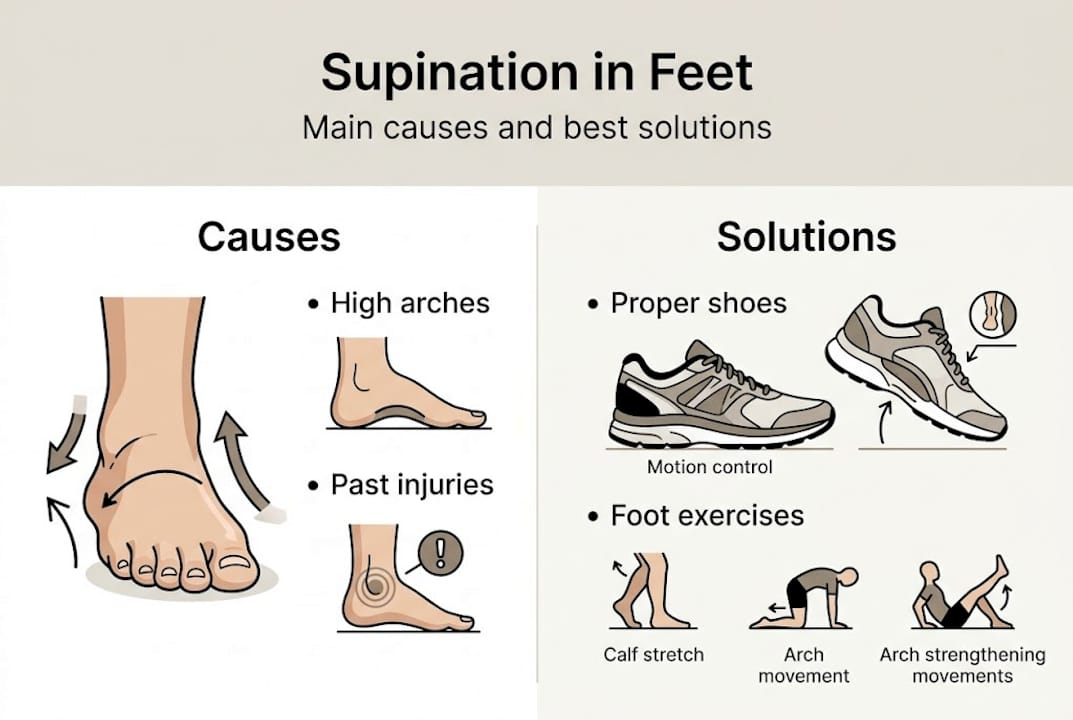
The single biggest biomechanical predisposition is a high arch, clinically known as cavus foot. high arches statistics confirm prevalence of around 4 to 5 per cent in university students and 10 to 15 per cent in adults. A high arch reduces the contact surface between the foot and the ground, making it structurally difficult to pronate normally, and so the foot compensates by rolling outward.
Beyond arch shape, several other factors raise your risk:
- tight calf muscles: When the gastrocnemius and soleus are chronically shortened, they restrict ankle dorsiflexion, pushing the foot to compensate by rolling laterally.
- Previous ankle injuries: A history of sprains stretches the ligaments on the outer ankle, making the foot more likely to roll outward again.
- Poor footwear choices: Motion-control or stability shoes, designed for overpronators, can actively force a supinating foot further outward by resisting the inward roll it lacks.
- hereditary factors: If one or both parents have high arches, the chance of inheriting the same foot structure is considerably higher.
- lifestyle and occupation: Jobs requiring long periods of standing on hard surfaces increase the mechanical load, making existing supination patterns more symptomatic.
Exploring footwear innovations designed around real foot mechanics can make a remarkable difference here, as can understanding your foot type before making footwear decisions. Learning how to maintain foot comfort through daily habits is equally valuable.
Pro tip: Place a damp piece of paper on a flat surface, wet the soles of your feet, and step onto it. A very narrow or incomplete arch print suggests a high arch and a potential tendency towards supination. For a more reliable result, examine the wear pattern on your current shoes: heavy outer-edge wear is a strong indicator.
typical symptoms and related foot problems
Understanding your risk of supination is one thing, but recognising its warning signs is crucial for taking action.
The symptoms of supination range from mildly inconvenient to genuinely debilitating. They commonly include:
- recurring ankle sprains: The outward tilt leaves the lateral ankle ligaments perpetually vulnerable.
- calluses and corns on the outer foot: constant pressure on the outer edge causes skin to thicken as a protective response.
- shin splints: The lower leg muscles work overtime to compensate for poor shock absorption.
- iliotibial band syndrome: lateral knee pain stemming from the biomechanical chain reaction travelling up from the foot.
- stress fractures: Poor shock absorption increases cumulative bone stress, particularly in the metatarsals.
- plantar fasciitis: The plantar fascia is strained differently in supinators but can still become inflamed.
According to clinical research, supination symptoms extend beyond the foot, with evidence associating supinated foot posture with reduced knee flexion range of motion and diminished strength in patients with knee osteoarthritis. This matters because it shows supination is not simply a foot problem; it is a full-body alignment issue.
Key statistic: People with supinated feet may experience up to twice the lateral ankle sprain rate compared with those with a neutral gait, according to current biomechanical assessments.
Learning to prevent foot injuries through better footwear and exercise habits is far more sustainable than repeatedly treating the consequences.
supination versus pronation and forefoot supinatus: understanding key differences
With typical symptoms in mind, it is vital to understand how supination compares with similar foot conditions to avoid missteps in treatment.
Supination and pronation are opposite movements, yet they are frequently confused, and mistreating one as the other can worsen outcomes. Here is a side-by-side breakdown:
| condition | direction of roll | arch type | key risk | orthotics needed |
|---|---|---|---|---|
| supination | outward | High | lateral ankle injuries | cushioning, flexibility |
| overpronation | inward | Low or flat | medial knee, shin | motion control, support |
| neutral gait | minimal | Medium | general wear | minimal correction |
| forefoot supinatus | inward forefoot tilt | Variable | soft-tissue strain | specialised orthotics |
forefoot supinatus is a condition that deserves special attention because it is frequently mistaken for structural supination. It is a flexible, acquired soft-tissue inversion of the forefoot relative to the rearfoot, often developing as a compensatory response to prolonged overpronation. Unlike rigid forefoot varus, forefoot supinatus explained describes a condition that is reducible when the foot is held in a neutral position, which means it requires a fundamentally different orthotic approach.
Why does this distinction matter? If a practitioner or a self-diagnosing individual treats forefoot supinatus as rearfoot supination, they will likely prescribe the wrong orthotic, potentially reinforcing the compensatory pattern rather than correcting it. This is one reason orthotic-friendly footwear matters so much: the shoe must accommodate the correction rather than fight it. Understanding footwear stability principles helps you select designs that work with an orthotic rather than against it.
practical tips: footwear choices and lifestyle adjustments for supinated feet
Now that you can identify various foot conditions, it is time to focus on practical ways to address supination in daily life.
For supinated feet, poor shock absorption and lateral overload are the primary mechanical problems. Every footwear and lifestyle decision should address these two concerns directly.
footwear features to prioritise:
- maximum cushioning: Look for thick, responsive midsoles that compensate for the foot’s reduced natural shock absorption.
- neutral or curved lasts: avoid straight-lasted shoes designed for overpronators; a curved last allows the foot to move more naturally.
- flexibility in the forefoot: A stiff forefoot prevents the natural toe-off mechanics needed by supinating feet.
- lightweight construction: Heavy shoes increase the ground impact force on an already-stressed outer foot.
- wide toe box: Extra room prevents the compression of the outer forefoot, where supinators place most of their load.
lifestyle adjustments that help:
- Regular calf stretching: Daily eccentric calf stretches reduce the ankle restriction that worsens supination.
- strength training for the peroneals: The peroneal muscles on the outer lower leg help counteract excessive outward rolling.
- surface awareness: Running or walking on cambered surfaces (roads banked to one side) amplifies supination; seek flat ground wherever possible.
Pro tip: If you experience persistent lateral foot pain or have had more than two ankle sprains in a year, consult a podiatrist before buying new footwear. Custom orthotics, combined with the right shoe design, will outperform off-the-shelf solutions every time. Browse the best shoes for problem feet and review a footwear selection guide to narrow your choices confidently.
Why most advice on supination misses the mark
With actionable solutions at hand, let us challenge some common beliefs around supination and foot care.
Most mainstream advice on supination boils down to “buy neutral shoes and stretch more.” That is not wrong, but it is damagingly incomplete. What the generic guidance consistently overlooks is that no two supinating feet are identical. The degree of arch height, the presence of forefoot supinatus, prior injury history, and even the activities a person does daily will determine what that person actually needs.
The uncomfortable truth is that much of the foot care industry still treats supination as a single, uniform condition. A supinator who runs long distances needs something fundamentally different from a supinator who stands on hard floors all day. Generic solutions paper over these differences.
What we at YDA believe is that essential features for healthy feet must be designed around real mechanics, not average assumptions. True foot comfort requires footwear engineered to respond to the individual’s specific load pattern, not a one-size-fits-all correction built for a marketing category.
explore comfortable footwear solutions for supinated feet
If you are ready to experience real comfort, tailored solutions are only a step away.
At YDA, we have built our range around the understanding that foot health is personal. Our YDA shoe technology prioritises cushioning, neutral flex, and load distribution for people whose feet need more than a standard shoe can offer.
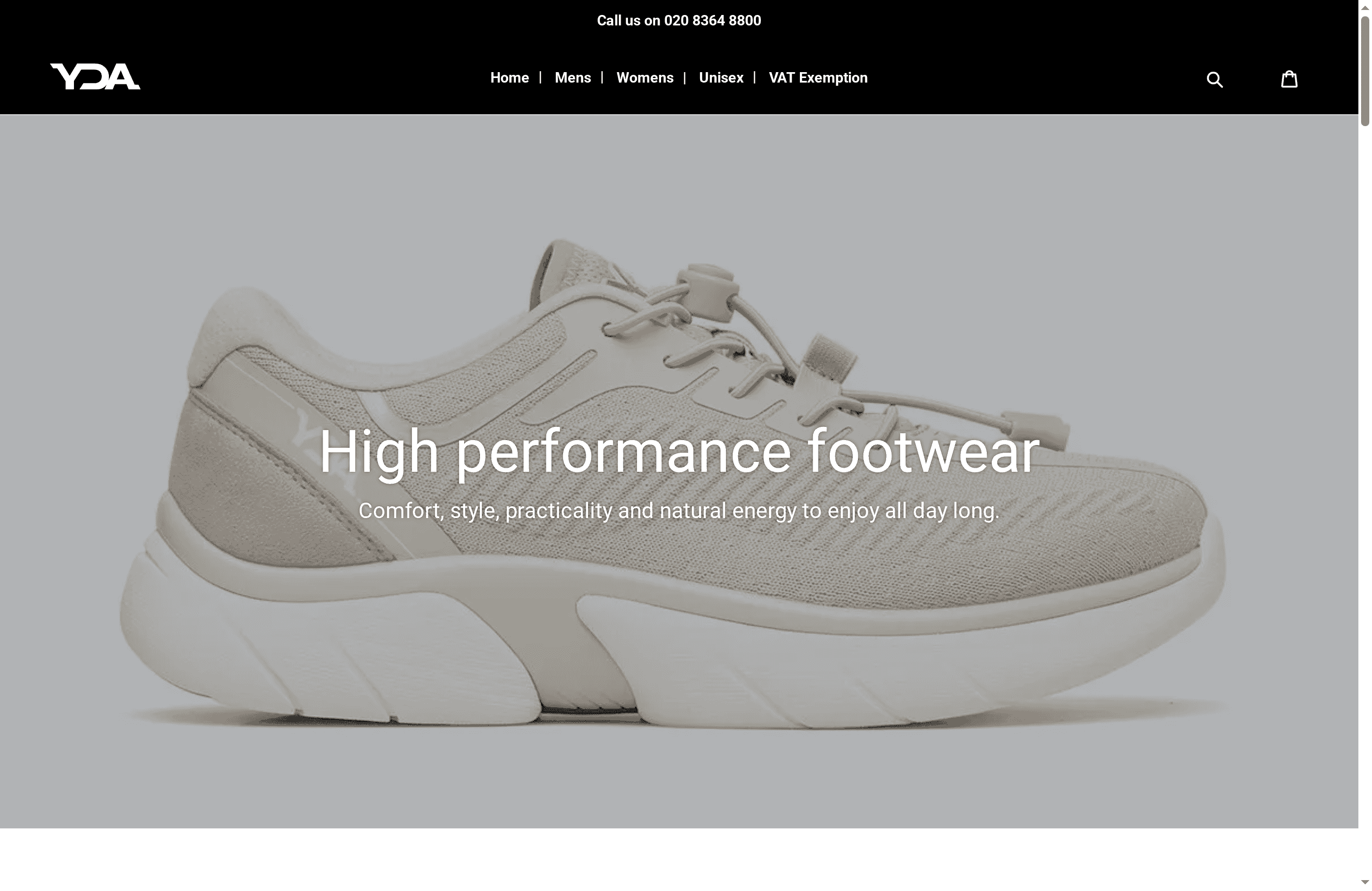
Whether you are managing supination, high arches, or general lateral foot discomfort, our shoes for problem feet are designed to work with your foot mechanics, not against them. Step into footwear that has been developed with genuine biomechanical understanding, and feel the difference a properly engineered shoe makes from the very first wear.
frequently asked questions
How can I tell if I have supination in my feet?
Check the outer edges of your shoe soles for excessive wear, as this is a reliable early indicator. A foot health professional can confirm with a gait analysis.
What are the main risks if supination is not addressed?
Ignoring supination increases your risk of ankle sprains, stress fractures, calluses, and knee pain over time. Research on supination symptoms also links it to reduced knee strength in susceptible individuals.
Is supination hereditary or can it develop over time?
Both are possible: high arches linked to supination are often inherited, but supination can also develop from previous injuries or habitual movement patterns.
Can the right footwear help manage supination symptoms?
Yes. Poor shock absorption is the core mechanical issue, and well-cushioned, neutral footwear directly addresses this, reducing discomfort and lowering injury risk significantly.