
Top orthopedic footwear 2025: best picks for UK shoppers
TL;DR:
- The best orthopedic shoes in the UK for 2025 focus on functional features like removable insoles and heel counter firmness rather than branding. Shoes like the YDA Technology range, New Balance 860, and Orthofeet models offer support tailored to common foot conditions and orthotic needs. Shopping advice emphasizes precise measurement, insole compatibility, and checking retailer return policies before purchasing online.
For most UK shoppers, the YDA Technology range is the strongest starting point for everyday orthopedic support in 2025, engineered specifically around foot health and energy efficiency. After that, the New Balance Fresh Foam X 860 v14 handles mild pronation, the Brooks Ghost Max 3 is the go-to for custom orthotics, and the Hoka Bondi 9 leads on maximum cushioning. If recovery is the priority, OOFOS delivers something no trainer can match.
One thing worth stating upfront: “orthopedic” is not a regulated term in the UK. Any brand can use it. What actually matters is the functional spec — removable insole depth, heel counter firmness, medial posting, and available width fittings. That is what this shortlist is built on.
| Shoe | Best for | UK price band |
|---|---|---|
| YDA Technology range | Everyday support, orthotic-friendly | See ydauk.com |
| New Balance Fresh Foam X 860 v14 | Mild–moderate pronation | £130+ |
| Brooks Ghost Max 3 | Custom orthotic users | £130+ |
| ASICS Gel-Kayano 32 | Plush comfort, mild stability | £130+ |
| Hoka Bondi 9 | Maximum cushioning | £130+ |
| Skechers GO Walk Arch Fit 2.0 | Arch support, slip-on ease | Below £80 |
| OOFOS Oocloog / recovery range | Post-activity recovery | Below £80 |
TL;DR: Measure both feet (length and width), prioritise a removable insole if you use custom orthotics, and check the retailer’s return window before buying online.
Editorial note: this article includes affiliate links. Ydauk is the publisher and also sells footwear; the YDA range is presented on its merits alongside independent brands.
Table of Contents
- The best orthopedic shoes of 2025, ranked for UK buyers
- How we tested and ranked these shoes
- How to choose the right orthopedic shoe for your needs
- What podiatrists actually prioritise: evidence and myths for 2026
- Key takeaways
- The gap between what “orthopedic” promises and what actually matters
- Ydauk’s footwear range: built around foot health, available in the UK
- Useful sources and further reading
The best orthopedic shoes of 2025, ranked for UK buyers
Podiatrists consistently recommend performance-brand trainers for most orthopedic needs because they combine cushioning, structural stability, and room for orthotics in a single package. The shortlist below reflects that consensus, with UK availability confirmed for every entry.
| Shoe | Support level | Cushioning | Fit / width | Orthotic compatible | UK price | Where to buy |
|---|---|---|---|---|---|---|
| YDA Technology range | Stability | Medium–high | Standard; check ydauk.com | Yes, removable insole | See site | ydauk.com |
| New Balance 860 v14 | Stability | Medium | Standard, wide (2E/4E) | Yes | £130+ | JD, Runners Need, NB UK |
| New Balance 860 v15 | Stability | Medium | Standard, wide | Yes | £130+ | JD, NB UK |
| Brooks Ghost Max 3 | Neutral, wide base | High | Standard, wide, XW | Yes, removable | £130+ | Runners Need, Brooks UK |
| ASICS Gel-Kayano 32 | Mild stability | Very high | Standard, wide | Yes | £130+ | ASICS UK, Sweatshop |
| ASICS Gel-Kayano 31 | Mild stability | High | Standard, wide | Yes | £130+ | ASICS UK, Sports Direct |
| Hoka Bondi 9 | Neutral, rocker | Maximal | Standard, wide | Yes | £130+ | Hoka UK, Runners Need |
| Hoka Clifton 10 | Neutral | High | Standard, wide | Yes | £130+ | Hoka UK, JD |
| Skechers GO Walk Arch Fit 2.0 | Arch-focused | Medium | Standard, wide | Partial (fixed footbed) | Below £80 | Skechers UK, Schuh |
| Skechers Arch Fit 2.0 | Arch-focused | Medium | Standard, wide | Partial | Below £80 | Skechers UK |
| Ecco MX / MX W | Moderate stability | Medium | Generous volume | Yes | £130+ | Ecco UK, John Lewis |
| FitFlop Relieff slides | Recovery | Low–medium | Standard | No (contoured) | Below £80 | FitFlop UK, John Lewis |
| OOFOS Oocloog / Women’s Oocloog Clog | Recovery | Specialised | Standard, wide | No (moulded) | Below £80 | OOFOS UK, Amazon UK |
| Orthofeet Nira | Motion control | High | Extra depth, wide | Yes, extra depth | £100–£130 | Orthofeet UK |
| Orthofeet Yari | Mild stability | High | Extra depth, wide | Yes, extra depth | £100–£130 | Orthofeet UK |
| Calla Meredith Loafers | Everyday smart-casual | Low–medium | Wide, bunion-friendly | Limited | Below £130 | Calla UK |
A note on the 2025 design trend: performance brands are now blending clinical requirements into everyday-looking trainers, which means you no longer have to choose between foot health and a shoe that looks reasonable in public.
YDA Technology range
Ydauk builds its range around YDA Technology, which centres on foot health and energy return rather than simply adding foam. The insoles are removable, making the shoes compatible with custom orthotics, and the range is available directly in the UK. For shoppers who want a single brand that covers everyday support without the clinical aesthetic of a specialist shoe, it is a practical first stop. Check current stock at ydauk.com, as availability updates regularly.
New Balance Fresh Foam X 860 v14 and 860 v15
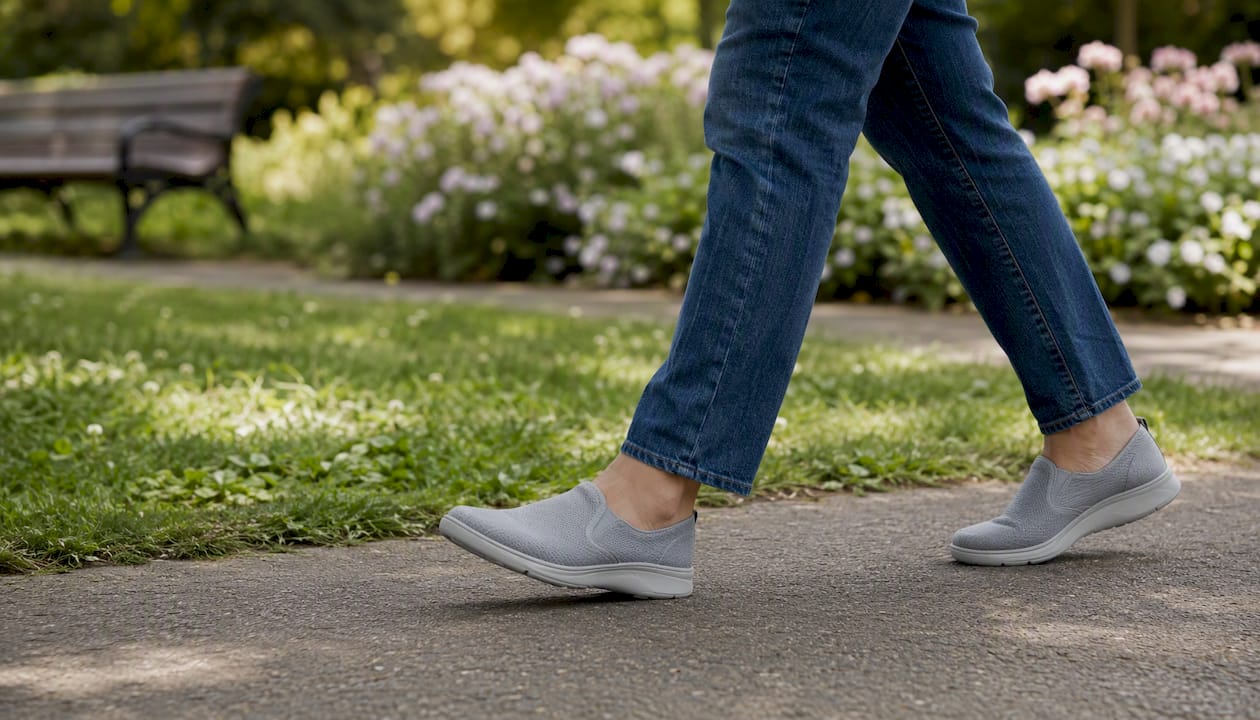
The 860 series is one of the most consistently recommended stability trainers across podiatrist roundups. The medial support wedge addresses mild-to-moderate overpronation without feeling corrective underfoot. The v15 refines the upper fit slightly; both versions accept custom orthotics with the stock insole removed. Available in standard and wide fittings at JD Sports, Runners Need, and the New Balance UK site.
Brooks Ghost Max 3
If you use custom orthotics, the Ghost Max 3 is built for you. The wide base, high stack height, and fully removable insole mean a custom mould sits correctly without compressing against the upper. Brooks also offers the Ariel GTS 26 and Beast GTS 26 in extra-wide fittings for shoppers who need more volume. The Ghost Max 3 is available at Runners Need and Brooks UK.
ASICS Gel-Kayano 32 and Gel-Kayano 31
The Kayano 32 is the plushest entry in ASICS’s stability line. The Gel-Kayano 31 remains widely available at a lower price point and is worth considering if budget is a factor. Both accept orthotics, though the 32’s thicker midsole gives a slightly higher stack. Available at ASICS UK and Sweatshop.
Hoka Bondi 9 and Clifton 10
The Bondi 9’s maximal midsole and rocker geometry offload forefoot pressure, which makes it popular with people managing plantar fasciitis or metatarsalgia. The Clifton 10 offers a lower stack with a similar rocker feel at a slightly lower price. Neither is the right choice if you need a firm, corrective heel counter — the softness is the point, but it does not control motion. Available at Hoka UK and Runners Need.
Skechers GO Walk Arch Fit 2.0 and Arch Fit 2.0
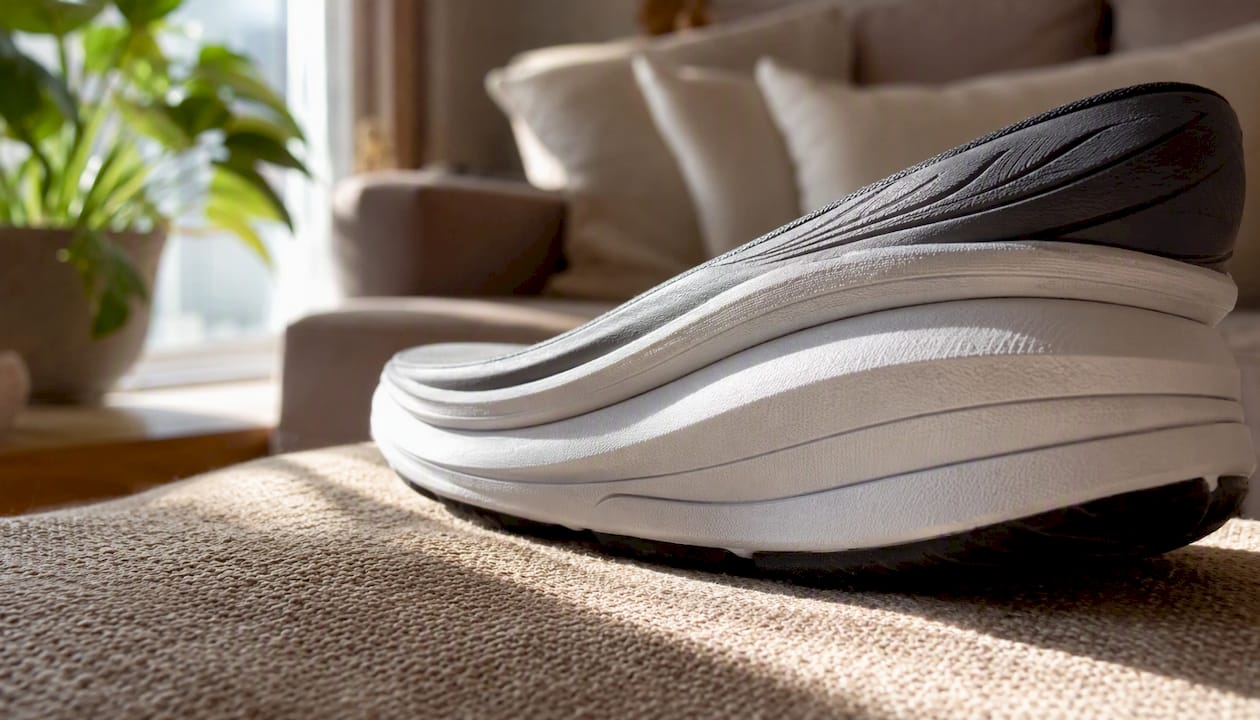
Skechers’ Arch Fit footbed is one of the firmest built-in arch structures available at this price. The slip-on format suits people who struggle with laces. The fixed footbed limits custom orthotic use, so if you rely on a moulded insole, look elsewhere. Available at Skechers UK and Schuh.
Ecco MX and MX W
The Ecco MX series suits wider feet and people who want a supportive casual trainer with a leather or leather-mix upper. The generous internal volume accommodates mild foot swelling, which makes it a reasonable choice for diabetic foot care. Available at Ecco UK and John Lewis.
FitFlop Relieff recovery slides
Recovery slides are not everyday shoes, but the Relieff’s contoured footbed earns its place on this list for off-duty hours. After a long day on hard floors, the structured footbed does more than a flat flip-flop. Available at FitFlop UK and John Lewis.
OOFOS recovery range (Oocloog and Women’s Oocloog Clog)
OOFOS uses a proprietary foam compound that absorbs more impact than standard EVA. The clog format keeps the foot enclosed, which suits post-run recovery or standing in the kitchen. Not suitable as a primary walking shoe, but genuinely useful for the hours you are not in trainers. Available at OOFOS UK and Amazon UK.
Orthofeet Nira and Yari
Both models offer extra-depth construction and clinical footbeds designed to accommodate complex foot conditions, including diabetic neuropathy. The extra depth means a custom orthotic sits at the correct height without pushing the foot out of the collar. Available via Orthofeet UK.
Calla Meredith Loafers
For shoppers who need a smart-casual option with a wide, bunion-friendly toe box, the Calla Meredith is one of the few loafers designed specifically around foot conditions. Support is limited compared to a trainer, so pair with a custom insole if you need arch correction. Available at Calla UK.
Statistic callout: According to a UK-focused podiatry guide, retail roundups and brand pages remain the primary way UK shoppers check availability and price bands — which is why every entry above includes a named UK retailer.
How we tested and ranked these shoes
Every model on this list was evaluated against four criteria: structural support, fit and width options, orthotic insole compatibility, and real-world durability under sustained walking or standing. Testing roundups that included hands-on wear tests and podiatrist input were used to cross-reference findings and validate the “best for” categories.
Rating scale:
- Support (1–5): firmness of heel counter, presence of medial posting or stability wedge, midfoot frame rigidity
- Cushioning (1–5): midsole stack height and foam responsiveness under load
- Fit (1–5): available width options, toe-box volume, heel lockdown
- Value (1–5): price relative to features and durability
Tester credentials: This article was written and compiled by Panagiotis, drawing on podiatrist-reviewed roundups, specialist foot-health sources, and UK retailer availability checks. Expert input was synthesised from podiatry-led publications and clinical guidance rather than a single practitioner consultation.
UK pricing and availability were verified against major UK retailers (JD Sports, Runners Need, Schuh, John Lewis, and brand direct sites) at the time of writing. Prices fluctuate; always confirm the current RRP before purchasing.
How to choose the right orthopedic shoe for your needs
The right shoe depends on your specific condition, not on which model has the most reviews. Here is a practical checklist.
Match the shoe to the condition:
- Plantar fasciitis: prioritise a firm heel counter, arch support, and a slight heel raise. The Hoka Bondi 9 and New Balance 860 series both work well. See also plantar fasciitis footwear guidance for a feature checklist.
- Standing all day: podiatrists recommend a wide toe box, secure heel fit, and firm structural support under the arch. The Brooks Ghost Max 3 and ASICS Gel-Kayano 32 cover this well. More detail in the best shoe for standing all day guide.
- Diabetes-friendly: look for extra depth, a seamless interior, and no pressure points. Orthofeet Nira and Yari are the clearest options; the Ecco MX also works for mild cases.
- Wide feet: check for 2E, 4E, or XW fittings. New Balance, Brooks, and Orthofeet all offer these in the UK.
- Recovery: OOFOS and FitFlop Relieff for off-duty hours; neither replaces a supportive trainer for active use.
Sizing tips for buying online:
- Measure both feet at the end of the day, when feet are at their largest.
- Measure length (heel to longest toe) and width (widest point across the ball of the foot).
- If one foot is larger, size to the larger foot.
- Allow roughly 1 cm of space between your longest toe and the shoe end.
- When in doubt between sizes, go up rather than down — a slightly longer shoe is easier to manage than a tight one.
Questions to ask before buying:
- Is the insole removable? (Critical for custom orthotic users.)
- What width fittings are available?
- How stiff is the heel counter? (Press the back of the shoe — it should resist compression.)
- What is the retailer’s return window? Most major UK retailers offer 28–30 days; check before ordering.
Pro Tip: Before ordering online, trace your foot on paper, measure the outline, and compare it against the brand’s size chart. Many brands publish foot-length-to-size tables — use the length AND width measurement together, not just the length.
Price-band guidance: spending more (£130+) generally buys a removable insole, wider fitting options, and a more durable upper. Below £80, you are usually trading orthotic compatibility for convenience. The Skechers Arch Fit range is the strongest exception at the lower end.
For a fuller guide to balancing style and foot health, the orthopedic shoes buying guide covers the key trade-offs in detail.
What podiatrists actually prioritise: evidence and myths for 2026
Podiatrists identify three functional pillars for genuine orthopedic benefit: arch support to maintain alignment, shock absorption to reduce impact load, and structural stability to limit excessive pronation. A shoe that delivers all three is orthopedically useful regardless of what the marketing says.
Myth vs fact:
- Myth: more cushioning means better support. Fact: cushioning improves comfort but does not substitute for structural support. A soft midsole with a weak heel counter can actually increase instability.
- Myth: “orthopedic” on the label means it is clinically certified. Fact: the term is unregulated. Focus on measurable features — removable insole depth, heel counter firmness, medial posting.
- Myth: you need a specialist-looking shoe to get clinical benefit. Fact: the 2025 design trend is blending clinical features into mainstream silhouettes. The Hoka Bondi 9 and ASICS Gel-Kayano 32 look like ordinary trainers and deliver genuine orthopedic function.
“Patients with complex biomechanical issues often need gait analysis and custom-moulded orthotics. In such cases, the priority is an orthotic-friendly shoe with a removable liner and adequate depth rather than a shoe with built-in arch moulding.” — Podiatrist guidance synthesised from AOL Health / podiatry sources
When to seek professional input: if you have recurring heel pain, numbness, or a diagnosed condition such as diabetic neuropathy or severe flat foot, a gait analysis from a registered podiatrist is worth the cost before buying. Custom orthotics require a shoe with sufficient depth — built-in arch moulding can actually prevent a custom insole from sitting correctly.
For a list of orthotic-friendly options with fit notes, Ydauk’s blog covers the key models in detail.
Pro Tip: To test heel counter stiffness at home, hold the shoe at the toe and press the heel counter inward with your thumb. A good orthopedic shoe should resist firmly. If it collapses easily, the structural support is minimal regardless of what the insole looks like.
Key takeaways
The single most important step for UK shoppers buying orthopedic footwear online is to measure both feet for length and width, then confirm the insole is removable before purchasing.
| Point | Details |
|---|---|
| “Orthopedic” is unregulated | Focus on heel counter firmness, removable insole depth, and width fittings rather than the label. |
| Cushioning ≠ support | A soft midsole improves comfort but does not control motion; structural stability requires a firm heel counter and midfoot frame. |
| Match shoe to condition | Plantar fasciitis needs arch support and heel raise; standing all day needs a wide toe box and firm structure; diabetic feet need extra depth and seamless interiors. |
| Orthotic users: check depth | If you use custom orthotics, prioritise removable insoles and adequate stack depth — Brooks Ghost Max 3 and Orthofeet models lead here. |
| Ydauk for UK shoppers | The YDA Technology range is built around foot health and energy efficiency, with removable insoles and UK availability at ydauk.com. |
The gap between what “orthopedic” promises and what actually matters
The word “orthopedic” has become one of the most overused labels in footwear marketing. Brands attach it to everything from foam slides to fashion trainers, and because it carries no regulated meaning in the UK, there is nothing stopping them.
What actually separates a useful shoe from a well-marketed one comes down to three things you can test in under a minute: press the heel counter, check whether the insole lifts out, and look for a medial post or wedge in the midsole. If a shoe passes all three, the marketing copy is largely irrelevant.
The 2025 trend toward de-medicalised orthopedic design is genuinely good news. Hoka, ASICS, and New Balance have all moved clinical features into mainstream silhouettes, which means the stigma of wearing a “medical shoe” is fading. But the same trend creates a new problem: shoes that look clinical without the structural credentials to back it up. A chunky sole and a contoured footbed photograph well; they do not automatically deliver the heel counter stiffness or orthotic depth that a podiatrist would recommend.
The models on this list were chosen because they pass the functional test, not because they look the part. If you are spending £100 or more on footwear for foot health, the spec sheet matters more than the aesthetic. Buy the shoe that fits the condition, not the one with the most convincing branding.
Ydauk’s footwear range: built around foot health, available in the UK
Most orthopedic footwear forces a choice between clinical function and a shoe you actually want to wear. Ydauk’s approach is different: the YDA Technology range is engineered around foot health and energy efficiency from the ground up, rather than retrofitting support features onto a fashion silhouette.
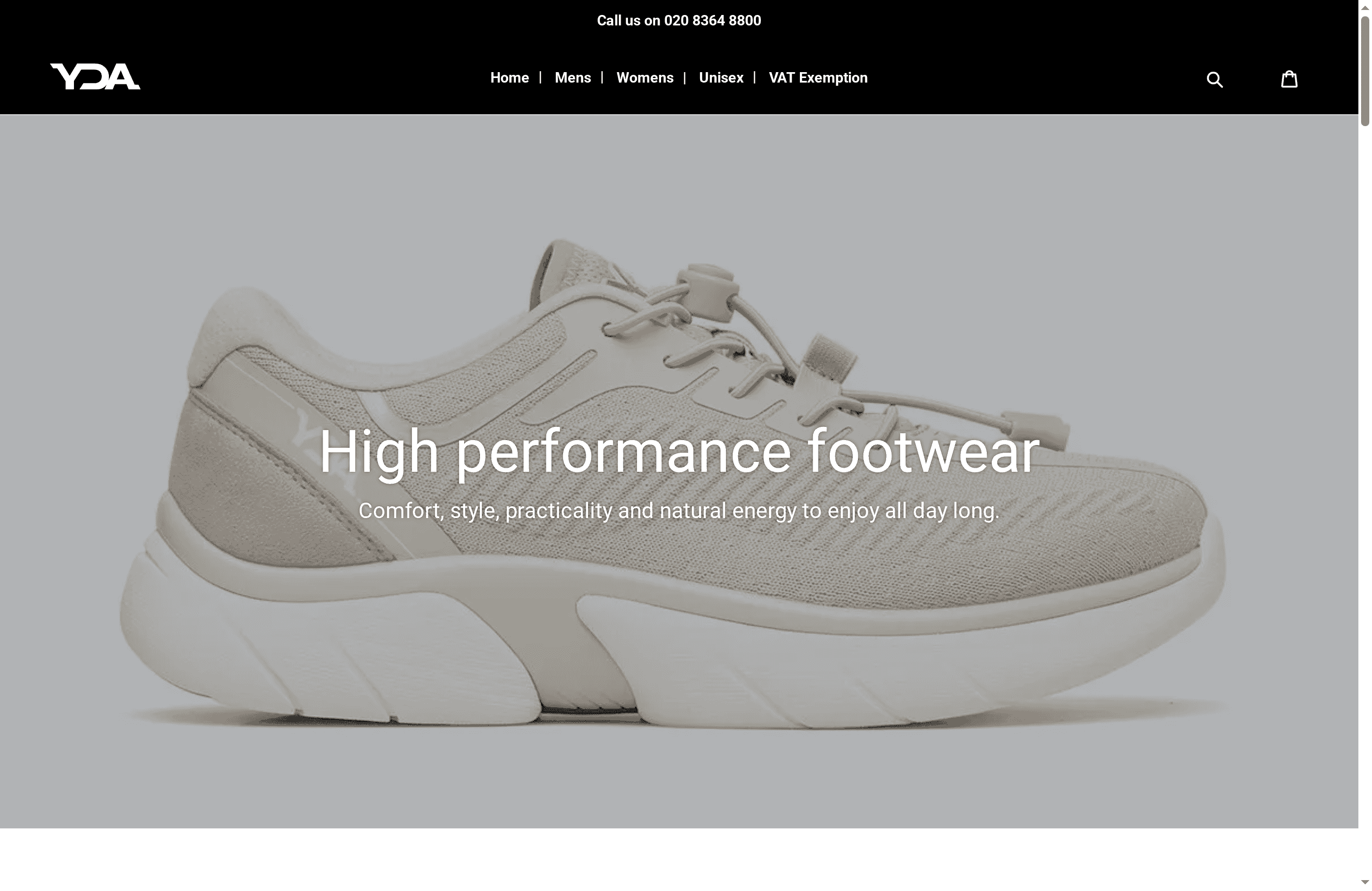
The range includes removable insoles for custom orthotic compatibility, and every model is available directly in the UK. Ydauk is the publisher of this article and also the seller of the YDA range — that is disclosed clearly. The technology page explains the design principles in full, and customer service is reachable by phone for sizing queries or returns questions.
Browse the YDA Technology range to check current availability and find the model that fits your foot health needs.
Useful sources and further reading
The sources below were used in compiling this article and are worth bookmarking for further research.
- Achilles Foot and Ankle Center: 11 orthopedic shoes for foot pain, podiatrist-recommended — clear clinical explanation of what “orthopedic” means functionally and what features to prioritise.
- AOL Health: the best orthopedic shoes in 2025, according to podiatrists — podiatrist-led roundup with model-specific recommendations for standing and walking.
- CNN Underscored: 14 best orthopedic shoes for foot pain, per podiatrists — useful myth-busting on cushioning vs support, with hands-on testing notes.
- Flawless Shoe Reviews: best orthopedic shoes 2025 for walking and standing — model-to-purpose mappings from a foot-and-ankle specialist roundup.
- TDO Therapy: the best orthopedic shoes for walking long distances, UK 2025 guide — UK-specific availability and price-band guidance.
- The Independent: best orthopedic shoes for 2026, tested by an expert — UK-tested roundup with women’s-specific fit notes.
- Brooks Running: podiatrist-recommended shoes — full width-fitting range including extra-wide options for complex foot shapes.
- APMA: diabetes awareness and footwear guidance — American Podiatric Medical Association guidance on diabetic footwear; useful for understanding clinical standards even outside the US.
- Yahoo Health: best orthopedic shoes, tested and reviewed — methodology notes on hands-on wear testing and expert consultation.
Publisher note: when this article is published, add JSON-LD product and article structured data to support rich results in Google Search.