
Shoe maintenance workflow: your 2026 practical guide
TL;DR:
- Maintaining shoes through regular cleaning, conditioning, polishing, and proper storage extends their lifespan and preserves performance. Consistent micro-habits like using a horsehair brush after each wear and rotating multiple pairs help prevent damage and moisture buildup. Proper care routines, combined with moisture-absorbing shoe trees and avoiding harsh chemicals, ensure footwear remains durable and well-shaped over time.
A shoe maintenance workflow is a systematic routine of cleaning, conditioning, polishing, waterproofing, and proper storage that preserves footwear quality, comfort, and performance over time. Most shoes fail not from heavy use but from neglect between wears. The right upkeep routine, built around tools like horsehair brushes, leather conditioner, and cedar shoe trees, can double the working life of a quality pair. This guide gives you a step-by-step footwear maintenance framework built on 2026 expert recommendations, designed to fit into real daily life without fuss.
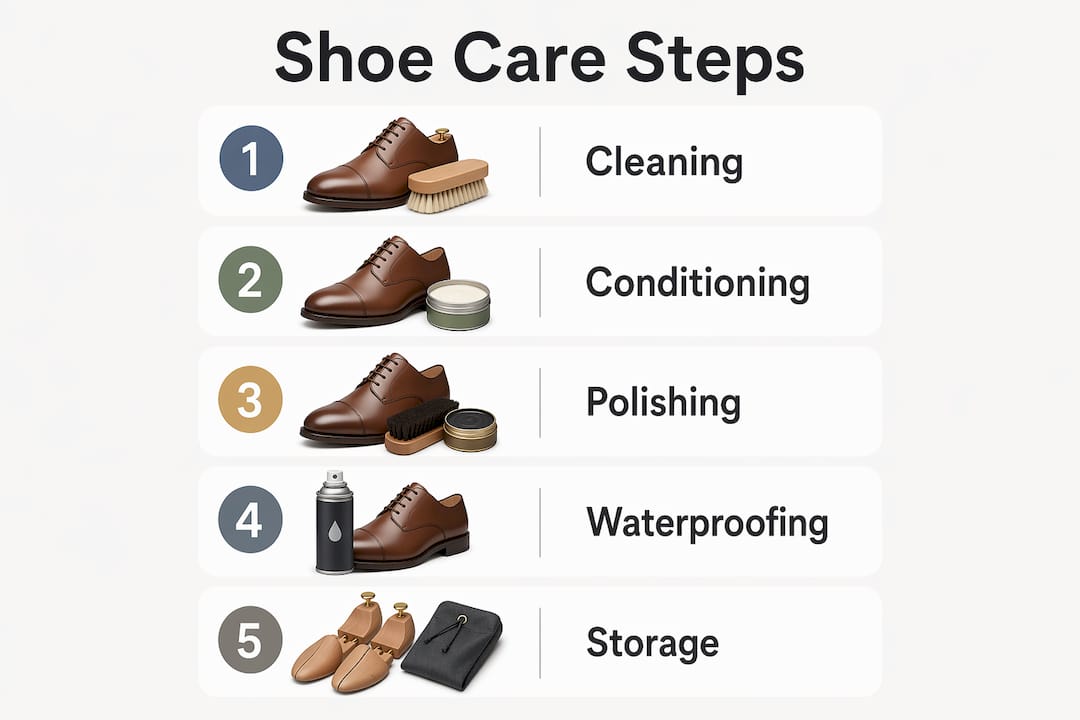
What tools do you need for a shoe maintenance workflow?
The right tools make the difference between a five-minute care session and a frustrating hour of improvisation. Every effective shoe care kit starts with a small, organised set of purpose-built items.
| Tool | Purpose | Frequency of Use |
|---|---|---|
| Horsehair brush | Removes surface dirt and buffs polish | After every wear |
| Soft cloths | Applies and removes cleaner or conditioner | Weekly or as needed |
| Leather cleaner | Lifts grime without stripping natural oils | Weekly |
| Leather conditioner | Restores flexibility and prevents cracking | Every 6–8 weeks |
| Cream or wax polish | Restores colour and adds surface protection | Monthly |
| Waterproofing spray | Repels water and stains | Every 4–6 weeks |
| Cedar shoe trees | Absorbs moisture and holds shape | After every wear |
A horsehair brush is the single most versatile item in the kit. It removes loose dirt before it grinds into the surface, and it buffs polish to a clean finish without scratching. Cedar shoe trees serve a dual purpose: they absorb the moisture your feet deposit during wear, and they push out creases before they become permanent. Leather cleaner and conditioner work as a pair. The cleaner removes dirt; the conditioner replenishes the oils that keep leather supple.
Pro Tip: Set up a dedicated shoe care station near your front door or wardrobe. Keep your brush, cloths, and shoe trees together in a small tray or box. When everything is within arm’s reach, you will actually use it.
How should you build a daily and weekly cleaning routine?
Consistent micro-habits form the primary driver of footwear longevity. A 30-second wipe-down after each wear prevents the kind of dirt build-up that eventually requires aggressive cleaning and risks damaging the material. Small, regular actions are always easier than infrequent deep restoration sessions.
Here is a practical daily and weekly cleaning routine to follow:
- After every wear: Use a horsehair brush or dry cloth to remove surface dirt and dust. Insert cedar shoe trees while the shoes are still warm to maximise moisture absorption.
- Every two to three days: Check the insoles for odour or moisture. Remove them and let them air for a few hours if needed.
- Weekly: Wipe down the uppers with a damp soft cloth. For leather, follow with a small amount of leather cleaner applied in circular motions. For suede, use a dedicated suede brush in one direction only.
- After wet exposure: Stuff the shoes with newspaper and allow them to dry naturally at room temperature. Rotate the newspaper every few hours to speed moisture removal.
- Monthly: Inspect the soles, stitching, and heel tips for early wear. Catching minor damage early prevents costly repairs later.
Material matters enormously when you decide how to clean shoes. Leather tolerates mild aqueous cleaners well. Suede requires a dry brush and specialist products only. Canvas and mesh sneakers can handle a gentle hand-wash with mild soap, but machine washing leather or suede causes warping, shrinkage, and cracking. Machine agitation is only appropriate for some canvas or mesh styles.
A common mistake is over-cleaning. Applying cleaner more than once a week strips natural oils from leather and weakens the finish. Another error is using household products like washing-up liquid or bleach. These harsh chemicals weaken structural bonds and damage dyes, particularly on premium materials.
Pro Tip: If your schedule is tight, the single most effective micro-habit is brushing dirt off immediately after you remove your shoes. It takes under 30 seconds and prevents the majority of long-term surface damage.
What role do conditioning, polishing, and waterproofing play?
These three steps are the protective layer of any shoe care routine. Cleaning removes what should not be there. Conditioning, polishing, and waterproofing replace and reinforce what should.
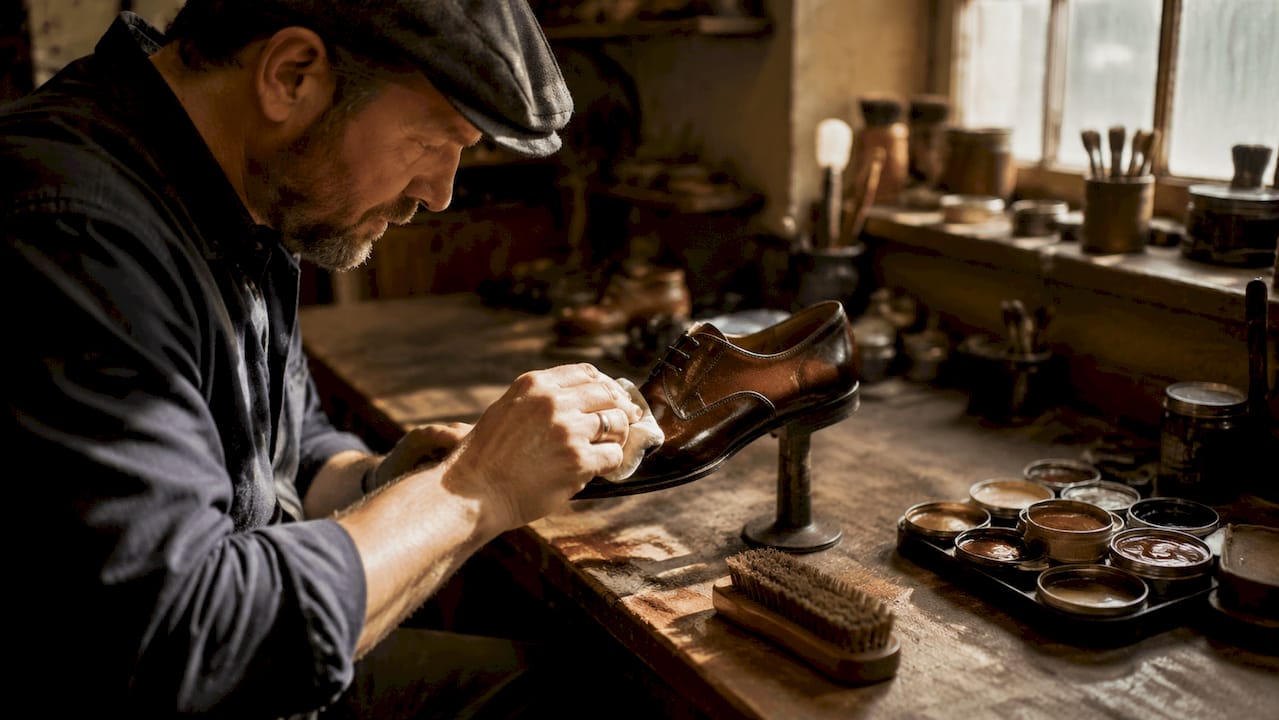
Conditioning is the most neglected step in most people’s shoe repair workflow. Leather loses its natural oils through wear, heat, and cleaning. Without replenishment, it dries out and cracks. Leather conditioning every 6–8 weeks is the standard interval for moderate use. If you wear the same pair daily in demanding conditions, that interval drops to every 2–3 weeks. Apply conditioner with a soft cloth in small circular motions, allow it to absorb for ten minutes, then buff off any excess.
Polishing serves two purposes: it restores colour depth and adds a thin protective layer to the surface. Cream polish is best for nourishing the leather and blending scuffs. Wax polish goes on top to add shine and water resistance. Always apply in thin coats. A thick application sits on the surface, cracks, and looks worse than no polish at all.
Waterproofing is the step most people skip until it is too late. Reapplying waterproofing spray every 4–6 weeks is the standard recommendation. In wet or snowy climates, every 2–3 weeks is more appropriate. Waterproofing does not just repel rain. It also blocks salt stains, which are particularly destructive to leather and suede in winter.
Key pitfalls to avoid in this phase:
- Skipping conditioning because the shoes “look fine.” Surface appearance does not reflect internal dryness.
- Applying polish over dirty leather. Always clean first, condition second, polish third.
- Using the same waterproofing product on suede and smooth leather. Each material requires a formulation designed for it.
- Over-polishing, which builds up a waxy residue that dulls the finish and traps dirt.
How can you store and rotate shoes to maximise their lifespan?
Storage and rotation are the two most underrated elements of a footwear maintenance guide. Most shoe damage accumulates not during wear but during the hours the shoes sit in the wrong conditions.
Rotating at least three pairs with 24–48 hours of rest between wears is the standard recommendation from shoe care specialists. That rest period allows moisture to fully evaporate from the insole and lining. A single pair worn every day never fully dries out, which accelerates the breakdown of adhesives, foam, and leather fibres. The table below shows the difference rotation makes over time.
| Factor | Single Pair Daily | Three-Pair Rotation |
|---|---|---|
| Moisture evaporation | Incomplete between wears | Full 24–48 hours per pair |
| Sole compression recovery | Minimal | Restored between wears |
| Estimated lifespan | 1–2 years | 3–5 years |
| Odour build-up | Rapid | Slow |
| Shape retention | Poor without shoe trees | Strong with cedar shoe trees |
Cedar shoe trees inserted within one hour of removing your shoes actively maintain shape and absorb moisture. Inserting them while the shoes are still warm maximises their effectiveness, as the cedar draws out moisture before it settles into the leather. This single habit can extend leather shoe life by up to three years.
For soaked shoes, stuff with newspaper and dry naturally at room temperature. Direct heat from radiators or hairdryers causes leather to crack and adhesives to fail. Rotate the newspaper every few hours until the shoes are fully dry.
Annual professional inspections catch early wear on stitching, heel tips, and welts before minor issues become expensive structural damage. A cobbler visit once a year costs very little and can add years to a quality pair.
You can read more about the benefits of shoe rotation for foot health and why it matters beyond just the shoes themselves.
What are the most common shoe care mistakes to avoid?
Even experienced shoe owners repeat the same errors. Knowing what not to do is as important as knowing the correct technique.
“The fastest way to ruin a quality shoe is not heavy wear. It is the wrong cleaning product applied once too often.” This principle applies to leather, suede, and canvas alike.
Avoid these mistakes in your shoe upkeep routine:
- Using household chemicals. Products like bleach, acetone, or washing-up liquid strip dyes and weaken the adhesives that hold the sole to the upper. Use only material-specific cleaners designed for footwear.
- Leaving stains untreated. Clean stains within 24 hours of occurrence. After that, they set into the material and require far more aggressive treatment.
- Machine washing leather or suede. Hand cleaning is the safest method for maintaining material integrity across leather, suede, and knit shoes.
- Drying with direct heat. A radiator or hairdryer will crack leather and warp synthetic materials. Always dry at room temperature.
- Neglecting laces and insoles. Laces carry bacteria and odour. Wash them separately by hand every two weeks. Replace insoles every six months or when they lose their cushioning.
- Rushing suede care. Suede requires patience. Brush gently in one direction with a suede brush. Never rub aggressively or apply water directly.
For a deeper look at expert footwear care tips that cover these and other common pitfalls, Ydauk’s blog has a dedicated resource worth bookmarking.
Key takeaways
A consistent shoe maintenance workflow, built on daily micro-habits, correct conditioning intervals, and proper rotation, is the single most effective way to extend footwear lifespan and comfort.
| Point | Details |
|---|---|
| Daily micro-habits matter most | A 30-second brush after each wear prevents the majority of long-term surface damage. |
| Condition leather on schedule | Apply conditioner every 6–8 weeks, or every 2–3 weeks for daily heavy use. |
| Rotate at least three pairs | Allow 24–48 hours of rest between wears to let moisture fully evaporate. |
| Insert cedar shoe trees promptly | Place them within one hour of removal, while shoes are still warm, for best results. |
| Avoid harsh chemicals and direct heat | Use material-specific products only, and always dry shoes at room temperature. |
Why i think most people overcomplicate shoe care
Most shoe care advice I have read treats the process like a weekend project. In practice, the people whose shoes last longest are not spending hours polishing. They are spending thirty seconds after every wear. That is the real insight that most footwear guides bury at the bottom.
The habit that changed my own approach was inserting cedar shoe trees the moment I took my shoes off. It felt fussy at first. Within a month, I noticed the creasing on my leather Oxfords had almost stopped progressing. The shoes simply held their shape better. That one habit, costing nothing beyond the initial purchase of the shoe trees, did more than any deep-clean session.
The other thing I would push back on is the idea that conditioning is optional for shoes that “look fine.” Leather dries from the inside out. By the time you see cracking on the surface, the damage is already significant. Conditioning on a schedule, not on appearance, is the correct approach.
Integrating shoe care into your daily routine does not require discipline. It requires proximity. Keep your brush and shoe trees where you take your shoes off. That is genuinely all it takes to build the habit. The cost savings are real: a quality pair maintained properly outlasts three poorly maintained pairs at the same price point.
— Panagiotis
How ydauk’s technology supports your shoe care routine

Maintaining your shoes well only pays off when the shoes themselves are worth maintaining. Ydauk designs performance footwear with foot health and durability at the centre of every product. The YDA Technology built into each pair focuses on energy efficiency, comfort, and structural longevity, which means your maintenance efforts go further. Shoes engineered for durability respond better to conditioning, hold their shape more reliably with shoe trees, and resist moisture damage more effectively than standard construction. If you are investing time in a proper shoe care routine, starting with footwear built to last makes every step of that routine more rewarding. Explore Ydauk’s range to see how advanced shoe comfort and smart design work together.
FAQ
How often should i condition leather shoes?
Condition leather shoes every 6–8 weeks under normal use. If you wear the same pair daily in demanding conditions, condition every 2–3 weeks to prevent drying and cracking.
Can i put leather or suede shoes in a washing machine?
No. Machine washing leather or suede causes warping, shrinkage, and cracking. Hand cleaning with material-specific products is the safest method for both materials.
How long should i rest shoes between wears?
Allow 24–48 hours of rest between wears to let moisture fully evaporate from the lining and insole. Rotating at least three pairs across a week achieves this naturally.
When should i reapply waterproofing spray?
Reapply waterproofing spray every 4–6 weeks under standard conditions. In wet or snowy climates, every 2–3 weeks is the recommended interval.
How do i dry shoes that have got soaked through?
Stuff the shoes with newspaper and leave them to dry naturally at room temperature. Rotate the newspaper every few hours and keep the shoes away from radiators or direct heat sources.