
Running shoe selection guide: choosing right in 2026
TL;DR:
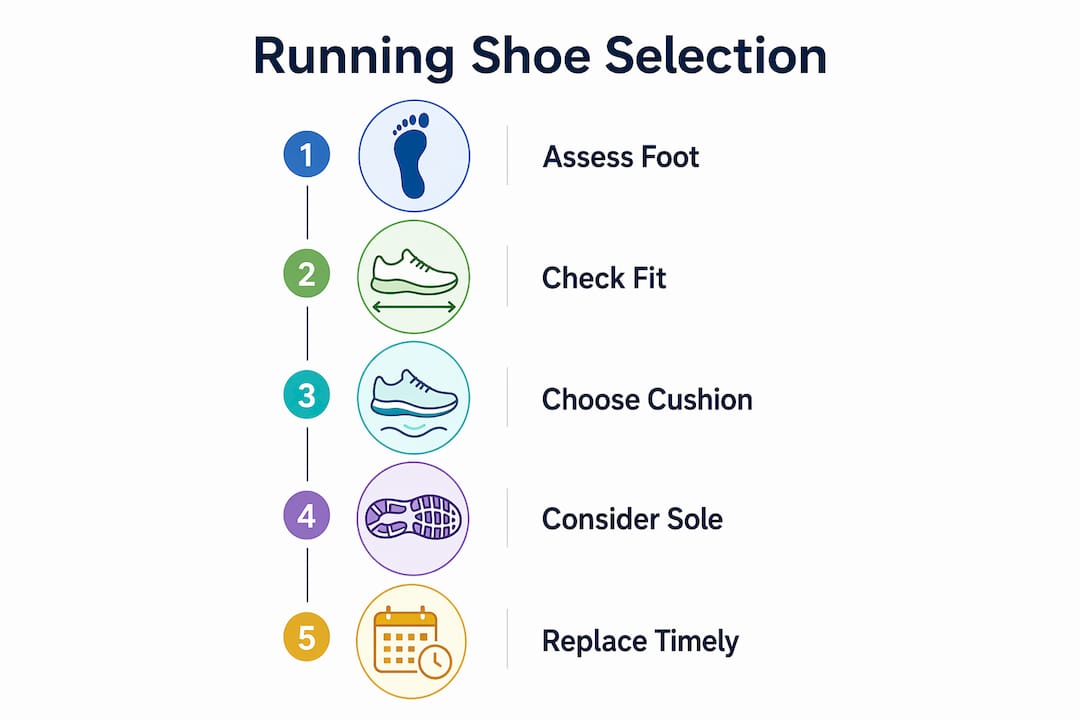
- Choosing the right running shoe depends on your foot type, gait, and surface you run on. Proper fit, support, and cushioning are essential to prevent injury and ensure comfort. Replace your shoes every 300 to 500 miles for optimal support and performance.
The right running shoe is defined by fit, foot mechanics, and the surface you run on. Not by brand, price, or appearance. A shoe that suits your gait and foot shape reduces injury risk and makes every run more comfortable. This guide to running shoe selection covers everything you need: how to assess your foot type, what fit actually means, how cushioning works, and when to replace worn shoes. Brands like ASICS, Brooks, and New Balance each offer different technologies, but the principles for choosing running shoes remain the same regardless of the label.
How does your foot type affect running shoe selection?
Your foot type is the single most important factor in choosing running shoes. Flat feet, high arches, and neutral arches each place different demands on a shoe’s support structure. Getting this wrong leads to discomfort at best and stress injuries at worst.
Flat feet, also called low arches, tend to roll inward when you run. This is called overpronation. Stability shoes with medial post support, such as those in the ASICS GT series or Brooks Adrenaline GTS line, counteract this rolling motion. High arches, by contrast, absorb less shock on impact. Cushioned neutral shoes work better here because they compensate for the reduced natural shock absorption.
Gait analysis identifies your foot strike pattern and guides you toward neutral or stability shoes. Most specialist running shops in the UK offer free gait analysis on a treadmill. The Cleveland Clinic recommends this assessment before any shoe purchase. It takes under ten minutes and removes most of the guesswork.
Pro Tip: Wear your usual running socks to a gait analysis appointment. Sock thickness affects how your foot sits in the shoe and changes the accuracy of the assessment.
- Flat feet / overpronation: Choose stability or motion control shoes with firm medial support.
- High arches / underpronation: Choose cushioned neutral shoes with flexible soles.
- Neutral arches: Most shoe types work, but a neutral trainer with moderate cushioning is the standard starting point.
- Heel strikers: A higher heel-to-toe drop (10mm or above) suits your natural landing pattern.
- Mid or forefoot strikers: A lower drop (4mm or below) aligns better with your mechanics.
What does proper fit mean for running shoes?
Fit is not just about shoe size. A running shoe that fits correctly holds your heel firmly, gives your toes room to spread, and flexes in exactly the right place. Each of these criteria matters independently.
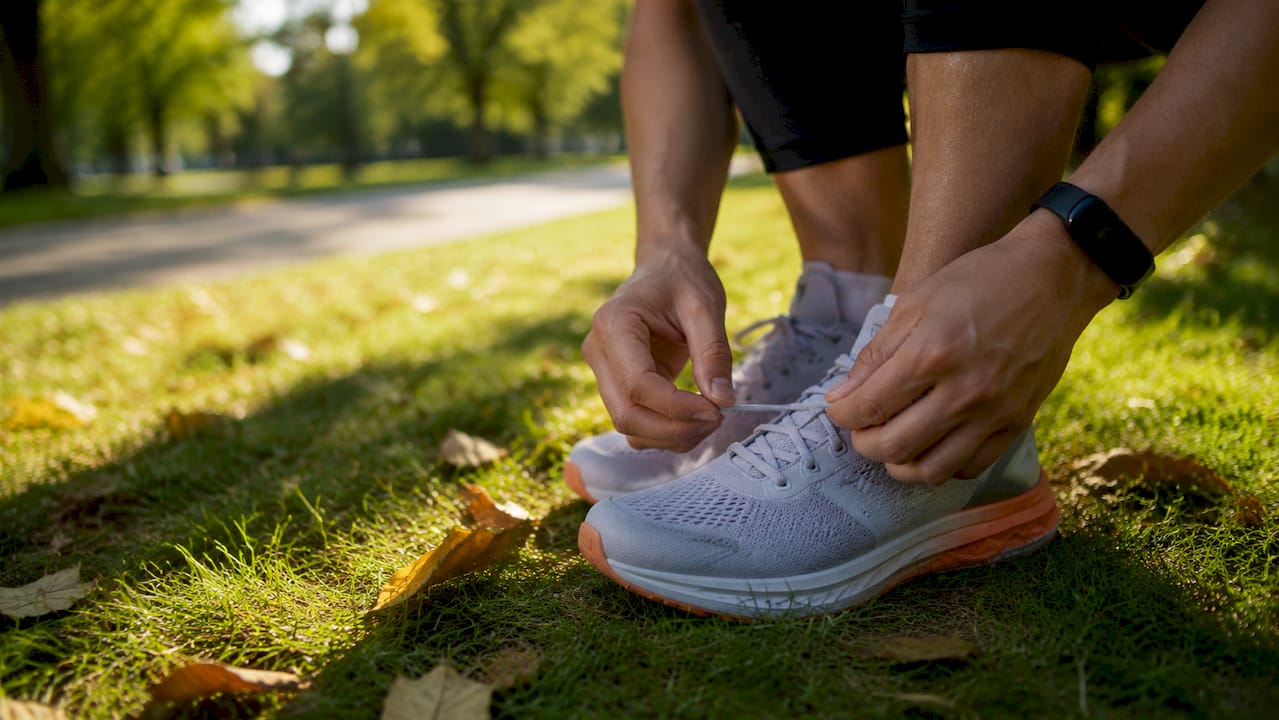
Leave roughly one thumb’s width of space between your longest toe and the front of the shoe. That is approximately 0.5 inches. Your foot expands slightly during a run, and without that space, your toes compress against the toe box, causing blisters and black toenails. The shape of the toe box also matters: a narrow box forces toes together even when length is correct.
New running shoes should feel comfortable immediately. There is no break-in period for a well-fitted running shoe. If a shoe pinches, rubs, or feels stiff from the first wear, it is the wrong shoe. This is one of the most commonly ignored running shoe buying tips, and ignoring it causes preventable injuries.
Pro Tip: Shop for shoes in the late afternoon or evening. Feet swell throughout the day, and a shoe that fits at 9am may feel tight by 6pm during a long run.
The five-point fit check
- Heel grip: The heel should sit firmly without slipping. Slide your finger behind the heel. If there is more than a centimetre of movement, the shoe is too large or the heel counter is too soft.
- Toe box width: Wiggle all five toes freely. If any toe is pressed against the upper, the box is too narrow.
- Midfoot hold: Lace the shoe fully and check that the midfoot feels snug but not tight. Pressure across the top of the foot signals a fit problem.
- Length check: Use the thumb’s width rule at the toe. Do this standing, not sitting, as the foot lengthens under body weight.
- Bend test: A shoe should flex only at the ball of the foot. Hold the heel in one hand and the toe in the other. If the sole bends in half or twists 180 degrees, the shoe lacks the structural support a runner needs.
| Fit criterion | What to check | Pass or fail signal |
|---|---|---|
| Toe box length | Thumb’s width gap at front | Pass: clear gap. Fail: toes touching front |
| Toe box width | Toes spread freely | Pass: no compression. Fail: toes squeezed |
| Heel grip | Minimal heel lift | Pass: under 1cm movement. Fail: slipping |
| Sole flex | Bends at ball only | Pass: flexes at ball. Fail: bends in half |
| Immediate comfort | No pinching or rubbing | Pass: comfortable at once. Fail: any discomfort |
How do cushioning and sole type affect your run?
Cushioning level and sole design determine how a shoe performs on different surfaces and at different speeds. Getting this right is as important as getting the fit right.
Heel-to-toe drop affects running style and injury risk. A higher drop (10mm or above) suits heel strikers by absorbing impact at the back of the foot. A lower drop (4mm or below) encourages a mid or forefoot strike, which distributes force more evenly but requires stronger calves and Achilles tendons. Switching drop dramatically and quickly is a known cause of Achilles injuries, so any change should be gradual.
Advanced cushioning technologies have changed what runners can expect from a modern shoe. Foam compounds like Nike’s ZoomX and ASICS’ FF Blast+ deliver energy return rather than just shock absorption. This distinction matters: energy return reduces fatigue over long distances, while basic cushioning simply softens impact. Experienced runners who have built strong leg muscles often prefer firmer, lower-profile shoes because they provide better ground feel and proprioception.
Trail running demands a different sole entirely. Aggressive lugs grip loose terrain, and a rock plate between the midsole and outsole protects the foot from sharp stones. Road shoes lack both features and become dangerous on wet trails. The sole type guide for 2026 breaks down which outsole compounds and tread patterns suit specific surfaces.
- Road running: Smooth or lightly textured outsole, moderate to high cushioning, flexible upper.
- Trail running: Deep lugs, rock plate, reinforced toe cap, drainage ports for wet conditions.
- Treadmill running: Lighter shoe with less aggressive outsole; treadmill belts provide grip.
- Track running: Minimal cushioning, low drop, lightweight upper for speed.
When should you replace running shoes?
Running shoes wear out before they look worn out. The cushioning degrades long before the upper shows visible damage, which is why many runners unknowingly train in dead shoes.
Replace running shoes every 300–500 miles to maintain cushioning and support. For a runner covering 20 miles per week, that means a new pair every four to six months. The midsole foam compresses over time and loses its ability to absorb impact. Running on a compressed midsole transfers more force to your joints, increasing the risk of shin splints, knee pain, and stress fractures.
Running shoes are designed for forward motion only. Using them for sports that involve lateral movement, such as tennis, squash, or court-based training, accelerates sole wear and removes the lateral ankle support those activities require. Keep a dedicated pair for running and a separate pair for gym or court work.
- Signs your shoes need replacing: Uneven wear on the outsole, visible compression lines in the midsole foam, reduced cushioning sensation during runs, or new aches in your knees and hips.
- Storage: Keep shoes in a cool, dry place away from direct sunlight. Heat degrades foam compounds faster than mileage.
- Rotation: Running two pairs in rotation extends the life of both. Foam needs 24–48 hours to decompress fully between runs.
Key takeaways
The most effective guide to running shoe selection starts with your foot type and gait, then matches cushioning and sole design to your terrain and running style.
| Point | Details |
|---|---|
| Assess foot type first | Flat, neutral, or high arches determine whether you need stability, neutral, or cushioned shoes. |
| Apply the five-point fit check | Check heel grip, toe box width, midfoot hold, length, and sole flex before buying. |
| Match cushioning to terrain | Road, trail, track, and treadmill running each require a different sole and cushioning profile. |
| Replace every 300–500 miles | Midsole foam degrades before visible wear appears; replace on mileage, not appearance. |
| Comfort is immediate | A correctly fitted running shoe requires no break-in period whatsoever. |
What I have learned from years of watching runners get this wrong
Most runners I have spoken to over the years make the same mistake: they buy on brand loyalty or aesthetics and ignore fit entirely. They pick up a pair of Brooks or New Balance because a friend recommended them, try them on briefly in the shop, and walk out without doing the bend test or checking heel grip. Six weeks later they are dealing with blisters, black toenails, or knee pain they cannot explain.
The second most common mistake is ignoring gait. Runners with flat feet who buy neutral shoes are essentially running without the support their foot mechanics require. A free ten-minute gait analysis at a specialist retailer like Sweatshop or Up and Running in the UK costs nothing and changes everything. I have seen runners eliminate chronic shin splints simply by switching from a neutral to a stability shoe after a proper assessment.
The third mistake is running in dead shoes. Cushioning degradation is invisible. A shoe that looks pristine at 400 miles may have lost most of its shock absorption. Track your mileage from day one, either in a notebook or through an app like Strava or Garmin Connect. When you hit 300 miles, start shopping. Do not wait for pain to tell you the shoe is finished.
Fit beats brand every time. Immediate comfort is the clearest signal that a shoe suits your foot. Trust that signal above all else.
— Panagiotis
Why Ydauk’s YDA technology is worth your attention
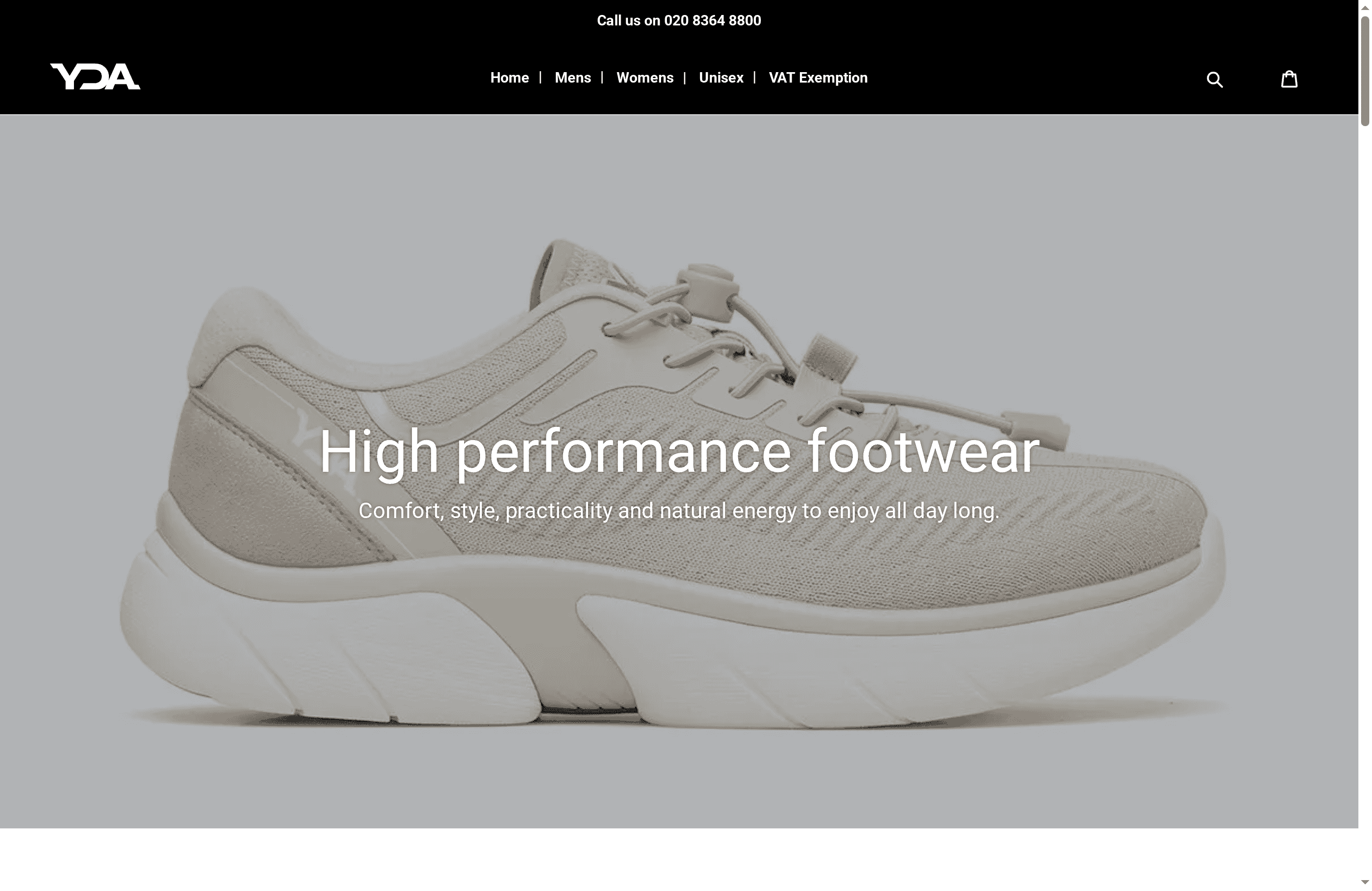
Ydauk builds its footwear around YDA Technology, a proprietary approach to cushioning and ergonomic fit designed specifically for foot health and energy efficiency. Where most shoes treat cushioning as a single layer of foam, Ydauk’s approach addresses how force distributes across the entire foot during movement. For runners who prioritise long-term foot health alongside performance, the YDA shoe technology page explains the engineering behind each design decision. If you are selecting your next pair with comfort and support as your primary criteria, Ydauk’s range is worth examining before you commit to a purchase.
FAQ
What is the most important factor when choosing running shoes?
Fit and foot type are the most important factors. A shoe that matches your arch type and gait pattern reduces injury risk more than any specific brand or cushioning technology.
How much toe space should a running shoe have?
Leave approximately one thumb’s width, around 0.5 inches, between your longest toe and the front of the shoe. This space accommodates foot expansion during a run.
Do running shoes need a break-in period?
No. A correctly fitted running shoe feels comfortable from the first wear. Discomfort during initial use signals a poor fit, not a shoe that needs breaking in.
How often should I replace my running shoes?
Replace running shoes every 300–500 miles. For most regular runners, this means a new pair every four to six months depending on weekly mileage.
Can I use running shoes for other sports?
Running shoes are designed for forward motion only. Using them for lateral sports like tennis or court training increases injury risk and accelerates sole wear. Use sport-specific footwear for each activity.