
On Cloud shoes sizing: your complete 2026 fit guide
TL;DR:
- On Cloud shoes generally fit true to length, but width and model choice significantly influence comfort. Buyers with wider feet should size up by half or choose models with a roomier toe box. Accurate foot measurement and considering sock thickness are essential for finding the right fit.
On Cloud shoes sizing is defined by a true-to-length fit across most models, combined with a narrower forefoot last that makes width the deciding factor for many buyers. Getting this balance right matters more than most people realise. A shoe that fits well in length but pinches across the forefoot causes the same discomfort as one that is too short. This guide covers how On’s last shape affects fit, which models suit wider feet, and how to measure accurately so you order with confidence the first time.
How does On Cloud shoe sizing work?
On shoes run true to size in length for the majority of buyers. The more important variable is width. On uses a streamlined, foot-shaped last that creates a narrower forefoot compared to many mainstream running shoe brands. That design suits runners with average to narrow feet well, but it means buyers with wider feet often need to size up by half or choose a model built with more internal volume.
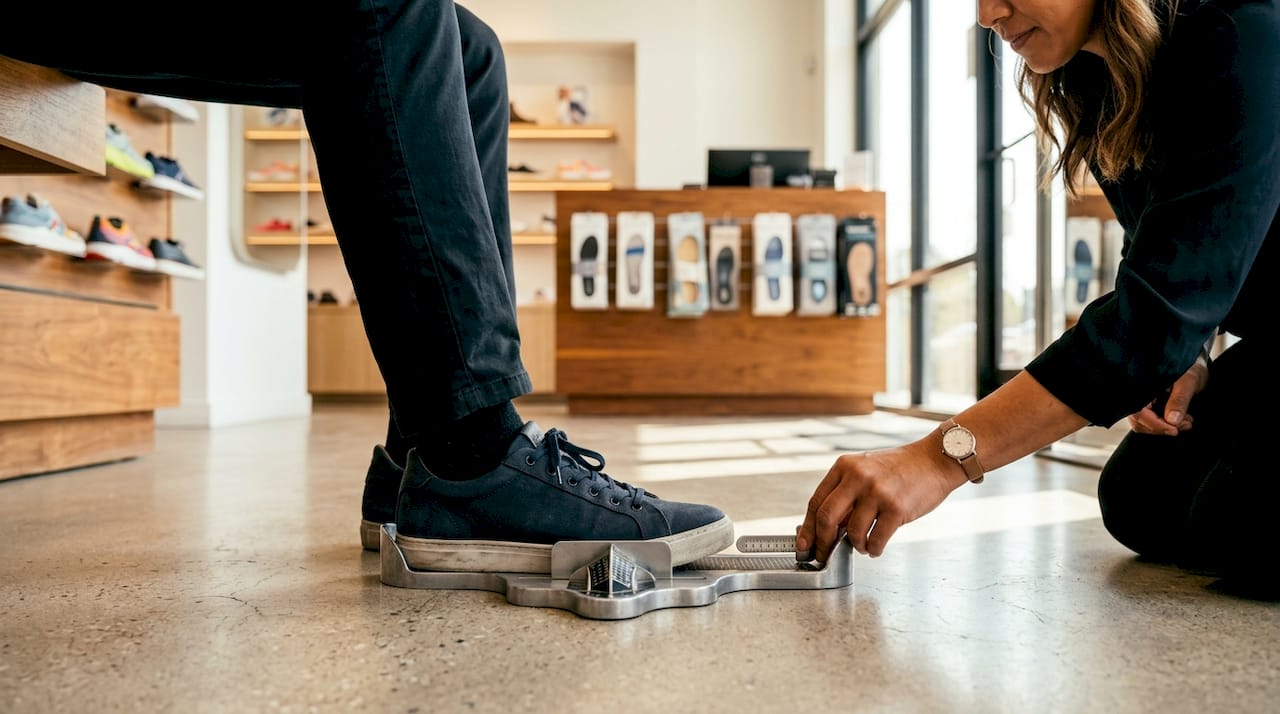
Length, width, and the thumb’s-width rule
The standard fit principle for any shoe applies here: you need a thumb’s width of space between your longest toe and the end of the shoe. That gap allows your toes to splay naturally during the push-off phase of a stride. Without it, you risk black toenails on longer runs and general forefoot discomfort during all-day wear.
Width fit is where On shoes diverge from the norm. The narrower forefoot means that buyers with a wide or medium-wide foot often feel pressure across the ball of the foot even when the length is correct. If you notice that sensation, sizing up by half is the right first step. Alternatively, choosing a model designed with a roomier toe box solves the problem without sacrificing length accuracy.
Sock thickness and foot swelling
Sock thickness affects fit more than most buyers anticipate. A performance running sock adds measurable volume inside the shoe, and a thick cushioned sock adds even more. That reduction in internal space can turn a correctly sized shoe into a tight one. Always try On shoes wearing the socks you intend to use for the activity.
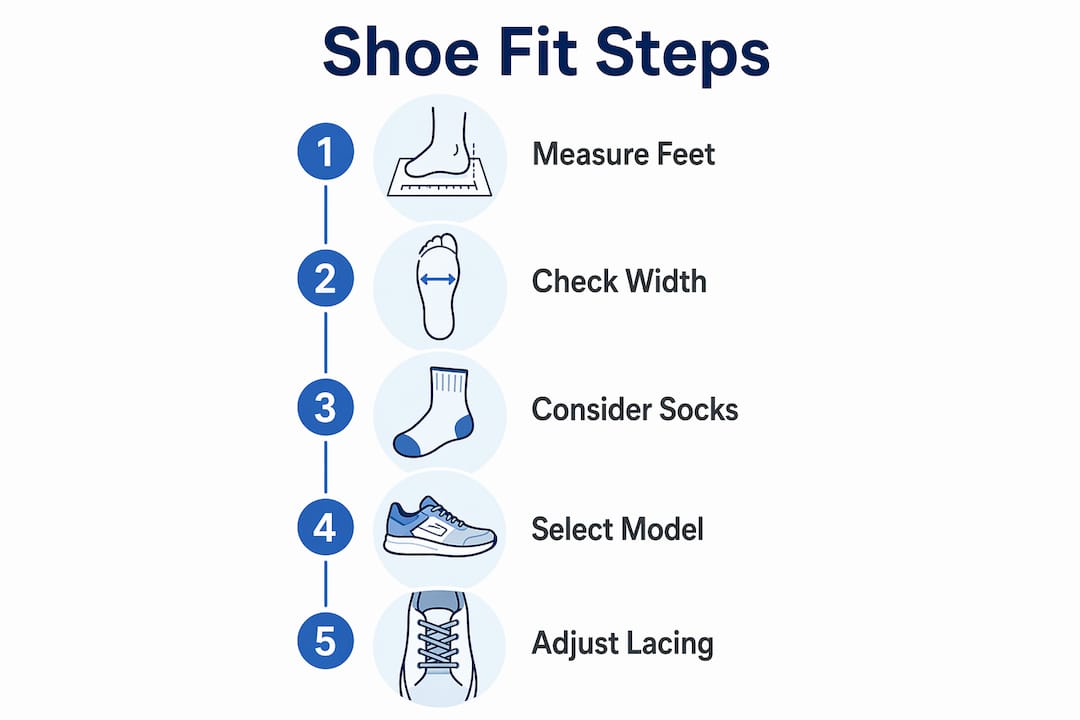
Foot swelling is the other variable. Feet expand during the day and during prolonged exercise. A shoe that fits perfectly in the morning may feel tight after four hours of walking or a long run. Sizing up by half accounts for both sock volume and natural swelling, particularly for lifestyle models worn all day.
Pro Tip: Measure your feet in the afternoon or evening when they are at their largest. Morning measurements consistently underestimate the size you actually need for comfortable all-day wear.
Which On Cloud model fits your foot shape?
On Cloud models differ significantly in internal volume and last shape. Choosing the right model for your foot type is as important as choosing the right size number. The table below summarises fit characteristics across the most popular models.
| Model | Fit character | Best for |
|---|---|---|
| Cloud 5 | Snug, tailored, narrower forefoot | Narrow to average feet, casual wear |
| Cloudrunner 3 | Roomier toe box, higher volume | Wide feet, longer daily wear |
| Cloudsurfer Max | Spacious, generous width | Wide feet, all-day comfort |
| Cloudmonster | Roomy, cushioned, wider platform | Wide to average feet, performance |
| Cloudflow | Slightly narrower, performance fit | Average feet, speed training |
| Cloudswift | Variable fit, midfoot-focused | Average feet, gym and commute |
Lifestyle models: Cloud 5 and similar styles
The Cloud 5 has a sleek, low-profile design that feels firm and snug straight out of the box. Lifestyle models like the Cloud 5 are built for a tailored aesthetic, which means the internal volume is deliberately lower. For all-day wear, sizing up by half is a sound choice because your foot will swell naturally over the course of the day. Buyers with narrow feet may find the standard size works perfectly.
Performance models: Cloudrunner 3, Cloudsurfer Max, and Cloudmonster
Cloudrunner 3 and Cloudsurfer Max are the two models most frequently recommended for wider feet. Both offer a higher-volume toe box and a more generous forefoot width. The Cloudmonster follows a similar pattern, with a wide platform that suits buyers who want cushioning without compression across the forefoot. If you have a wide foot and want to stay in your standard size, these three models are the right place to start.
The Cloudflow and Cloudswift sit closer to the narrower end of the On range. Both are built for performance use, and their fit reflects that. Buyers with average feet typically find their standard size works well. Those with wider feet should size up by half or move to a roomier model.
Midfoot lacing and heel lockdown
On’s dual lacing system allows you to adjust midfoot tension independently of the toe box. Tightening the midfoot laces improves heel lockdown and reduces slippage without creating pressure across the forefoot. This is particularly useful if you have sized up by half and want to prevent the heel from lifting during a run.
How to measure your feet for On Cloud shoes
Accurate measurement removes guesswork from the sizing process. Follow these steps before ordering or visiting a shop.
- Stand on a piece of paper and trace around your foot with a pencil held vertically. Seated measurements underestimate foot length because your foot spreads under body weight when standing.
- Measure the longest distance from the back of your heel to the tip of your longest toe. Use a ruler and record the measurement in millimetres.
- Measure the widest point across the ball of your foot. This width measurement tells you whether the On last will accommodate your foot without pressure.
- Compare both feet and use the larger measurement. Most people have one foot slightly larger than the other. Fitting the larger foot prevents discomfort on that side.
- Put on your intended socks before measuring. The sock adds volume, and your measurement should reflect the actual conditions you will wear the shoe in.
- Apply the pinch test once you have a shoe on. If you cannot pinch fabric at the top of the toe box, the shoe is too small. A small fold of material confirms adequate space.
- Walk and jog indoors on a clean surface before committing. Heel slip, forefoot pressure, and toe contact with the end of the shoe all become apparent within two minutes of movement.
Pro Tip: If you use custom orthotics, bring them to every fitting. Aftermarket insoles reduce interior volume and typically require sizing up by half to maintain comfort across the midfoot.
For buyers with wider feet, the shoe width chart guide at Ydauk provides a detailed reference for matching foot width measurements to the right shoe category.
Common fit mistakes with On Cloud shoes
Most sizing errors with On shoes fall into a small number of predictable patterns. Recognising them before you buy saves a return trip.
- Assuming tight equals supportive. A snug fit across the forefoot is not the same as support. Toes need room to move naturally, and a tight toe box restricts that movement, leading to long-term foot health issues including bunions and neuromas.
- Wearing thick socks without adjusting size. Thick cushioned socks reduce internal volume noticeably. If you plan to wear them, size up by half. Wearing thin socks to the fitting and thick socks during use is a reliable way to end up with a shoe that is too tight.
- Ignoring model differences. The Cloud 5 and the Cloudrunner 3 are both On shoes, but their internal volume differs considerably. Treating all On models as interchangeable leads to poor fit decisions.
- Over-sizing causing heel slip. Going up a full size rather than half a size introduces heel instability. The foot slides back on the push-off, which reduces efficiency and increases blister risk. Half-size increments are the correct adjustment.
- Ignoring foot swelling on long wear. A shoe that fits at the start of a run or a day’s walking may feel tight after two hours. Buyers who plan extended use should account for swelling when choosing between two sizes.
- Skipping lacing adjustments. On’s lacing system gives you meaningful control over fit. Adjusting midfoot tension can resolve minor heel slip or forefoot pressure without changing size.
For a broader look at how proper fit connects to foot health, the footwear selection guide at Ydauk covers the key principles in detail.
Key takeaways
On Cloud shoes run true to size in length, but the narrower forefoot last means width fit and model selection determine whether a shoe is genuinely comfortable.
| Point | Details |
|---|---|
| True to length, variable in width | On shoes fit standard length but run narrow; wide feet often need half a size up. |
| Model selection matters | Cloudrunner 3 and Cloudsurfer Max suit wide feet; Cloud 5 suits narrow to average. |
| Measure standing, afternoon | Feet spread under weight and swell through the day; measure at your largest point. |
| Sock thickness changes fit | Always try shoes with the socks you intend to wear; thick socks may require half a size up. |
| Orthotics require adjustment | Custom insoles reduce interior volume; size up by half when using aftermarket insoles. |
Sizing On Cloud shoes: what I’ve learned from experience
The most common mistake I see is buyers treating the size chart as the final answer. A size chart tells you where to start, not where to finish. On Cloud shoes reward the extra step of actually testing fit under real conditions, with the right socks, standing up, and moving around.
What surprises people most is how much the model choice matters. Two buyers with identical foot measurements can have completely different experiences if one chooses a Cloud 5 and the other picks a Cloudrunner 3. The Cloud 5 is a beautiful shoe, but it is built for a specific foot shape. Buyers who push it onto a wider foot and then complain it runs small are not wrong, exactly. They just chose the wrong model.
My honest advice is to let your activity guide your model choice before you think about size. If you are running long distances, the Cloudmonster or Cloudrunner 3 gives you the volume you need. If you want a clean everyday shoe, the Cloud 5 works well for narrow to average feet. Once you have the right model, the size chart becomes reliable. The On shoes sizing guide at Ydauk is a useful reference for cross-checking your model choice against your foot shape before you commit.
Prioritise foot health over the number on the label. A half-size up that keeps your toes comfortable is always the right call.
— Panagiotis
Ydauk technology: built around how your foot actually fits
Getting your On Cloud size right is the first step. The second is understanding what the shoe’s technology does once it is on your foot.
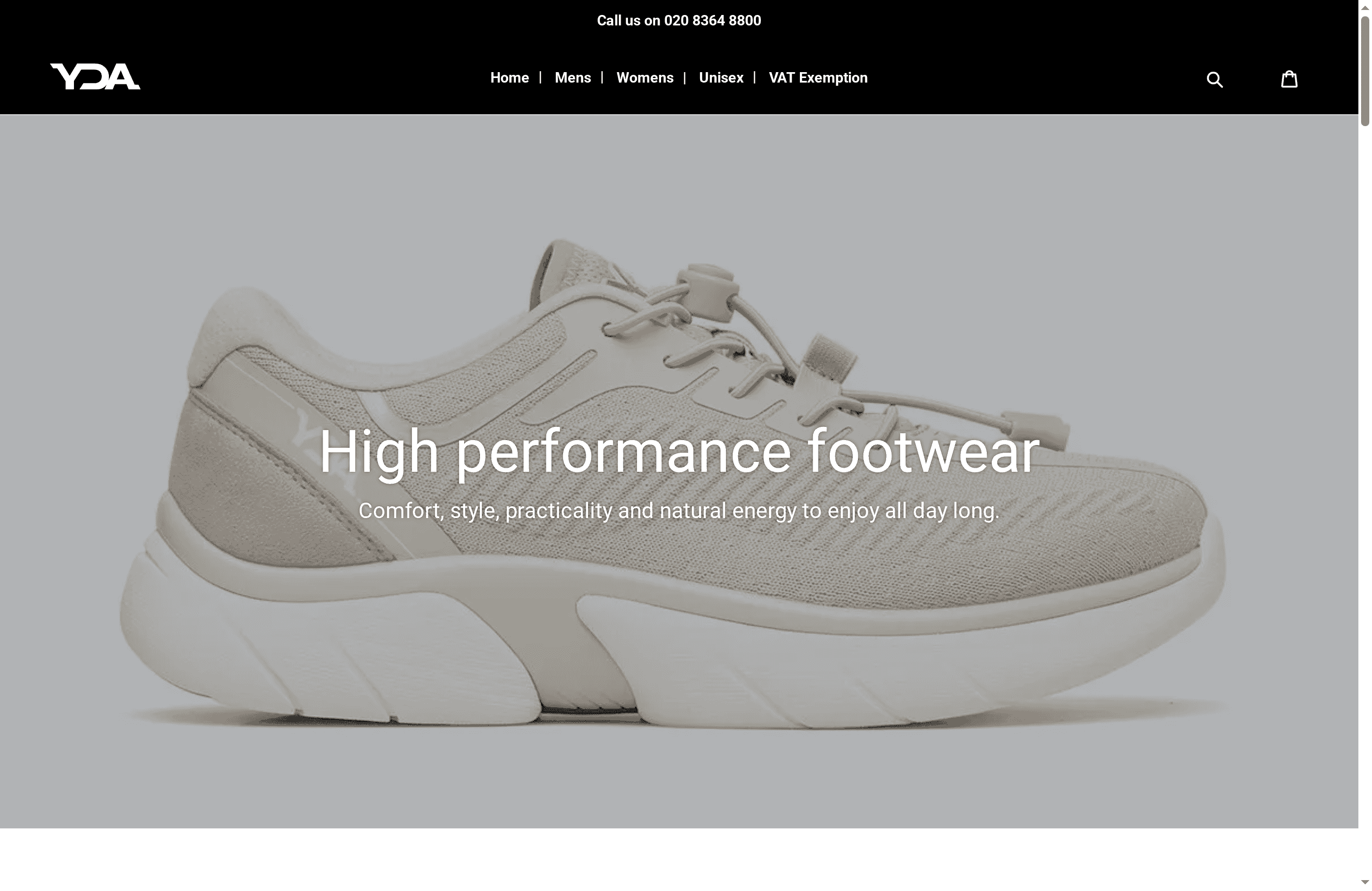
Ydauk’s YDA Technology is built around foot health and energy efficiency, two principles that align directly with what makes a well-fitted shoe perform well. When a shoe fits correctly, the technology beneath it can do its job. When it does not, no amount of cushioning or sole engineering compensates for the mismatch. Ydauk’s range is designed with these principles at its core, combining comfort with functional foot support for buyers who take their footwear seriously. If you are building a shoe collection around performance and long-term foot health, Ydauk is worth exploring alongside your On Cloud purchase.
FAQ
Do On Cloud shoes run true to size?
On Cloud shoes run true to size in length for most buyers. Width is the variable to watch, as the narrower forefoot last can feel tight for wide or medium-wide feet.
Should I size up in On Cloud shoes?
Sizing up by half is recommended for wide feet, buyers using thick socks, those wearing custom orthotics, and anyone choosing a lifestyle model like the Cloud 5 for all-day wear.
Which On Cloud model is best for wide feet?
The Cloudrunner 3 and Cloudsurfer Max are the best choices for wide feet, offering a higher-volume toe box and a roomier forefoot compared to other models in the range.
How do I check if my On Cloud shoes fit correctly?
Apply the pinch test at the toe box: if you cannot pinch any fabric at the top, the shoe is too small. You should also have a thumb’s width of space between your longest toe and the shoe end.
Does sock thickness affect On Cloud shoe sizing?
Thick socks reduce internal volume and can make a correctly sized shoe feel tight. Always try On Cloud shoes wearing the socks you plan to use, and size up by half if you wear cushioned or performance socks.