
5 Minute Trainer Maintenance: Clean Weekly Without Damage
Identify the material first, dry-brush off loose grit, then clean with a lukewarm mild-detergent solution in small sections before air drying. That single sequence rescues most canvas, mesh and synthetic trainers. Skip hot water, skip the tumble dryer, and treat leather and suede separately with dedicated products rather than soap and water.
TL;DR:
- Use a gentle, material-specific approach, avoiding hot water and tumble drying to prevent damage to leather, suede, and glued parts.
- Clean laces and insoles separately with soaking or spot cleaning to control odors and prolong their usability.
- Air dry trainers in shade with stuffing to maintain shape, and condition leather or apply protective sprays once fully dry.
- Regular light cleaning every one to two weeks is more effective and less risky than infrequent deep scrubbing with aggressive methods.
- Reserve machine washing for canvas or synthetic trainers, following careful precautions, and never wash leather or suede in a machine.
Table of Contents
- What supplies do you need to clean trainers properly?
- How do you clean trainers step by step at home?
- Does every trainer material need the same cleaning method?
- How do you clean laces, insoles and stop trainers smelling?
- Is it safe to put trainers in the washing machine?
- What’s the right way to dry and finish cleaned trainers?
- How often should you clean trainers, and what mistakes ruin the effort?
- Where can you find product-specific trainer care advice?
- What actually matters most when cleaning trainers?
- Sources
What supplies do you need to clean trainers properly?
Good results come down to having the right kit before you start, not scrubbing harder once you’ve begun. A soft-bristle brush handles mesh and canvas, a stiffer brush suits rubber soles, and an old toothbrush gets into stitching and logo grooves. Add microfibre cloths for blotting, a small bowl for your solution, a mesh laundry bag for laces, and shoe trees or rolled paper to hold shape while drying.
For cleaning agents, mild detergent or dish soap does most of the work, backed up by bicarbonate of soda for scuffs and odour. Leather and suede need their own specialised cleaners rather than a general soap, since manufacturers generally recommend hand-cleaning leather and suede rather than treating them like canvas.
Before you touch water to fabric, prepare properly:
- Remove laces and insoles so you can clean every surface underneath
- Dry-brush the whole shoe to lift grit before it turns into mud
- Patch-test any product on a small, hidden area first
- Stuff the toe box loosely to stop the upper collapsing mid-clean
How do you clean trainers step by step at home?
This is the core workflow, and it works whether you’re rescuing a pair of running shoes or freshening up white canvas trainers for the weekend.
- Dry-brush everything first. Grit acts like sandpaper once it’s wet, so brushing it off dry protects the fibres and stops you grinding dirt further into the material.
- Pull out laces and insoles. They hold most of the smell and grime, and they clean far better on their own.
- Mix your solution. A teaspoon of mild detergent in a bowl of lukewarm water is plenty. Lukewarm, roughly 20 to 30°C, activates the soap without softening glue or warping the shape the way hot water can.
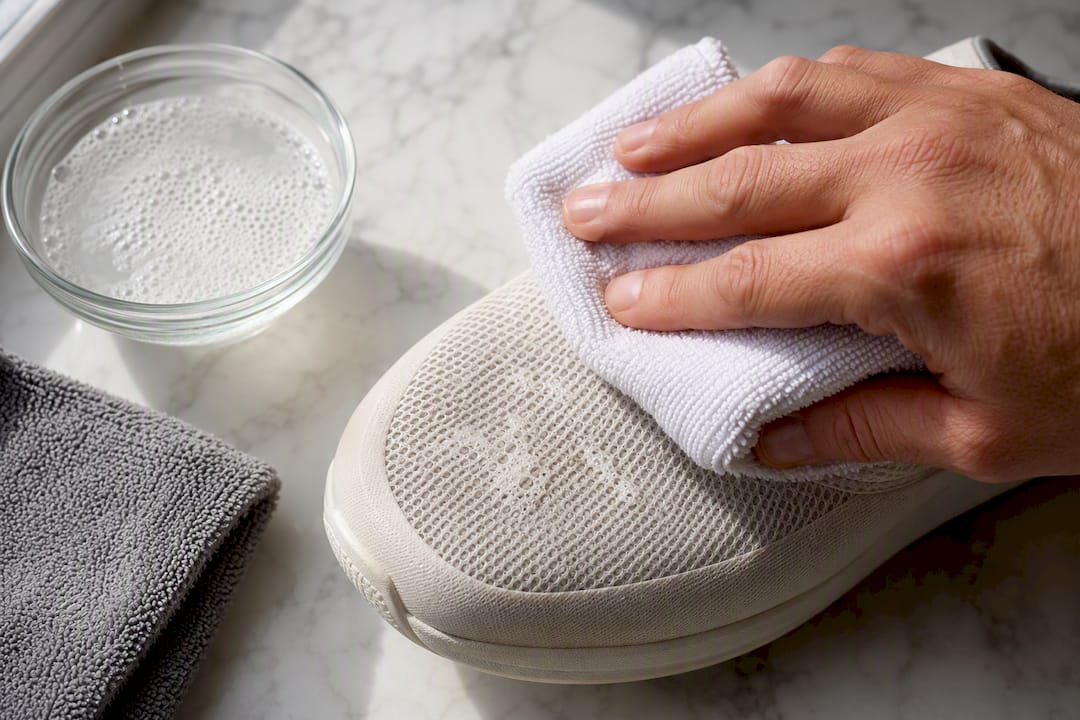
- Work the upper in small sections. Dip your brush, use light circular motions, and wipe residue away with a microfibre cloth as you go rather than letting it dry back into the fabric.
- Switch to a firmer brush for the midsole and outsole. A bicarbonate of soda paste lifts scuffs and brightens yellowed rubber without bleaching the upper.
- Rinse and blot, then inspect. Repeat stubborn patches rather than scrubbing harder in one spot, and finish by air drying with the shoe stuffed to hold its shape.
The pattern that separates a good clean from a mediocre one is patience: multiple light passes beat one aggressive scrub every time, and working section by section with the right brush for each material gets you a longer-lasting result than blitzing the whole shoe at once.
Pro Tip: Blot, don’t rub, once you’ve applied your solution. Rubbing pushes grime deeper into the fibres and can leave a hazy residue that actually attracts dirt faster afterwards.
Does every trainer material need the same cleaning method?
No, and this is where most cleaning attempts go wrong. Treating suede like canvas, or scrubbing leather the way you would a mesh running shoe, is the fastest way to turn a stain into permanent damage.
- Canvas and synthetics: hand-cleaning is the safer default, though some canvas pairs can tolerate a careful machine wash if you take precautions.
- Mesh and knit uppers: use gentle strokes and a soft brush; a toothbrush handles logos and seams without snagging the weave.
- Leather: use minimal water and a proper leather cleaner, then condition once dry to stop the material drying out and cracking.
- Suede and nubuck: never soak it. Use a dry-application suede cleaner and brush the nap in one direction to lift dirt without flattening the texture.
- White rubber and midsoles: a bicarbonate paste handles surface grime well, but it won’t reverse genuine yellowing, which is oxidation rather than dirt sitting on the surface.
That last distinction matters more than most guides admit. Bicarbonate of soda works as a mild abrasive and deodoriser, but it isn’t a fix for every discolouration, and expecting it to strip out age-related yellowing usually just wastes your effort. For white leather specifically, YDA’s guide on cleaning white leather shoes covers conditioning steps that keep the surface from cracking once it dries.
How do you clean laces, insoles and stop trainers smelling?
Laces and insoles hold onto more grime and odour than the rest of the shoe combined, so they deserve their own five minutes rather than a quick wipe.
- Soak laces in warm soapy water, or drop them into a mesh laundry bag and machine wash them alongside a normal load.
- Spot-clean insoles rather than submerging them. Fragile foam soaks up water and stays damp for days, which just breeds more odour.
- Replace insoles that are past saving rather than fighting a losing battle with smell.
- Sprinkle bicarbonate of soda inside the shoe overnight to absorb odour, then tip it out and air the shoe properly the next day.
- Rotate between two pairs rather than wearing the same trainers daily; letting them dry out fully does more for smell than any spray.
Skip the perfume sprays. They mask a smell instead of removing its source, and once the mask wears off the original problem is still there.
Is it safe to put trainers in the washing machine?
Sometimes, but not as often as people assume. Canvas trainers and some plain synthetics generally tolerate a careful machine wash. Leather, suede and anything with glued embellishments generally don’t, because manufacturers commonly discourage machine washing since the agitation and heat weaken adhesives and can pull leather panels apart at the seams.
If you decide to machine wash, follow this checklist:
- Remove laces and insoles first
- Put the shoes in a mesh bag or old pillowcase
- Add a couple of towels to balance the drum
- Select the gentlest cycle at 30°C or below
- Skip the spin cycle and never tumble dry
Pro Tip: Machine washing feels quicker, but it’s often unnecessary. Hand-cleaning with the right brushes usually gets a comparable result with none of the risk to glue or shape.
For anything you’d be genuinely upset to lose, hand-clean it. A washing machine can’t tell the difference between a £15 pair and a £150 one.
What’s the right way to dry and finish cleaned trainers?
Heat is the enemy here, not water. Air dry trainers in the shade at room temperature, away from radiators, direct sun or a tumble dryer, since heat weakens the same glue that holds the sole on.
- Stuff shoes with paper towel or use shoe trees to hold their shape while drying
- Swap out stuffing once it’s saturated rather than leaving damp paper inside overnight
- Condition leather and apply a fabric protector spray once the shoe is completely dry, not before
- Consider a specialist protector spray for technical or performance footwear before its first proper outing
- If yellowing or sole oxidation is severe and won’t shift with cleaning, restoration is a better bet than repeated scrubbing
How often should you clean trainers, and what mistakes ruin the effort?
Little and often beats a rare deep clean. Spot-clean marks the moment you spot them, give trainers a light clean every week or two, and reserve the full section-by-section wash for once a month if you’re wearing them regularly.
The mistakes that undo good cleaning work are depressingly common:
- Using hot water, which can warp shape and loosen adhesive
- Machine washing leather or suede
- Leaving soap residue behind instead of rinsing and blotting properly
- Drying on a radiator or in direct sun
- Skipping lace and insole removal, so grime just gets pushed around instead of removed
| Do this | Not this |
|---|---|
| Lukewarm water, mild detergent | Hot water, harsh chemicals |
| Air dry in shade, shoes stuffed | Direct heat or tumble drying |
| Hand-clean leather and suede | Machine washing delicate materials |
| Light passes, patient brushing | Aggressive scrubbing in one spot |
| Remove laces/insoles before cleaning | Cleaning around them and hoping |
Where can you find product-specific trainer care advice?
Ydauk builds footwear around foot health and comfort technology, which means care advice has to match the actual materials used in each shoe, not a generic one-size-fits-all method. The technology behind Ydauk shoes page explains the material choices that inform how each pair should be cleaned and maintained.
For deeper, product-specific instructions, Ydauk’s guide to step-by-step shoe cleaning and its piece on cleaning white tennis shoes both go further into specific finishes. Always check the manufacturer’s care label first. If you want more general product-handling guidance beyond footwear, Onyx Removals’ cleaning tips cover sensible use of household cleaning agents too.
What actually matters most when cleaning trainers?
Most cleaning advice treats every trainer the same, and that’s the mistake worth calling out. A method that’s perfectly safe on canvas will ruin suede, and the internet is full of hacks (toothpaste on scuffs, magic erasers on leather) that work in a single photo and cause damage everywhere else.
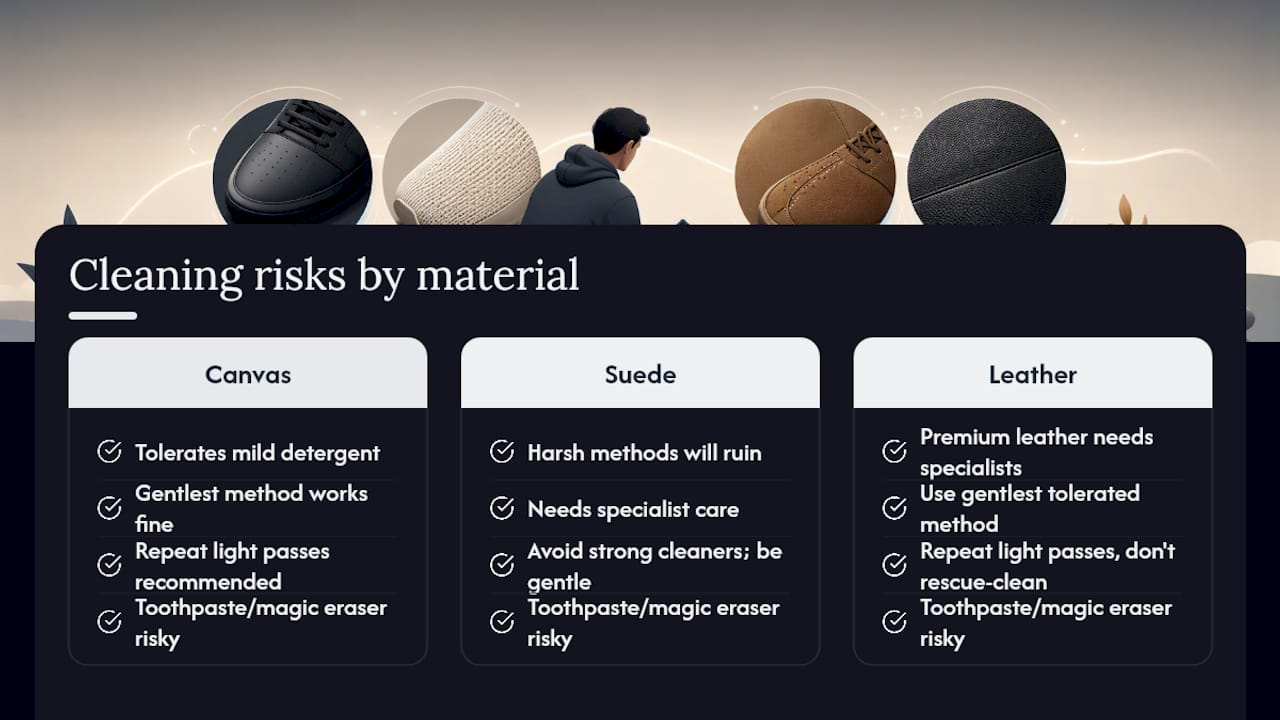
What the evidence actually supports is dull but reliable: identify the material, use the gentlest method that material tolerates, and repeat light passes instead of reaching for something stronger. Bicarbonate of soda and mild detergent handle the vast majority of everyday grime. You don’t need a cabinet of specialist products unless you own suede or premium leather.
Where most people fall down isn’t technique, it’s frequency. Waiting until trainers look genuinely bad, then attempting a rescue job, is harder and riskier than five minutes of maintenance every week or two. Build that habit before you build a shelf of cleaning products.
— Panagiotis
Sources
- How to Clean Trainers: Complete Guide for All Materials | Cleaners Guide
- Ask ACI: Sneaker cleaning in the washing machine or by hand | The American Cleaning Institute (ACI)
- How to Clean Sneakers: Complete Guide (2026) | SNKRR BAR
- How to wash your sneakers (industry professional advice) | GQ