
Five Steps to Keep White Sneakers Clean With Gentle Material Care
Wipe your white sneakers after every wear, dry-brush before any wet cleaning, match your cleaning method to the actual material, air-dry away from heat, and finish with a protectant spray. That five-step loop stops most staining before it starts. Quick maintenance takes a minute or two; a proper deep clean, done once every few weeks, runs 20 to 60 minutes plus drying time.
TL;DR:
- Regular dry-brushing after every wear prevents most stains and takes only about a minute to remove loose dirt.
- Use gentle, material-specific cleaning methods such as damp microfibre wipes for leather and hand wash for canvas, avoiding harsh chemicals.
- Machine washing canvas shoes is safe only if the shoes are sturdy, with glued trims or delicate soles treated as hand wash only.
- Proper drying with shoe trees and avoiding heat sources prevents yellowing, cracks, and damage to the sneakers.
- Applying a protectant spray before wear and reapplying monthly helps maintain whiteness and repels dirt and stains over time.
Table of Contents
- What you need: tools and safe products before you start
- Quick maintenance routine: what to do after every wear
- How do you clean white leather and vegan leather sneakers?
- Can you machine wash canvas white sneakers safely?
- How do you clean mesh and knit sneakers without fraying them?
- Suede and nubuck: why you should stay dry as long as possible
- How do you whiten scuffed soles and midsoles?
- Laces, insoles and odour: the parts everyone forgets to clean
- Drying, shaping and storage: how to avoid yellowing and warping
- What’s the best schedule for keeping white sneakers looking new?
- YDA UK’s care resources and where this guidance comes from
- Common cleaning mistakes that ruin white sneakers faster than dirt does
- How Ydauk supports material-specific sneaker care
- Sources
What you need: tools and safe products before you start
You don’t need a cupboard full of specialist gear. A short, sensible kit does most of the work, and knowing what to leave out matters just as much as what to buy in.
- A soft-bristled brush (an old nail brush or soft toothbrush works fine) for dry-brushing and gentle scrubbing
- Microfibre cloths, white where possible, so no dye transfers onto the shoe
- Mild dish soap or a small dose of laundry detergent diluted in warm water
- Baking soda for stain pastes and odour control
- White vinegar for cutting through grime
- Hydrogen peroxide, kept for spot use only, never a full soak
- A magic eraser, useful strictly on rubber soles and midsoles
- A stain and water protectant spray
- Shoe trees or plain white paper towels for shaping and drying
Skip bleach, acetone, and strong solvents. Bleach yellows fabric over time rather than keeping it white, and it eats away at glue joins. Coloured rags are the other trap: a damp red cloth on a white canvas upper will leave a faint tint you can’t fully undo. Disposable kitchen roll is an acceptable stand in for microfibre if that’s what’s to hand.
Quick maintenance routine: what to do after every wear
This is the single habit that prevents most staining, according to sneaker-care guides that consistently flag light, frequent wipe-downs as the highest-impact maintenance move you can make. It takes about a minute.
- Knock off loose dirt and grit with a dry brush, working from the toe back.
- Wipe the midsole and any scuffed rubber with a damp microfibre cloth.
- If you spot a fresh mark, mist it lightly with a diluted soap solution and dab, don’t rub.
- Leave the shoes somewhere airy for ten minutes to dry fully before they go back in the cupboard.
Apply a protectant spray before the first wear, then reapply roughly once a month or straight after any deep clean. That single spray does more long-term good than an extra scrub ever will.
How do you clean white leather and vegan leather sneakers?
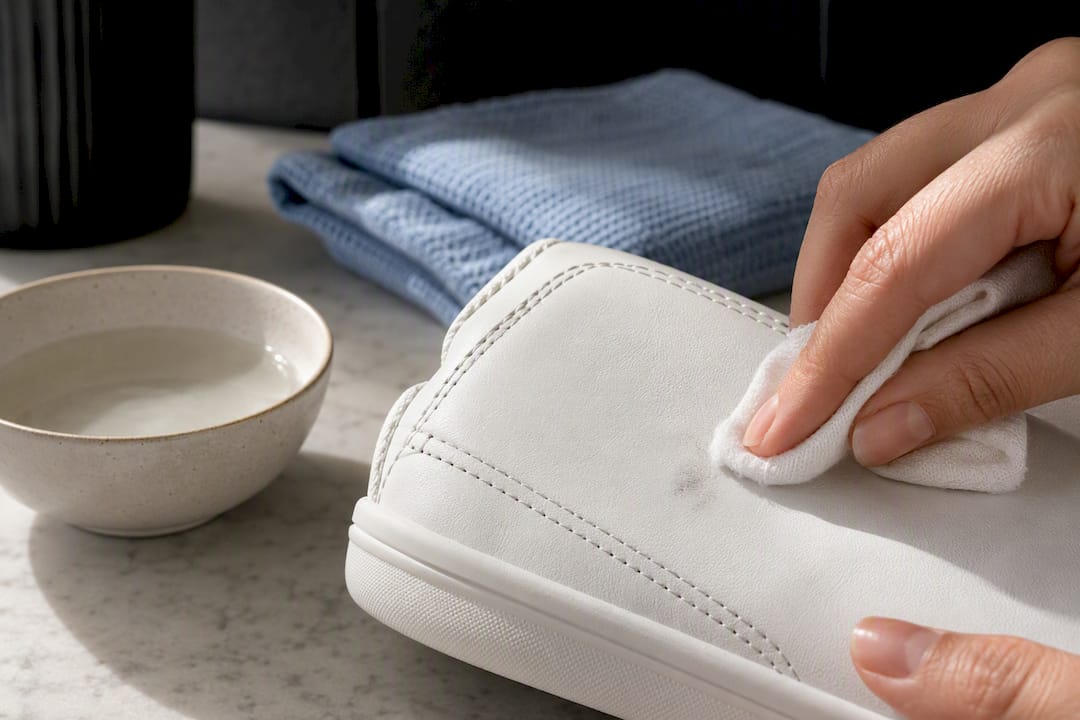
Leather uppers respond badly to water, so the method here is deliberately restrained. Start by removing the laces and insoles if they lift out easily, then dry-brush the whole shoe to clear loose dust and grit, a step cleaning professionals treat as non-negotiable because wet cleaning over unremoved grit just grinds it into the surface. Pack the shoes with paper towels or slot in shoe trees to hold their shape while you work.
Mix a small amount of mild dish soap into warm water. Dip a microfibre cloth in, wring it out until it’s barely damp, and clean in gentle circular motions. Saturating leather is the fastest way to warp or crack it.
- Use a dedicated leather cleaner and conditioner every few months to keep the surface supple.
- Never soak the upper or leave it wet for extended periods.
- Keep leather well away from radiators, tumble dryers, or direct heat of any kind.
- Avoid coloured rags and skip bleach entirely; both cause yellowing over time.
Pro Tip: Condition leather sneakers straight after cleaning, while there’s still a trace of moisture in the surface. It helps the conditioner absorb evenly rather than sitting on top.
Full leather-specific steps, including product recommendations, are covered in this guide to cleaning white leather shoes.
Can you machine wash canvas white sneakers safely?
Canvas is far more forgiving than leather, which is why it’s the one material where a washing machine sometimes belongs in the conversation, though not always.
- Dry-brush the uppers first to lift surface dirt and lower the risk of grinding it into the weave.
- For stubborn stains, mix baking soda with a little water into a thick paste, work it into the mark with an old toothbrush, and leave it to sit for 15 minutes before rinsing.
- Test hydrogen peroxide on a hidden seam before using it on visible stains. If there’s no discolouration after a few minutes, it’s safe to dab onto the mark itself.
- If machine washing, remove the laces and insoles first, then bag the shoes in a mesh laundry bag.
- Wash on a cold, gentle cycle with a small dose of detergent, no more than a quarter of the usual amount.
- Never tumble dry. Heat warps canvas and can loosen the glue holding the sole on.
- Pull the shoes back into shape while damp and stuff them with paper towels or trees before leaving them to air-dry.
Machine washing isn’t right for every canvas shoe. Anything with glued-on trims, decorative stitching, or a delicate sole should stick to hand cleaning; guides that test this repeatedly warn that the wash drum can weaken adhesive bonds even on hardy canvas construction. If you’re unsure which category your pair falls into, treat it as hand wash only. More specific advice on breathable fabric uppers is covered in this piece on cleaning white tennis shoes.
How do you clean mesh and knit sneakers without fraying them?
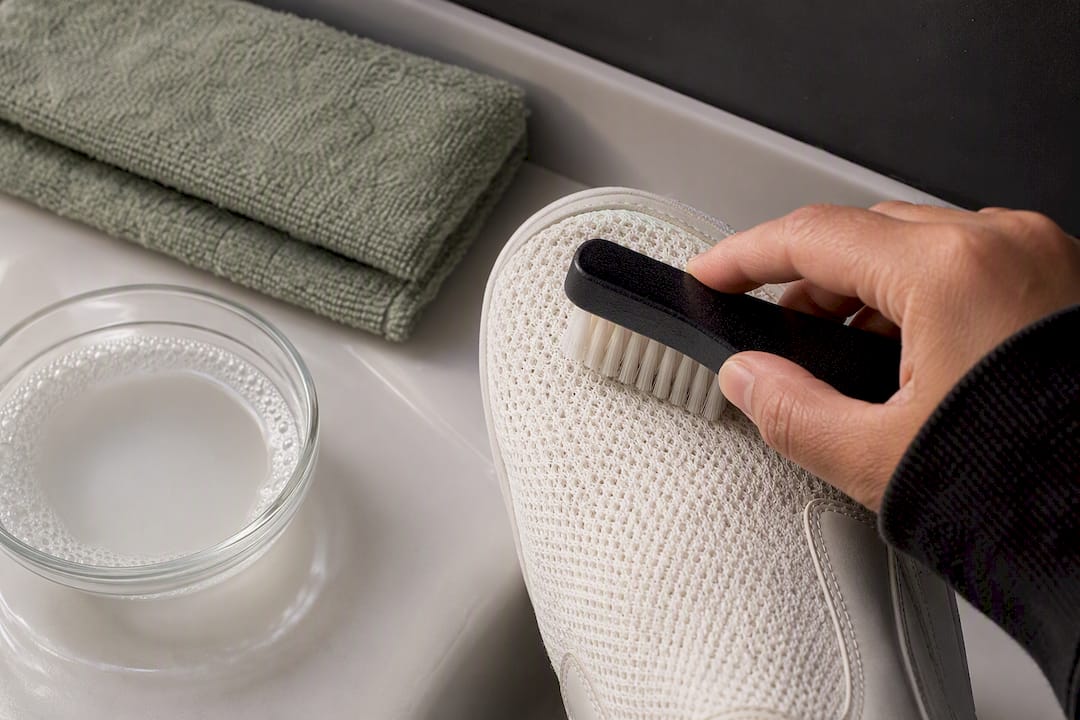
Mesh and technical knit uppers are woven from far finer threads than canvas, and aggressive scrubbing frays them fast. The fix is to slow down, not scrub harder.
Mix soap into water at a weaker dilution than you’d use on canvas or leather. Dip a soft brush, and work in one direction only, following the weave rather than scrubbing back and forth. That directional stroke is what keeps the fibres intact instead of pilling or pulling loose.
- Tackle odour by tipping a spoonful of baking soda inside each shoe and leaving it overnight, then tipping it out before wear.
- Swap out insoles once they start holding a smell that survives a wash; some odours are bacterial and won’t fully lift.
- Skip heavy alcohol-based sprays on mesh. They dry out the fibres and can leave visible tide marks.
- Stuff the shoes to hold their shape and give mesh more drying time than you’d allow leather or canvas, since it holds moisture in tighter pockets.
Suede and nubuck: why you should stay dry as long as possible
Suede is the one material where water is closer to an enemy than a solution. Start with a dedicated suede brush and a suede eraser to lift dirt and light marks while everything’s dry; that alone resolves most day-to-day grime.
Oil-based stains need a different approach. Cover the mark generously with cornstarch or talcum powder, leave it overnight to draw the oil out, then brush the residue away in the morning.
- Reach for a professional cleaner when a stain won’t shift with dry methods, since water-based cleaning easily crushes or mats the nap permanently.
- Use only suede-specific protectant sprays, applied before first wear, never a generic all-purpose spray.
- Re-brush suede regularly to keep the nap standing and looking fresh, even between stains.
Pro Tip: Brush suede in the same direction every time. Switching directions flattens the nap unevenly and leaves visible patches.
How do you whiten scuffed soles and midsoles?
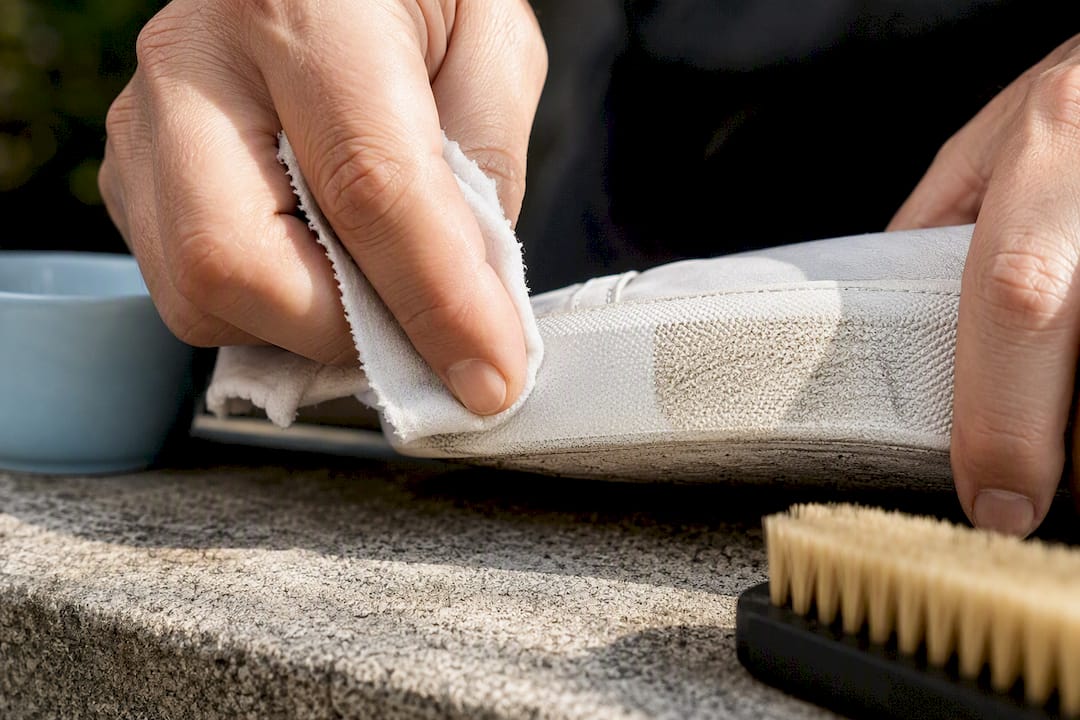
Soles take the most physical abuse of any part of the shoe, and they’re usually the easiest to bring back. A damp magic eraser, used with light pressure, lifts most scuff marks off rubber and midsoles within a few passes. Non-gel white toothpaste works as a backup for smaller rubber scuffs; rub it in gently with an old toothbrush, then wipe clean.
Yellowing midsoles are a slightly different problem, usually caused by oxidation rather than dirt. A paste of baking soda and hydrogen peroxide can lift that discolouration when applied, left for 15 to 20 minutes, then wiped away. Test it on a small area first, and repeat the process every few days rather than scrubbing harder in one go.
- Keep acetone and nail-polish remover away from glued joins between the sole and upper.
- Cover seams with a strip of tape before scrubbing hard, so the cleaner doesn’t seep into the join.
- Rinse pastes off fully; leftover residue can attract more dirt.
Laces, insoles and odour: the parts everyone forgets to clean
Laces and insoles hold more grime and sweat than the upper itself, yet they’re the part most people never actually wash. Soak cotton laces in warm soapy water for 20 minutes, or drop them into a mesh bag and run them through with your next load. Bleach is a last resort for genuinely grey laces, not a routine step, and needs a thorough rinse afterwards.
- Wipe insoles with mild soap and a cloth, then let them air-dry completely before reinserting them; damp insoles breed odour fast.
- Sprinkle baking soda inside shoes overnight to absorb lingering smell.
- Replace insoles once they’re visibly compressed or the odour returns straight after washing, since that usually signals bacteria or mould embedded in the foam rather than surface smell.
Drying, shaping and storage: how to avoid yellowing and warping
How a shoe dries matters almost as much as how it’s cleaned. Air-dry at room temperature, away from direct sunlight and away from radiators; both accelerate yellowing and can dry out adhesives. Pack the toe box with plain white paper towels, or slot in shoe trees, to help the shoe hold its shape while it dries.
- Never reach for newspaper. The ink transfers onto damp fabric and leaves grey smudges that don’t wash out.
- Skip the hair dryer entirely. Heat is the fastest route to cracked leather and yellowed canvas.
- Store finished pairs in breathable shoe bags rather than sealed plastic.
- Rotate between two or three pairs rather than wearing one constantly, and avoid damp basements or cupboards, since trapped humidity encourages mould.
Pro Tip: Stuff shoes while they’re still damp, not after they’ve already started drying. It holds the shape far better than reshaping a half-dried shoe.
What’s the best schedule for keeping white sneakers looking new?
Prevention beats correction every time, and the schedule below is deliberately light because over-cleaning shortens a shoe’s lifespan just as surely as neglect does.
- Apply a protectant spray before the first wear on any new pair, and reapply monthly or straight after heavy exposure to rain, mud, or dust.
- Do a 30 second visual check once a week, catching fresh marks before they set into the material.
- Spot-treat small marks the day they happen; save the full deep clean for once every few weeks, or sooner if the shoes see daily wear.
- Match your product to the material: soap and water for canvas and mesh, conditioner for leather, dry brushing and cornstarch for suede.
YDA UK’s care resources and where this guidance comes from
Material-aware care sits at the centre of how Ydauk thinks about footwear, because a shoe’s technology only holds up if it’s cleaned in a way that respects the materials it’s built from. Ydauk’s own guides go deeper on specific cases, including a step-by-step white leather cleaning walkthrough and a fuller shoe cleaning workflow covering tools, timing, and product choice pair by pair. The practical steps above, dry-brush first, dilute rather than saturate, avoid heat, echo the same conservative philosophy Ydauk applies across its care content, written and reviewed by Panagiotis.
Common cleaning mistakes that ruin white sneakers faster than dirt does
Over-scrubbing is the mistake that does the most damage, and it’s almost always well-intentioned. People see a stubborn mark, push harder instead of pausing, and end up thinning the fabric or breaking down the glue holding a sole in place. Heat-drying is the second habit worth dropping entirely; a radiator or hairdryer might look faster, but it’s the surest route to a yellowed, brittle upper. Bleach on anything delicate belongs on the same list.
If there’s one change worth making today, it’s this: dry-brush before you introduce any water, spot-treat rather than blitzing the whole shoe, then stuff with white paper towels to dry. Favour prevention over rescue, and the aggressive cleans become rare rather than routine.
— Panagiotis
How Ydauk supports material-specific sneaker care
Ydauk builds footwear around technology designed for comfort and foot health, and that same material-first thinking runs through its care guidance. The Technology of YDA Shoes page explains the engineering behind Ydauk’s designs and why the care steps above, gentle cleaning, no heat, regular protectant, matter more for technical footwear than for a basic canvas pump. If you’re weighing up a pair built for foot support or all-day wear, that page is the place to see how the construction holds up to daily use and to check current stock. For the fuller day-to-day maintenance workflow, including product recommendations by material, the shoe maintenance guide rounds out everything covered here.
Sources
- How to Clean White Sneakers | Wirecutter
- How to clean white shoes without damage — Jason Markk (how‑to)