
How do you clean white tennis shoes safely at home?
The best general answer: mix a few drops of mild dish soap into warm water, work it into the uppers with a soft-bristle brush, wipe away the suds with a damp microfibre cloth, then air-dry away from direct heat. That single method handles most everyday grime on most white tennis shoes. Trickier jobs (rubber yellowing, canvas stains, machine-washable builds) need a slightly different approach.
- Hand-clean with soap and a soft brush if the shoe has any leather, suede, or glued trim.
- Use a gentle machine wash only for all-canvas or sturdy mesh trainers with laces and insoles removed.
- Switch to material-specific care for leather, vegan leather, or delicate knit uppers.
Never use chlorine bleach directly on the upper, and never dry white trainers on a radiator or with tumble heat. Both cause yellowing that will not come back out.
Key Takeaways
Hand-cleaning with mild soap and a soft brush is the safest, most effective default for nearly every white tennis shoe, with material-specific care reserved for leather, canvas and mesh.
| Point | Details |
|---|---|
| Start gentle | Mild dish soap and a soft brush handle most everyday dirt without risking damage. |
| Match the method to the material | Leather needs wiping not soaking; canvas tolerates paste and light bleach; mesh needs a gentle touch. |
| Machine wash selectively | Only sturdy canvas or mesh, laces and insoles out, air-dry only, never leather. |
| Rubber needs its own fix | Toothpaste or a melamine sponge lifts scuffs and yellowing with the least risk. |
| Build a routine | Spot clean weekly, full clean monthly, and consider easy-care uppers like YDA Technology to cut maintenance time. |
Table of Contents
- What you need before you start cleaning white sneakers
- How do you clean white tennis shoes step by step?
- How do you clean white leather, canvas and mesh trainers?
- Can you put white tennis shoes in the washing machine?
- What’s the best way to clean rubber midsoles and scuffs?
- How do you clean shoe laces and insoles?
- How long does it take to dry and reshape white trainers?
- How do you get rid of stains and odours on white sneakers?
- What common mistakes ruin white tennis shoes?
- What routine keeps white trainers looking fresh long-term?
- What actually surprises people once they start doing this regularly?
- Want trainers that need less cleaning in the first place?
- Sources
What you need before you start cleaning white sneakers
Most jobs need nothing more exotic than what’s already under the sink. Build a small kit and you’ll be ready for spot-cleaning, laces, rubber scuffs, and light stains without a special trip to the shop.
- Mild dish soap (unscented, dye-free where possible)
- Soft-bristle brush or an old toothbrush
- Microfibre cloths, plus a spare towel
- Baking soda and white vinegar
- Non-gel white toothpaste
- Melamine sponge (the generic “magic eraser” type)
- Paper towel or tissue for stuffing while drying
Keep chlorine bleach and acetone out of your everyday rotation. Bleach belongs only in a heavily diluted form, and only on white cotton laces or all-canvas panels, never on leather or rubber trims, according to Good Housekeeping’s shoe-cleaning advice. Acetone can lift a tough scuff off a rubber sole but will strip finishes off anything else it touches.
Pro Tip: Test any product, even something as mild as toothpaste, on a small hidden patch of the shoe first and wait five minutes. If there’s no colour change or texture shift, you’re clear to treat the whole area.
How do you clean white tennis shoes step by step?
The standard sequence is: remove the laces, dry-brush off loose dirt, mix a mild soap solution, scrub gently in small circles, rinse with a barely-damp cloth, reshape, then air dry. That order matters. Dirt trapped under a wet scrub just gets ground further into the material.
- Remove laces and insoles. This stops dirt transferring back onto clean areas and lets you treat both separately, a step Vice’s cleaning guide flags as easy to skip but worth doing.
- Dry-brush first. Knock off loose dust and grit with a dry brush before anything gets wet, so you’re not just smearing mud around.
- Mix your solution. A few drops of dish soap in a cup of warm water is enough for most uppers. Wirecutter recommends this as a low-risk first pass before reaching for anything stronger.
- Scrub in small circles. Light pressure, soft bristles. Let the soap do the work rather than forcing it with a hard brush.
- Rinse with a barely damp cloth. Wipe away suds rather than dunking the whole shoe.
- Reshape and dry. Stuff loosely with paper towel and leave at room temperature.
| Step | Smooth leather | Canvas | Mesh/knit |
|---|---|---|---|
| Dry-brush | Safe, use very lightly | Safe | Safe, gentle only |
| Soap solution | Wipe, don’t saturate | Safe to soak lightly | Spot clean only |
| Scrub pressure | Very light | Moderate | Very light |
| Air dry | Away from heat, condition after | Standard air dry | Standard air dry |
How do you clean white leather, canvas and mesh trainers?
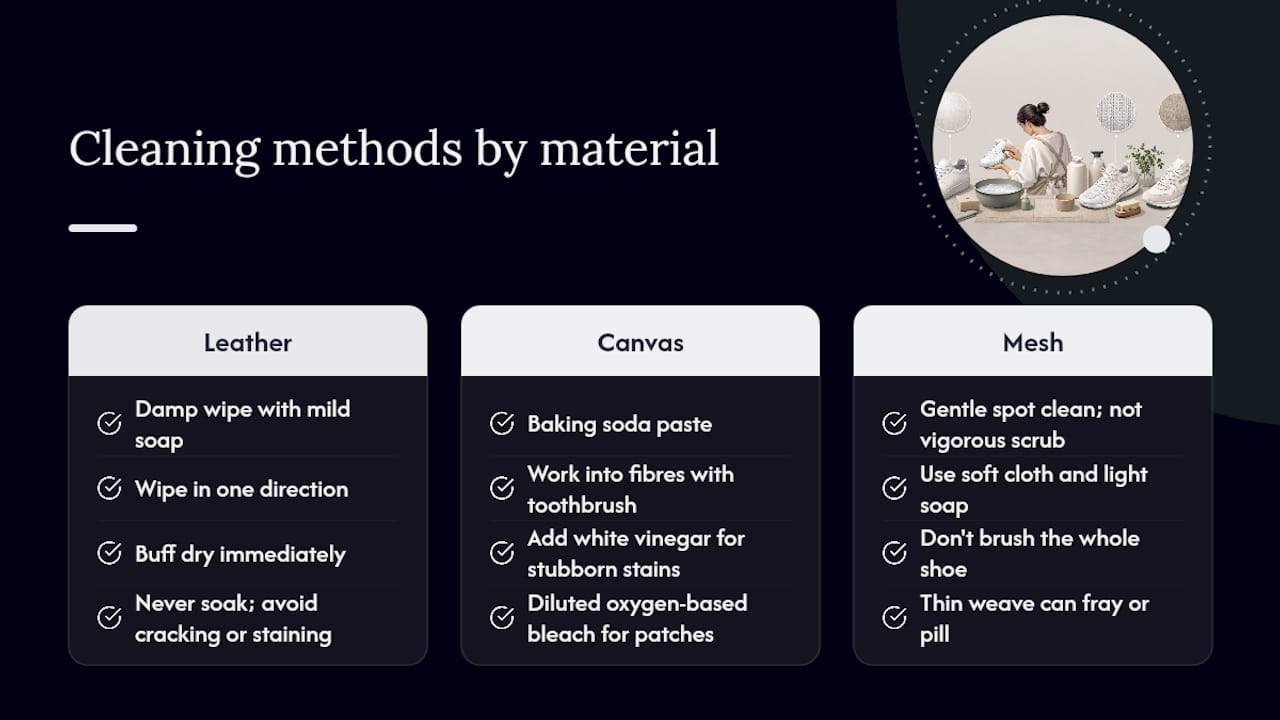
For smooth leather (including vegan leather), the method is a damp wipe with mild soap, never a soak. Dampen a cloth with your soap solution, wipe in one direction, then buff dry immediately. Leather that stays wet too long can crack or stain unevenly. Finish with a leather conditioner to stop the surface drying out, and if the shoe has deep scuffing or discolouration that won’t lift, a professional leather cleaner is worth the cost rather than risking the upper. Ydauk’s own leather-cleaning walkthrough covers the toothbrush technique for stitched seams in more depth.
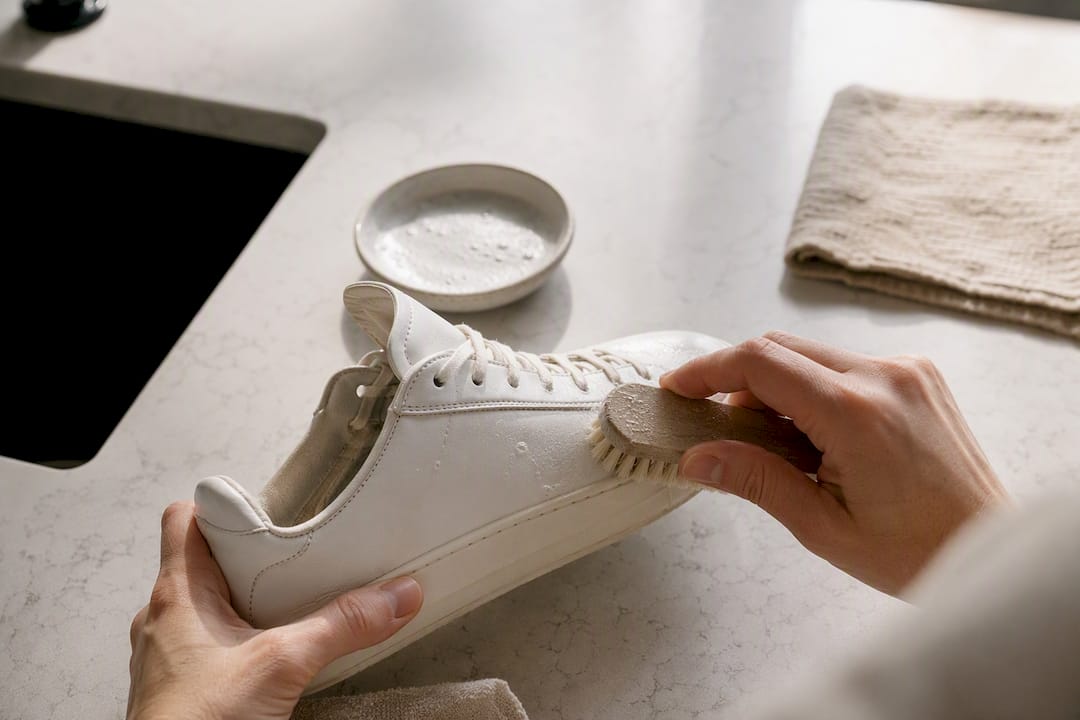
For canvas, the method is a baking soda paste worked into the fibres with a toothbrush. Mix baking soda with a little water for general stains, or baking soda and white vinegar for something more stubborn. Canvas is also the one upper where diluted oxygen-based bleach is reasonable for isolated white patches, kept well away from any rubber trim.
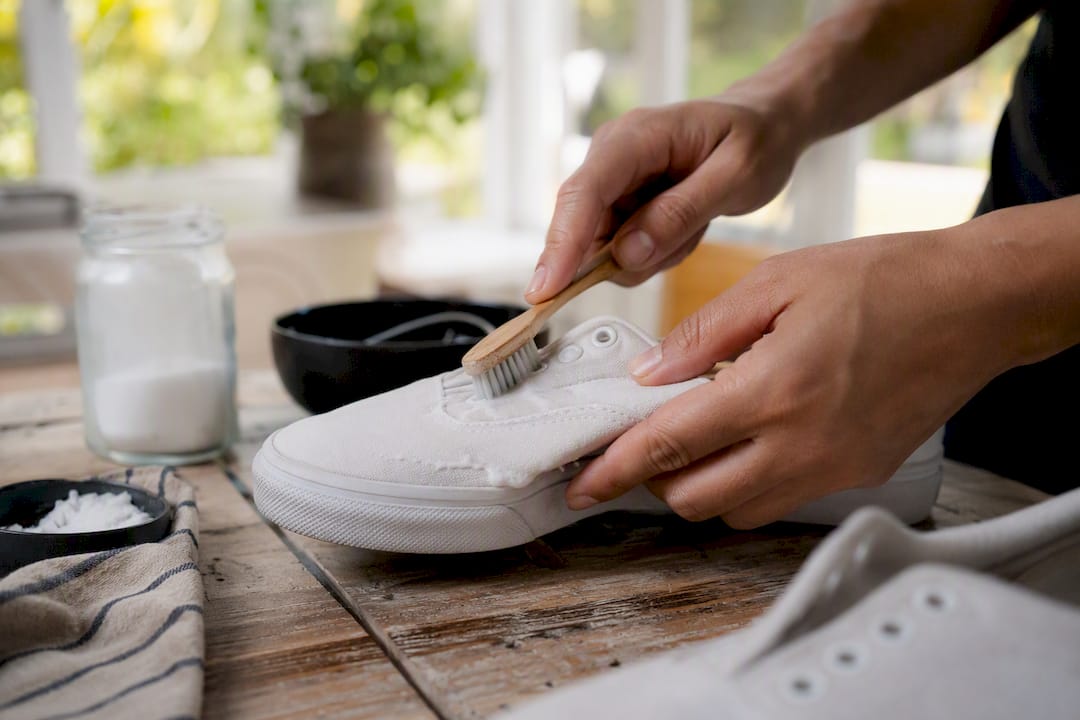
For mesh and knit uppers, the method is a gentle spot clean, not a vigorous scrub. These weaves are thinner and can fray or pill under pressure. Treat marks individually with a soft cloth and light soap rather than working the whole shoe over with a brush.
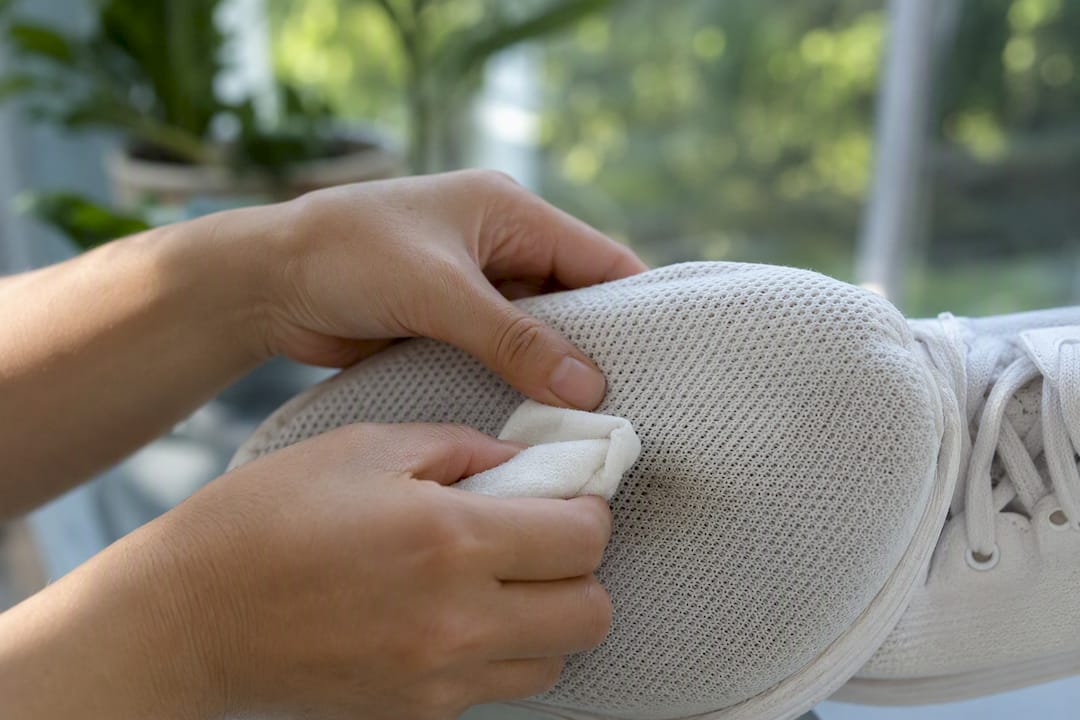
Pro Tip: Stuff canvas shoes with paper towel while they dry to stop the sides caving in, and give leather a light conditioner pass once a month even when it isn’t visibly dirty.
Can you put white tennis shoes in the washing machine?
A gentle machine wash works for sturdy all-canvas or mesh trainers, laces and insoles removed first, but it’s the wrong call for anything with leather, suede, or heavily glued construction. Machine agitation is far rougher than hand-washing and can shift adhesives that hold the sole to the upper.
Avoid the washing machine when:
- The shoe has any leather, suede, or foam-backed panel.
- Trims are glued rather than stitched.
- The midsole has visible separation or wear already.
If the shoe qualifies, use cold or warm water on a gentle cycle, place it inside a mesh laundry bag or old pillowcase, and add a couple of towels to balance the drum. Skip the dryer entirely afterwards. Vice’s reporting notes that machine washing is one of the most common causes of premature trainer damage, precisely because people assume it’s always safe.
What’s the best way to clean rubber midsoles and scuffs?
For most yellowed or scuffed rubber midsoles, non-gel white toothpaste or a melamine sponge is the simplest effective fix. Both work by gently abrading the surface rather than dissolving the stain chemically, which is why they’re low risk compared with solvents.
- Toothpaste: mild polishing action, safe for daily use, needs a few minutes’ contact time.
- Melamine sponge: lifts scuffs fast with light pressure, but can strip protective coatings if scrubbed too hard.
- Acetone: the strongest option for set-in marks, but it will damage adjacent fabric, leather trim, and painted logos on contact.
Test acetone on a hidden rubber patch only, and keep a cotton bud rather than a soaked cloth so it never touches anything but the rubber itself.
How do you clean shoe laces and insoles?
Remove laces before you clean the shoe, then soak white laces in warm soapy water, or a little oxygen bleach for stubborn greying, for 20 to 30 minutes before rinsing and air-drying. This small step also stops dirt migrating back onto a clean upper, as Vice notes.
- Hand-wash insoles with mild soap, then sprinkle with baking soda to deodorise before they dry fully.
- Replace laces or insoles instead of cleaning them once they’re visibly frayed, permanently grey, or losing cushioning. It’s cheaper than risking the whole clean on a lost cause.
How long does it take to dry and reshape white trainers?
Air-dry at room temperature, stuffed with paper towel or a shoe tree to hold their shape, and never near a radiator or in direct sun. Heat is the single fastest way to yellow white materials and warp glued soles.
Timeline estimates vary by method: a simple spot-clean dries quickly, a full hand wash takes several hours depending on humidity, and anything that’s been through a machine wash can take a day or more to dry properly through the midsole. A fan pointed at the shoes, or a shaded spot with good airflow, speeds this up without adding heat.
- Never use a hairdryer, radiator, or tumble dryer.
- Do stuff shoes while damp to stop them collapsing inward.
- Do dry in a ventilated spot, not a closed cupboard.
How do you get rid of stains and odours on white sneakers?
Start with baking soda paste or a white vinegar spot treatment before reaching for anything stronger. A paste of baking soda and water, left on a stain for 10 to 15 minutes then brushed off, handles most everyday marks and doubles as a deodoriser, a method Arm & Hammer backs for canvas specifically.
- Baking soda paste: 10 to 15 minutes contact, brush off, rinse with a damp cloth.
- White vinegar: dab undiluted onto the stain, leave a few minutes, wipe clean.
- Diluted oxygen bleach: for white canvas only, short contact time, rinse thoroughly.
- Hydrogen peroxide: a light dab on canvas can lift set-in stains that soap alone won’t shift.
Pro Tip: If a stain survives two separate home treatments, stop. Repeated scrubbing at that point usually does more damage than the stain itself, and a professional cleaner is the safer next move.
What common mistakes ruin white tennis shoes?
Chlorine bleach used undiluted on mixed-material shoes, hard-bristled brushes scrubbing canvas and mesh, drying on a radiator, and machine-washing anything with leather or heavy glue: these four mistakes account for most of the irreversible damage seen on white trainers.
Heat and harsh chemicals both attack the adhesives holding soles to uppers and the foam inside cushioning, as Vice’s reporting confirms.
Gentle and slow beats fast and aggressive every time with white shoes. A soft brush and patience will outperform a stiff brush and bleach almost every time.
Pro Tip: If you’re ever unsure whether a shoe can handle a treatment, treat it like leather: less water, less pressure, less heat.
What routine keeps white trainers looking fresh long-term?
The core routine is simple: clean small marks the day they happen, do a full light clean once a month, and store shoes dry with pairs rotated rather than worn back-to-back. Waiting lets dirt set into the material, which is why routine beats reactive scrubbing, a pattern CNET’s cleaning research also points to.
- Daily: a quick glance and wipe of any fresh marks.
- Weekly: spot-clean scuffs on the midsole and toe.
- Monthly: a full clean following the steps above, laces and insoles included.
…
Rotating two pairs rather than wearing one daily roughly halves the cleaning frequency needed on either shoe.
Ydauk (https://ydauk.com) is a footwear platform built around foot-health technology, and its athlete footwear care guide covers rotation scheduling in more detail if you want to build this into a habit.
What actually surprises people once they start doing this regularly?
Midsoles almost always yellow before the upper does, which catches most people off guard the first time they notice it. Once you build a monthly habit, the whole process gets faster because you’re never dealing with set-in grime, just light upkeep. Ydauk’s blog runs through fuller step-by-step results if you want to see the routine tested over time.
Want trainers that need less cleaning in the first place?
If the whole idea of a monthly cleaning routine sounds like more upkeep than you want, the more practical fix is choosing uppers that resist staining and yellowing to begin with. Certain synthetic weaves and treated finishes shed dirt and moisture before it sets into the fibres, which is exactly the reasoning behind YDA Technology, Ydauk’s approach to durable, easy-care uppers built for everyday wear.

Instead of choosing between hand-washing and risking a machine cycle, a shoe designed with cleaning frequency in mind sidesteps that decision altogether. If low-maintenance white or light-coloured trainers sound like the better long-term fit for your routine, take a look at the current YDA Technology range and see which build matches how you actually wear your shoes.
Sources
- How to make white shoes look new again, according to pros | Good Housekeeping
- Seven steps to getting your white sneakers actually white again | CNET
- How to clean white trainers without ruining them | Vice
- How to clean yellowed white shoes and sneakers: 5 easy ways to brighten them and 5 mistakes to avoid | The Times of India
- How to Clean White Shoes with Baking Soda | Arm & Hammer
For deeper material-specific walkthroughs, Ydauk’s step-by-step shoe cleaning guide covers the full process in more depth.