
How to maximise shoe durability: expert care guide
TL;DR:
- Proper shoe care involves regular inspection, cleaning, conditioning, and storage to prolong lifespan. Using the right tools and signals of early wear helps prevent costly repairs and structural failure. Consistent maintenance routines greatly improve shoe durability and overall value.
Shoe durability is defined as a shoe’s ability to maintain its structure, appearance, and function across repeated wear. Knowing how to maximise shoe durability means adopting consistent care routines, using the right protective products, and catching wear early before it becomes costly damage. Most shoes fail prematurely not because of poor construction, but because of neglect. Professional shoemakers recommend annual shoe inspection and servicing as the industry standard for preventing avoidable deterioration. The good news is that the techniques required are straightforward, and the investment in time is minimal compared to the cost of replacing footwear.
How to maximise shoe durability with the right tools
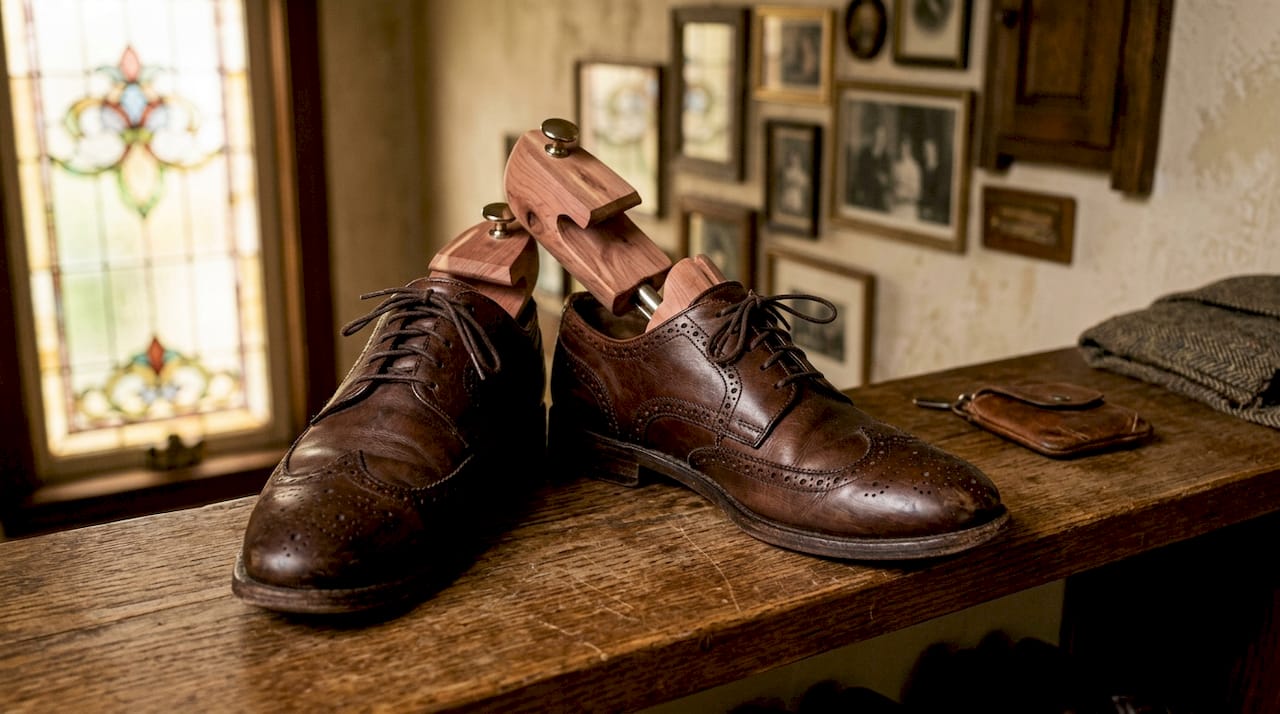
The right tools make the difference between shoes that last years and shoes that fall apart within months. Every care kit should cover the basics: a soft-bristled brush for surface dirt, a leather conditioner for hide-based uppers, a suede eraser for napped materials, and a waterproof spray for weather protection. Canvas and mesh shoes need gentler treatment, typically a mild soap solution and a soft cloth rather than stiff brushes that can damage fibres.
Cedar shoe trees are one of the most underused tools in everyday shoe care. They perform three functions simultaneously: absorbing post-wear moisture from the insole, holding the upper in its correct shape to prevent creasing, and deodorising naturally through the wood’s aromatic properties. Without them, leather uppers collapse inward overnight and set permanent creases that weaken the material over time.
| Tool | Purpose | Best for |
|---|---|---|
| Soft-bristled brush | Removes surface dirt before cleaning | All shoe types |
| Leather conditioner | Replenishes oils and prevents cracking | Leather and smooth hide |
| Suede eraser | Lifts dry marks without water damage | Suede and nubuck |
| Waterproof spray | Repels moisture and staining | All materials, especially leather |
| Cedar shoe trees | Absorbs moisture, holds shape, deodorises | Leather, dress, and structured shoes |
| Microfibre cloth | Buffs and applies product evenly | Leather and patent finishes |
Choosing the correct size of shoe tree matters as much as choosing the material. A tree that is too small will not hold the shoe’s shape. One that is too large will stretch the upper and distort the toe box permanently.
Pro Tip: Insert cedar shoe trees while the shoes are still warm from wear. The warmth opens the leather fibres slightly, allowing the cedar to draw out moisture more effectively and prevent creases from setting.
What is the best routine for cleaning and protecting shoes?
Cleaning shoes correctly is the foundation of any shoe maintenance technique. The single most important rule is never to soak shoes. Prolonged water exposure damages adhesives, warps insoles, and causes leather to dry out unevenly, leading to cracking. Always use a damp cloth or controlled application rather than submerging the shoe.
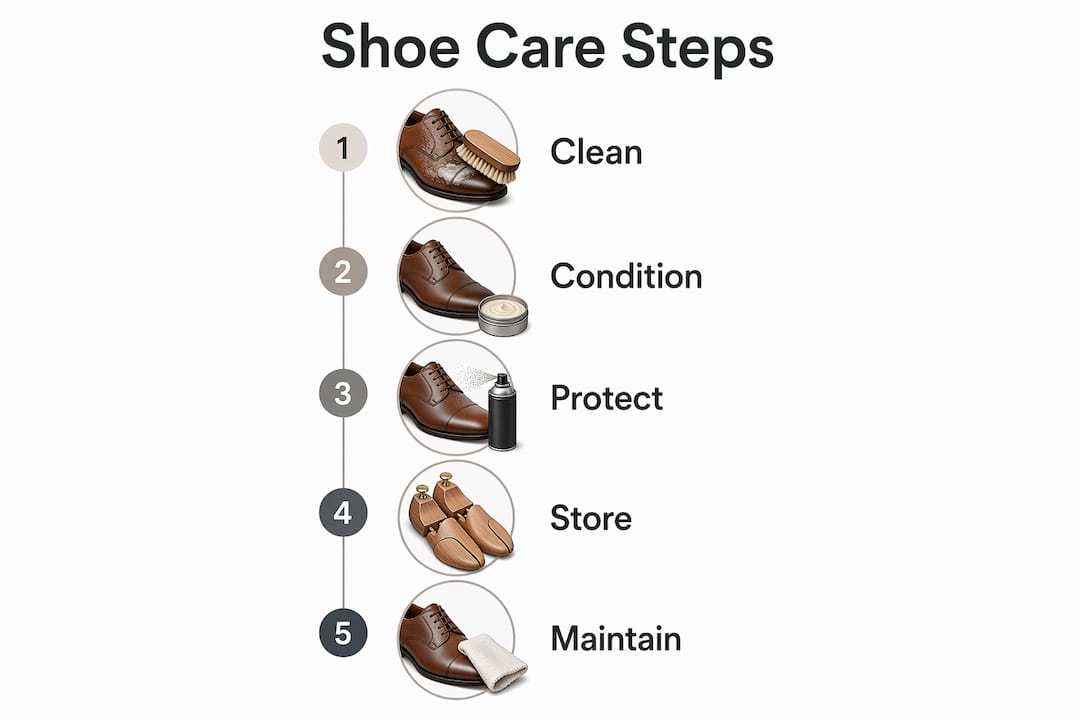
Follow this sequence for a thorough clean and condition:
- Remove loose dirt. Use a dry soft brush to sweep away surface mud or dust before applying any liquid. Rubbing wet dirt into the material causes staining.
- Wipe down with a damp cloth. Use a clean, barely damp microfibre cloth to remove remaining surface grime. Work in small circular motions on leather; use straight strokes on suede to avoid lifting the nap.
- Apply conditioner before stains set. Proactive conditioning before stains penetrate the material drastically reduces cleaning time and extends the shoe’s life. Do not wait until the leather looks dry or dull.
- Allow to dry naturally. Never place shoes near a radiator or in direct sunlight. Direct heat causes sole separation, cracking, and deformation of the upper. Room temperature drying is the only safe method.
- Reapply waterproofing spray. Water repellent sprays wear off with use. Reapply once a month between october and april to maintain effective weather protection during wet months.
- Rotate your pairs. Wearing the same shoes every day prevents them from drying fully between uses. Rotating between at least two pairs gives each shoe 24–48 hours to recover, which significantly reduces cumulative wear.
One detail most people overlook is the relationship between waterproofing and breathability. Permanent waterproof seals hinder leather’s natural breathability and make future repairs harder. Moderate, regular reapplication of a spray-based product is far better than a single heavy-duty treatment.
Pro Tip: Wipe your shoes with a dry cloth immediately after each wear. This takes under 30 seconds and removes salt, moisture, and surface grime before they have a chance to penetrate the material.
For a more detailed breakdown of daily and weekly routines, the shoe maintenance workflow guide from Ydauk covers every step with practical examples.
How do you spot early signs of shoe wear?
Catching damage early is the most cost-effective approach to preserving footwear. Most people wait until a shoe is visibly broken before acting. By that point, what could have been a minor repair has become a structural failure requiring full sole replacement or, worse, a new pair.
The three areas to inspect regularly are:
- Heel tips. Worn heel tips are the earliest and cheapest repair. Left unaddressed, the heel block beneath wears down, and replacing the full heel costs significantly more than a simple tip replacement.
- The welt. The welt is the strip of material stitched between the upper and the sole. Cracking or separation here signals that water is entering the shoe’s structure. A cobbler can restitch a welt before it fails completely.
- The sole. Uneven sole wear indicates gait issues and accelerates damage to the upper. Thin patches on the ball of the foot or the outer edge of the heel are warning signs that the sole needs attention.
“Annual professional inspection and servicing of heel tips, the welt, and the sole prevents minor damage from escalating into costly structural repairs.” — Andrew McDonald, shoemaker
Choosing a reputable cobbler is straightforward. Look for one who specialises in the type of shoe you own, whether that is Goodyear-welted dress shoes, cemented casual trainers, or handmade boots. Ask to see examples of previous repair work. A good cobbler will tell you honestly whether a repair is worth the cost relative to the shoe’s value.
For guidance on when professional servicing makes sense, Ydauk’s practical lifespan guide outlines the decision points clearly.
Does storage affect how long shoes last?
Storage is where most shoe care routines fall apart. Shoes left in a pile on the floor, stuffed into a bag, or stored in a damp cupboard deteriorate faster than shoes worn regularly. The material damage caused by poor storage is often irreversible.
Key storage practices that protect shoe lifespan:
- Insert cedar shoe trees immediately. Cedar shoe trees inserted within one hour of removing shoes maximise moisture absorption and prevent creases from setting permanently.
- Keep shoes away from direct heat and sunlight. Heat dries out leather and causes adhesives to weaken. A cool, ventilated shelf or shoe rack is the correct environment.
- Rotate pairs consistently. Shoes need time to breathe between wears. Rotation also prevents the sole foam from compressing permanently under repeated daily load.
- Store in breathable bags or boxes. Plastic bags trap moisture and encourage mould. Cotton dust bags or ventilated boxes allow air circulation while protecting the surface from dust.
- Do not store shoes damp. Polyurethane midsoles degrade through a process called hydrolysis when stored in humid conditions. Regular wear keeps the foam flexible, but storing damp shoes accelerates crumbling and sole failure.
Pro Tip: If you are storing shoes for longer than a month, stuff the toe box with acid-free tissue paper rather than newspaper. Newspaper ink can transfer to light-coloured linings and is difficult to remove.
The expert footwear care tips published by Ydauk expand on storage methods for performance and everyday footwear alike.
Key takeaways
Consistent, proactive care is the single most effective method for extending shoe lifespan, combining correct cleaning, conditioning, early repair, and proper storage.
| Point | Details |
|---|---|
| Clean before conditioning | Always remove dirt before applying conditioner to avoid trapping grime in the material. |
| Reapply waterproofing monthly | Reapply water repellent spray monthly from october to april to maintain weather protection. |
| Inspect three wear zones | Check heel tips, the welt, and the sole regularly and repair minor damage before it escalates. |
| Use cedar shoe trees | Insert cedar trees within one hour of removing shoes to absorb moisture and hold shape. |
| Avoid direct heat when drying | Dry shoes at room temperature only; heat causes cracking, sole separation, and deformation. |
Why I think most people are getting shoe care backwards
Most people treat shoe care as something you do when a shoe looks bad. That is the wrong approach entirely. By the time a shoe looks visibly worn or dirty, the damage is already done. The leather has dried out, the sole has started to separate, or the upper has set a crease that no amount of conditioning will fully reverse.
I have seen this pattern repeatedly. Someone buys a well-made pair of shoes, wears them hard for two years without any care, and then asks whether they can be saved. Sometimes they can. More often, the cost of restoration exceeds the cost of a new pair. The preventative habit takes five minutes a week. The remedial work takes five hours and a significant bill.
The other thing most guides get wrong is the rotation advice. They mention it briefly as a tip. It is not a tip. It is the single most structural change you can make to how long your shoes last. Wearing the same pair every day means the insole never fully dries, the foam never recovers, and the upper never rests. Two pairs worn on alternating days will both outlast one pair worn daily by a considerable margin.
Shoe care is not complicated. It is just consistent. Build the habit of wiping shoes after each wear, conditioning once a month, and inspecting the soles every few weeks. That routine, applied to any decent pair of shoes, will extend their life well beyond what most people expect.
— Panagiotis
Ydauk shoes: built to reward good care
Shoes that are well-made respond better to care. That is the principle behind Ydauk’s approach to footwear design. The YDA shoe technology combines foot health engineering with materials selected for both comfort and longevity, meaning the care routines described in this article will have a greater and more lasting effect on Ydauk footwear than on shoes built to lower standards.

Ydauk designs shoes for people who want footwear that performs well and lasts. The technology behind each pair supports the kind of daily wear that benefits most from consistent maintenance. If you want footwear that holds its structure, supports your foot correctly, and responds well to conditioning and care, the YDA technology page explains exactly what goes into each pair.
FAQ
How often should I condition leather shoes?
Condition leather shoes once a month under normal wear. Increase to every two weeks during dry or cold months when leather loses moisture faster.
Can I clean suede shoes with water?
Avoid using water directly on suede. Use a dry suede eraser for marks and a soft brush to restore the nap. Water causes suede to stiffen and stain unevenly.
When should I take shoes to a cobbler?
Take shoes to a cobbler when heel tips show visible wear, when the welt shows cracking or separation, or when sole thinning becomes uneven. Annual professional inspection is the recommended standard.
Do waterproof sprays damage shoe materials?
Permanent waterproof treatments can reduce leather breathability. Use spray-based repellents and reapply moderately rather than applying a single heavy coat.
Why do shoe soles crumble even when barely worn?
Polyurethane midsoles degrade through hydrolysis when stored in damp or humid conditions. Regular wear keeps the foam flexible. Shoes stored unworn for long periods in poor conditions are at the highest risk of sole crumbling.