
Arch support shoe types: your 2026 guide for UK feet
Your arch type determines which shoe category you actually need, and getting that wrong is one of the most common causes of preventable foot pain. Flat or low arches need motion control or stability shoes with firm medial posts and rigid heel counters. Normal arches suit neutral or mild stability shoes with moderate cushioning and semi-curved lasts. High arches call for cushioned neutral shoes with flexible midsoles and no corrective posting whatsoever.
Here is the quick reference by arch shape:
- Flat/low arch: motion control shoes, stability shoes with medial posts, a moderate heel-to-toe drop
- Normal/neutral arch: neutral cushioned shoes, mild stability shoes, semi-curved last shapes
- High arch: neutral cushioned shoes, maximum cushioning, curved lasts, no rigid arch posting
The distinction matters beyond comfort. Wearing the wrong category can shift stress up through the ankle, knee, and hip, turning a foot problem into a lower-limb one.
Table of Contents
- What your arch type actually means for how you walk
- How to identify your arch type at home
- Key shoe features and technologies suited to different arch types
- Expert insights on choosing arch support shoes for optimal foot health
- Tips for choosing the right arch support shoe in the UK market
- What happens when arch support does not match your foot type
- How arch support prevents and alleviates specific injuries
- What arch support materials actually do differently
- Recommended shoe models for each arch type
- 1. Brooks Adrenaline GTS for flat feet and overpronation
- 2. ASICS Gel-Kayano for long-distance comfort with overpronation
- 3. HOKA Arahi for maximum cushioning with arch control
- Ydauk: footwear built around foot health technology
- Key takeaways
What your arch type actually means for how you walk
Foot arches are not just structural curiosities. They are the body’s primary shock-absorption system, and their height directly shapes how weight travels through every step you take.
Flat feet (also called pes planus) have a collapsed or very low medial longitudinal arch. The foot tends to roll inward excessively when walking or running, a pattern called overpronation. Left unsupported, this places strain on the posterior tibial tendon, the plantar fascia, and eventually the knee and hip joints. People with flat feet often notice fatigue along the inner ankle or a dull ache through the arch after prolonged standing.
Normal arches distribute load efficiently across the heel, outer foot, and ball of the foot. The arch compresses slightly under weight and springs back, functioning as a natural energy return mechanism. Most people with normal arches can wear a wide range of shoe types without discomfort, though they still benefit from moderate support during high-impact activity.
“High arches may cause excessive strain on joints and muscles. Your feet may not absorb shock well, especially if you perform high-impact or jumping activities.” — Mayo Clinic Health System
High arches (pes cavus) sit at the opposite extreme. The foot contacts the ground mainly through the heel and ball, with very little midfoot contact. This concentrates pressure at two points rather than spreading it, and the foot tends to supinate (roll outward) rather than pronate. Rigid arch supports make this worse by adding pressure to an already stiff structure.
Key biomechanical differences at a glance:
- Flat arch: excessive inward roll, wider contact area, overpronation risk
- Normal arch: balanced load distribution, natural pronation within healthy range
- High arch: limited contact area, outward roll tendency, poor shock absorption
Proper arch support distributes weight evenly and prevents the compensatory patterns that cause injury over time.
How to identify your arch type at home
The wet footprint test is the most practical home method for determining arch height, and it takes about two minutes. A podiatrist at the Mayo Clinic Health System recommends it as a reliable first step before buying athletic footwear.
Step-by-step:
- Fill a shallow tray or bowl with water.
- Wet the sole of one foot thoroughly.
- Step firmly onto a piece of dark card, brown paper, or a dry concrete surface.
- Step off carefully and examine the imprint left behind.
- Compare the shape to the descriptions below.
What your wet footprint reveals:
- Full print with little or no curve on the inner edge: flat or low arch
- Partial print with a distinct curve inward at the midfoot: normal arch
- Very narrow band connecting heel and ball, or no midfoot contact at all: high arch
“If your footprint looks like a complete foot, then you have a flat arch. If you see little of your footprint, you likely have a high arch.” — Mayo Clinic Health System
The test gives a useful starting point, not a clinical diagnosis. If you have persistent pain, numbness, or your arch shape has changed noticeably over time, a podiatrist assessment is worth arranging. Arch height can shift with age, weight change, and pregnancy, so a test you did ten years ago may no longer reflect your current foot structure.
Pro Tip: Do the test at the end of the day rather than first thing in the morning. Feet spread and arches lower slightly after hours of loading, giving you a more accurate picture of how your foot behaves under real conditions.
Key shoe features and technologies suited to different arch types
Knowing your arch type is only half the job. The other half is understanding which shoe design elements actually address your biomechanics, rather than just feeling comfortable in the shop.
For flat feet and overpronation:
- Firm medial post: a denser foam or plastic wedge on the inner midsole that resists inward collapse
- Rigid heel counter: the stiff cup around the back of the shoe that centres the heel bone
- Straight or semi-straight last: the shape the shoe is built around, which suits wider, flatter foot profiles
- Motion control or stability category rating
- a moderate heel-to-toe drop to reduce tension on the plantar fascia and Achilles
For normal arches:
- Moderate arch support without aggressive posting
- Dual-density midsole for cushioning with light structure
- Semi-curved last to match the foot’s natural shape
- Firm midsole with moderate rear-foot stability
For high arches:
- Maximum cushioning throughout the midsole
- Flexible, curved last that accommodates a narrow midfoot
- Neutral support with no medial post. Rigid arch posts worsen supination and should be avoided entirely for high arches
- Shock-absorbing materials at heel and forefoot
| Arch type | Shoe category | Key feature | Avoid |
|---|---|---|---|
| Flat/low | Motion control, stability | Firm medial post, rigid heel counter | Neutral, minimalist |
| Normal | Neutral, mild stability | Semi-curved last, moderate cushioning | Over-corrective posting |
| High | Neutral cushioned | Maximum cushioning, flexible midsole | Rigid arch supports |
Technologies worth knowing by name: Brooks GuideRails control excess movement at the knee and hip, not just the foot. ASICS DuoMax is a dual-density midsole system that resists arch collapse under load. HOKA’s J-Frame provides pronation control through midsole geometry rather than a heavy medial post, which suits people who find traditional stability shoes too stiff.
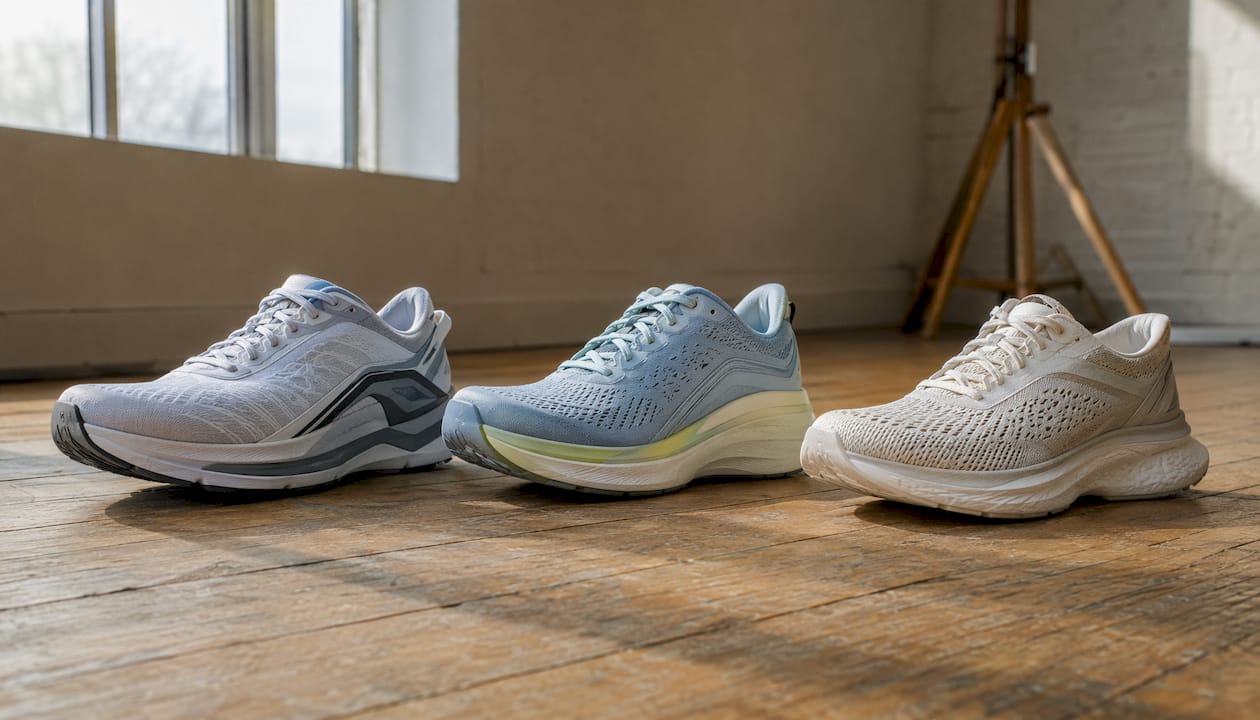
Removable footbeds matter more than most people realise. A removable insole lets you swap in a custom or over-the-counter orthotic without raising the heel-to-toe drop excessively or cramping the foot. If you already use orthotics, or think you might need them, check for this feature before buying.
Expert insights on choosing arch support shoes for optimal foot health
Podiatrists are consistent on one point: the most common mistake is choosing a neutral shoe for flat feet because it feels softer. Softness and support are not the same thing.
“Wearing the wrong type of shoe, such as minimalist or neutral shoes for flat feet, worsens overpronation symptoms. Motion control and stability shoes are preferable to address flat foot biomechanics.” — Podiatrist guidance
Podiatrists also caution against overcorrection. Stability without excess is the goal. Pushing the foot too far into a corrected position can cause lateral foot strain and peroneal tendon irritation, particularly in people whose overpronation is mild rather than severe.
Practical expert guidance:
- Match support intensity to severity. Mild overpronation suits a stability shoe; severe collapse may need a motion control shoe or custom orthotics.
- Check shoe volume before adding an orthotic. A low-volume shoe negates the benefit of a corrective insole because the foot cannot sit in proper alignment.
- Break in rigid orthotics gradually, starting at two hours per day and increasing by one hour daily over the first week.
- Replace over-the-counter insoles regularly. They lose a significant portion of their effectiveness within 6–12 months as the materials compress.
- Use different supports for different activities. A running orthotic will not function correctly in a dress shoe or work boot.
Pro Tip: If you have been using foam arch insoles without relief, the issue is likely the material rather than the concept. Foam compresses under body weight within weeks and provides no meaningful mechanical correction. A semi-rigid polypropylene shell holds the arch in position regardless of load.
Weight distribution via arch support also prevents injuries well above the foot. When the arch collapses repeatedly, the knee rotates inward and the hip compensates, creating a chain of stress that can manifest as IT band syndrome, patellofemoral pain, or lower back ache. Addressing the foot first often resolves what appears to be a knee or hip problem.
Tips for choosing the right arch support shoe in the UK market
UK consumers have good access to clinically endorsed footwear, but the sheer number of options makes selection harder than it should be. A few practical criteria cut through the noise.
Best practice when buying:
- Try multiple models within the correct support category. Brand lasts vary widely, and a shoe labelled “stability” from one manufacturer may fit very differently from another. Fit within the right category is the ultimate determinant of success.
- Prioritise width options. Many UK stockists carry D (standard), 2E (wide), and 4E (extra-wide) fittings. Flat feet in particular tend to spread wider due to arch collapse, so a standard width may force the foot to pronate further just to find room.
- Check heel-to-toe drop on the product specification. For flat feet, 8–12mm is the clinical target. Zero-drop shoes are contraindicated during active plantar fasciitis.
- Look for removable insoles if you use or plan to use orthotics.
- Match the shoe to the activity. A stability running shoe is not the right choice for all-day office wear, and vice versa.
Common mistakes to avoid:
- Buying on cushioning feel alone in the shop
- Choosing a shoe that is too narrow, then wondering why the arch support is not working
- Using a running orthotic in a dress shoe or flat
- Going barefoot at home while treating a foot condition. Supportive footwear or sandals throughout the day matters as much as the shoe itself
- Assuming a higher price means better clinical support. Biomechanical features, not brand prestige, determine effectiveness
The flat foot versus high arch footwear guide on Ydauk’s blog covers UK-specific sizing and width considerations in more detail.
What happens when arch support does not match your foot type
The consequences of a mismatch between arch type and shoe category are predictable and well-documented. They tend to develop gradually, which is why people often blame overuse or ageing rather than their footwear.
Flat feet in neutral or minimalist shoes experience accelerated overpronation. The medial longitudinal arch collapses further with each step, placing the posterior tibial tendon under sustained eccentric load. Over time, this leads to posterior tibial tendon dysfunction, a progressive condition that can eventually cause the arch to flatten permanently. Plantar fasciitis is also common, as the fascia stretches beyond its capacity with every footfall.
Normal arches in over-corrective motion control shoes are pushed into supination. The medial post forces the foot outward, concentrating load on the lateral border and stressing the peroneal tendons. This is less common but genuinely problematic for people who self-diagnose as “flat-footed” and buy the most corrective shoe available.
High arches in stability or motion control shoes face the most acute risk. A rigid medial post adds pressure directly to a foot that already concentrates load at the heel and ball. Stress fractures of the metatarsals, lateral ankle sprains, and Achilles tendinopathy are all associated with high-arched feet in over-structured footwear.
How arch support prevents and alleviates specific injuries
Arch support works mechanically, not just by adding comfort. A structured midsole or orthotic physically holds the foot in a corrected position, reducing the load on soft tissues that would otherwise absorb excessive force.
Proper arch support distributes weight evenly across the foot, reducing plantar fasciitis and tendon strain. For plantar fasciitis specifically, the mechanism is straightforward: a firm arch support reduces the stretch placed on the plantar fascia at its calcaneal insertion with every step. Pair that with an 8–12mm heel drop and a deep heel cup, and the cumulative load reduction across a day of walking is substantial.
Shin splints in runners with flat feet often respond to stability footwear alone, without any other intervention. The tibialis anterior and posterior muscles work harder when the foot overpronates, and a medial post reduces that demand. Knee pain from patellofemoral syndrome frequently has a foot component too. Brooks GuideRails, for instance, are specifically designed to control excess movement at the knee as well as the foot, addressing the full kinetic chain rather than just the arch.
For high arches, cushioning is the primary injury prevention tool. The goal is to absorb the impact energy that the foot’s rigid structure cannot dissipate naturally. Maximum-cushion neutral shoes reduce metatarsal stress and lower the risk of stress fractures during high-impact activity.
What arch support materials actually do differently
The material inside an arch support determines how it behaves under load, and the differences are not subtle.
Foam and memory foam compress quickly under body weight. They feel comfortable initially but provide minimal mechanical correction. Memory foam in particular moulds to the foot’s existing shape, which means it accommodates overpronation rather than correcting it. Suitable for pressure distribution in low-demand situations, not for biomechanical control.
Cork offers a middle ground. It compresses slightly under load and moulds gradually to the foot’s shape over weeks of wear, providing a personalised fit. Cork supports are more durable than foam and offer better rearfoot control, though they are less corrective than polypropylene shells.
Semi-rigid polypropylene or carbon fibre shells with a soft top layer are the most clinically effective over-the-counter option. The shell holds its shape under full body weight, providing consistent mechanical correction throughout the day. The soft top layer protects the foot from pressure points. This is the category that delivers 60–70% of the benefit of custom orthotics for common conditions like plantar fasciitis and mild overpronation.
Gel inserts excel at pressure redistribution rather than arch correction. They are well-suited to metatarsalgia, fat pad atrophy, and diabetic foot care, where the priority is offloading pressure rather than controlling motion.
Custom rigid orthotics made from polypropylene or graphite provide maximum correction for structural conditions. They require a 2–4 week break-in period but produce superior long-term outcomes for conditions like posterior tibial tendon dysfunction and severe overpronation.
Recommended shoe models for each arch type
Three models consistently appear in podiatrist recommendations across the UK and internationally, each addressing a specific arch-related need.
1. Brooks Adrenaline GTS for flat feet and overpronation
The Adrenaline GTS is the most widely recommended stability shoe for flat feet with plantar fasciitis. Its GuideRails technology controls excess movement at the knee and hip as well as the foot, addressing the full kinetic chain that overpronation disrupts. The BioMoGo DNA midsole adapts to the wearer’s weight, and the structured heel counter keeps the heel bone centred under the ankle joint. The removable footbed accommodates orthotics without raising the heel-to-toe drop excessively.
2. ASICS Gel-Kayano for long-distance comfort with overpronation
The Gel-Kayano’s Dynamic DuoMax support system has been refined over three decades for overpronators. Rear-foot GEL cushioning units sit directly under the heel bone, absorbing the specific impact forces that stress the plantar fascia. The shoe runs reliably wide in the toe box, which suits flat-footed people whose feet spread due to arch collapse. For distance runners or anyone on their feet for long shifts, the Gel-Kayano’s combination of support and long-duration comfort is difficult to match.
3. HOKA Arahi for maximum cushioning with arch control
The Arahi solves a problem that most stability shoes create: they are so stiff that they transmit ground forces directly to inflamed tissue. HOKA’s oversized midsole absorbs considerably more impact energy than standard shoes, while the J-Frame stability system controls pronation through midsole geometry rather than a heavy medial post. The result is a shoe that suits people with severe heel pain who cannot tolerate firm footwear, as well as runners who need pronation control without the rigidity of traditional motion control designs.
For high arches, the priority shifts entirely to cushioned neutral shoes. Look for maximum-cushion options with curved lasts and no medial posting. The types of foot support guide on Ydauk’s site covers how to match over-the-counter insoles to these shoe categories for added comfort.
Ydauk: footwear built around foot health technology
If you have spent time reading about arch types, medial posts, and heel drops, you already know that most everyday shoes are not designed with any of this in mind. Ydauk is different. The brand’s footwear is built around YDA Technology, a foot health-focused design system that prioritises energy efficiency, arch accommodation, and all-day comfort rather than aesthetics alone.
Ydauk suits people who want the biomechanical benefits of a clinically informed shoe without the clinical look. The range is designed for everyday wear, which means you are not choosing between a shoe that supports your feet and one you actually want to wear. For anyone coming from this article who has identified their arch type and wants a shoe engineered to match it, the YDA shoe technology page explains exactly how the design addresses foot health from the ground up. Browse the current range at Ydauk.com and find the model that fits your arch type and your life.
Key takeaways
Matching your shoe category to your arch type is the single most effective step you can take to prevent foot pain and lower-limb injury before it starts.
| Point | Details |
|---|---|
| Arch type drives shoe category | Flat arches need motion control or stability; normal arches suit neutral or mild stability; high arches need cushioned neutral shoes. |
| Wet footprint test works at home | A full print indicates flat arch; partial print indicates normal; narrow or absent midfoot indicates high arch. |
| Material determines correction level | Semi-rigid polypropylene shells deliver 60–70% of the benefit of custom orthotics for plantar fasciitis and mild overpronation. |
| Heel-to-toe drop matters for flat feet | A drop of 8–12mm reduces plantar fascia tension; zero-drop shoes are contraindicated during active plantar fasciitis. |
| Ydauk applies foot health technology | Ydauk’s YDA Technology is designed to support arch health and energy efficiency in everyday footwear. |