
Flat foot vs high arch: footwear guide 2026
TL;DR:
- Flat feet and high arches significantly influence how your body absorbs impact during movement, affecting injury risk and pain patterns. Proper footwear with support tailored to your arch type, combined with orthotics and targeted exercises, can effectively reduce discomfort and prevent future issues. Understanding your specific arch biomechanical behavior is essential for selecting the right shoes and treatment approach.
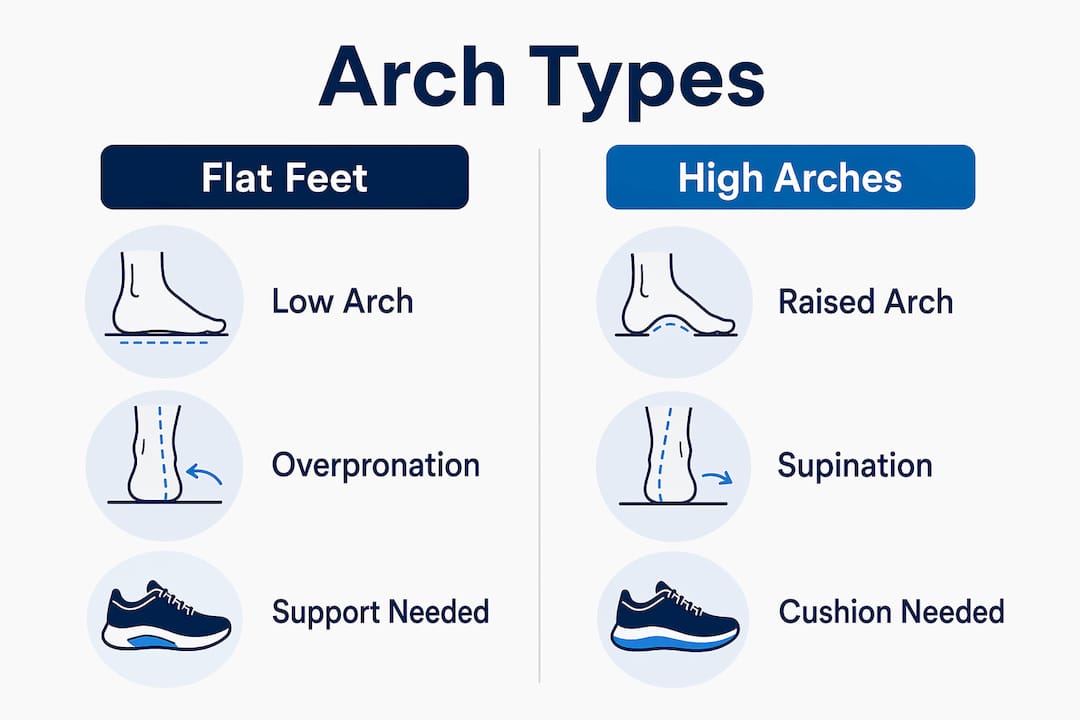
Flat feet and high arches are the two most common arch type extremes, and both directly affect how your body absorbs impact with every step you take. Flat feet, clinically known as pes planus or fallen arches, occur when the arch collapses toward the ground, causing the foot to overpronate. High arches, or pes cavus, feature an exaggerated curve that reduces ground contact and leads to supination. Understanding the difference between a flat foot high arch situation is not just academic. It determines which shoes protect your joints, which exercises help, and whether you are heading toward chronic pain or not.
How do flat feet and high arches differ in biomechanics?
The mechanical difference between flat and high-arched feet is stark, and it shapes every aspect of how you move. High-arched feet transmit impact forces more directly to proximal joints, while flat feet rely on excessive soft-tissue deformation and inward joint rotation. That means a high arch sends shockwaves straight up to your knees and hips, while a flat foot absorbs shock by collapsing inward rather than through the arch structure itself.
Overpronation in flat feet causes the ankle to roll inward with each stride. This inward collapse shifts load to the inner edge of the foot and rotates the shin and knee medially. Over time, that rotation stresses the knee, hip, and lower back in ways that feel unrelated to the foot itself.
Supination in high arches works in the opposite direction. The foot rolls outward, concentrating pressure on the outer edge and the ball of the foot. Both flat and high arches exhibit a U-shaped risk for pathologies due to distinct energy dissipation patterns: flat feet show excessive compliance, while high arches have excessive stiffness. Neither extreme is safe without the right footwear or support.
| Feature | Flat Feet | High Arches |
|---|---|---|
| Arch height | Very low or absent | Exaggerated, raised |
| Gait pattern | Overpronation (inward roll) | Supination (outward roll) |
| Shock absorption | Excessive soft-tissue deformation | Poor, forces travel to joints |
| Primary injury risk | Plantar fasciitis, shin splints | Stress fractures, ankle sprains |
| Footwear need | Stability and motion control | Cushioning and flexibility |
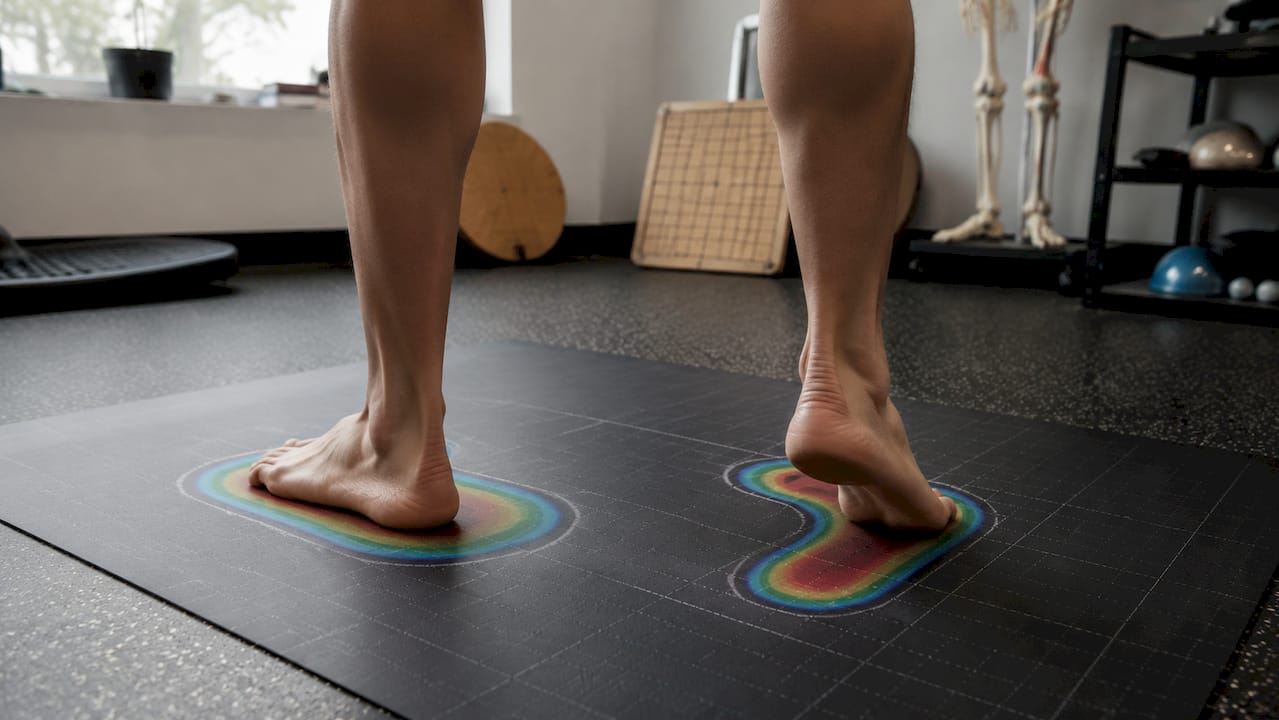
Pro Tip: Stand on a wet surface and step onto a dry tile. A flat foot leaves a near-complete footprint with no visible arch. A high arch leaves only the heel and ball with a thin outer strip. This simple wet test tells you your arch type in seconds.
What symptoms do flat feet and high arches cause?
Flat feet and high arches produce different pain patterns, and confusing them leads to the wrong treatment. Patients often confuse normal pronation with overpronation, which causes alignment issues leading to pain in the knees, hips, and lower back. Knowing your specific symptoms is the first step toward fixing them.
Common symptoms of flat feet include:
- Heel pain and arch fatigue after standing or walking
- Plantar fasciitis, shin splints, and posterior tibial tendon pain linked to inward collapse
- Knee pain from medial rotation of the lower limb
- Swelling along the inner ankle
- Shoes that wear down faster on the inner edge
Common symptoms of high arches include:
- Stress fractures, ankle sprains, and forefoot pain from concentrated pressure
- Lateral knee or hip pain from outward rolling
- Lower back discomfort from poor shock distribution
- Calluses under the ball of the foot and heel
- Shoes that wear down on the outer edge
The secondary effects matter as much as the foot pain itself. Improper footwear choices for flat feet or high arches can worsen knee tracking, tilt the pelvis, and create chronic tension in the lower back. Understanding how footwear choices impact back pain is critical for anyone dealing with either arch type.
What are the best shoes for flat feet and high arches?
Footwear is the single most accessible intervention for both arch types, and the wrong shoe makes every step worse. Podiatric guidelines for flat feet recommend shoes with a structured heel counter, firm midsoles with medial posts, and midfoot accommodation to prevent overpronation-related injuries. For high arches, the priority flips entirely toward cushioning and flexibility.
Footwear features for flat feet
The best shoes for flat feet share three non-negotiable features. First, a firm heel counter holds the rear foot in a neutral position and prevents the ankle from rolling inward. Second, a medial post, which is a denser section of foam on the inner midsole, resists the collapsing motion of overpronation. Third, a rigid shank through the midfoot stops the shoe from bending where the arch should be. Soft foam cushioning alone is ineffective for flat feet. Proper support requires a combination of firm heel counters, medial posts, and rigid shanks to prevent arch collapse.
Motion control running shoes, supportive walking shoes with a straight last, and structured work shoes all fit this profile. A step-by-step guide to picking shoes for flat feet can help you identify these features before you buy.
Footwear features for high arches
High arches require cushioning and flexibility to compensate for poor shock absorption, unlike flat feet which need stability and structured support to limit motion. Look for shoes with generous midsole cushioning, a wider toe box to accommodate forefoot pressure, and a flexible sole that allows the foot to move naturally. Neutral running shoes and cushioned trainers with curved lasts suit high-arched feet well. Avoid motion control shoes entirely. They restrict the foot’s already limited movement and increase lateral stress.
| Footwear Feature | Flat Feet | High Arches |
|---|---|---|
| Heel counter | Firm and structured | Moderately supportive |
| Midsole | Firm with medial post | Soft, high-volume cushioning |
| Sole flexibility | Rigid through midfoot | Flexible throughout |
| Toe box | Standard width | Wide to reduce forefoot pressure |
| Last shape | Straight | Curved |
Pro Tip: Avoid block heel styles with no arch support if you have flat feet. Even a modest heel height can worsen overpronation if the shoe lacks a medial post and firm shank.
How do orthotics and exercises help flat feet and high arches?
Shoes address the external environment, but orthotics and exercises target the foot itself. Smart insole systems can classify foot arch types with 92% accuracy by analysing plantar pressure patterns, confirming that flat feet and high arches have distinct shock absorption needs that generic insoles cannot address. Custom orthotics, prescribed by a podiatrist, correct alignment by redistributing plantar pressure across the entire foot surface.
Prefabricated orthotics from brands such as Superfeet or Powerstep offer a more accessible starting point. They work well for mild to moderate cases but lack the precision of bespoke solutions. For anyone with significant pain or structural deformity, a consultation with a podiatrist is the right move before spending money on insoles.
Exercises build the intrinsic foot muscles that support the arch from within. These are the small muscles that run along the sole and between the metatarsals. Strengthening them reduces reliance on external support over time.
Exercises for flat feet:
- Towel scrunches: place a towel on the floor and scrunch it with your toes for 30 seconds
- Short foot exercise: draw the ball of your foot toward your heel without curling your toes, activating the arch
- Single-leg calf raises: build posterior tibial tendon strength to resist inward collapse
Exercises for high arches:
- Ankle eversion with a resistance band: strengthens the peroneal muscles to reduce lateral rolling
- Marble pickups: improve intrinsic muscle control and forefoot flexibility
- Seated plantar fascia stretch: gently lengthens the tight plantar fascia common in high-arched feet
Pro Tip: Pair shock-absorbing footwear with daily intrinsic foot exercises. The combination reduces pain faster than either approach alone, particularly for high arch foot problems.
Key takeaways
Choosing the right footwear for your arch type is the most direct way to reduce foot pain, protect your joints, and prevent long-term injury.
| Point | Details |
|---|---|
| Arch types differ mechanically | Flat feet overpronate inward; high arches supinate outward, each creating distinct injury risks. |
| Symptoms guide diagnosis | Heel pain and shin splints suggest flat feet; stress fractures and lateral pain suggest high arches. |
| Footwear features are non-negotiable | Flat feet need medial posts and firm shanks; high arches need cushioning and flexible soles. |
| Orthotics add precision | Custom insoles from a podiatrist correct plantar pressure distribution beyond what shoes alone achieve. |
| Exercises build lasting support | Intrinsic foot muscle training reduces pain and reliance on external support over time. |
Why i think most people get this completely wrong
Most people I speak with assume that any supportive shoe will help their foot pain, regardless of arch type. That assumption causes real harm. I have seen people with high arches buy motion control shoes because they felt “sturdy,” only to develop worse lateral ankle pain within weeks. The shoe was doing exactly what it was designed to do. It was just designed for the opposite foot type.
The other mistake is treating arch height as the whole story. Distinguishing normal pronation from overpronation is the real diagnostic question. Some people with visually flat feet pronate within a normal range and feel no pain at all. Others with moderate arches overpronate significantly and suffer for it. The mechanics matter more than the shape.
What I have found actually works is a combination of the right shoe structure, a targeted insole, and consistent foot strengthening. None of these alone is sufficient. The shoe creates the environment, the insole corrects the alignment, and the exercises build the capacity to maintain that alignment without constant external help. Patience is required. Most people expect results in a week and abandon a good programme before it has time to work. Give any new footwear and exercise combination at least six weeks before judging it.
Focus on how your foot feels during and after activity, not on what your arch looks like. That shift in focus leads to better decisions and faster relief.
— Panagiotis
How Ydauk designs shoes for every arch type
Ydauk builds footwear around the biomechanical realities of different arch types, not just aesthetics. The YDA Technology platform incorporates structured heel counters, energy-return midsoles, and carefully engineered sole flexibility to address the specific needs of both flat-footed and high-arched wearers. Each design balances the stability that flat feet require with the cushioning that high arches depend on. If you have been searching for shoes that genuinely account for your foot structure, the Ydauk range is worth exploring. The technology behind each pair is built to support foot health from the ground up, every single day.
FAQ
What is the difference between flat feet and high arches?
Flat feet have a collapsed or absent arch that causes overpronation, while high arches feature an exaggerated curve that leads to supination and poor shock absorption. Both extremes increase injury risk compared to a neutral arch.
What causes flat feet in adults?
The causes of flat feet include posterior tibial tendon dysfunction, obesity, ageing, pregnancy, and prolonged standing on hard surfaces. Genetics also plays a significant role, as fallen arches often run in families.
How do i fix high arches?
There is no single fix for high arches, but a combination of cushioned footwear, flexible orthotics, and peroneal strengthening exercises significantly reduces pain and improves stability. A podiatrist can prescribe bespoke insoles for severe cases.
Can the wrong shoes make flat feet or high arches worse?
Yes. Motion control shoes worn by someone with high arches restrict natural foot movement and increase lateral stress. Soft, unsupportive shoes worn by someone with flat feet accelerate arch collapse and worsen overpronation-related pain.
Do i need custom orthotics or will off-the-shelf insoles work?
Prefabricated insoles from brands such as Superfeet or Powerstep work well for mild cases. Significant structural issues or persistent pain require custom orthotics prescribed by a podiatrist for accurate plantar pressure correction.