
Your guide to energy efficient shoes in 2026
TL;DR:
- Choosing energy-efficient shoes involves matching the shoe’s design to your specific activity and ensuring proper fit for optimal performance. Sustainable materials like bio-based foams, recycled textiles, and solution dyeing significantly reduce environmental impact without sacrificing comfort, although some challenges remain, especially with TPU production. While energy return technology offers real benefits, focus on proper fit and sustainable sourcing to maximize both performance and eco-friendliness.
Finding shoes that genuinely perform well and tread lightly on the planet is harder than it sounds. This guide to energy efficient shoes cuts through the noise by covering what energy return actually means at a biomechanical level, which sustainable materials are making the biggest difference, and how to choose shoes wisely for your specific activity. Whether you are a daily runner, a keen hiker, or simply someone who wants eco-friendly footwear without sacrificing comfort, you will find practical answers here rather than vague promises.
Table of Contents
- Key takeaways
- The guide to energy efficient shoes: understanding energy return
- Sustainable materials changing the game
- How to choose energy efficient shoes wisely
- Emerging technology: energy harvesting footwear
- My honest take on energy efficient footwear
- Discover Ydauk’s approach to energy-efficient footwear
- FAQ
Key takeaways
| Point | Details |
|---|---|
| Energy return is a supplement | Shoes aid efficiency, but 70–90% of elastic energy in running still comes from your own body. |
| Sustainable materials matter | Bio-based foams and recycled textiles can cut CO2 emissions dramatically, in some cases by 76%. |
| Fit beats technology | A high-energy-return sole on a poorly fitting shoe will underperform a well-fitted standard shoe every time. |
| Future tech is arriving | Piezoelectric insoles capable of generating up to 13 V are moving from labs toward real products. |
| Activity drives selection | Match energy return level, stability features, and sustainability credentials to your primary use case. |
The guide to energy efficient shoes: understanding energy return
Before you can choose the right pair, you need to know what energy return actually means in practical terms. When your foot strikes the ground, the midsole compresses and stores mechanical energy. When you lift your foot, the foam rebounds and releases some of that stored energy back into your stride. The result is a subtle forward or upward push that reduces the muscular effort required to maintain your pace.
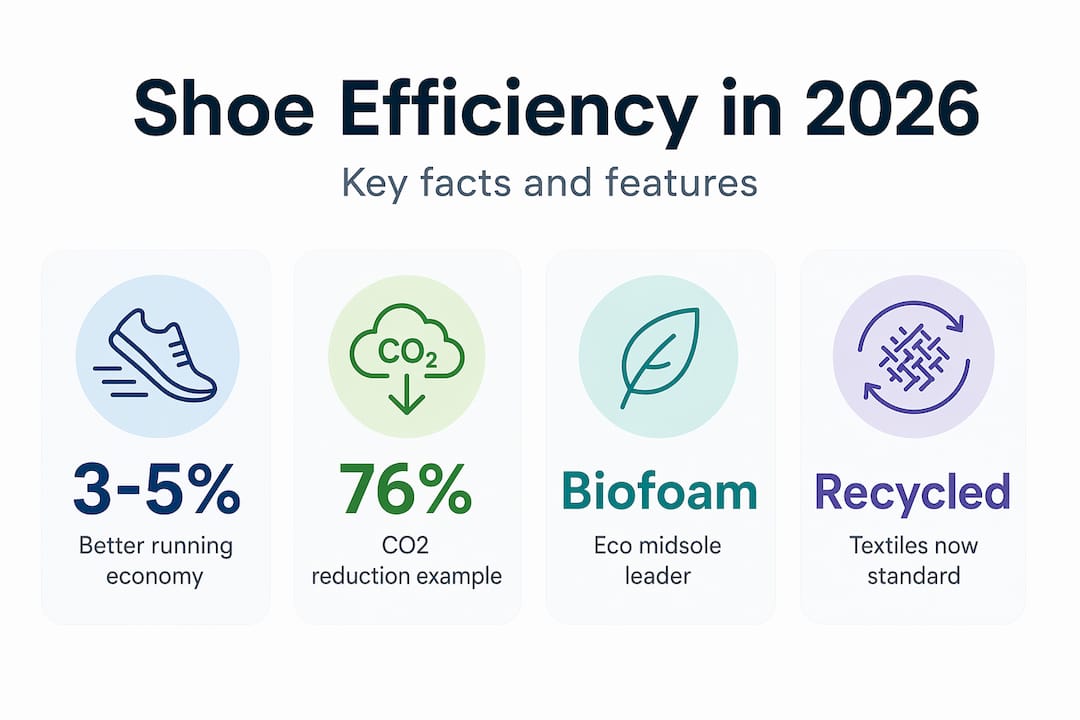
The key word is subtle. Research confirms that running economy improves by roughly 3 to 5% with high-energy-return footwear compared to traditional trainers. That is a meaningful gain over long distances, but it is not a transformation. A well-conditioned runner with good form will always extract more value from an energy-return shoe than someone with a biomechanical mismatch wearing the same pair.
The materials behind the technology
Three foam types dominate the market when it comes to energy return performance:
- EVA (ethylene vinyl acetate): The traditional choice. Lightweight, affordable, and decent at energy return. Degrades faster than newer alternatives.
- TPU (thermoplastic polyurethane): Denser and more durable than EVA, with excellent rebound properties. Common in performance footwear. Has a higher carbon footprint in production.
- PEBA (polyether block amide): Currently the top performer for energy return. Used in many elite racing shoes. Expensive to produce and more difficult to recycle.
There is also no standard industry measurement for energy return, which means brand marketing figures are rarely directly comparable. Metabolic cost testing, where scientists measure how much oxygen a runner consumes at a given pace, is the most scientifically accurate way to evaluate real-world efficiency gains.
Pro Tip: When a brand claims a specific energy return percentage on the box, ask whether that figure comes from lab compression tests or actual metabolic cost trials. The latter is far more meaningful for real-world performance.
Sustainable materials changing the game
Eco-friendly footwear has moved well beyond token gestures. The most forward-thinking brands are rethinking materials from the ground up, and the data behind some of these shifts is genuinely striking.
The standout example comes from the ASICS GEL-LYTE III CM 1.95, which achieved a 76% reduction in CO2 emissions by combining bio-based foams with recycled textiles. The figure sounds almost too good. It is achievable because the emissions reductions compound across multiple components: the upper, the foam, and the dyeing process.

That last point deserves attention. Traditional textile dyeing is one of the most water-intensive processes in manufacturing. Switching to solution dyeing, where colour is added to the raw fibre before it is spun rather than applied to finished fabric, reduces water use by 33% and cuts carbon emissions from dyeing by 45%.
| Material or technique | Environmental benefit | Trade-off |
|---|---|---|
| Bio-based foam (sugarcane) | Significant CO2 reduction | Slightly lower energy return than PEBA |
| Recycled textiles (uppers) | Reduces textile waste and virgin resource use | Durability can vary by source material |
| 50% recycled TPU midsole | ~26% lower carbon footprint | Complex recycling supply chain |
| Solution dyeing | 33% less water, 45% fewer dye emissions | Limits colour flexibility in production |
| Recycled rubber outsoles | Diverts waste from landfill | May have slightly reduced grip life |
The challenge that remains is TPU. Decarbonising TPU midsoles is technically difficult because the polymer itself is energy-intensive to produce. Increasing the recycled content and sourcing manufacturing energy from renewables are currently the most effective levers brands can pull. For a thorough breakdown of how sustainable shoe materials affect both comfort and environmental impact, that analysis is worth your time.
Pro Tip: When reviewing a brand’s sustainability claims, look for specific data on materials composition and manufacturing energy rather than broad statements about “green” credentials. Numbers are harder to fake than adjectives.
How to choose energy efficient shoes wisely
The best energy efficient shoes for you are not necessarily those with the highest published energy return figure. Selection requires matching the shoe’s design priorities to your actual needs.
Step-by-step selection process
- Define your primary activity. Running shoes optimise for propulsion and weight. Hiking shoes balance energy return with lateral stability and grip. Casual everyday shoes prioritise sustained comfort over long periods. Start here before looking at anything else.
- Get your foot measured properly. Width, arch height, and volume all affect how a shoe’s midsole performs. A foam rated at excellent energy return will behave very differently on a wide flat foot versus a narrow high-arched one.
- Assess energy return against stability needs. Energy return in hiking footwear helps on long endurance trails but can compromise stability on uneven rocky terrain. If your routes include technical ground, prioritise lateral support over maximum rebound.
- Evaluate sustainability credentials. Check whether the brand publishes a lifecycle assessment or material breakdown. Look for certifications such as bluesign or Responsible Wool Standard where relevant. A company’s commitment to eco-friendly footwear is often visible in the specificity of its claims.
- Try before you commit, wherever possible. Wear the shoes for at least 15 minutes on different surfaces. Energy return benefits require the shoe to be properly loaded by your specific gait, so a brief walk on a flat shop floor tells you only part of the story.
Common pitfalls to avoid
- Choosing maximum energy return without confirming the shoe fits your foot shape correctly. A mismatch here leads to hot spots, blisters, and inefficient load transfer, all of which negate the performance benefit.
- Ignoring weight. Heavier shoes require more muscular effort per stride, which can offset energy return gains entirely for lighter runners.
- Overlooking the outsole. Grip and durability affect how long the shoe performs as intended. A midsole that delivers excellent energy return on day one loses value quickly if the outsole wears down after three months.
- Treating sustainability as a binary. No current shoe is truly zero-impact. Look for meaningful reduction rather than perfection, and consider selecting shoes for energy and comfort together as an integrated decision rather than separate priorities.
Emerging technology: energy harvesting footwear
The next frontier for energy efficient shoes is not just about what the shoe gives back to your stride. It is about capturing the mechanical energy your foot produces and using it to power technology.
Piezoelectret insole prototypes represent the most promising development in this space. These insoles contain layered polymer films that generate an electrical charge when compressed. Research shows these devices can produce voltage pulses up to 13 V, with estimated power outputs around 900 microwatts, which is enough to run low-energy sensors, fitness trackers, or GPS modules embedded in the shoe itself.
“Piezoelectret insoles enable promising low-cost mechanical energy harvesting for wearable electronics in footwear, though still early stage.” Development and Evaluation of a Piezoelectret Insole
The implications reach beyond convenience. Shoes that power their own sensors could eliminate the need for separate charged devices, reducing battery waste across the wearable technology ecosystem. For sustainability-focused consumers, this matters.
The current limitations are real, though:
- Power output is sufficient for low-draw sensors but cannot yet support screens, communication modules, or significant data processing.
- Durability across tens of thousands of compression cycles remains an active area of research.
- Cost per unit at scale has not yet been established, and manufacturing integration with existing shoe production is unproven at volume.
- Standardisation of how harvested energy is stored and distributed within a shoe has no agreed-upon solution.
The technology is credible and the proof-of-concept phase is largely complete. Commercial products at meaningful scale are probably three to five years away for most consumers, but the trajectory is clear.
My honest take on energy efficient footwear
I’ve been around enough footwear technology discussions to have developed some firm opinions, and the one I hold most strongly is this: energy return is real, but it is oversold as a standalone benefit.
In my experience, the biggest performance gains I have seen come from people switching to a shoe that fits their foot shape correctly and suits their activity. When those fundamentals are right, energy return foam is a genuine bonus. When they are wrong, no amount of PEBA midsole technology compensates.
What I find more exciting right now is the sustainability side. The materials science advances in bio-based foams and solution-dyed textiles are the most significant shifts I have observed in the past decade. The 76% CO2 reduction achieved by the ASICS GEL-LYTE III CM 1.95 is not a one-off trick. It is a signal that the industry has genuinely learnt how to attack emissions across multiple touchpoints at once.
My practical advice: pick a shoe that fits well and has credible, specific sustainability data behind it. Then let the energy return technology do its job quietly in the background. That is the combination that delivers both personal comfort and meaningful environmental benefit, without requiring you to compromise on either. For deeper context on energy return soles and how they interact with daily comfort, the research is genuinely worth reading.
— Panagiotis
Discover Ydauk’s approach to energy-efficient footwear
If this guide has shaped how you think about what makes a shoe genuinely worth wearing, Ydauk’s range is built around exactly these principles. The YDA technology platform places foot health and energy return at the centre of every design decision, with materials chosen for both performance and reduced environmental impact. Ydauk’s footwear is developed for people who want their shoes to work harder and tread lighter, without treating those as competing priorities. Browse the full range and see how YDA technology translates these concepts into shoes you can actually wear every day.
FAQ
What are energy-efficient shoes?
Energy-efficient shoes are footwear designed to return mechanical energy to your stride through responsive midsole foams, reducing muscular effort and improving comfort or performance. The term also encompasses shoes made with sustainable materials that reduce environmental impact during production.
How much do energy return shoes actually improve performance?
High-energy-return shoes improve running economy by approximately 3 to 5% compared to traditional trainers, according to current research. The benefit is most pronounced over long distances and when the shoe fits the wearer’s biomechanics correctly.
Are sustainable shoes less comfortable than standard ones?
Not necessarily. Bio-based foams and recycled textiles have advanced significantly, and many sustainable designs now match or exceed the comfort of conventionally produced shoes. The key is checking that sustainable materials are matched to the shoe’s intended use case.
What is the most eco-friendly midsole material currently available?
Bio-based foams derived from sugarcane offer a meaningful carbon reduction compared to petroleum-based alternatives. Switching to 50% recycled TPU reduces the midsole’s carbon footprint by around 26%, making it a practical choice for brands balancing performance with environmental goals.
Will energy harvesting shoes become mainstream soon?
Piezoelectret insoles that generate electrical energy from walking are credible and validated at prototype stage, producing up to 13 V in lab conditions. Commercial mainstream products are likely several years away, but the technology is advancing with clear practical applications for powering wearable sensors.