
What shoes are slip resistant: your practical guide
TL;DR:
- Slip-resistant shoes are designed to lower slip and fall risks by meeting specific traction standards. Certification marks like “SR” or “SRC” confirm shoes pass lab tests, but real-world performance depends on outsole material, tread pattern, and maintenance. Regular inspection and proper footwear selection based on surface contaminants are essential for workplace safety and effective grip.
Slip-resistant shoes are footwear engineered to reduce the risk of slips and falls by achieving specific traction standards on hazardous surfaces such as wet floors, oily work areas, and smooth tiles. The correct industry term is “slip-resistant,” not “non-slip.” That distinction matters because no shoe eliminates slip risk entirely. What shoes are slip resistant is a question answered by laboratory testing, outsole design, and how well the shoe matches the actual surface you work on. Nurses, kitchen workers, warehouse staff, and outdoor labourers all face different hazards, and the right footwear differs for each.
How is slip resistance tested and certified?
Slip resistance is a lab-verified label, not a marketing claim. The ASTM F3445-24 standard requires footwear to achieve a coefficient of friction (COF) of at least 0.40 on both wet and dry surfaces to carry an official slip-resistant label. That threshold is the benchmark for compliance across North America in 2026. A shoe that passes this test has demonstrated measurable grip under controlled conditions.
The ASTM F2913 test method is the companion methodology. It measures how a shoe outsole performs against standardised surfaces including wet tile, oily steel, and polished vinyl. Each surface simulates a real workplace hazard. The result is a COF score that tells buyers whether a shoe meets the minimum grip requirement for that surface type.
Certification marks matter. Look for “SR” or “SRC” markings on the shoe label or product listing. These confirm the shoe passed standardised testing. A shoe marketed as “non-slip” without a certification mark is making an unverified claim.
Slip resistance and oil resistance are separate properties. Dedicated oil-resistant boots use nitrile rubber compounds to maintain structural integrity on petroleum-contaminated floors. A shoe can pass ASTM F3445 slip testing and still degrade rapidly on oily surfaces if the rubber compound is not oil-resistant. Always check both ratings if your workplace involves grease or petroleum.
- Look for ASTM F3445-24 or ASTM F2913 certification on the product label.
- Confirm “SR” or “SRC” markings before purchasing.
- Check oil resistance separately if your floor involves grease or petroleum.
- Understand that lab ratings reflect controlled conditions, not every real-world surface.
Pro Tip: Ask the retailer for the specific COF score, not just the “slip-resistant” label. A score of 0.50 or above gives you a meaningful safety margin beyond the minimum 0.40 threshold.
What features make shoes grip on slippery surfaces?
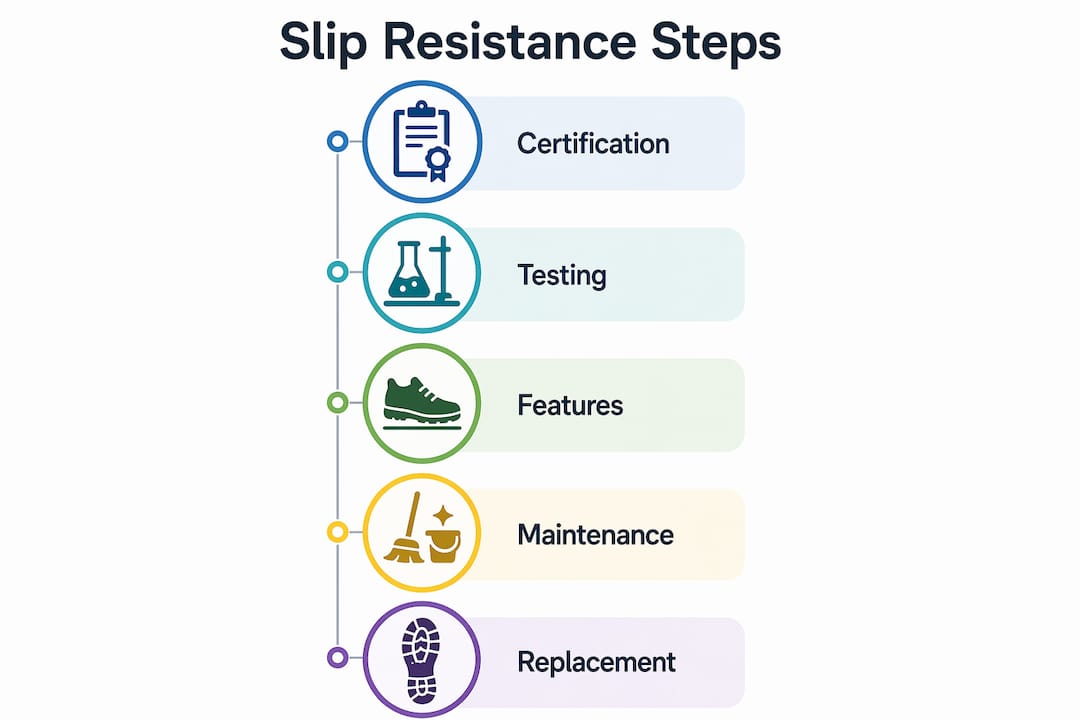
The outsole is the single most important component in any slip-resistant shoe. Rubber compound type determines how the sole interacts with the floor. Soft rubber compounds grip wet, smooth surfaces well because they deform slightly to increase contact area. Nitrile rubber compounds resist oil and chemical exposure, making them the right choice for kitchens, garages, and industrial floors.
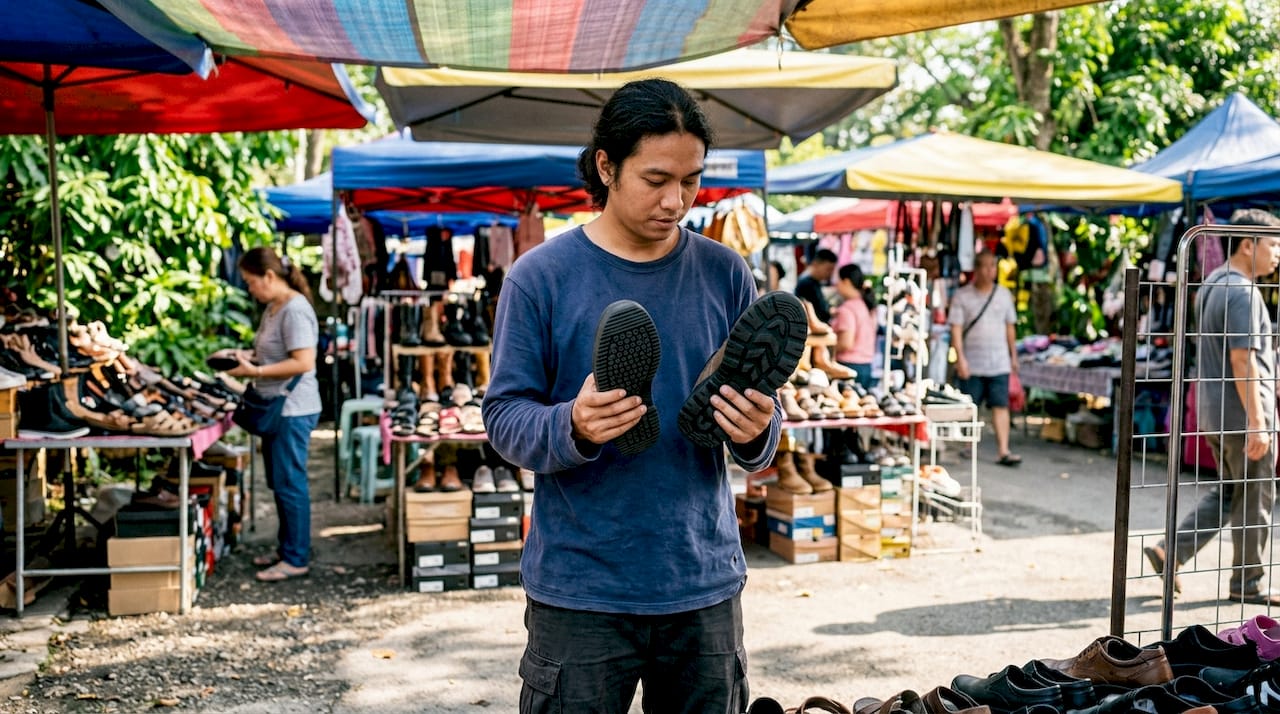
Tread pattern is equally critical, and it varies by environment. Siped patterns feature thin cuts across the sole that channel water away from the contact surface, making them effective on wet smooth floors such as hospital corridors or supermarket aisles. Hexagonal tread patterns are common in kitchen footwear because the multi-directional channels disperse grease effectively. Aggressive lugged soles work well outdoors on mud and uneven terrain. Wedge soles with minimal tread work best on flat indoor surfaces because they maximise contact area.
Heel design is a detail most buyers overlook. Beveled heel edges reduce slip risk at the moment of heel strike, which is when most slips actually occur. ASTM F3445 testing specifically includes forward-heel slip scenarios because this is the highest-risk phase of each step. A shoe with a squared-off heel edge loses grip at exactly the wrong moment.
Tread depth affects how long a shoe remains effective. Deeper tread channels more liquid away from the contact surface. As tread wears down, that channelling capacity reduces, and so does grip. Outsole weight and flexibility also affect comfort during long shifts. A heavier, stiffer sole may offer more durability but causes fatigue over an eight-hour day.
| Environment | Recommended tread pattern | Recommended compound |
|---|---|---|
| Wet smooth floors (hospitals, retail) | Siped | Soft rubber |
| Kitchen and food service | Hexagonal | Nitrile or oil-resistant rubber |
| Outdoor mud and uneven terrain | Aggressive lugs | Durable rubber |
| Indoor flat surfaces (warehouses) | Wedge sole | Soft rubber |
| Oily or petroleum-contaminated floors | Hexagonal or siped | Nitrile rubber |
Pro Tip: Lift the shoe and flex the outsole by hand before buying. A sole that barely flexes will cause foot fatigue within hours. Grip and comfort must work together, not against each other.
How to choose the best slip-resistant shoes for your job
Selecting the right footwear starts with an honest assessment of your work surface. Identify the primary floor type: tile, concrete, steel, wood, or outdoor terrain. Then identify the contaminants: water, cooking oil, grease, dust, or mud. OSHA requires employers to conduct a workplace hazard assessment and document the need for protective footwear under 29 CFR 1910.136. That assessment is your starting point even if you are buying shoes independently.
Follow these steps to match footwear to your environment:
- Identify your floor surface. Smooth tile and polished concrete demand siped or hexagonal tread. Outdoor terrain requires lugged soles. Flat warehouse floors suit wedge soles.
- Identify your contaminants. Water requires soft rubber with channelling tread. Oil and grease require nitrile compounds. Dust on smooth floors requires maximum contact area.
- Decide on toe protection. Safety toe boots and slip resistance are distinct ratings. A steel-toe boot without SR certification offers no slip protection. If your job involves both falling objects and slippery floors, you need a shoe certified for both.
- Consider standing duration. Workers on their feet for eight or more hours need cushioned midsoles alongside slip-resistant outsoles. Grip alone does not prevent fatigue-related accidents.
- Set a realistic budget. Dedicated slip-resistant shoes for kitchens and healthcare typically retail between £45 and £130. Spending at the lower end is acceptable for light-duty use. High-contamination environments justify the higher price point for durability and compound quality.
For workers in healthcare, hospitality, or food service, a soft-toe slip-resistant shoe often outperforms a steel-toe boot without SR certification. The footwear selection guide from Ydauk covers this trade-off in detail, matching outsole features to specific hazard profiles. Workers in construction or manufacturing who face both impact and slip hazards should confirm that their chosen boot carries both a safety-toe rating and an SR certification mark.
How to maintain slip-resistant shoes so they keep working
Slip resistance degrades before you notice visible damage. Embedded dirt, rubber hardening from chemical or UV exposure, and tread wear all reduce grip without leaving obvious signs. A shoe that looks fine may already be performing below the ASTM F3445 threshold.
The most common causes of grip loss are:
- Tread wear. Shallow channels cannot disperse liquid effectively. Check tread depth monthly in high-use environments.
- Rubber hardening. Exposure to cleaning chemicals, heat, or UV light stiffens the outsole compound. Hard rubber loses the deformation that creates grip on wet surfaces.
- Embedded debris. Grease, food particles, and grit fill tread channels and reduce their function. This is the most overlooked cause of slip resistance loss.
- Chemical degradation. Bleach and solvent-based cleaners attack rubber compounds. Use pH-neutral cleaners on outsoles.
Clean outsoles after every shift in contaminated environments. Use a stiff brush and warm water with a mild detergent. Avoid soaking shoes in chemical solutions. Many employers replace safety footwear annually or sooner when contamination is heavy. That replacement cycle is a safety control, not an optional expense.
Inspect the heel edge and forefoot tread weekly if you work on wet or oily floors. Inspect the full outsole monthly for hardening or cracking. The expert footwear care tips from Ydauk provide a practical inspection routine you can complete in under five minutes.
Pro Tip: Press your thumbnail firmly into the outsole rubber. If it leaves no mark, the rubber has hardened and grip has degraded. Replace the shoes regardless of how the tread looks visually.
Key takeaways
Slip-resistant shoes require the right outsole compound, a tread pattern matched to your specific surface, and regular inspection to maintain performance beyond the lab certification.
| Point | Details |
|---|---|
| Certification is the baseline | Look for ASTM F3445-24 or ASTM F2913 certification and a COF of at least 0.40 before buying. |
| Tread pattern must match the surface | Siped for wet floors, hexagonal for grease, lugged for outdoor terrain, wedge for flat indoor surfaces. |
| Slip resistance and oil resistance differ | Nitrile compounds are needed for oily floors; standard rubber alone is not sufficient. |
| Safety toes do not equal slip resistance | Confirm SR certification separately from any toe protection rating on the same shoe. |
| Maintenance determines real-world performance | Clean outsoles after every shift and replace shoes when rubber hardens or tread shallows. |
Why I trust condition over certification
The most common mistake I see is treating the “SR” label as a permanent guarantee. It is not. Slip resistance is a dynamic interaction between the shoe, the floor, and whatever sits between them. A shoe that passed ASTM F3445 testing on a standard wet tile may perform very differently on a foamy kitchen floor or a polished marble entrance. Real floors can reduce friction compared to standard test tiles, and that gap matters in practice.
I have seen workers in healthcare settings wearing shoes with valid SR certification that had hardened outsoles from repeated exposure to hospital-grade disinfectants. The label said slip-resistant. The rubber said otherwise. That is why I advocate for the thumbnail test and monthly inspections over blind trust in a certification mark.
The other misconception worth addressing is the assumption that a heavier, more protective boot is automatically safer. A steel-toe boot without SR certification gives you no slip protection at all. Conversely, a lightweight slip-resistant shoe without toe protection is the wrong choice on a construction site. The non-slip shoe guide from Ydauk addresses this clearly. Match the shoe to the hazard, not to a general idea of “safety footwear.”
Proactive replacement cycles are the most underrated safety practice in workplaces I have observed. Waiting until a shoe looks worn is waiting too long. Set a calendar reminder for monthly outsole checks and treat replacement as a scheduled maintenance task, not a reactive one.
— Panagiotis
Ydauk footwear: built for real-world grip
Choosing the right slip-resistant shoe is only half the equation. The other half is finding footwear that maintains that grip through long shifts, repeated cleaning, and varied floor conditions.
Ydauk designs footwear around YDA Technology, which combines outsole compounds and tread geometries matched to specific workplace surfaces. The focus is on pairing genuine slip resistance with the comfort needed for extended wear, because a shoe you avoid wearing is no protection at all. Ydauk’s range also addresses foot health alongside grip performance, recognising that fatigue and poor support increase accident risk as much as inadequate tread. Workers in occupational settings covered by PC 128.06 standards will find Ydauk’s approach directly relevant to their compliance requirements.
FAQ
What does “slip resistant” actually mean on a shoe label?
A slip-resistant label means the shoe achieved a coefficient of friction of at least 0.40 under ASTM F3445-24 testing on wet and dry surfaces. It is a minimum performance standard, not a guarantee under all real-world conditions.
Are slip-resistant shoes the same as non-slip shoes?
The correct industry term is “slip-resistant.” “Non-slip” is an informal marketing phrase with no standardised definition. Always look for ASTM F3445 or ASTM F2913 certification rather than relying on “non-slip” labelling alone.
How often should I replace slip-resistant work shoes?
Many employers replace safety footwear annually in high-contamination environments. Replace sooner if the outsole rubber has hardened, tread depth has reduced significantly, or the shoe has been exposed to harsh chemicals that degrade rubber compounds.
Do safety-toe boots also provide slip resistance?
Not automatically. Safety toe ratings and slip resistance are separate certifications. A steel-toe boot must carry an additional SR or SRC mark to confirm it also meets slip-resistance standards. Always verify both ratings independently.
Which tread pattern works best on kitchen floors?
Hexagonal tread patterns are the standard choice for kitchen and food service environments. The multi-directional channels disperse grease and cooking oil effectively, maintaining grip on the contaminated surfaces typical in commercial kitchens.