
Anti-Slip Footwear: Essential Safety for Foot Health
Finding footwear that truly prevents slips is more challenging than adverts suggest. The reality is that slip resistance is shaped by the complex interaction between shoe soles, surface contaminants such as water or oil, and your unique walking pattern. For health-conscious people, especially those managing diabetes or other foot conditions, understanding these factors makes a real difference to safety and wellbeing. Learn how modern anti-slip footwear blends science, style, and support to keep you steady whatever your day brings.
Table of Contents
- Anti-Slip Footwear And Common Myths
- Types Of Anti-Slip Footwear For Daily Use
- Making The Right Choice For Your Lifestyle
- Key Features And Technology Behind Slip Resistance
- International Standards And Certifications For Safety
- Health Benefits For Diabetes And Foot Conditions
- Common Mistakes When Choosing Slip-Resistant Shoes
Key Takeaways
| Point | Details |
|---|---|
| Slip Resistance is Multifactorial | Effective slip resistance relies on the interaction between shoe materials, gait mechanics, and environmental conditions. |
| Comfort and Style are Possible | Modern anti-slip footwear is designed to be both protective and aesthetically pleasing, dispelling the myth that safety requires sacrificing style. |
| Maintenance is Essential | Regular cleaning and inspection of anti-slip shoes are crucial to maintain their effectiveness and safety over time. |
| Certifications Matter | Look for reputable certifications that indicate robust testing for slip resistance and safety in real-world conditions. |
Anti-slip footwear and common myths
When you search for anti-slip footwear, you’ll encounter plenty of claims that don’t quite match reality. One of the most persistent myths is that a single “best” material or tread design automatically makes shoes slip-resistant. The truth is far more nuanced. Research into complex interactions between sole materials and surfaces reveals that slip resistance depends on a dynamic relationship between your shoe’s outsole, the ground you’re walking on, any contaminants present (water, oil, dust), and even how you’re moving. A rubber sole that performs brilliantly on dry tile might lose grip on oily kitchen floors, whilst a deeper tread pattern isn’t automatically safer simply because it looks more aggressive. The interaction between all these factors matters far more than any single component.
Another widespread misconception holds that footwear alone determines whether you’ll slip. This oversimplification leads people to believe that buying the “right” shoes solves the problem entirely. The reality is that slip resistance involves footwear, gait mechanics, environmental conditions, and surface contamination working together. Your walking pattern, how quickly you’re moving, the moisture level in your environment, and what’s coating the floor all play equally significant roles. This is especially important if you have diabetes or other foot conditions. Your gait might be different from someone else’s, meaning shoes that work perfectly for them might not offer the same protection for you. Understanding this multifactorial nature helps explain why someone might slip in shoes that feel secure to their friend.
A third myth specifically relevant to those with foot health concerns is that all anti-slip shoes feel uncomfortable or ugly. This assumption causes many people to sacrifice safety for comfort, a choice that ultimately puts them at greater risk. Modern footwear technology, particularly approaches like non-slip sole technology designed to safeguard everyday mobility, demonstrates that protection and style can coexist. Manufacturers now develop anti-slip footwear using empirical friction measurements and advanced testing rather than guesswork. This scientific approach produces shoes that are both aesthetically appealing and genuinely effective at reducing slip risk. For health-conscious individuals seeking stylish options, this represents a genuine shift in what’s available on the market.
A final misconception concerns the durability of anti-slip features. Many people assume that if a shoe feels grippy when new, it will stay that way indefinitely. Wear affects the outsole, contamination builds up, and environmental factors change how your shoes perform. The anti-slip properties you notice on day one require active maintenance. This means regularly cleaning your shoes, checking for sole wear, and replacing them when the tread pattern has significantly worn down. For people managing foot conditions, this ongoing attention matters because worn shoes contribute to instability and increase fall risk.
Dica profissional When evaluating anti-slip footwear, test your shoes on multiple surfaces before committing to regular wear, and inspect the soles monthly for signs of wear or contamination that could reduce slip resistance.
Types of anti-slip footwear for daily use
Anti-slip footwear comes in several distinct categories, each designed for different daily scenarios and environments. Understanding which type suits your needs depends on where you spend most of your time and what surfaces you navigate regularly. The most common everyday option is casual shoes with rubber soles, which offer decent grip on standard indoor and outdoor surfaces without sacrificing comfort or style. These work well for shopping, light office work, or general household activities. If you’re managing diabetes or other foot conditions, casual shoes with anti-slip soles provide a good starting point because they don’t require a dramatic change to your wardrobe whilst still offering meaningful protection. Research into traction performance across formal and casual footwear shows that rubber-soled shoes consistently outperform smooth leather soles, particularly on wet surfaces.
For those who work in environments with moisture, oil, or spills, specialised slip-resistant work shoes represent a different category entirely. These typically feature deeper tread patterns, reinforced soles designed specifically for grip, and materials engineered to resist contamination. If you work in hospitality, healthcare, manufacturing, or any setting where wet or oily floors are common, these shoes become non-negotiable. Rubber boots constitute another practical type, particularly useful during rainy weather or when cleaning floors at home. The full rubber construction provides consistent slip resistance around the entire foot rather than relying solely on the sole. Beyond these main categories, specialised anti-slip devices such as ice cleats, slip-resistant inserts, and dedicated outdoor footwear cater to specific situations. Older adults and people with mobility concerns often benefit from temporary grip-enhancing solutions like inserts placed inside existing shoes, which can be a practical middle ground if buying entirely new footwear feels daunting.
When selecting among these types, consider your daily environment and activities carefully. Someone working in a dry office differs from someone managing a home with tile floors and children. Health-conscious individuals with diabetes should particularly focus on shoes that combine anti-slip features with proper arch support and cushioning, since foot complications extend beyond simple slip risk. The good news is that modern anti-slip footwear no longer means choosing between safety and aesthetics. Trainers, loafers, and casual shoes now incorporate slip-resistant technology without looking clinical or medical. When evaluating specific shoes, test them on the surfaces you encounter most frequently. A shoe that grips brilliantly on polished wood might behave differently on bathroom tiles or kitchen linoleum. Your walking speed, gait pattern, and even the weight you carry throughout the day influence how well any shoe protects you, which is why personal testing matters more than generic recommendations.
Here is a summary of common anti-slip footwear types and their ideal uses:
| Footwear Type | Typical Environments | Key Advantages |
|---|---|---|
| Casual rubber-soled shoes | Everyday indoor/outdoor | Balanced comfort and decent grip |
| Specialist work shoes | Wet/oily workplaces | Enhanced tread and contaminant resistance |
| Rubber boots | Wet weather, cleaning | 360-degree waterproof slip protection |
| Insert devices/cleats | Ice, temporary situations | Adaptable grip without new footwear |
Making the right choice for your lifestyle
Your choice ultimately depends on balancing three factors: the environments you inhabit, your specific health needs, and your personal style preferences. If you spend most of your time in a stable indoor environment, basic rubber-soled casual shoes may suffice. However, if you have diabetes, proprioceptive difficulties, or a history of falls, investing in shoes specifically engineered for slip resistance becomes more critical. Look for shoes with proven traction across varying surface conditions rather than relying on appearance alone. For daily wear, prioritise comfort alongside slip resistance. A shoe that grips brilliantly but causes foot pain after two hours won’t protect you effectively because you’ll avoid wearing it. When evaluating options, consider whether you need a single versatile pair or multiple shoes for different settings. Many people benefit from keeping slip-resistant shoes for indoor use and different footwear for outdoor activities, much like keeping separate work shoes and casual shoes.
Pro tip Start by testing anti-slip shoes in your most-visited environments before making a purchase commitment, and remember that even the best slip-resistant footwear requires regular cleaning and sole inspection to maintain its protective properties.
Key features and technology behind slip resistance
Slip resistance isn’t magic. It’s engineering. The foundation of any effective anti-slip shoe rests on three interconnected elements: the outsole material, the tread pattern, and how these components interact with surfaces beneath your feet. Understanding these basics helps you make informed choices about which shoes will actually protect you. The outsole material forms the critical contact point between your foot and the ground. Modern anti-slip shoes typically use composite rubber formulations rather than single-material soles, combining different rubber types to optimise grip whilst maintaining durability. A softer rubber compound grips better on smooth surfaces but wears quickly, whilst a harder compound lasts longer but sacrifices some traction. Manufacturers solve this tension by layering different hardness grades within the sole. The surface layer prioritises grip through friction mechanics, whilst deeper layers provide structural support and longevity. Outsole technology innovations focus on material composition and tread geometry to achieve this balance between safety and durability.
Tread design represents the second critical element. The pattern of ridges, grooves, and sipes etched into your sole dramatically influences how well water, oil, and other contaminants are channelled away from your foot’s contact point. Think of tread like a drainage system. Deeper grooves create better water evacuation on wet surfaces, preventing the thin film of liquid that causes hydroplaning. Sipes are tiny slits within the tread blocks that increase micro-friction contact with surfaces. Microstructured tread patterns and hardness gradients work together to enhance traction under various conditions. The geometric arrangement matters just as much as the depth. Some shoes feature patterns optimised for wet conditions, others for oil resistance, and increasingly, manufacturers design multi-directional patterns that perform reasonably well across multiple surface types. For someone with diabetes, this matters considerably because you might encounter diverse flooring types throughout your day—kitchen tiles, bathroom floors, carpeted areas, outdoor concrete—and you need shoes that don’t become dangerously slippery in any of them.
The science of friction and surface interaction
Beyond materials and tread, slip resistance depends on friction mechanics and how shoe soles interact with specific surfaces. Friction increases when surfaces are rougher because more contact points exist between the sole and ground. Smooth tile floors create fewer contact opportunities than textured bathroom surfaces, which explains why the same shoe might grip differently on various floors. Contaminants complicate this dramatically. Water reduces friction by acting as a lubricant between surfaces. Oil does the same but persists longer and is more difficult to clear through tread grooves. Dust and dirt can either increase friction (if dry) or decrease it (if mixed with moisture). Key features such as tread design, material properties, and outsole wear characteristics all influence how shoes perform under real-world conditions with various contaminants present. This explains why manufacturers conduct rigorous testing on multiple surfaces rather than simply designing shoes and hoping they work.
Modern anti-slip footwear also incorporates biomechanical considerations that extend beyond sole technology. Your walking pattern, weight distribution, and gait speed all influence slip risk. A shoe with brilliant tread but poor arch support might cause you to walk differently, actually increasing fall risk. This is particularly important for people managing diabetes or neuropathy, where altered gait mechanics are common. Some shoes include embedded pressure-sensing technologies or ergonomic sole designs that account for these biomechanical factors. The most advanced anti-slip shoes balance material science, geometric design, and ergonomic support into unified systems. When evaluating shoes, check whether they address all three components. A shoe with excellent tread but subpar cushioning won’t truly protect you because you’ll either avoid wearing it or develop pain that changes how you move. The technology conversation extends beyond tread depth and rubber composition to encompass the entire system of how your shoe keeps you safe.
Pro tip When comparing anti-slip shoes, test them on surfaces relevant to your daily life such as kitchen tiles or bathroom floors rather than relying solely on manufacturer claims, since real-world performance varies significantly based on your specific environment and walking patterns.
International standards and certifications for safety
When you’re shopping for anti-slip footwear, certification marks on the packaging represent far more than marketing labels. They indicate that shoes have undergone rigorous testing against standardised criteria and meet established safety benchmarks. Understanding which certifications matter helps you distinguish genuinely protective footwear from shoes making unsubstantiated safety claims. Several international bodies govern slip-resistant footwear standards. The most prominent include ASTM International, which sets American standards; ISO, the International Organisation for Standardisation; and EN standards, which apply across European countries. Each organisation maintains specific testing protocols that measure friction coefficients, wear resistance, and performance across multiple surface types. What makes these standards valuable is their consistency. A shoe certified to ASTM standards in Canada undergoes the same rigorous testing as one certified in the United States or Australia. This means you’re comparing apples to apples rather than trusting individual manufacturer claims. Key international standards and certification bodies govern slip-resistant footwear globally, creating a framework where safety performance is objectively measured rather than subjectively assessed.
For healthcare workers, hospitality staff, and others in high-risk environments, the GRIP rating system represents a particularly useful certification. This 5-star rating specifically evaluates slip resistance under demanding workplace conditions, including wet floors and contaminated surfaces. Research shows that 5-star GRIP-rated slip-resistant footwear significantly reduces slip incidents among healthcare workers, with randomised controlled trials demonstrating measurable safety improvements. For individuals with diabetes or mobility concerns, understanding GRIP ratings matters because the testing deliberately mimics the challenging environments where slips most frequently occur. A shoe rated 5-star GRIP hasn’t simply performed adequately in laboratory conditions; it’s been proven effective in real workplaces where people slip and fall regularly. Other important certifications include EN ISO 20347 for occupational footwear and ASTM F1679, which measures static and kinetic friction. Different certifications emphasise different priorities. Some focus heavily on wet surfaces, others on oily contaminants, and increasingly, manufacturers seek multiple certifications to demonstrate broad-spectrum protection. When evaluating shoes, check the packaging and product descriptions for these certification marks rather than accepting vague claims about “slip resistance.”
Decoding certification labels and what they actually mean
Certifications appear in different formats depending on the region and testing body. European shoes often display CE markings alongside specific EN standards, indicating compliance with European safety directives. North American footwear shows ASTM compliance, sometimes accompanied by specific friction coefficient measurements. Australian and New Zealand products reference AS/NZS standards. The testing methodology behind these certifications involves measuring how much force is required to make a shoe slip across standardised surfaces. This creates a friction coefficient, a numeric value where higher numbers indicate better grip. Different certifications use different testing surfaces. Some test exclusively on wet tile (common in healthcare settings), others on oil-contaminated steel (common in industrial environments), and advanced certifications test across multiple surface types to simulate real-world variability. For someone managing diabetes, this diversity of testing conditions is actually beneficial. It means certified shoes have proven performance across the varied surfaces you encounter daily rather than excelling in only one scenario. Beyond the testing itself, certifications also require manufacturers to maintain consistent production standards. A shoe that earns certification must continue meeting those standards with every batch produced. This quality control aspect is why certified footwear typically costs more than uncertified alternatives.
When purchasing anti-slip shoes, use certifications as your primary decision criterion rather than relying solely on appearance, brand reputation, or price. Look for specific certification marks on packaging, check product descriptions for standards compliance, and verify these claims against official certification bodies’ databases if you’re making a significant investment. For workplace settings, confirm that your employer recognises the specific certification standards being claimed. Some occupational health and safety regulations mandate particular certifications, meaning a shoe certified to one standard might not satisfy your workplace requirements despite offering excellent slip resistance. If you’re buying anti-slip footwear for personal health reasons related to diabetes or foot conditions, prioritise shoes certified to standards that test multiple surface types rather than single-surface certifications. Your daily environment probably includes varied flooring, so shoes with broad-spectrum certification offer better protection than those optimised for specific conditions. Don’t assume that because a shoe claims “slip-resistant” properties without certification that it’s inadequate, but do recognise that certified shoes come with objective evidence of performance rather than subjective claims.
Pro tip Before purchasing anti-slip footwear, search for the specific certification mark on the shoe’s packaging or product page, verify it against the certifying body’s official database, and prioritise shoes with multiple certifications such as both EN and ASTM standards if you encounter varied surfaces throughout your day.
Compare key certification standards for anti-slip footwear:
| Standard | Testing Focus | Common Marking | Region/Countries |
|---|---|---|---|
| ASTM F1679 | Wet/oily friction | “ASTM Compliant” | USA, Canada, Australia |
| EN ISO 20347 | Occupational footwear | “CE” + EN Number | UK, EU |
| AS/NZS 2210.3 | Multiple surfaces | “AS/NZS 2210.3” | Australia, New Zealand |
| GRIP Rating | Real-world workplaces | Star rating (1–5) | UK, Europe |
Health benefits for diabetes and foot conditions
If you have diabetes, anti-slip footwear represents far more than a convenience. It’s a critical component of your foot health strategy. Diabetes damages nerves in your feet through a condition called diabetic neuropathy, meaning you might not feel pain, pressure, or temperature changes properly. This sensory loss creates a dangerous situation where you could injure your foot without realising it happened. A small blister from slipping and catching your foot could develop into a serious infection, leading to complications that compromise your overall health. Anti-slip footwear addresses this vulnerability directly by reducing fall and slip risk, which minimises the traumatic injuries that diabetic feet struggle to heal. Anti-slip footwear reduces fall risk for diabetic patients with neuropathy, protecting against the kinds of injuries that trigger serious complications. Beyond slip prevention, properly designed anti-slip shoes provide the cushioning and support your diabetic feet require. Your feet carry the weight of your entire body with every step, and without proper support, pressure concentrates in specific areas, creating ulceration risk. This is why diabetic footwear specifications go beyond grip alone. The best options combine slip resistance with pressure-relieving insoles, adequate arch support, and materials that don’t irritate sensitive skin. When you’re evaluating anti-slip shoes, you’re actually evaluating a complete foot health solution rather than just a safety feature.
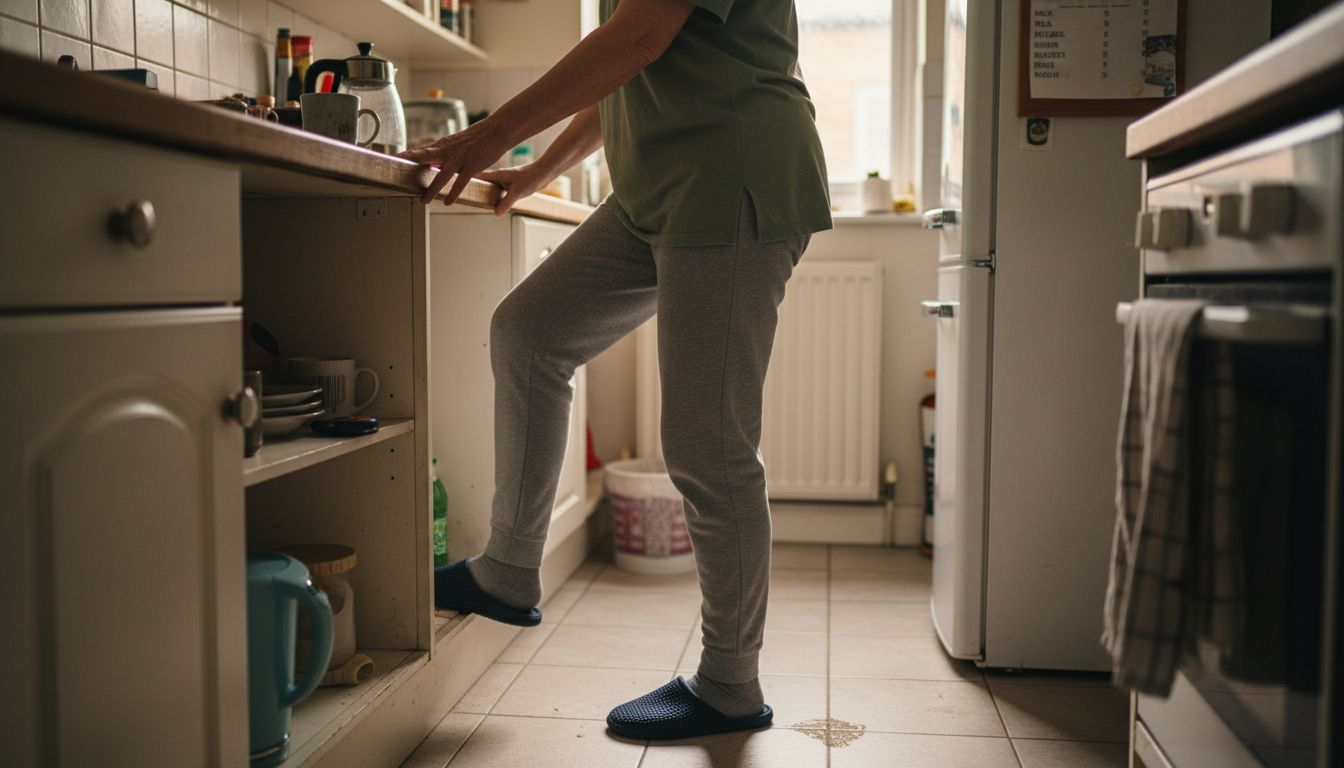
For people with other foot conditions such as arthritis, poor circulation, or previous foot injuries, anti-slip footwear delivers similar protective benefits. Arthritis causes pain and reduces mobility, making you more vulnerable to falls because your gait becomes altered and less stable. A shoe that prevents slipping compensates for your changed walking pattern, providing the stability your body needs. Poor circulation means wounds heal slowly, making even minor injuries significant concerns. Anti-slip shoes protect your feet from the small traumas that become large problems when healing capacity is compromised. Slip-resistant footwear prevents injury in patients with foot health issues, particularly those with diabetes and related complications. The research specifically evaluated hospitalised patients, where fall risk is already elevated, but the findings apply equally to daily life. Your home presents genuine slip hazards: wet bathroom tiles, kitchen floors, stairs. Your workplace might include polished floors, spills, or environmental moisture. Anti-slip shoes create a consistent protective barrier across these varied environments rather than gambling that you’ll remember to be careful.
How anti-slip footwear prevents complications
The mechanism of protection works on multiple levels. First, better grip reduces the likelihood of your foot sliding unexpectedly, which prevents the jarring motions that can cause injuries. Second, anti-slip shoes typically feature better overall construction quality, meaning they provide superior support throughout the shoe rather than just at the sole. Third, shoes designed with foot health in mind incorporate features like seamless linings to prevent blisters, breathable materials to reduce moisture accumulation, and wider toe boxes to accommodate swelling or deformities. For diabetic patients specifically, these features matter because your feet have reduced ability to signal problems. A blister causing minor discomfort in someone without diabetes could develop into a serious wound in your foot because you might not notice it early enough to take action. Anti-slip footwear designed for foot conditions addresses this vulnerability comprehensively.
Consider also the psychological benefit of wearing appropriate footwear. When you know your shoes provide genuine grip and support, you move with greater confidence. This confidence translates into better posture, more balanced walking, and reduced anxiety about falling. Conversely, wearing shoes you don’t trust creates tension and altered movement patterns that actually increase fall risk. People with diabetes or foot conditions often describe the difference as transformative. They stop avoiding activities, stop gripping handrails constantly, and regain a sense of physical freedom. This psychological shift improves quality of life beyond the measurable reduction in slip incidents. When selecting anti-slip shoes for diabetes or other foot conditions, prioritise options that include understanding of diabetic shoe design principles rather than treating them as ordinary slip-resistant shoes. Diabetic shoes incorporate specific features like soft interiors, removable insoles for customisation, and materials chosen specifically for foot health rather than just durability.
Pro tip If you have diabetes, schedule regular foot inspections with your healthcare provider and always inspect your shoes internally for rough seams, debris, or areas that might cause irritation before wearing them, since you might not feel developing problems until they become serious.
Common mistakes when choosing slip-resistant shoes
People make predictable errors when shopping for anti-slip footwear, and these mistakes often negate the safety benefits they’re seeking. The most common error is prioritising appearance over function. A shoe that looks stylish but lacks genuine slip-resistant features offers you false confidence. You feel protected when you’re actually vulnerable. This happens because marketing language obscures the difference between shoes claiming to be “slip-resistant” and shoes that have been rigorously tested and certified. A shoe with marketing photos showing it on wet surfaces hasn’t necessarily been engineered for wet-surface grip. Actual slip resistance requires specific outsole materials, tread geometry, and testing protocols. Similarly, choosing footwear based purely on price point creates problems. Cheaper shoes often cut corners on outsole technology to reduce manufacturing costs. You might save money upfront but spend far more managing injuries from falls that properly designed shoes would have prevented. The financial logic seems straightforward until you’re paying for medical treatment or recovering from a serious injury.
Another widespread mistake involves ignoring fit and comfort. People assume that if a shoe prevents slipping, it must be uncomfortable and restrictive. This false choice leads them to select shoes that don’t truly fit their feet. Shoes that are too tight restrict circulation and create pressure points. Shoes that are too loose cause your foot to slide within the shoe, negating slip resistance benefits and creating instability. Your foot shape, width, and any specific conditions like swelling or deformities matter enormously. A shoe that grips brilliantly but pinches your toes or creates blisters becomes a hazard because you’ll avoid wearing it. Frequent mistakes in selecting slip-resistant footwear include inadequate evaluation of slip resistance features and poor matching between shoes and surface conditions, with research showing that consumers often misjudge outsole effectiveness and tread pattern performance. Additionally, people frequently overlook certification standards entirely. They trust marketing claims instead of verifying that shoes meet recognised testing protocols. A shoe claiming “advanced slip resistance” without certification badges like ASTM, ISO, or EN standards might offer no more grip than ordinary shoes. Certification represents objective evidence of performance. Marketing claims represent subjective sales language. When you skip certification verification, you’re essentially gambling with your safety.
The maintenance mistake that undermines protection
One critical error many people make is treating anti-slip shoes like ordinary footwear. They never clean the soles, never inspect them for wear, and assume that slip resistance remains constant throughout the shoe’s life. This assumption is dangerously wrong. Dirt, dust, and contaminants accumulate on your sole over time. This buildup gradually reduces friction until your “slip-resistant” shoes grip no better than smooth dress shoes. The tread wears down with regular use, just like car tyres. Common consumer errors include neglecting maintenance and overlooking wear effects on slip resistance, which contributes to increased slip and fall incidents. Your shoes require active maintenance to retain their protective properties. This means regular cleaning, periodic inspection for tread wear, and replacement when the outsole has significantly worn. Many people never think to check these details, believing that anti-slip is a permanent property rather than a performance characteristic that degrades over time. The solution is straightforward: establish a maintenance routine. Wipe your soles weekly, inspect them monthly for wear, and replace shoes when tread depth becomes shallow. This sounds simple but requires conscious effort and discipline.
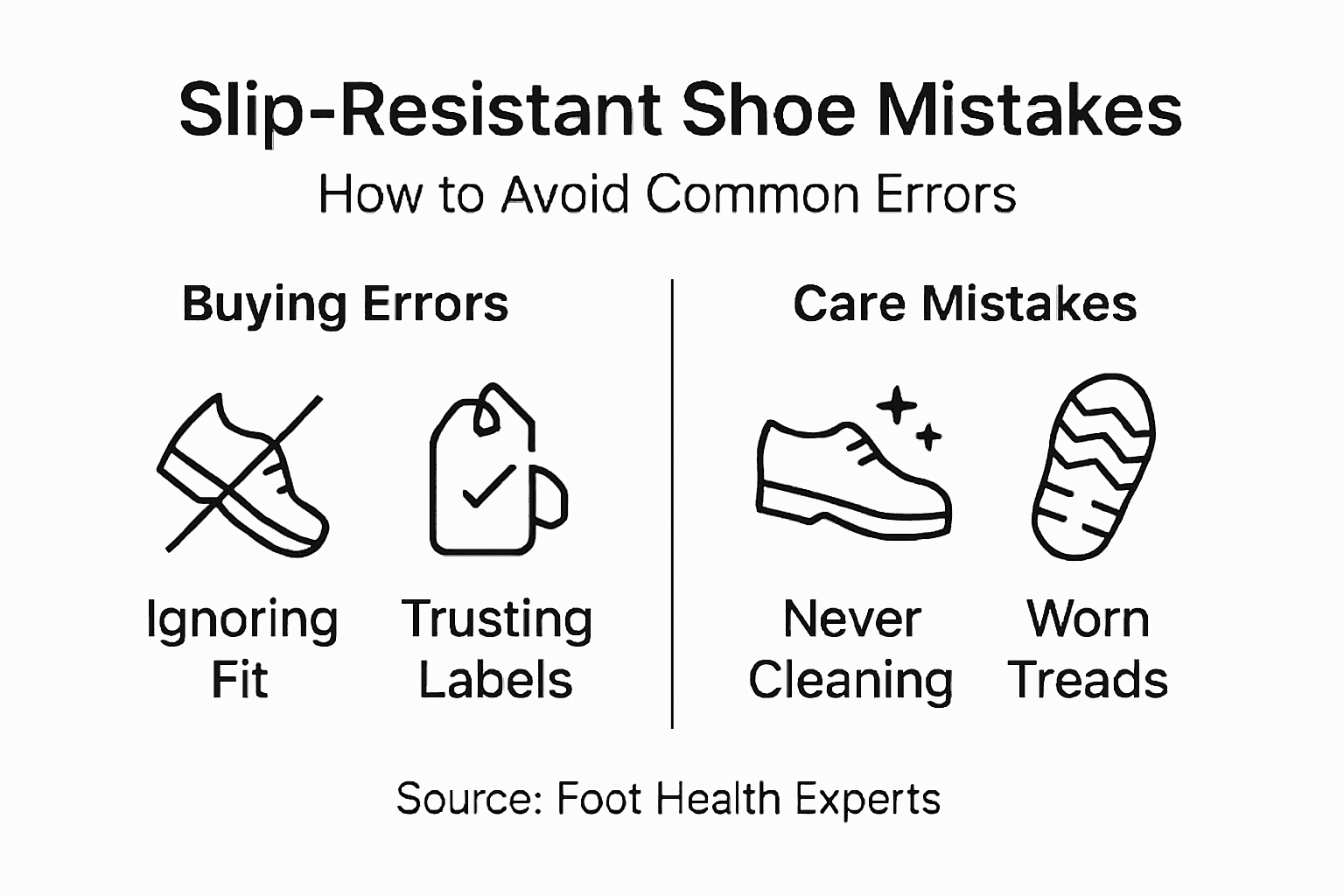
People also frequently make the mistake of selecting shoes based on a single use case rather than their actual lifestyle. Someone with diabetes who encounters kitchen tiles, bathroom floors, carpeted areas, and outdoor concrete throughout their day selects shoes optimised only for wet surfaces. These shoes perform brilliantly in the bathroom but may not grip well on dry kitchen tiles. Then the person slips on the one surface their shoes weren’t designed for. The solution involves choosing shoes certified across multiple surface types or owning multiple pairs for different environments. You might use water-resistance optimised shoes for bathrooms and oil-resistance shoes for kitchens, just as you might keep work shoes separate from casual shoes. Another underrated mistake involves not testing shoes before committing to them. Buying online based on reviews without trying shoes on your feet or testing them on your actual home surfaces is risky. Shoes that work brilliantly for someone else with different feet, different walking patterns, and different surfaces might fail you completely. When selecting slip-resistant footwear, informed decision-making based on evidence and testing matters far more than marketing claims. This means physically testing shoes, checking for proper fit, verifying certifications, and understanding your specific environmental and health needs before making a purchase.
Pro tip Before purchasing anti-slip shoes, test them on the surfaces you encounter most frequently in your daily life, verify certification marks on the packaging, check that they fit properly without pinching or sliding, and establish a maintenance routine of cleaning soles weekly and inspecting them monthly for wear.
Discover Stylish Anti-Slip Footwear Designed for Your Foot Health Needs
Falling due to slippery surfaces is a real risk, especially if you have diabetes or foot conditions that affect stability and sensation. The article highlights the importance of choosing footwear that combines scientifically tested slip resistance with comfort and tailored support. At YDA UK, we understand the challenge of balancing safety with style. Our range features advanced YDA Technology that prioritises durable grip, ergonomic design, and foot health innovation — ensuring every step you take feels confident and cared for.
Take control of your foot safety today by exploring our collection of high-performance shoes that meet international safety standards without sacrificing appearance or comfort. Visit https://ydauk.com to find your perfect pair and experience the difference proactive slip resistance and expert craftsmanship can make in your everyday life.
Frequently Asked Questions
What materials are best for anti-slip footwear?
Modern anti-slip footwear typically uses composite rubber formulations, combining different rubber types to optimise grip and durability. A well-designed outsole balances softer compounds for grip and harder compounds for longevity.
How do I ensure my anti-slip shoes remain effective?
To maintain slip resistance, regularly clean your shoes, inspect the soles for wear, and replace them when the tread has significantly worn down. Ensure to check for contaminants that can reduce grip, such as dirt or oil.
Are all anti-slip shoes uncomfortable or unappealing?
No, many manufacturers now focus on combining style with functionality. Modern anti-slip footwear includes advanced designs that offer both aesthetic appeal and effective slip resistance, allowing you to prioritise safety without sacrificing style.
How do foot conditions like diabetes affect my choice of anti-slip footwear?
For individuals with diabetes, selecting anti-slip shoes that provide proper arch support, cushioning, and fit is crucial. These features help prevent instability and reduce the risk of slips and falls, which can lead to serious injuries due to complications associated with diabetes.
Recommended
- Role of Non-Slip Soles – Safeguarding Everyday Mobility – YDA UK
- Role of Footwear in Ulcer Prevention: Foot Health Matters – YDA UK
- 7 Key Benefits of Foot Health Shoes for Everyday Comfort – YDA UK
- Podiatrist Recommended Footwear: Lasting Comfort and Health – YDA UK
- Manusi protectie acoperite cu latex - Krmendan