
What is a last in shoes: fit, comfort, and choice
TL;DR:
- A shoe last is a three-dimensional foot-shaped mold that determines a shoe’s fit and comfort. It controls key dimensions such as toe box shape, heel width, and flex point alignment, which directly impact foot health and shoe performance. Selecting the right last tailored to your foot’s shape ensures better fit, comfort, and long-term foot health.
A shoe last is defined as a three-dimensional, foot-shaped mould around which a shoe is constructed, controlling every dimension that determines how a shoe fits and feels. The last sets the toe box shape, ball girth, instep height, heel width, and the heel-to-ball distance that aligns the shoe’s flex point with your foot. Without a well-designed last, no amount of premium leather or cushioning foam can produce a comfortable shoe. Understanding what a shoe last is and how it works gives you a genuine advantage when buying footwear.
What is a last in shoes and how does it shape fit?
A shoe last is the master template for every dimension of a shoe. Technicians can account for up to 30 anatomical measurements during last development, covering everything from arch contour to toe spring. That level of detail explains why two shoes in the same size from different brands can feel completely different on the same foot.
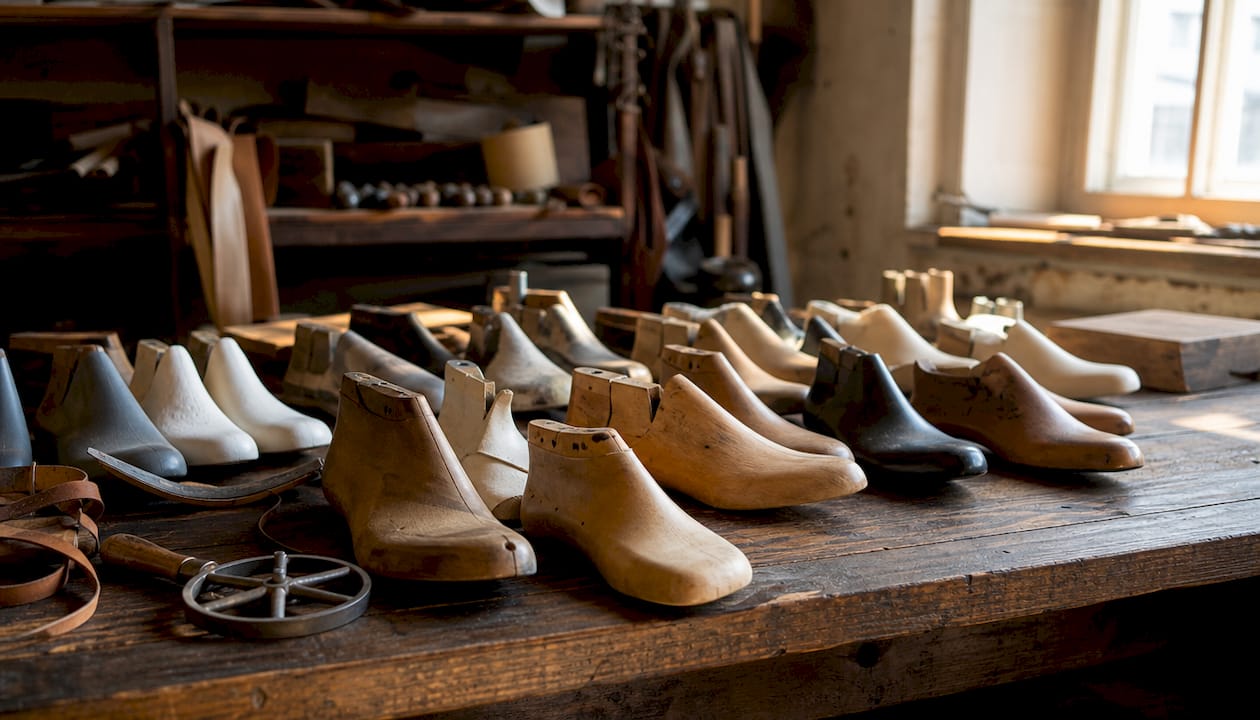
The last controls the toe box shape, which determines whether your toes sit naturally or are compressed. It sets the instep volume, which governs how securely the shoe wraps the top of your foot. It also defines the heel cup width, which affects rear-foot stability during walking or running. Each of these dimensions is fixed once the last is finalised, so the last is effectively the comfort blueprint for the finished shoe.
The heel-to-ball measurement deserves particular attention. Proper last design prioritises heel-to-ball length over total foot length, because this measurement dictates where the shoe flexes. If the flex point of the shoe does not align with the ball of your foot, you will experience discomfort regardless of whether the overall length feels correct. This is one of the most common and least understood sources of foot pain from footwear.
The last also shapes the shoe’s silhouette. A pointed last produces a narrow, tapered toe box suited to dress shoes. A rounded last creates more volume for the toes and suits casual or athletic styles. The same foot length can sit in very different shapes depending on the last, which is why shoe fit and foot health are so closely tied to last design rather than size alone.
Pro Tip: When trying on shoes, press the toe box gently. If the shoe’s widest point does not align with the widest part of your foot, the last shape is wrong for you, regardless of the size label.
How does sock thickness affect shoe fit?
Sock thickness significantly affects fit perception because the instep volume set by the last is fixed. A shoe that fits well with thin dress socks may feel uncomfortably tight with wool or athletic socks. This is not a sizing problem. It is a last volume problem.
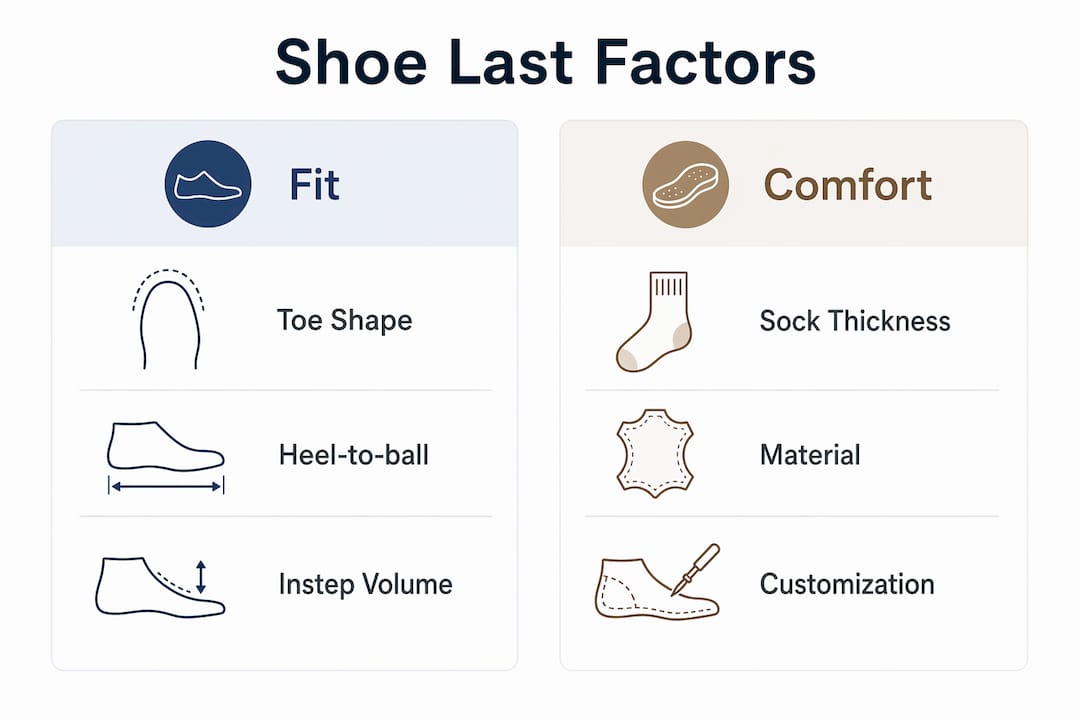
Manufacturers rarely account for sock thickness variation in standard last development. The result is that consumers blame the shoe when the real issue is a mismatch between the last’s fixed internal volume and the sock’s additional bulk. If you plan to wear thicker socks regularly, you need a shoe built on a last with slightly more instep volume, not simply a larger size.
Pro Tip: Always try shoes with the socks you intend to wear most often. A shoe that fits barefoot or with thin socks may not accommodate your usual athletic or winter socks.
What are the main types of shoe lasts?
Shoe lasts can be solid or hinged. Solid lasts are one-piece forms typically used for open footwear such as sandals, where the last can be removed easily after construction. Hinged lasts use a spring-loaded mechanism that allows the last to collapse slightly, making it possible to extract from closed shoes with narrow openings. The type of last used directly affects how a shoe is constructed and what styles are achievable.
The material of the last also matters. Most lasts are made from wood, plastic, or composite materials, each with distinct properties. Reusable and recyclable plastic compounds are now emerging as a sustainability-focused alternative in manufacturing.
| Last type | Material | Best suited for | Key advantage | Limitation |
|---|---|---|---|---|
| Solid | Wood | Open sandals, simple constructions | Durable, stable shape | Cannot be removed from closed uppers |
| Hinged | Plastic | Closed dress shoes, boots | Easy extraction from narrow openings | More complex mechanism |
| Composite | Composite blend | Athletic and performance footwear | Lightweight, consistent dimensions | Higher production cost |
The choice of last type also affects the lasting process itself. Cement lasting, stitch-down lasting, and Goodyear welt construction each interact differently with the last’s shape and material. A hinged plastic last suits high-volume production of closed shoes, while a wooden solid last remains common in bespoke and artisan shoemaking where durability and precision over many uses matter more than extraction ease.
Key distinctions between last types:
- Solid lasts offer greater dimensional stability over repeated use.
- Hinged lasts reduce the risk of damaging the upper during extraction.
- Wooden lasts absorb moisture during lasting, which can slightly alter dimensions over time.
- Composite lasts maintain consistent dimensions across large production runs.
How are shoe lasts developed and customised?
Developing a new shoe last is a significant investment of time and money. A new last requires 10–21 days of lead time and costs approximately USD 150 to USD 500 per size, depending on complexity. For a full size run across multiple widths, the total investment can be substantial. This is why many brands reuse existing lasts rather than developing new ones for every style.
Premium brands invest in proprietary lasts because they define a consistent and recognisable fit. A brand’s last is refined through years of fit testing and customer feedback. When you find a brand whose shoes consistently fit your foot well, you are benefiting from that accumulated investment in last development.
The development process typically follows these stages:
- Anatomical measurement collection. Technicians gather up to 30 measurements of the target foot, including arch height, instep circumference, and heel width.
- Digital modelling. A CAD model of the last is created based on the measurements, allowing rapid iteration of shape and volume.
- Physical prototype production. The last is machined or printed in its intended material for physical evaluation.
- Fit sample construction. A shoe is built on the physical last using the intended materials to test real-world fit.
- Fit testing and refinement. The sample is tested on real feet, and the last is adjusted until the fit meets specification.
Relying solely on digital CAD models is insufficient. Physical fit samples built on the actual last and intended materials are necessary to avoid fit issues caused by how materials behave during lasting. Leather stretches differently from synthetic mesh. Foam compresses under load. These behaviours only reveal themselves in a physical sample.
Sustainability is also reshaping last production. Recyclable plastic compounds and last-sharing programmes between manufacturers reduce waste and lower the cost of entry for smaller brands. This trend is making well-designed lasts more accessible without requiring every brand to develop entirely new tooling from scratch.
Pro Tip: When a brand releases a new shoe style, the fit may differ from their previous models if they have changed the last. Always check whether a new style uses the same last as the model you already know fits you well.
How to choose the right shoe last for your needs
No single standard size can guarantee comfort because human feet vary widely in arch height, instep volume, and width. Choosing footwear based on last characteristics rather than size alone produces far better results. The practical steps below help you identify which lasts suit your foot.
Factors to assess before buying:
- Foot width. Wide feet need a last with greater ball girth. Narrow lasts compress the metatarsals and cause pain over time.
- Arch height. High-arched feet need more instep volume. A low-volume last will press on the top of the foot.
- Heel width. Narrow heels slip in wide heel cups, causing blisters. A last with a narrower heel cup prevents this.
- Activity type. Athletic lasts account for foot splay under load. Dress lasts prioritise silhouette over volume.
- Sock thickness. As noted, thicker socks require more internal volume, which means a last with greater instep clearance.
Practical steps for consumers:
- Identify brands whose shoes have consistently fitted you well. Those brands likely use a last shape compatible with your foot.
- When trying a new brand, wear the socks you plan to use most often and walk for at least five minutes in the shoe.
- Press the toe box to check that the widest point of the shoe aligns with the widest point of your foot.
- Check for heel slip. Minor slip on a new shoe is normal, but persistent slip indicates a last with a heel cup that is too wide for your foot.
- Ask retailers whether a style uses the same last as a previous model you have worn.
Understanding how foot width and length affect fit is as important as knowing your size. A shoe built on a last designed for a different foot shape will never feel right, regardless of how well it fits in length. The shoe lasting process locks in these dimensions permanently, so the time to assess fit is before purchase, not after.
Key takeaways
The shoe last is the single most important factor in determining whether a shoe fits and feels comfortable, because it sets every internal dimension before any other component is added.
| Point | Details |
|---|---|
| Last defines fit | The last controls toe box shape, instep volume, heel width, and flex point alignment. |
| Heel-to-ball matters most | Flex point alignment, not total length, determines whether a shoe causes discomfort. |
| Sock thickness changes fit | Fixed instep volume means sock thickness directly affects how a shoe feels on the foot. |
| Last development is costly | New lasts take 10–21 days and cost USD 150–500 per size, driving brand reuse of existing lasts. |
| Physical samples are necessary | Digital models alone cannot predict fit; only physical samples reveal how materials behave. |
Why I think most people are looking at shoe fit the wrong way
Most people judge shoe fit by length. They measure their foot, find their size on a brand’s chart, and expect the shoe to fit. When it does not, they assume the brand runs small or large. The last is rarely part of the conversation.
I have spent years paying attention to why certain shoes feel right immediately and others never settle, no matter how long you wear them. The answer is almost always the last. A shoe built on a last with the wrong heel-to-ball distance will cause arch fatigue or heel slip from the first step. No amount of breaking in resolves a structural mismatch between your foot’s geometry and the last’s geometry.
The insight that changed how I buy shoes was understanding that last shape affects foot health far more than cushioning or materials. A well-designed last keeps your foot in its natural position. A poorly designed one forces your foot to adapt to the shoe’s shape, which is where long-term problems begin.
Style and fit do not have to conflict. Brands that invest in proprietary lasts prove this. They achieve a recognisable silhouette while maintaining consistent, comfortable fit across their range. The lesson for consumers is straightforward: find brands whose lasts match your foot shape, then stay loyal to them. That is a more reliable path to comfortable footwear than chasing the latest materials or cushioning technologies.
— Panagiotis
Ydauk’s approach to lasting technology and foot comfort
Ydauk builds its footwear around YDA Technology, a framework that places last design and foot health at the centre of every shoe in the range.
The YDA shoe technology page details how Ydauk’s lasting methods are developed to support natural foot positioning, energy efficiency, and everyday comfort. If you have read this far and now understand why the last matters, Ydauk’s approach to last-driven design is worth examining before your next footwear purchase. The brand’s focus on anatomical fit means the last is never an afterthought. It is the starting point for every shoe in the collection.
FAQ
What is a shoe last, in simple terms?
A shoe last is a solid, foot-shaped form used to construct a shoe. Every dimension of the finished shoe, including its width, toe shape, and flex point, is determined by the last.
Why does the heel-to-ball measurement matter more than foot length?
The heel-to-ball distance sets where the shoe flexes. If this point does not align with the ball of your foot, you will experience discomfort even if the shoe’s total length is correct.
How do types of shoe lasts differ?
Solid lasts are one-piece forms suited to open footwear, while hinged lasts collapse for easy removal from closed shoes. Materials include wood, plastic, and composite blends, each affecting durability and production suitability.
Can sock thickness really affect shoe fit?
Yes. The instep volume set by the last is fixed, so thicker socks reduce the available space inside the shoe. A shoe that fits well with thin socks may feel tight with wool or athletic socks.
How do I know if a shoe’s last suits my foot?
Check that the shoe’s widest point aligns with the widest part of your foot, that there is no heel slip after five minutes of walking, and that the instep does not press on the top of your foot. These three checks reveal whether the last shape matches your foot’s geometry.