
Top performance footwear for adults: pick the right trainer
For most adults in the UK right now, a high-performance daily trainer with stable foam and genuine energy return is the smartest single purchase. Not a dedicated racer, not a basic gym shoe. The category that sits between those two extremes delivers speed-adjacent cushioning you can wear every day without wrecking your joints or your schedule.
Two reasons this category wins:
- Comfort and usable tech: Modern stable super-trainers carry the same high-energy foams once reserved for race day, now tuned for daily mileage and mixed-use wear. Runner’s World testing consistently groups these as the most practical picks for adult runners who train regularly.
- Durability that earns the price: Stable platforms distribute load more evenly than aggressive racers, which extends midsole life and reduces the risk of early breakdown under everyday use. Ydauk’s YDA Technology collection is built around exactly this principle, combining foot-health engineering with energy-efficient cushioning for UK buyers.
Key takeaways
A stable high-performance daily trainer, chosen by activity type and fitted correctly, gives most UK adults the best balance of energy return, durability, and everyday comfort.
| Point | Details |
|---|---|
| Fit before everything else | Measure both feet late in the day and test with your actual socks and insoles before buying. |
| Match shoe to activity | Plated racers for road running, stable cross-trainers for gym work, lateral-support shoes for court sports. |
| Transition gradually | Allow two to three weeks when switching to a high-stack or super-trainer to avoid calf and Achilles strain. |
| Replace by mileage, not looks | Most performance midsoles degrade within 300–500 miles regardless of upper condition. |
| Ydauk for UK buyers | Check the YDA Technology collection for VAT-inclusive pricing, tech specs, and direct customer support. |
Table of Contents
- Why the race-day / everyday crossover changes everything in 2026
- Which shoe type suits your activity?
- How to choose the right performance shoe
- Materials and technologies that actually matter
- Buying performance footwear in the UK: price, VAT and availability
- How long do high-performance shoes last?
- What testers and editors actually recommend for adults
- Ydauk’s performance footwear collection for UK buyers
- Sources
Why the race-day / everyday crossover changes everything in 2026
The single biggest shift in performance footwear this year is the collapse of the boundary between race-day shoes and daily trainers. Foams and plate geometries that were exclusive to podium-level racers two years ago are now standard in everyday training shoes, tuned with added stability so they don’t punish you on a Tuesday morning commute.
Runner’s World’s review of the Hoka Skyward X 2 captures this precisely: the Skyward X 2 is a super-trainer designed for daily use, with a stable platform that manages the aggressive energy return rather than leaving the runner to absorb it uncontrolled. That is the template for 2026.
What this means practically:
- More bounce, managed: High-energy foams like PEBA and nitrogen-infused EVA now appear in shoes with wider bases and medial posts, so the propulsive feel doesn’t come at the cost of lateral control.
- Break-in still matters: Even stable super-trainers need a transition period. Jumping straight from a low-stack neutral shoe to a 40mm-stack daily trainer stresses calves and Achilles tendons. Build mileage gradually over two to three weeks.
- Stability is not the same as motion control: A stable platform manages pronation gently; a motion-control shoe corrects it aggressively. Most adults need the former, not the latter.
Which shoe type suits your activity?
Runner’s World’s category framework organises picks by primary use, and that logic holds up across the market. Match your main activity first, then worry about brand and colourway.
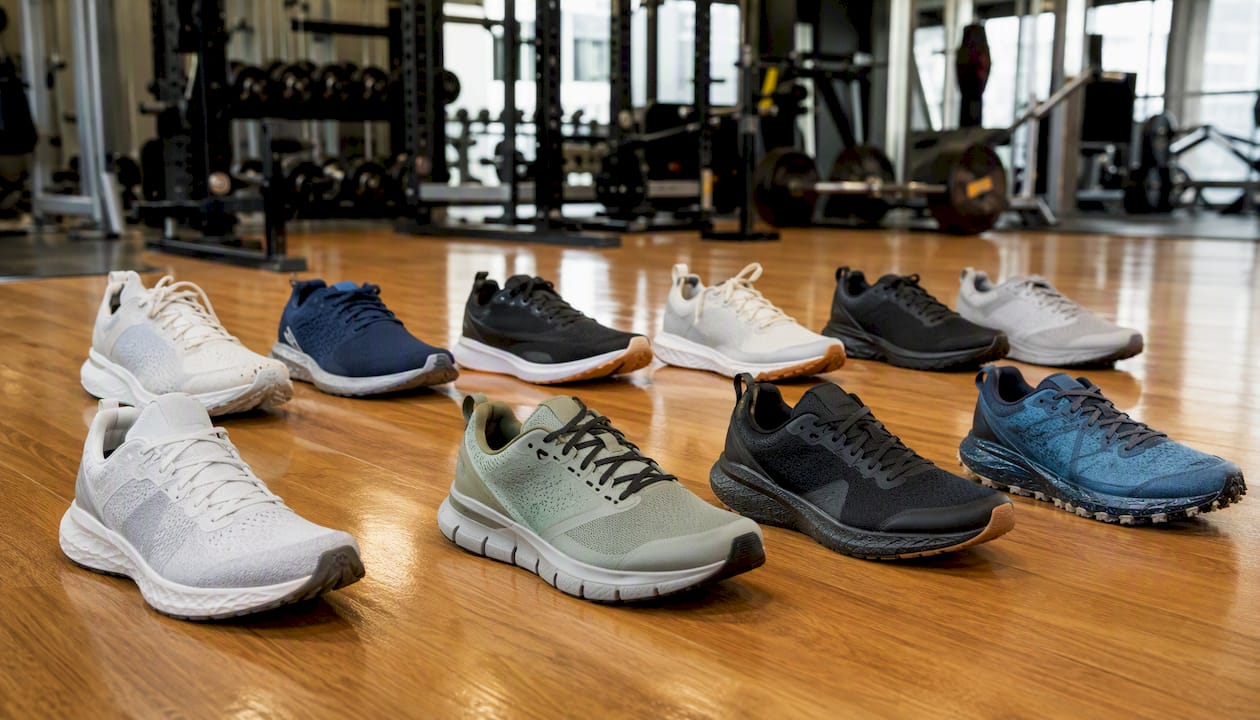
Road running: A daily trainer or stable super-trainer. Prioritise cushion depth, heel-to-toe drop (8–12mm for most adults), and outsole rubber coverage. If you race occasionally, a plated racer as a second shoe makes sense; it should not be your only shoe.
Gym and cross-training: A cross-trainer with a flat, stable base. The Nova01 from PICSIL illustrates the design logic well: 6mm drop, wide toe box, multi-directional outsole, EVA cushioning. Purpose-built for lateral movement and loaded lifts, not long-distance running.
Court sports (tennis, basketball, indoor): Lateral lockdown and sticky rubber are non-negotiable. The adidas DON Issue 8 uses unlocked Lightstrike Pro cushioning pods and a TPU midfoot plate for court responsiveness. Heel padding can feel unusual initially, but traction on indoor surfaces is strong.
Trail running: Lugged outsoles (4–6mm lug depth), rock plates, and drainage ports. Cushion matters less than grip and protection underfoot.
Daily wear and walking: A premium walking shoe or low-profile daily trainer. Prioritise forefoot flexibility, breathable upper, and a cushioned but not excessively stacked midsole.
Safety note: Never use a plated racing trainer for lateral gym work or court sports. The stiff carbon plate is designed for forward propulsion; it offers no lateral stability and increases ankle-roll risk on side-to-side movements.
How to choose the right performance shoe
Fit is the single most important factor, ahead of foam type, plate presence, and brand reputation. A technically brilliant shoe in the wrong size or width will underperform a basic trainer that fits correctly.
- Define your primary activity. One shoe cannot do everything well. Pick the category from the section above before you look at specific models.
- Measure both feet, late in the day. Feet swell by up to half a size during the day. Measure standing, not seated, and fit to the larger foot.
- Wear your intended socks and insoles. A 3mm orthotic changes the fit volume significantly. Always try shoes with the kit you’ll actually use.
- Check heel slip, toe clearance, and midfoot lockdown. Heel should be snug with no lift. Toes need roughly a thumb’s width of clearance at the front. The midfoot should feel held, not compressed.
- Test short movement patterns in-store. Walk, jog a few steps, do a lateral shuffle. A shoe that feels fine standing still can reveal pressure points under load.
- Check the returns window before ordering online. Most UK retailers offer 30 days; some performance specialists extend to 60. Use that window as your real-world trial period.
Width matters more than most buyers realise. As TennisNerd’s review of the Asics Gel-Resolution X notes, aggressive lockdown systems and tight containment can create pressure points when the width is wrong, even if the length is correct. Similarly, The Independent’s review of the Skechers SKX_2 Elite found the FitKnit upper delivered excellent lockdown but ran narrow, making a try-on essential for wider feet.
Pro Tip: If you’re ordering online, use the brand’s own returns policy as a structured trial: wear the shoe for short sessions on a clean surface for the first week, check for pressure points and heel slip, then commit or return before the window closes.
Materials and technologies that actually matter
Understanding what’s in the midsole and upper helps you cut through marketing copy quickly. Here are the technologies you’ll encounter most often, and what they actually trade off.
- PEBA foam: Extremely light, high energy return, poor durability under daily mileage. Best in race-day or occasional-use shoes.
- A-TPU (e.g. Dreamstrike Pro): Firmer feel than PEBA but more durable and stable. The Adidas Supernova Prima’s Dreamstrike Pro midsole delivers energetic rebound on a stable neutral platform, making it a practical daily-use choice.
- Nitrogen-infused EVA: Lighter and more responsive than standard EVA, less expensive than PEBA. Good balance for mid-price daily trainers.
- Carbon plates: Stiffen the forefoot for propulsive efficiency. Excellent for forward-motion running; a liability for lateral or multi-directional work.
- Nylon plates: Softer flex than carbon, more forgiving on varied terrain and mixed activities.
- Knit uppers: Breathable and adaptive, but less durable on abrasive surfaces. Better for road and gym than trail.
- Engineered mesh uppers: More structured support and abrasion resistance; slightly less breathable than knit.
| Technology | Energy return | Weight | Stability | Durability |
|---|---|---|---|---|
| PEBA foam | Very high | Very light | Low | Low |
| A-TPU foam | High | Moderate | Moderate | High |
| Nitrogen EVA | Moderate | Light | Moderate | Moderate |
| Carbon plate | Propulsive | Minimal add | Low (lateral) | High |
| Nylon plate | Moderate | Minimal add | Moderate | High |
For a deeper look at how these footwear technologies transform comfort and performance, Ydauk’s technology blog covers the trade-offs in plain terms.
Buying performance footwear in the UK: price, VAT and availability
UK performance footwear broadly falls into three price bands, all quoted VAT-inclusive as standard in retail:
- Budget (under £80): Nitrogen EVA midsoles, basic mesh uppers, limited tech. Adequate for occasional use and gym work.
- Mid-range (£80–£150): A-TPU or quality EVA, structured uppers, some stability features. The sweet spot for most adults training three to five times per week.
- Premium (£150+): PEBA foams, carbon or nylon plates, advanced uppers. Justified for serious runners; harder to justify for mixed daily use unless the shoe is a stable super-trainer rather than a pure racer.
VAT at 20% is already included in all UK retail prices. When comparing prices across EU retailers, add VAT to their ex-VAT figures before comparing.
Availability fluctuates, particularly for high-demand models that drop in limited runs. Check stock status on product pages directly rather than relying on third-party aggregators, which often lag by days. Ydauk’s YDA Technology page lists current availability alongside technical specifications, making it a practical first stop for UK buyers.
Always save your order receipt and note the purchase date. Your returns window starts from delivery, not order date, and a 30-day window goes faster than expected when you’re testing across different activities.
How long do high-performance shoes last?
Most performance trainers have a typical lifespan suitable for several hundred miles of road use, but that figure assumes correct use and reasonable care. Misuse on abrasive surfaces or wrong-activity use shortens life significantly.
- Clean after muddy or wet sessions: Remove insoles, air-dry at room temperature. Never use direct heat; it degrades foam structure.
- Machine washing: Only if the manufacturer explicitly permits it. Most knit uppers tolerate a cold, gentle cycle in a mesh bag; structured mesh uppers generally do not.
- Surface discipline: Indoor court shoes used outdoors on tarmac lose their outsole rubber quickly. Trail shoes used on roads wear their lugs flat within weeks.
Visual wear indicators worth checking: uneven heel compression (visible when you place the shoe on a flat surface), outsole rubber worn through to the midsole, and upper fabric separating at the toe box.
Pro Tip: Rotate between two pairs of the same or similar shoe. Foam needs 24–48 hours to decompress fully after a run. Rotation extends midsole life noticeably and reduces odour build-up.
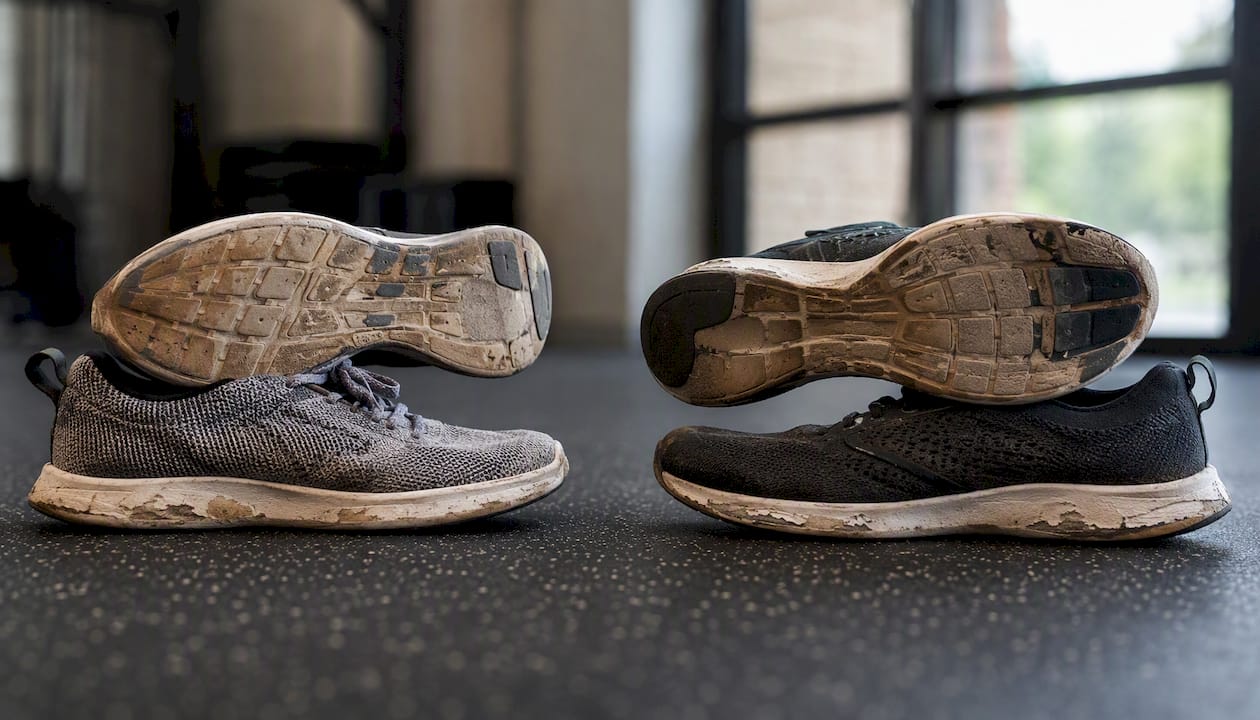
Runner’s World testing notes that midsole performance decays with accumulated miles regardless of visible upper condition, so replace by mileage cues rather than appearance alone.
What testers and editors actually recommend for adults
After OutsideOnline’s mid-2026 evaluation of over 100 models, the pattern is clear: most adults are best served by a stable daily trainer rather than a pure racer or a basic gym shoe. The Asics Superblast 3 took the overall road-running crown in that round of testing, but the broader lesson is category discipline, not brand loyalty.
The honest editorial caveat: max-cushioned shoes require a genuine transition period. Adults switching from a traditional 10mm-drop trainer to a 40mm-stack super-trainer should expect two to three weeks of adaptation, with shorter initial sessions and attention to calf tightness. Skipping that transition is the most common cause of early injury with high-performance footwear.
For lateral work, stability picks with TPU midfoot plates and wider bases outperform plated racers every time. For value, mid-range A-TPU shoes deliver 80–90% of the performance feel of premium PEBA options at roughly half the price.
Ydauk’s performance footwear collection for UK buyers
Ydauk brings YDA Technology to UK adults who want foot-health engineering and energy-efficient cushioning in the same shoe, without the guesswork of navigating a crowded market. The YDA Technology page explains the design principles behind each model, including how the midsole geometry and upper construction are matched to specific activity profiles.
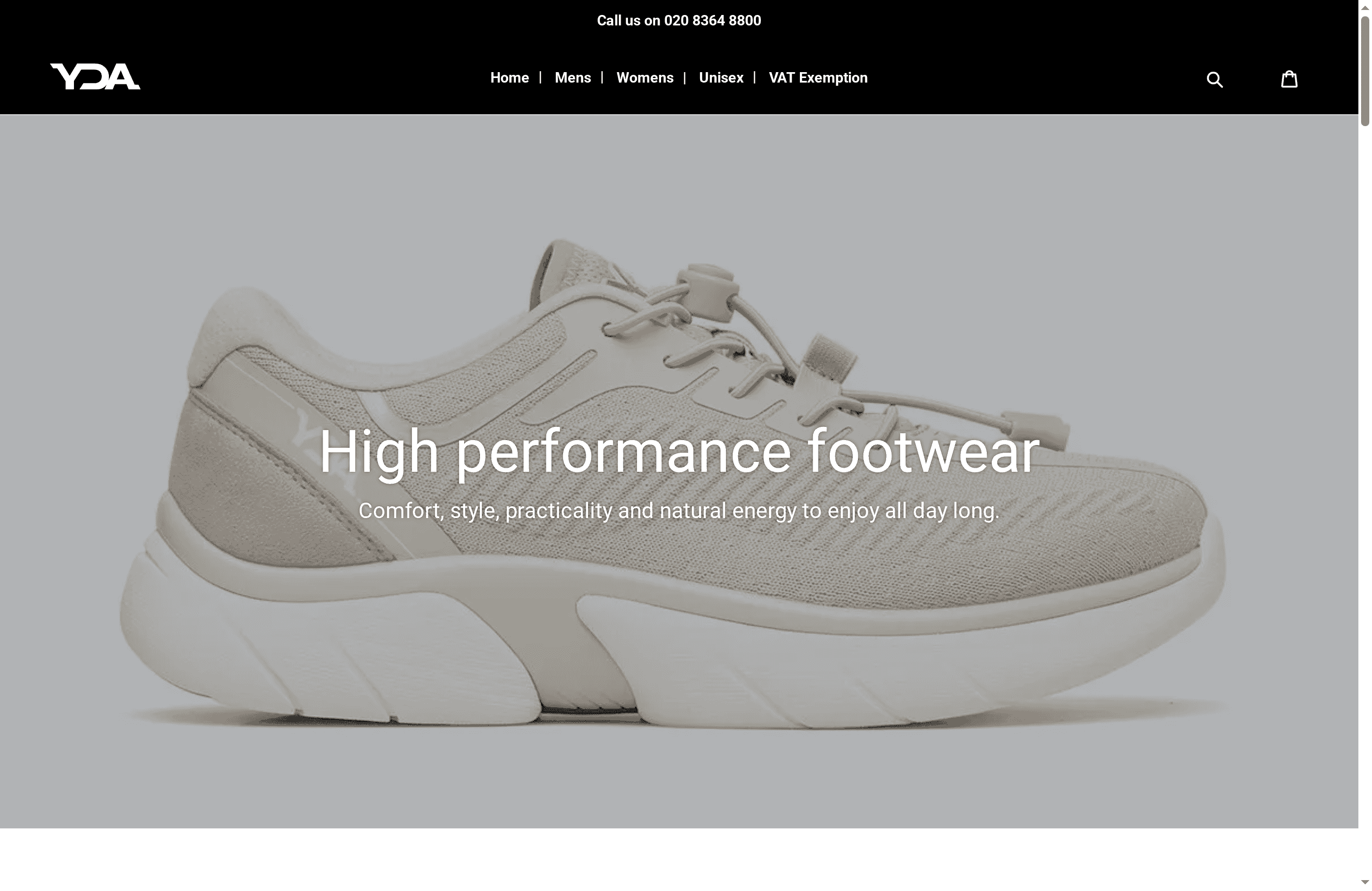
All prices on the Ydauk site are VAT-inclusive, availability is updated directly on product pages, and customer support is reachable by phone for sizing queries before you order. If a model doesn’t suit after your trial period, the returns process is straightforward. Browse the current collection, check availability, and contact the team with any fit questions before committing.
Sources
- Asics Gel‑Resolution X tennis shoe review (TennisNerd)
- I played football in Harry Kane’s World Cup boots for 2 weeks — here’s my review (The Independent)
- Best running shoes (OutsideOnline)
- Adidas Supernova Prima 3/4 review (RoadTrailRun)
- Best running shoes (Runner’s World — overview)