
Summer shoe recommendations: the 2026 comfort guide
TL;DR:
- The ideal summer shoes combine thick support, breathable materials, and a proper fit to safeguard foot health during warm-weather activities. Choosing supportive, structured footwear over fashionable but flimsy options prevents blisters, pain, and fatigue. Prioritizing support and fit ensures comfort and long-term foot well-being throughout the season.
The best summer shoes combine thick-soled support, breathable materials, and a secure fit to protect your feet across every warm-weather activity. Podiatrists consistently point to these three qualities as non-negotiable when making summer shoe recommendations, yet most shoppers still reach for flat flip-flops or plastic sandals that cause more harm than good. Brands like Birkenstock, Common Projects, and Red Wing have built loyal followings precisely because they take foot architecture seriously, even in warm-weather styles. Choosing the wrong summer footwear leads to blisters, metatarsal pain, and fatigue that compounds over a long day outdoors.
1. What are the essential features to look for in summer shoes?
Podiatrists recommend thick soles, arch support, and cushioning as the baseline requirements for any summer shoe. A shoe that bends in half when you twist it lacks the structural integrity to protect your foot over hours of wear. That simple bend test, performed in-store or on delivery, tells you more about a shoe’s support than any marketing claim.
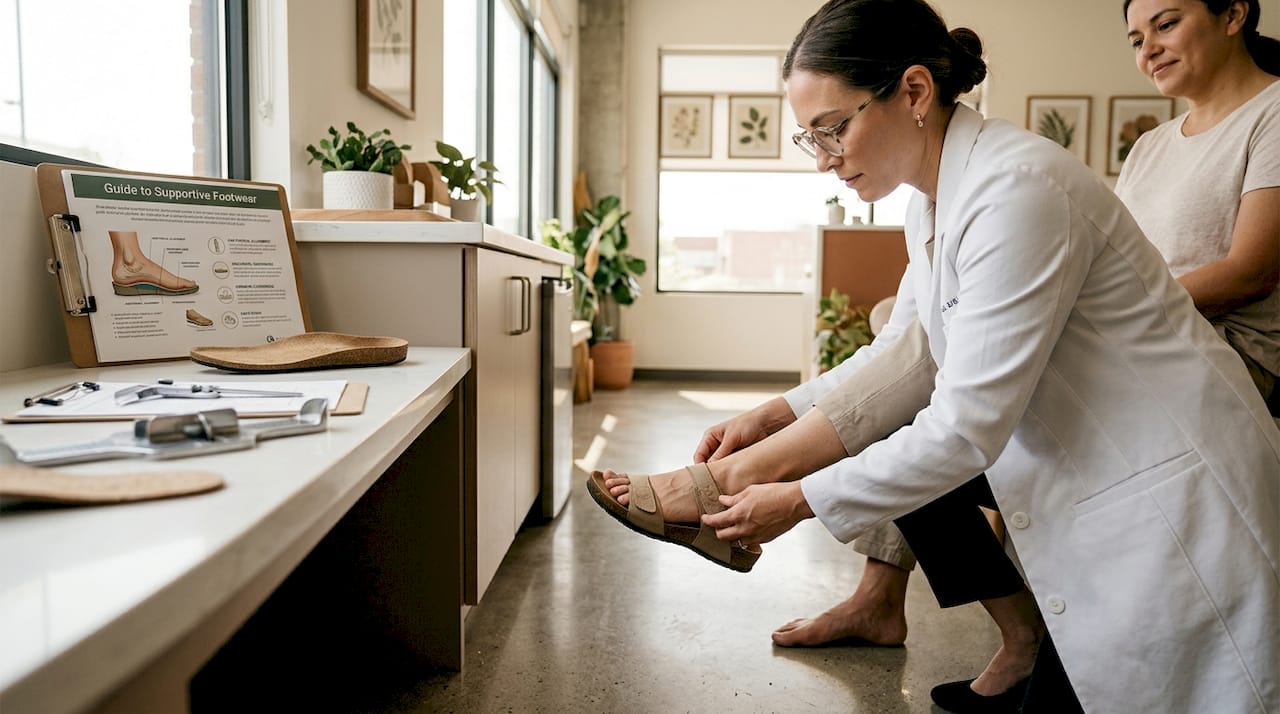
Breathability is the second pillar. Breathable materials like leather, canvas, and mesh allow air to circulate and moisture to escape, while plastic and rubber trap heat and create the damp conditions that breed blisters and fungal infections. This is a deliberate design choice, not a side effect of going sockless.
Fit matters more in summer than any other season because feet swell in heat. Correct shoe width is frequently overlooked; forcing a wide foot into a narrow shoe compresses the metatarsals and causes long-term pain. Always check width alongside length when trying on or ordering footwear.
Key features to assess before buying:
- Sole thickness: at least 10mm of cushioning underfoot
- Arch support: a contoured footbed, not a flat insole
- Heel counter: firm enough to resist lateral movement
- Upper material: leather, canvas, or mesh rather than synthetic plastic
- Width options: look for brands that offer multiple width fittings
Pro Tip: Apply a small amount of anti-chafing balm to any strap contact points before wearing new sandals for the first time. This prevents the raw friction blisters that ruin the first week of a new pair.
2. Anatomical sandals: the podiatrist’s first choice
Anatomical cork-sole sandals consistently top podiatrist-approved summer lists because the footbed moulds to your arch over time, distributing weight evenly across the entire foot. Birkenstock is the most recognised name in this category, but the principle applies to any sandal with a contoured cork or EVA base. The deep heel cup is what separates these from decorative flat sandals.
The arch support built into a quality anatomical sandal reduces the strain on your plantar fascia, the band of tissue that connects your heel to your toes. This matters most on hard urban surfaces like stone pavements and tiled floors, where the ground offers zero natural give. A well-fitted cork sandal on a cobbled European street is genuinely more protective than a running shoe on grass.
3. Running shoes repurposed for casual summer wear
Mesh-upper running shoes from brands like New Balance, ASICS, and Brooks deliver more foot protection than almost any dedicated summer sandal. Mesh sneakers are advised by podiatrists specifically for their breathability combined with structured cushioning. The key is choosing a low-profile silhouette that reads as casual rather than gym-specific.
Pairing a neutral running shoe with shorts, linen trousers, or a summer dress has become entirely acceptable in 2026 street style. The functional argument is strong: you get a full heel counter, a cushioned midsole, and a breathable upper in one package. For anyone spending long days on their feet at festivals, markets, or city breaks, this is the most practical summer footwear choice available.
4. Leather moccasins and loafers for versatile summer style
Multi-material construction and Goodyear welted designs give leather moccasins and loafers a durability advantage over most summer shoes. A thick leather sole with a rigid heel counter provides the structural support that flat canvas shoes cannot match. Red Wing and similar heritage brands produce moccasin-style shoes that work equally well on a city commute or a weekend walk.
Leather also breathes better than most people expect, particularly full-grain and vegetable-tanned varieties. The material wicks moisture away from the foot and dries relatively quickly, making it a practical choice for warm climates. Pair with thin cotton or bamboo no-show socks to manage moisture without the visual bulk of a trainer sock.
5. Sneaker-heel hybrids for occasions that demand elevation
Sneex’s Charlie Hy-Heel Sandal, powered by INNERPLAY™ technology, is the clearest current example of a heel shoe engineered around foot fatigue rather than aesthetics alone. The design places sneaker-grade cushioning inside a heel sandal silhouette, reducing the impact that conventional heels transfer to the forefoot. This category matters because formal and semi-formal summer occasions have historically forced a trade-off between appearance and comfort.
Block heels and slingbacks with padded soles occupy a similar space at a lower price point. The rule of thumb is to look for a heel no higher than 5cm with a wide base, a cushioned insole, and a strap that holds the heel in place rather than letting the foot slide forward. Foot sliding is the primary cause of forefoot pain in heeled summer shoes.
6. Espadrilles and breathable flats: the travel staple
Espadrilles combine a canvas upper with a jute or rubber sole, making them among the lightest and most packable summer shoes available. They fold flat into a bag, weigh almost nothing, and look appropriate across a wide range of casual and smart-casual settings. The limitation is sole thickness: traditional espadrilles offer minimal cushioning, so wedge versions with a 3 to 4cm platform are a better choice for anyone walking more than a few kilometres.
Breathable leather flats with a cushioned insole occupy the gap between espadrilles and structured loafers. They offer more support than a canvas flat while remaining lightweight enough for travel. For anyone building a summer travel capsule wardrobe, one pair of wedge espadrilles and one pair of leather flats covers the majority of occasions without the weight penalty of carrying multiple shoes.
7. How to choose summer shoes for different activities
The right shoe depends on what you are actually doing, not just how the shoe looks. Here is a practical framework:
- Casual days and errands: Leather slides or cork-sole sandals with a heel cup. Prioritise ease of on-and-off without sacrificing arch support.
- Active summer days (hiking, festivals, markets): Mesh-upper trainers with a cushioned midsole and a firm heel counter. Pair with moisture-wicking no-show socks.
- Formal and smart-casual occasions: Block-heel sandals or leather loafers with a padded insole. Avoid stilettos on uneven outdoor surfaces.
- Beach and poolside: Rubber-soled sandals are acceptable here because the exposure is brief. Apply sunscreen to the tops of your feet and any strap gaps.
- City travel and long-haul sightseeing: Leather loafers or low-profile running shoes. Prioritise a shoe you can wear for eight or more hours without foot fatigue.
- Evening dining and events: Wedge espadrilles or a low block heel. The wedge distributes weight more evenly than a stiletto and is far more stable on restaurant floors.
Pro Tip: When travelling, wear your heaviest shoes on the plane and pack the lightest pair. This single habit saves significant luggage weight and means your most supportive shoes are on your feet during the longest walking days.
8. Common mistakes when buying summer shoes
The most frequent error is prioritising appearance over structure. A shoe that looks minimal often is minimal, with no cushioning, no arch support, and a sole that folds under light pressure. Avoiding flimsy, easily bendable shoes is the single most useful piece of advice podiatrists repeat every summer.
Ignoring foot width is the second major mistake. Narrow shoes on wide feet cause metatarsal compression that worsens over the course of a day. Many shoppers buy the correct length but the wrong width, then blame the style rather than the fit.
Hygiene and maintenance errors compound discomfort over a season. Wash feet daily, use antifungal spray if needed, and air out shoes between wears. Rotating between at least two pairs allows each shoe to dry fully, which prevents odour and material breakdown. Wipe down leather and canvas uppers weekly to remove salt residue from sweat.
Common mistakes to avoid:
- Buying shoes that bend completely in half
- Choosing style over sole thickness and arch support
- Ignoring width and buying only by length
- Wearing the same pair every day without rotation
- Skipping moisture management (socks, powder, or liners)
- Using plastic or rubber-upper shoes for extended wear
Pro Tip: Rotate between at least two pairs of summer shoes and use a podiatry-informed selection approach to assess each pair before purchase. Your feet will feel the difference within the first week.
Key takeaways
The most effective summer footwear combines thick-soled support, breathable materials, and correct width fit to prevent pain and protect foot health across all warm-weather activities.
| Point | Details |
|---|---|
| Prioritise structure over style | Choose shoes with thick soles, arch support, and a firm heel counter before considering aesthetics. |
| Match shoe type to activity | Use mesh trainers for active days, leather loafers for travel, and block heels for formal occasions. |
| Breathable materials are non-negotiable | Leather, canvas, and mesh prevent heat and moisture build-up; avoid plastic and rubber uppers for extended wear. |
| Width fit matters as much as length | Narrow shoes on wide feet cause metatarsal compression; always check width when buying summer footwear. |
| Rotate and maintain your shoes | Airing shoes between wears and cleaning them weekly prevents odour, fungal issues, and material breakdown. |
Why I think most people are buying summer shoes backwards
Most shoppers start with how a shoe looks and then hope it feels acceptable after a few wears. I have spent years observing this pattern, and it produces the same result every time: blisters by day three, arch pain by week two, and a pair of expensive sandals gathering dust by August.
The more useful approach is to start with the footwear selection criteria that podiatrists actually use, and then find the most attractive shoe that meets those criteria. This is not a compromise. The best-looking summer shoes in 2026 are also among the most structured. Cork-sole sandals, leather loafers, and low-profile mesh trainers all look sharp precisely because they have enough material and construction to hold a clean shape.
The other thing I would push back on is the idea that summer means going minimal. Heat does not reduce your need for support. If anything, summer means more activity, which makes support and cushioning more important than in winter when you are largely sedentary indoors. A thin flat sandal on a full day of sightseeing is the footwear equivalent of running a half-marathon in bare feet.
Invest in two or three pairs that genuinely work, rotate them, maintain them, and your feet will carry you through the entire summer without complaint.
— Panagiotis
Discover supportive summer footwear at Ydauk
Ydauk builds shoes around foot health technology rather than trend cycles, which makes the range particularly well-suited to the demands of summer wear. Every design in the collection addresses the core requirements that podiatrists prioritise: structured support, breathable construction, and a fit that accommodates real foot shapes.
If you are ready to move beyond generic summer sandals, explore the YDA shoe technology that underpins every pair in the range. For shoppers with specific foot concerns, the shoes for problem feet section covers options designed for wider fits, high arches, and other common summer comfort challenges. Browse the full collection and find a pair built to last the season.
FAQ
What makes a summer shoe podiatrist-approved?
A podiatrist-approved summer shoe has a thick sole, contoured arch support, a firm heel counter, and a breathable upper made from leather, canvas, or mesh. Shoes that bend easily in half fail the basic structural test and should be avoided.
Are flip-flops bad for your feet in summer?
Extended wear of flat flip-flops is discouraged by podiatrists because they offer no arch support, no heel counter, and minimal cushioning. Brief poolside or beach use is acceptable, but they are not suitable for long days of walking.
How do I prevent blisters from summer sandals?
Use moisture-wicking liners or no-show socks where possible, apply anti-chafing balm to strap contact points, and rotate between pairs daily to allow shoes to dry fully between wears.
What is the best material for breathable summer shoes?
Leather, canvas, and mesh are the most breathable materials for summer footwear. Plastic and rubber trap heat and moisture, increasing the risk of blisters and fungal infections during extended warm-weather wear.
Can I buy good summer shoes online without trying them first?
Yes, provided you know your correct length and width measurements and choose brands that offer clear sizing guides and straightforward returns. When you buy summer shoes online, prioritise retailers that publish detailed fit information and customer reviews mentioning width and arch support.